
Citharacanthus cyaneus
Cuban Orange Violet - complete care guide
Cuban Orange Violet

Temperature
22-26 °C
Target ambient range
Humidity
60-75 %
Substrate / enclosure RH
Adult DLS
10-13 cm
Average - varies per individual
Moult interval
Sling 3-7w - Juv 2-3.3mo
Adult 11-15mo
Adult cycle = mature females; males never moult again after maturity
About
Cuban semi-dwarf with warm orange highlights over violet-blue tones and a dark facial mask - the colour shifts with the light, and the name cyaneus ("blue") undersells the orange. Calm, manageable at 10-13 cm, and content with straightforward tropical husbandry: an underrated, quietly beautiful display species.
Husbandry cheat sheet
- Origin
- Cuba
- Habitat
- Savannah / open forest
- Temperament
- Docile
- In your collection
- 0
Growth, lifespan & conservation
- Growth rate
- Medium
- Maturity
- ♀ 48mo ♂ 36mo
- Lifespan
- ♀ 12yr ♂ 4yr
- Continent
- Caribbean
- UK availability
- Uncommon
📸 Community Gallery Photos from keepers with public specimens
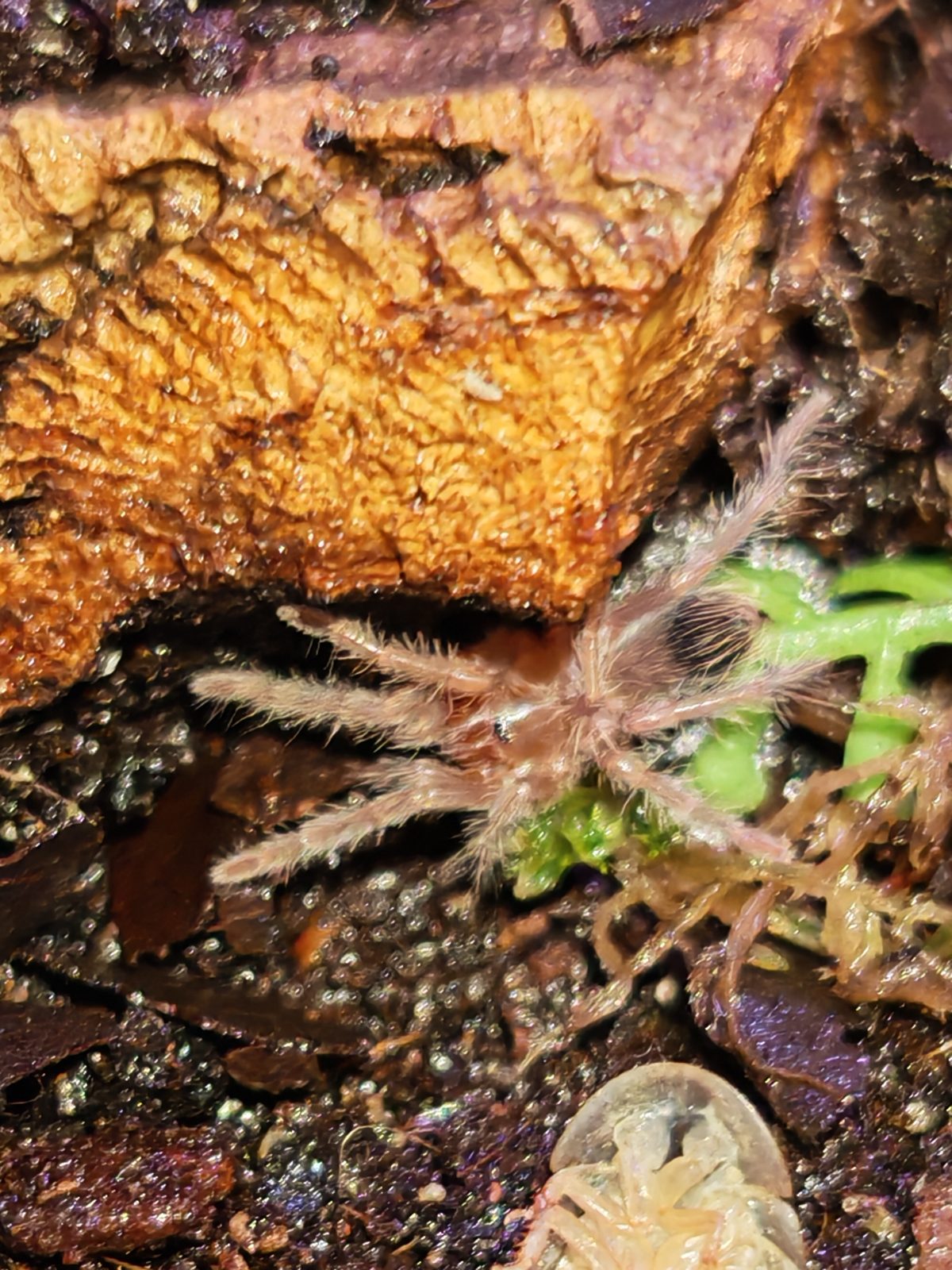
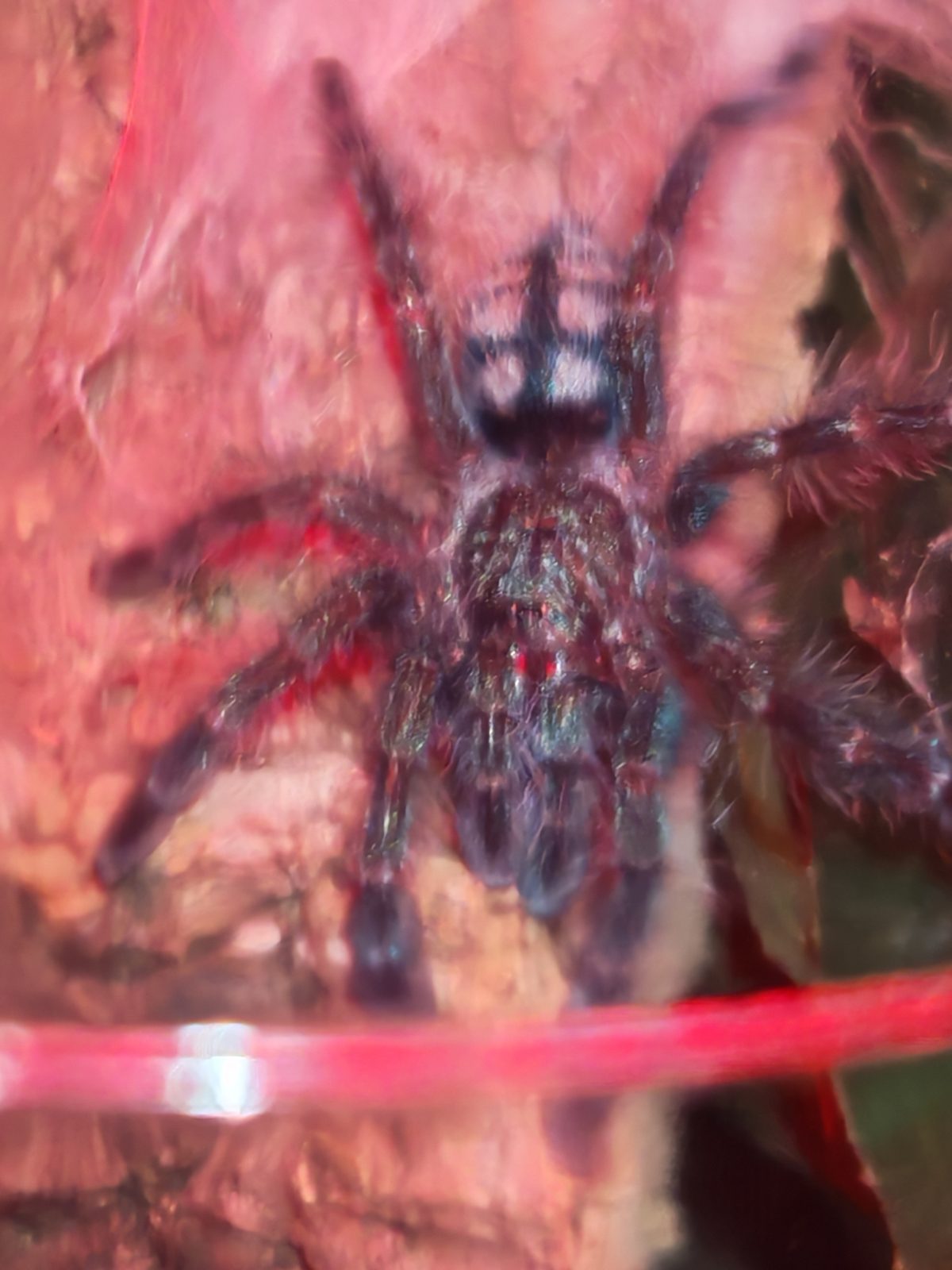
Want your specimen photo here? Set it to public in your specimen's settings.
Care Guide
Citharacanthus cyaneus
Cuban Orange Violet - a complete husbandry sheet. Use as a starting point and adjust to your individual specimen.
What size enclosure does a Cuban Orange Violet Tarantula need?
Adults
30 × 25 cm (12 × 10 in) for a mature adult. Floor space matters more than height.
Slings & Juveniles
House spiderlings in small, appropriately sized deli cups or sling enclosures - oversized enclosures make prey capture difficult. Upgrade roughly every 2-3 moults.
To map exact floor space and substrate safety limits for your setup, use our free interactive tarantula enclosure planner.
What temperature and humidity does a Cuban Orange Violet Tarantula need?
Heating
The Cuban Orange Violet is comfortable at 22-26 °C. Most UK homes sit in or near this range for most of the year; heat the room rather than the enclosure if winter drops below it.
Humidity
60-75 %: keep half the substrate lightly damp and let it dry out before re-wetting - pour water down one side rather than misting everything.
Ventilation
Cross-ventilation is essential - side-vented enclosures, never stagnant. Poor airflow plus humidity kills faster than dryness ever will.
What substrate is best for a Cuban Orange Violet Tarantula?
Recommended Mixes
Depth
7-10 cm
Notes
Keep substrate dry to barely moist with a damp gradient - never soaking. Pack it firm enough to support décor.
How do you set up a Cuban Orange Violet Tarantula enclosure?
Décor
The Hide
A cork bark half-log, leaning slab, or cork tube placed on the substrate.
Water
Always provide a shallow fresh water dish. Keep it full and clean it regularly. No sponges.
Lighting
No special lighting needed. Ambient room light is enough; avoid heat lamps and bright spotlights.
How often should you feed a Cuban Orange Violet Tarantula?
Good Feeders
Long refusal worrying you? Separate premoult fasting from genuine problems with our "Is my T okay?" checker.
Is my Cuban Orange Violet Tarantula dying or moulting?
Pre-moult signs to look for
Refusing food for weeks is normal before a moult - a healthy Cuban Orange Violet Tarantula fasting is almost never an emergency in itself. Watch for slowing down and spending more time in the hide, laying a thick moult mat of web on the floor. New World species like this one often show a bald spot on the abdomen that darkens to near-black as the new skin underneath readies - a darkening bald patch is a reliable countdown, not a disease.
On its back is MOULTING, not dying
A Cuban Orange Violet Tarantula lying upside down or on its side with legs curled inwards is almost certainly mid-moult. Do not touch it, do not right it, do not mist it - just remove any live prey (crickets can kill a defenceless moulter) and leave the room.
How long between moults?
For this species, expect a moult roughly every 24-49 days for spiderlings, every 60-100 days for juveniles, and every 180-260 days for sub-adults, with adult females moulting around every 11 months (up to 15 months at the extreme). Males never moult again after their ultimate (mature) moult.
After the moult: fang hardening time
The new exoskeleton stays soft, with fangs that cannot grip, for roughly 7 days in this species. Offer no food and no handling for about 7 days - feeding too early is how fresh moulters get injured. The shed exuvium is also the best sexing tool there is - see our tarantula sexing guide for what to look for.
Genuinely worried about behaviour that is not moulting? Our "Is my T okay?" triage tool walks the danger signs one by one.
What ongoing care does a Cuban Orange Violet Tarantula need?
🪞 Moulting
Signs: refuses food, abdomen darkens and goes glossy, becomes sluggish, often heavy webbing or a moult mat. During the moult: do not disturb, remove any live prey, keep water available. Wait until the fangs are black and hard (several days for adults, 1-2 for slings) before feeding again. Adult intervals apply to mature FEMALES - a mature male never moults again.
🧹 Cleaning
Daily: check the water dish. Weekly: remove uneaten prey boluses and spot-clean. Full deep clean only every few months, and only when necessary.
✋ Handling
Generally calm and tolerant, with occasional hair-flicking when annoyed. Handle rarely and at floor level if at all - the usual sensible approach.
What are the most common mistakes when keeping Cuban Orange Violet Tarantulas?
✓ What They Love
- Fresh water dish at all times
- Cross-ventilation
- Stable room temperature
- A proper hide and a few anchor points
- Half-damp substrate gradient for this tropical Cuban species
✕ Common Mistakes
- Bone-dry substrate for long periods - it is a Cuban tropical species
- Soaking-wet or swampy substrate
- Heat mat underneath the enclosure
- Expecting constant visibility - it alternates between open basking and hiding for weeks at a time
Keep exploring: related care guides
More ground-dwelling species and close relatives from our full library:
Acanthoscurria cordubensis
Argentinian Bronze Birdeater
Terrestrial - full guide →
Acanthoscurria geniculata
Brazilian Giant White Knee
Terrestrial - full guide →
Acanthoscurria musculosa
Black Velvet Rump
Terrestrial - full guide →
Acanthoscurria natalensis
Natal Brown Birdeater
Terrestrial - full guide →
⭐ Community Ratings
No ratings yet - be the first to rate this species!