
Pseudhapalopus sp. Kurzhaar
Colombian Short-hair - complete care guide
Colombian Short-hair

Temperature
24-28 °C
Target ambient range
Humidity
70-80 %
Substrate / enclosure RH
Adult DLS
4-5 cm
Average - varies per individual
Moult interval
Sling 4-8w - Juv 3-5mo
Adult 15-18mo
Adult cycle = mature females; males never moult again after maturity
About
Colombian dwarf with a subtle grey-brown base and a blue-violet flush on the legs after a fresh moult. "Kurzhaar" is German for short-haired, and the species is still scientifically undescribed (trade genus sometimes listed as Spinosatibiapalpus after the 2020 revision). An opportunistic burrower that stays under 5 cm: small enclosure, deep damp substrate, and famously glacial growth - a female can take five years to mature.
Husbandry cheat sheet
- Origin
- Colombia
- Habitat
- Rainforest floor
- Temperament
- Skittish
- In your collection
- 0
Growth, lifespan & conservation
- Growth rate
- Very slow
- Maturity
- ♀ 60mo ♂ 42mo
- Lifespan
- ♀ 10yr ♂ 4yr
- Continent
- South America
- UK availability
- Uncommon
📸 Community Gallery Photos from keepers with public specimens
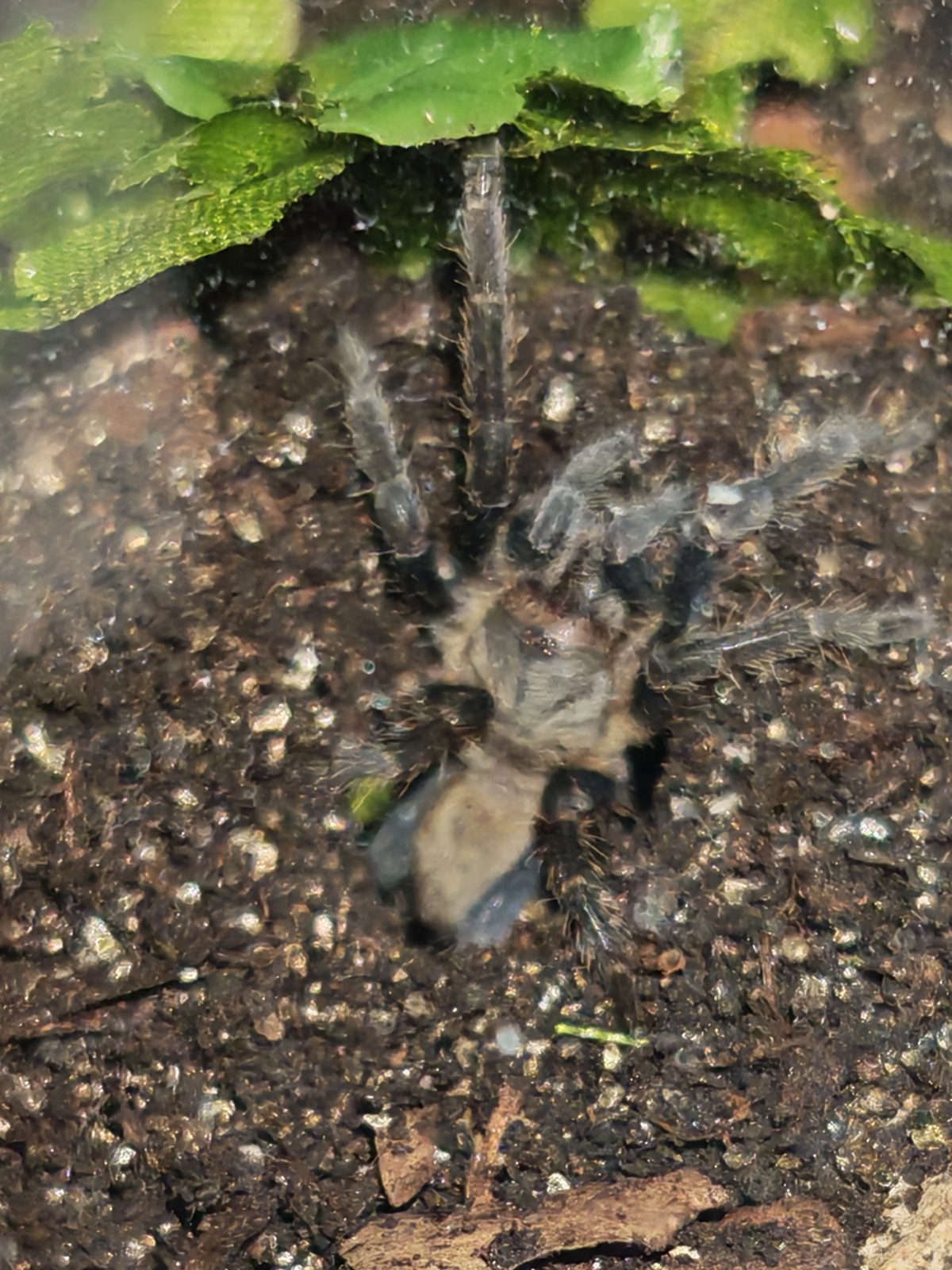
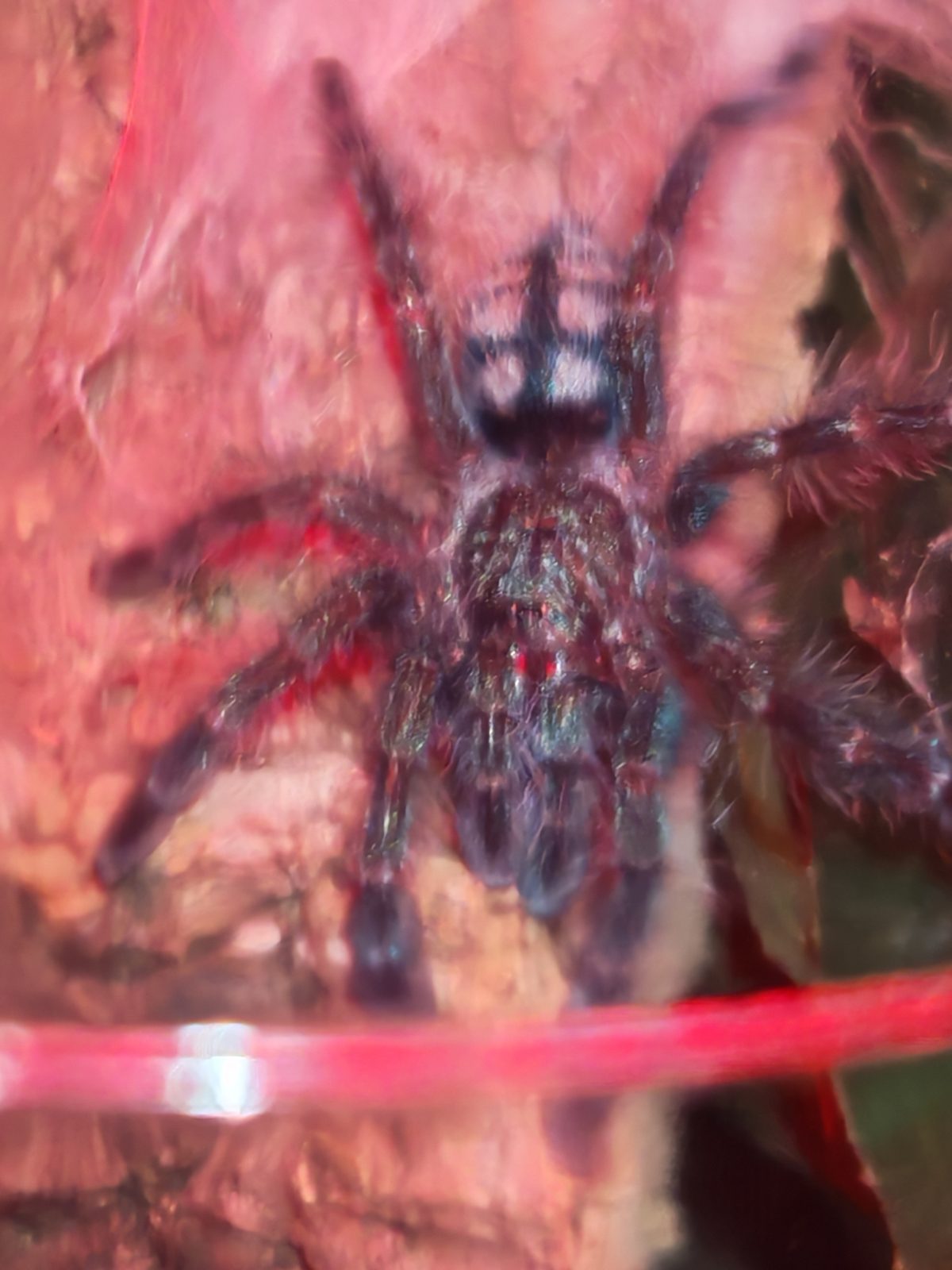
Want your specimen photo here? Set it to public in your specimen's settings.
Care Guide
Pseudhapalopus sp. Kurzhaar
Colombian Short-hair - a complete husbandry sheet. Use as a starting point and adjust to your individual specimen.
What size enclosure does a Colombian Short-hair Tarantula need?
Adults
20 × 20 cm is plenty for a mature female - dwarfs hunt poorly in large tanks. Floor space with 8-10 cm of substrate matters more than height.
Slings & Juveniles
Small tubs or sling pots with 4-6 cm of substrate and a starter burrow. Upgrade slowly - they thrive slightly cramped.
To map exact floor space and substrate safety limits for your setup, use our free interactive tarantula enclosure planner.
What temperature and humidity does a Colombian Short-hair Tarantula need?
Heating
The Colombian Short-hair is comfortable at 24-28 °C. Most UK homes sit below this for much of the year; heat the room rather than the enclosure if it drops under 22 °C.
Humidity
70-80 %. Keep the lower substrate damp-packed and let the surface dry slightly between top-ups: pour water down one corner rather than misting everything.
Ventilation
Cross-ventilation with a damp-but-not-wet substrate. Stagnant, soggy air is the main killer of dwarf burrowers - mould and mites follow.
What substrate is best for a Colombian Short-hair Tarantula?
Recommended Mixes
Depth
8-10 cm
Notes
The enclosure IS the substrate. Keep it deep and packed so burrows hold, with a moisture gradient - damp below, drier at the surface. Never soaking.
How do you set up a Colombian Short-hair Tarantula enclosure?
Décor
The Hide
A starter burrow (cork bark piece, half a flower pot or a straw/pipe entrance) angled into the substrate. Most build their own retreat and spend days at a time inside.
Water
A bottle cap or tiny dish on the surface. Most drinking needs are met by the damp substrate, but always offer one.
Lighting
No special lighting needed. Ambient room light is enough; they are most active at dusk.
How often should you feed a Colombian Short-hair Tarantula?
Good Feeders
Long refusal worrying you? Separate premoult fasting from genuine problems with our "Is my T okay?" checker.
Is my Colombian Short-hair Tarantula dying or moulting?
Pre-moult signs to look for
Refusing food for weeks is normal before a moult - a healthy Colombian Short-hair Tarantula fasting is almost never an emergency in itself. Watch for slowing down and spending more time in the hide, laying a thick moult mat of web on the floor. New World species like this one often show a bald spot on the abdomen that darkens to near-black as the new skin underneath readies - a darkening bald patch is a reliable countdown, not a disease.
On its back is MOULTING, not dying
A Colombian Short-hair Tarantula lying upside down or on its side with legs curled inwards is almost certainly mid-moult. Do not touch it, do not right it, do not mist it - just remove any live prey (crickets can kill a defenceless moulter) and leave the room.
How long between moults?
For this species, expect a moult roughly every 28-56 days for spiderlings, every 90-150 days for juveniles, and every 240-330 days for sub-adults, with adult females moulting around every 15 months (up to 18 months at the extreme). Males never moult again after their ultimate (mature) moult.
After the moult: fang hardening time
The new exoskeleton stays soft, with fangs that cannot grip, for roughly 5 days in this species. Offer no food and no handling for about 7 days - feeding too early is how fresh moulters get injured. The shed exuvium is also the best sexing tool there is - see our tarantula sexing guide for what to look for.
Genuinely worried about behaviour that is not moulting? Our "Is my T okay?" triage tool walks the danger signs one by one.
What ongoing care does a Colombian Short-hair Tarantula need?
🪞 Moulting
Usually moults inside its burrow - you may only see the excavated exuvium at the entrance. Do not dig to check. Remove prey, keep humidity steady, and wait 3-5 days post-moult (small species harden fast) before feeding. Adult intervals apply to mature females - males never moult after their ultimate moult.
🧹 Cleaning
Refresh the water dish (bottle-cap sized) weekly. Spot clean boluses from around the burrow entrance. Full cleans are disruptive to an established burrow - do them only when necessary.
✋ Handling
Not a handling species. Small, fast and fragile - a fall from any height is fatal. Observe, do not touch.
What are the most common mistakes when keeping Colombian Short-hair Tarantulas?
✓ What They Love
- Deep, damp-packed substrate for burrowing
- Cross-ventilation
- Stable room temperature
- Tiny prey - dwarf species struggle with oversized feeders
- Patience - this is one of the slowest-growing species in the hobby
✕ Common Mistakes
- Oversized prey - a prey item thicker than the spider is dangerous
- Large enclosures - dwarfs hunt poorly in big open tanks
- Bone-dry substrate - they are rainforest burrowers
- Waterlogged, swampy substrate
- Expecting fast growth - glacial is normal for this genus, not a husbandry failure
Keep exploring: related care guides
More ground-dwelling species and close relatives from our full library:
Pseudhapalopus sp. Blue
Colombian Bluebottle
Same genus - full guide →
Acanthoscurria cordubensis
Argentinian Bronze Birdeater
Terrestrial - full guide →
Acanthoscurria geniculata
Brazilian Giant White Knee
Terrestrial - full guide →
Acanthoscurria musculosa
Black Velvet Rump
Terrestrial - full guide →
⭐ Community Ratings
No ratings yet - be the first to rate this species!