
Pterinochilus murinus
Orange Baboon Tarantula (OBT) - complete care guide
Orange Baboon Tarantula (OBT)

Temperature
24-28 °C
Target ambient range
Humidity
60-70 %
Substrate / enclosure RH
Adult DLS
13-15 cm
Average - varies per individual
Moult interval
Sling 3-6w - Juv 2-3mo
Adult 8-10mo
Adult cycle = mature females; males never moult again after maturity
About
Vivid orange "Orange Bitey Thing". Fast, defensive, and a prolific webber. No urticating hairs - potent bite instead.
Husbandry cheat sheet
- Origin
- Tanzania, Kenya, Uganda
- Habitat
- Dry savanna & scrub
- Temperament
- Defensive
- In your collection
- 0
Growth, lifespan & conservation
- Growth rate
- Fast
- Maturity
- ♀ 14mo ♂ 10mo
- Lifespan
- ♀ 10yr ♂ 2yr
- Continent
- Africa
- UK availability
- Commonly available
📸 Community Gallery Photos from keepers with public specimens
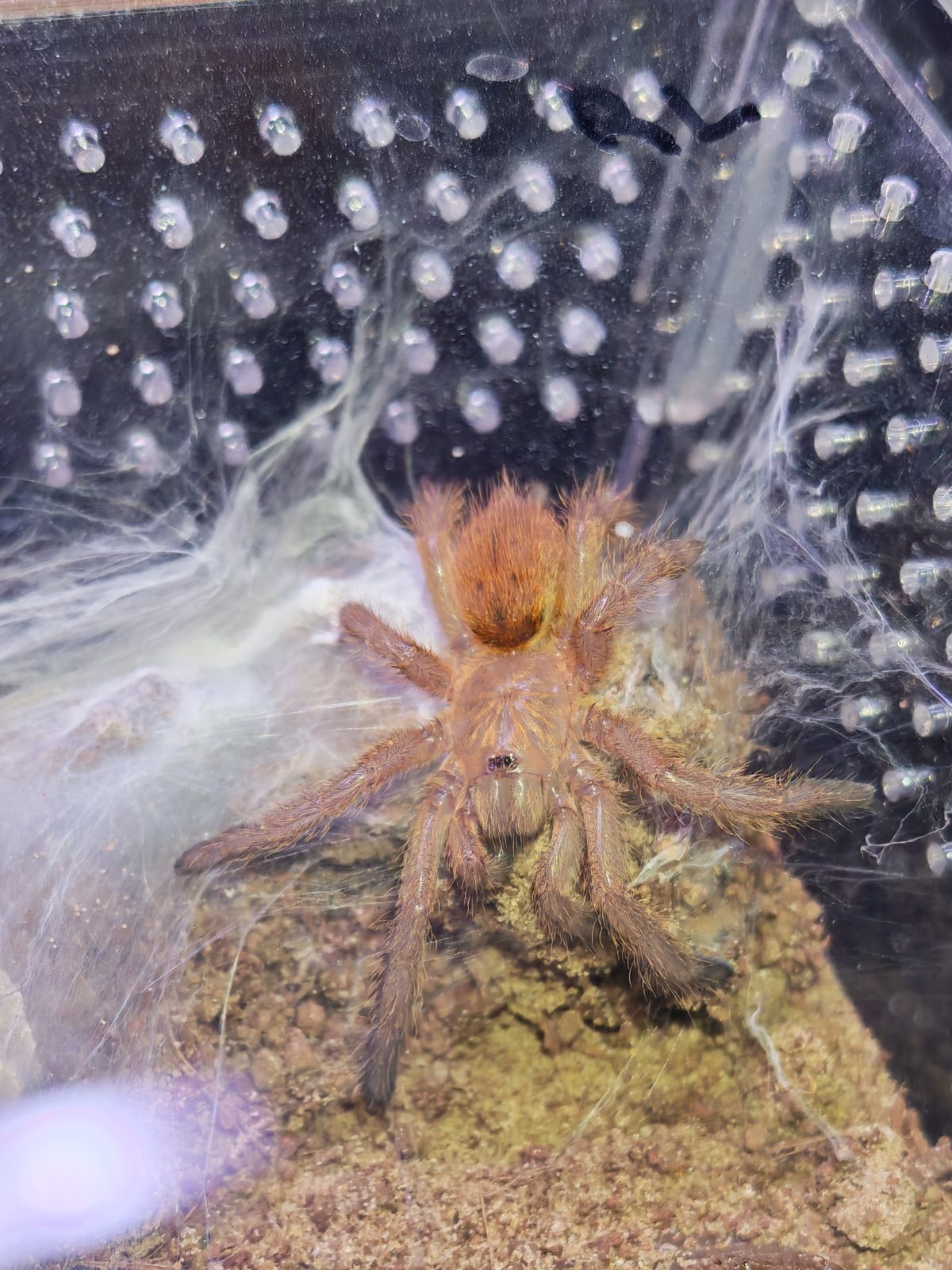
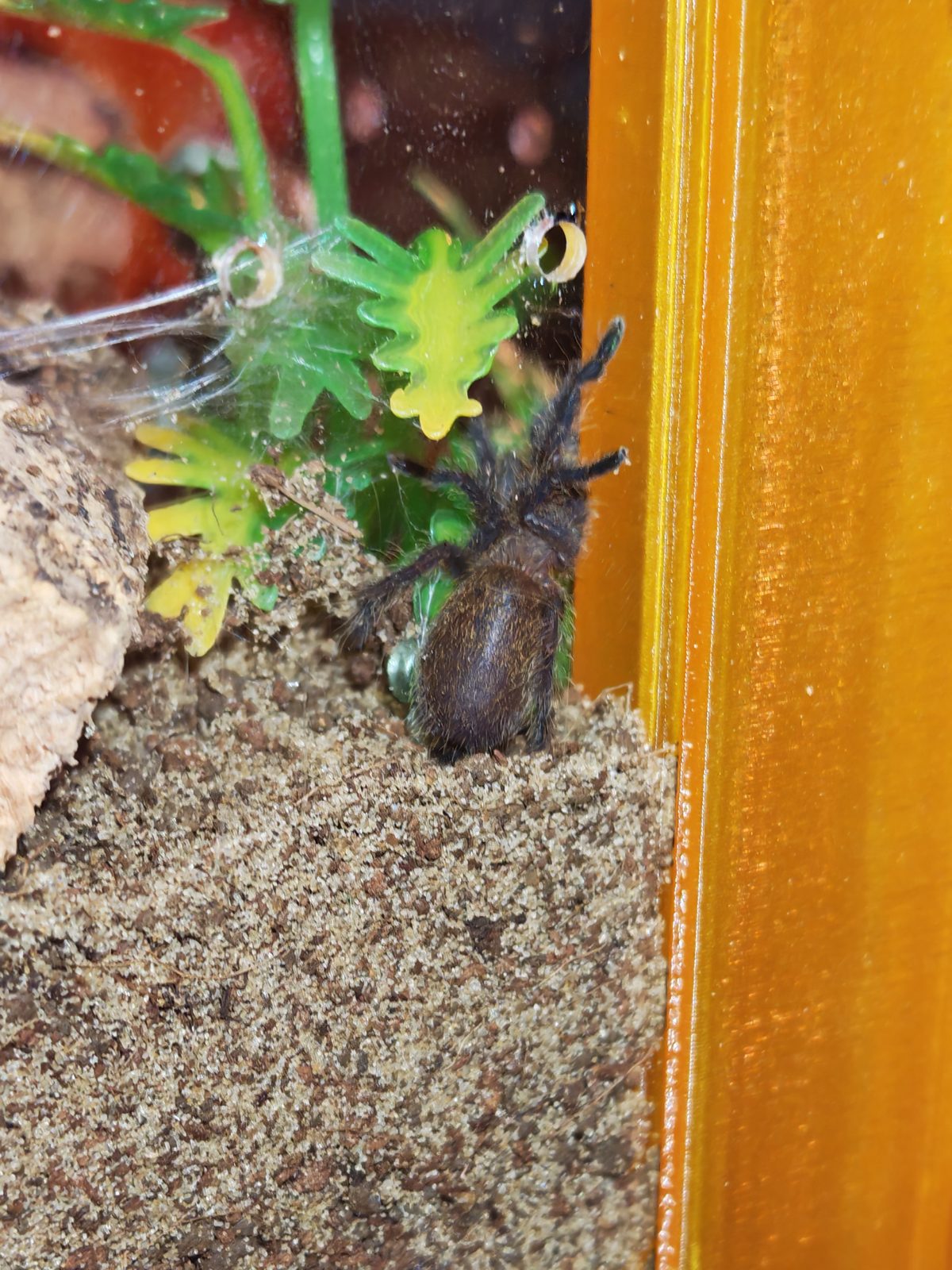
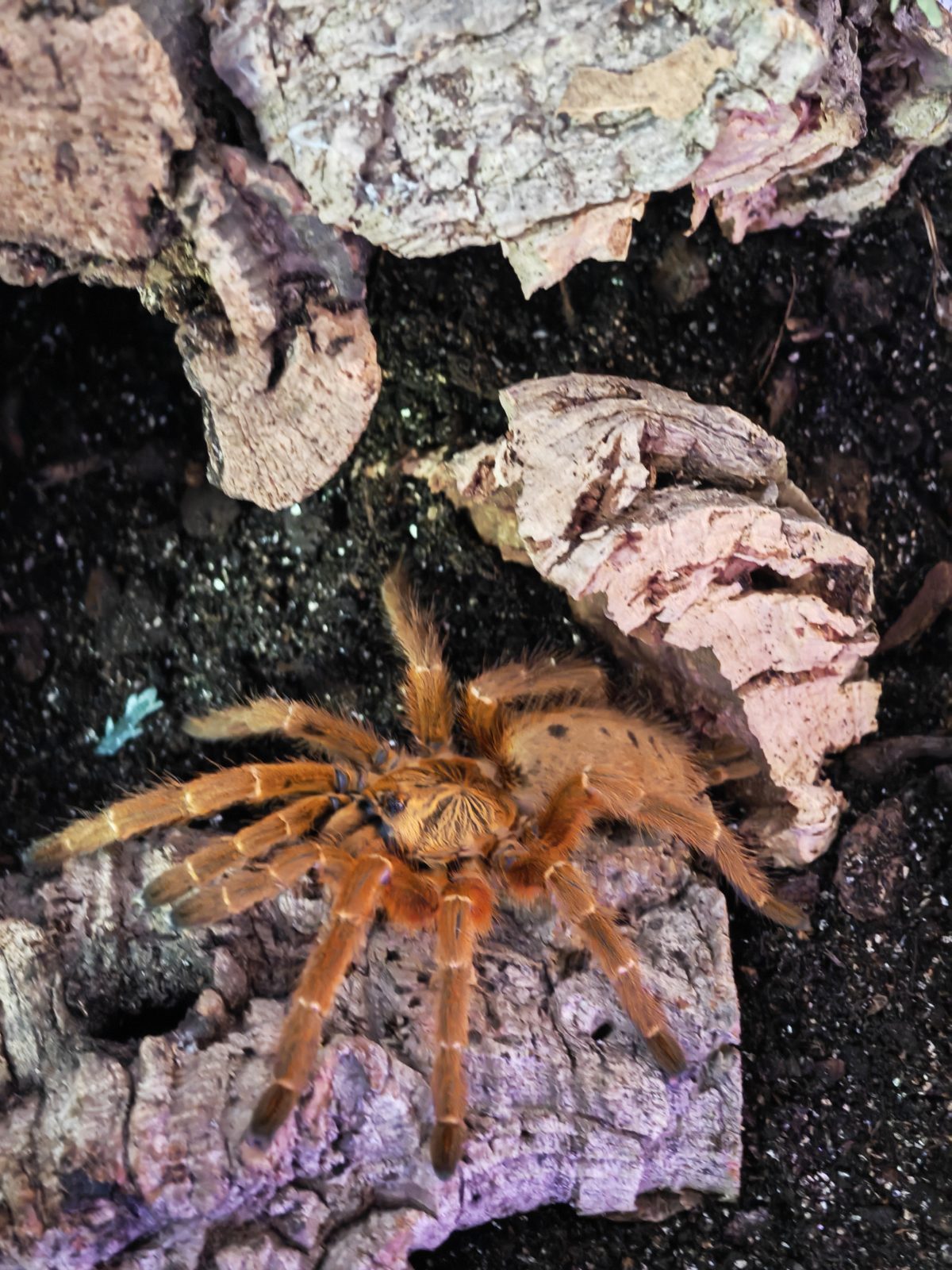
Want your specimen photo here? Set it to public in your specimen's settings.
Care Guide
Pterinochilus murinus
Orange Baboon Tarantula (OBT) - a complete husbandry sheet. Use as a starting point and adjust to your individual specimen.
What size enclosure does an Orange Baboon Tarantula (OBT) Tarantula need?
Adults
30 × 30 cm with generous substrate depth. They web THICK - expect a silk tunnel complex over everything, lid included.
Slings & Juveniles
House spiderlings in small, appropriately sized deli cups or sling enclosures - oversized enclosures make prey capture difficult. Upgrade roughly every 2-3 moults.
To map exact floor space and substrate safety limits for your setup, use our free interactive tarantula enclosure planner.
What temperature and humidity does an Orange Baboon Tarantula (OBT) Tarantula need?
Heating
The Orange Baboon Tarantula (OBT) is comfortable at 24-28 °C. Most UK homes sit in or near this range for most of the year; heat the room rather than the enclosure if winter drops below it.
Humidity
East African savanna: 55-70 % with dry substrate - despite the heavy webbing, they want it arid. A water dish covers drinking; misting is unnecessary.
Ventilation
Cross-ventilation is essential - side-vented enclosures, never stagnant. Poor airflow plus humidity kills faster than dryness ever will.
What substrate is best for an Orange Baboon Tarantula (OBT) Tarantula?
Recommended Mixes
Depth
6-8 cm
Notes
Keep substrate dry to barely moist - never soaking. Pack it firm enough to support décor.
How do you set up an Orange Baboon Tarantula (OBT) Tarantula enclosure?
Décor
The Hide
A cork bark half-log, leaning slab, or cork tube placed on the substrate.
Water
Always provide a shallow fresh water dish. Keep it full and clean it regularly. No sponges.
Lighting
No special lighting needed. Ambient room light is enough; avoid heat lamps and bright spotlights.
How often should you feed an Orange Baboon Tarantula (OBT) Tarantula?
Good Feeders
Long refusal worrying you? Separate premoult fasting from genuine problems with our "Is my T okay?" checker.
Is my Orange Baboon Tarantula (OBT) Tarantula dying or moulting?
Pre-moult signs to look for
Refusing food for weeks is normal before a moult - an healthy Orange Baboon Tarantula (OBT) Tarantula fasting is almost never an emergency in itself. Watch for slowing down and spending more time in the hide, laying a thick moult mat of web on the floor. Old World species do not flick urticating hairs, so there is no bald patch to watch - rely on fasting, lethargy and hide time instead.
On its back is MOULTING, not dying
An Orange Baboon Tarantula (OBT) Tarantula lying upside down or on its side with legs curled inwards is almost certainly mid-moult. Do not touch it, do not right it, do not mist it - just remove any live prey (crickets can kill a defenceless moulter) and leave the room.
How long between moults?
For this species, expect a moult roughly every 21-42 days for spiderlings, every 60-90 days for juveniles, and every 135-191 days for sub-adults, with adult females moulting around every 7.5 months (up to 9.8 months at the extreme). Males never moult again after their ultimate (mature) moult.
After the moult: fang hardening time
The new exoskeleton stays soft, with fangs that cannot grip, for roughly 6 days in this species. Offer no food and no handling for about 7 days - feeding too early is how fresh moulters get injured. The shed exuvium is also the best sexing tool there is - see our tarantula sexing guide for what to look for.
Genuinely worried about behaviour that is not moulting? Our "Is my T okay?" triage tool walks the danger signs one by one.
What ongoing care does an Orange Baboon Tarantula (OBT) Tarantula need?
🪞 Moulting
Signs: refuses food, abdomen darkens and goes glossy, becomes sluggish, often heavy webbing or a moult mat. During the moult: do not disturb, remove any live prey, keep water available. Wait until the fangs are black and hard (several days for adults, 1-2 for slings) before feeding again. Adult intervals apply to mature FEMALES - a mature male never moults again (his ultimate moult is his last), and female cycles stretch or shrink with feeding and temperature.
🧹 Cleaning
Daily: check the water dish. Weekly: remove uneaten prey boluses and spot-clean. Full deep clean only every few months, and only when necessary.
✋ Handling
The OBT - 'Orange Bitey Thing' - earned the name. Defensive, blindingly fast, potent, and often webbed to the lid. Every OBT enclosure opening is a two-hands, catch-cup-ready event. (The other famous trait: with respect, they are endlessly entertaining. From behind glass.)
What are the most common mistakes when keeping Orange Baboon Tarantula (OBT) Tarantulas?
✓ What They Love
- Fresh water dish at all times
- Cross-ventilation
- Stable room temperature
- A proper hide and a few anchor points
✕ Common Mistakes
- Soaking-wet substrate
- Daily misting
- Heat mat underneath the enclosure
- Tall enclosures with hard décor (fall risk for terrestrials)
- Opening the lid without checking where the spider is - they web exit tunnels
Keep exploring: related care guides
More ground-dwelling species and close relatives from our full library:
⭐ Community Ratings
No ratings yet - be the first to rate this species!