
Species library
255 species profiled with accurate care data. Click any species to start a specimen record pre-filled.
+ Request a species
-
 🕳️ Fossorial
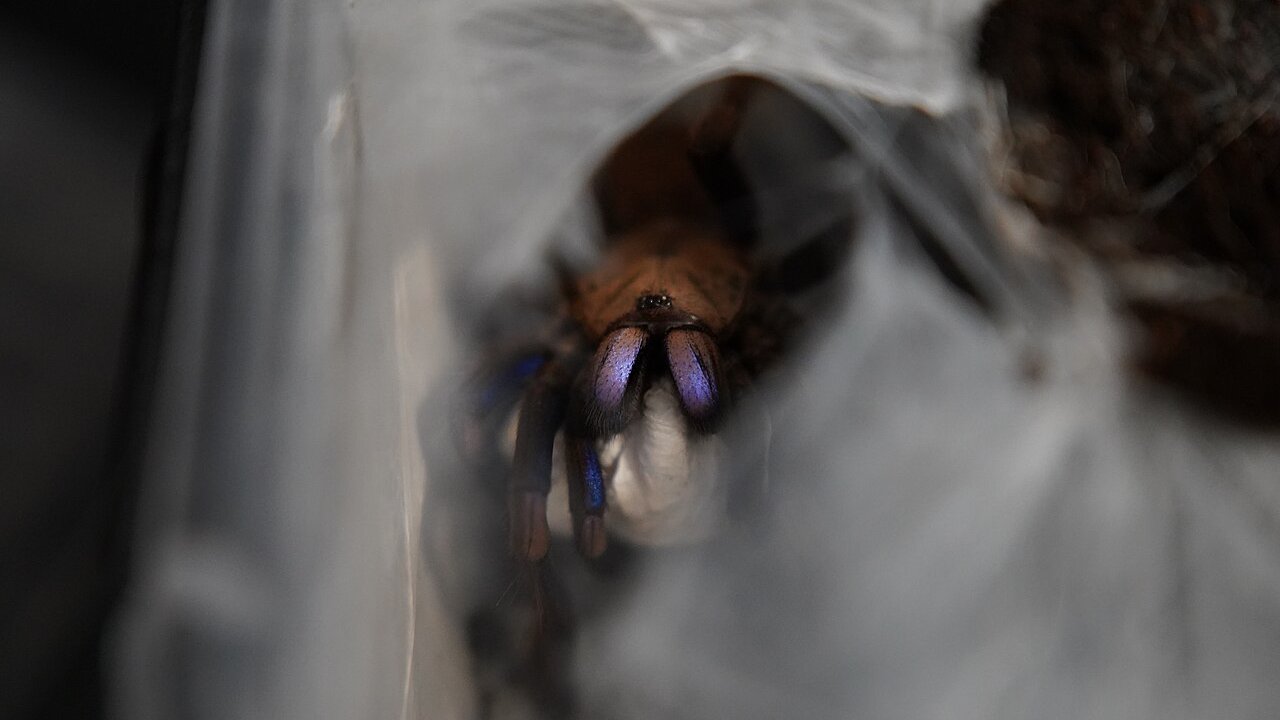
Chilobrachys natanicharum
Electric Blue Tarantula
Advanced Demanding or potentially dangerous. May be very fast, defensive, or have medically significant venom. Experienced keepers only. 🕳️ Fossorial Lives underground in deep burrows. Needs deep, packed substrate to dig. You may rarely see them - patience required. 🌍 Old World From Africa, Asia or Australasia: no urticating hairs - defence is speed and a potent bite. Medically significant venom possible. ⚠️ Defensive Will adopt a threat posture (rearing up, showing fangs) when disturbed. May bite if provoked. Approach with care and use a catch cup for rehoming. ⚡ Fast Moves very quickly, especially when startled. Can cross an enclosure in the blink of an eye. Not recommended for handling. ☠️ Potent venom Possesses medically significant venom. A bite can cause intense pain, muscle cramps, sweating, and may require medical attention. Old World species typically fall here as they lack urticating hairs.- Temp
- 22-28°C
- Humidity
- 65-80%
- Adult DLS
- 14-17 cm
- Moult
- Sling ~3w - Adult ~12mo
Electric blue tarantula - recently described; fossorial like others in the genus. Deep damp packed substrate with starter burrow, 75-80% humidity.
-
 🕳️ Fossorial
Chilobrachys sp. Aladdin
Thai Purple Earth Tiger
Advanced Demanding or potentially dangerous. May be very fast, defensive, or have medically significant venom. Experienced keepers only. 🕳️ Fossorial Lives underground in deep burrows. Needs deep, packed substrate to dig. You may rarely see them - patience required. 🌍 Old World From Africa, Asia or Australasia: no urticating hairs - defence is speed and a potent bite. Medically significant venom possible. ⚠️ Defensive Will adopt a threat posture (rearing up, showing fangs) when disturbed. May bite if provoked. Approach with care and use a catch cup for rehoming. ⚡ Fast Moves very quickly, especially when startled. Can cross an enclosure in the blink of an eye. Not recommended for handling. 🕸️ Heavy webber Dense, prolific webbing behaviour. Will carpet the entire enclosure in thick silk - this is normal and healthy. Provides a visual indicator of the spider's territory. Old world 🍽️ Voracious eater Aggressive feeding response. Will tackle prey eagerly and rarely refuses a meal. Adjust feeding schedule accordingly - overfeeding shortens lifespan.- Temp
- 24-28°C
- Humidity
- 70-80%
- Adult DLS
- 11-13 cm
- Moult
- Sling ~3w - Adult ~8mo
The Purple Earth Tiger ("Aladdin", named for the Thai hotel garden where it was first found) - one of the very few Chilobrachys showing blue-violet colour on TOP rather than just the underside: purple legs and abdomen over the standard earth-tiger frame. All the genus charm comes too: teleport speed, theatrical defensive tantrums, fortress-grade webbing over a deep burrow, and medically significant venom. Cheap (£10 slings), fast-growing and endlessly entertaining for experienced Asian-fossorial keepers.
-
 🕳️ Fossorial
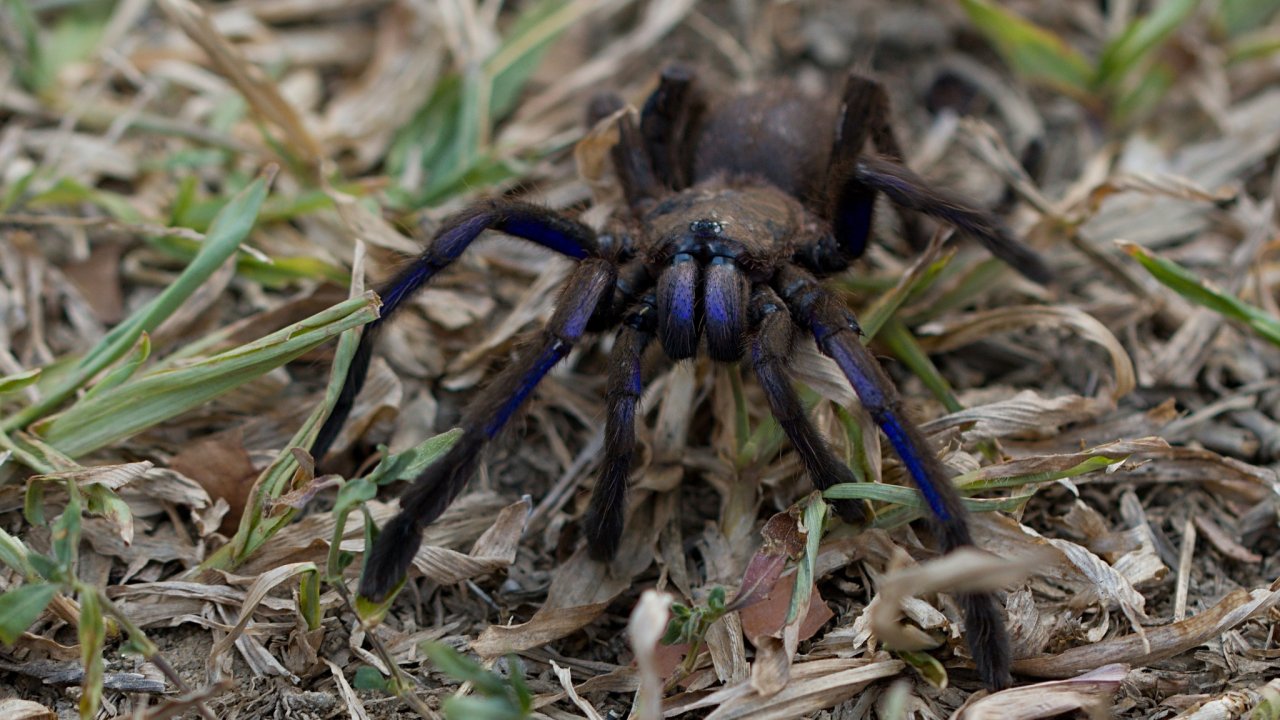
Chilobrachys sp. Kaeng Krachan
Kaeng Krachan Earth Tiger
Advanced Demanding or potentially dangerous. May be very fast, defensive, or have medically significant venom. Experienced keepers only. 🕳️ Fossorial Lives underground in deep burrows. Needs deep, packed substrate to dig. You may rarely see them - patience required. 🌍 Old World From Africa, Asia or Australasia: no urticating hairs - defence is speed and a potent bite. Medically significant venom possible. ⚠️ Defensive Will adopt a threat posture (rearing up, showing fangs) when disturbed. May bite if provoked. Approach with care and use a catch cup for rehoming. ⚡ Fast Moves very quickly, especially when startled. Can cross an enclosure in the blink of an eye. Not recommended for handling. ☠️ Potent venom Possesses medically significant venom. A bite can cause intense pain, muscle cramps, sweating, and may require medical attention. Old World species typically fall here as they lack urticating hairs.- Temp
- 22-28°C
- Humidity
- 65-80%
- Adult DLS
- 14-17 cm
- Moult
- Sling ~3w - Adult ~12mo
Thai black - standard Chilobrachys fossorial care: deep damp packed substrate, starter burrow, heavy webbing, defensive.
-
🌍 Terrestrial
Chilobrachys sp. South Thai
South Thailand Blue
Advanced Demanding or potentially dangerous. May be very fast, defensive, or have medically significant venom. Experienced keepers only. 🌍 Terrestrial Lives on or near the ground. Needs floor space more than height. Falls from height can be fatal - keep décor low. 🌍 Old World From Africa, Asia or Australasia: no urticating hairs - defence is speed and a potent bite. Medically significant venom possible. ⚠️ Defensive Will adopt a threat posture (rearing up, showing fangs) when disturbed. May bite if provoked. Approach with care and use a catch cup for rehoming. ⚡ Fast Moves very quickly, especially when startled. Can cross an enclosure in the blink of an eye. Not recommended for handling. 🕸️ Heavy webber Dense, prolific webbing behaviour. Will carpet the entire enclosure in thick silk - this is normal and healthy. Provides a visual indicator of the spider's territory. Old world- Temp
- 24-26°C
- Humidity
- 80-90%
- Adult DLS
- 15-17 cm
- Moult
- Sling ~3w - Adult ~9mo
The South Thailand Blue - an undescribed southern Thai Chilobrachys of rock-crevice and cave-mouth habitats (deep shaded holes spun out with heavy silk), explicitly NOT a close relative of the Electric Blue (different spermathecae structure). One of the highest humidity requirements in the genus (80-90 %) and a fast defensive disposition on a 17 cm frame. £25 slings / £55 WC sub-adults.
-
🌍 Terrestrial
Chilocosmia dichromata
Black Femur Fury
Advanced Demanding or potentially dangerous. May be very fast, defensive, or have medically significant venom. Experienced keepers only. 🌍 Terrestrial Lives on or near the ground. Needs floor space more than height. Falls from height can be fatal - keep décor low. 🌍 Old World From Africa, Asia or Australasia: no urticating hairs - defence is speed and a potent bite. Medically significant venom possible. ⚠️ Defensive Will adopt a threat posture (rearing up, showing fangs) when disturbed. May bite if provoked. Approach with care and use a catch cup for rehoming. ⚡ Fast Moves very quickly, especially when startled. Can cross an enclosure in the blink of an eye. Not recommended for handling. Old world- Temp
- 22-26°C
- Humidity
- 70-80%
- Adult DLS
- 13-16 cm
- Moult
- Sling ~3w - Adult ~9mo
The Black Femur Fury (Chilocosmia dichromata) - velvety black body with a contrasting orange-pink carapace, from New Guinea. Taxonomic history: bounced from Chilocosmia to Selenocosmia to Orphnaecus and BACK to Chilocosmia when the genus was revalidated in April 2025. UK vendor disposition rating: "Satanic" - fearless, lightning fast, and willing to bite, but oddly less secretive than most Asians (often seen in the open, which is when the problems start). WC slings surface occasionally at £22; advanced keepers only.
-
 🌍 Terrestrial
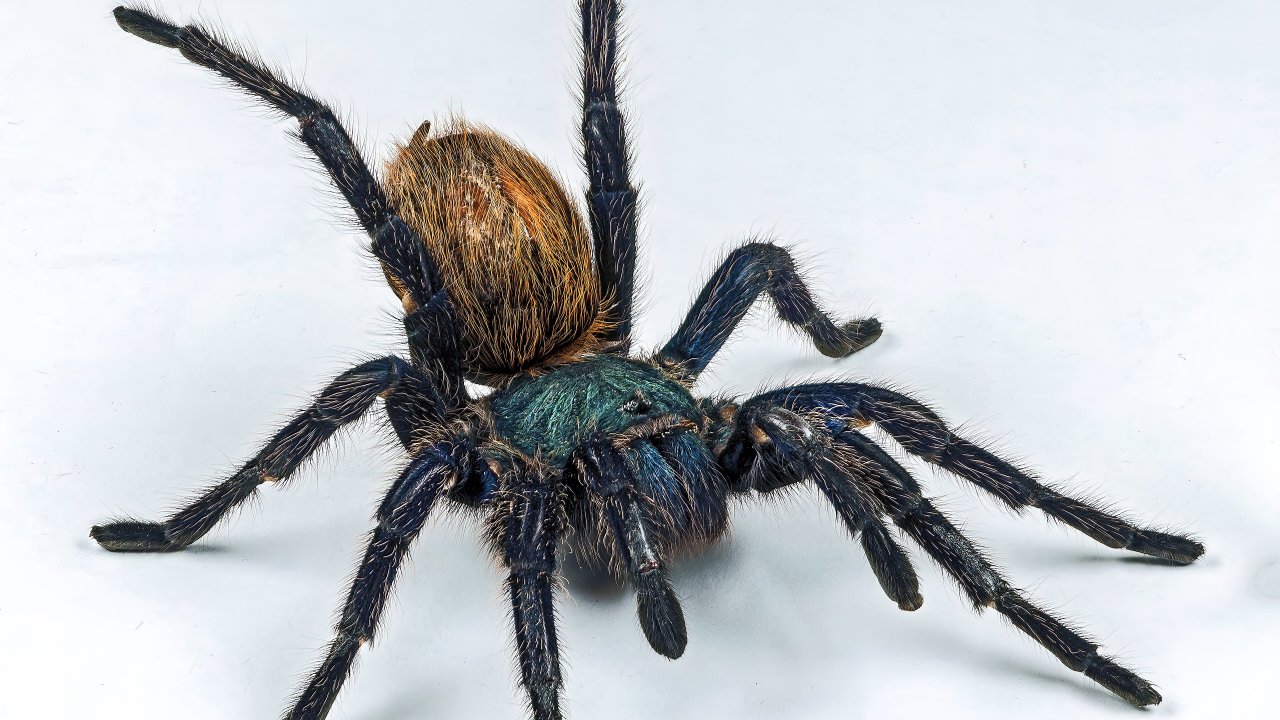
Chromatopelma cyaneopubescens
Greenbottle Blue (GBB)
Beginner Forgiving of common mistakes. Tolerant of temperature/humidity variation. Great first tarantula. 🌍 Terrestrial Lives on or near the ground. Needs floor space more than height. Falls from height can be fatal - keep décor low. 🌎 New World From the Americas: can flick urticating (irritating) hairs as a first defence, and venom is generally milder. ⚡ Fast Moves very quickly, especially when startled. Can cross an enclosure in the blink of an eye. Not recommended for handling. 💨 Skittish Easily startled - may bolt or dart suddenly when disturbed. Secure lids are essential as they can be escape artists. 🕸️ Heavy webber Dense, prolific webbing behaviour. Will carpet the entire enclosure in thick silk - this is normal and healthy. Provides a visual indicator of the spider's territory. 🍽️ Voracious eater Aggressive feeding response. Will tackle prey eagerly and rarely refuses a meal. Adjust feeding schedule accordingly - overfeeding shortens lifespan.- Temp
- 22-26°C
- Humidity
- 40-60%
- Adult DLS
- 12-14 cm
- Moult
- Sling ~3w - Adult ~6mo
Three-tone showpiece: metallic green carapace, blue legs, vivid orange abdominal setae. Heavy webber, fast-growing, hardy. Likes it relatively dry.
-
 🕳️ Fossorial
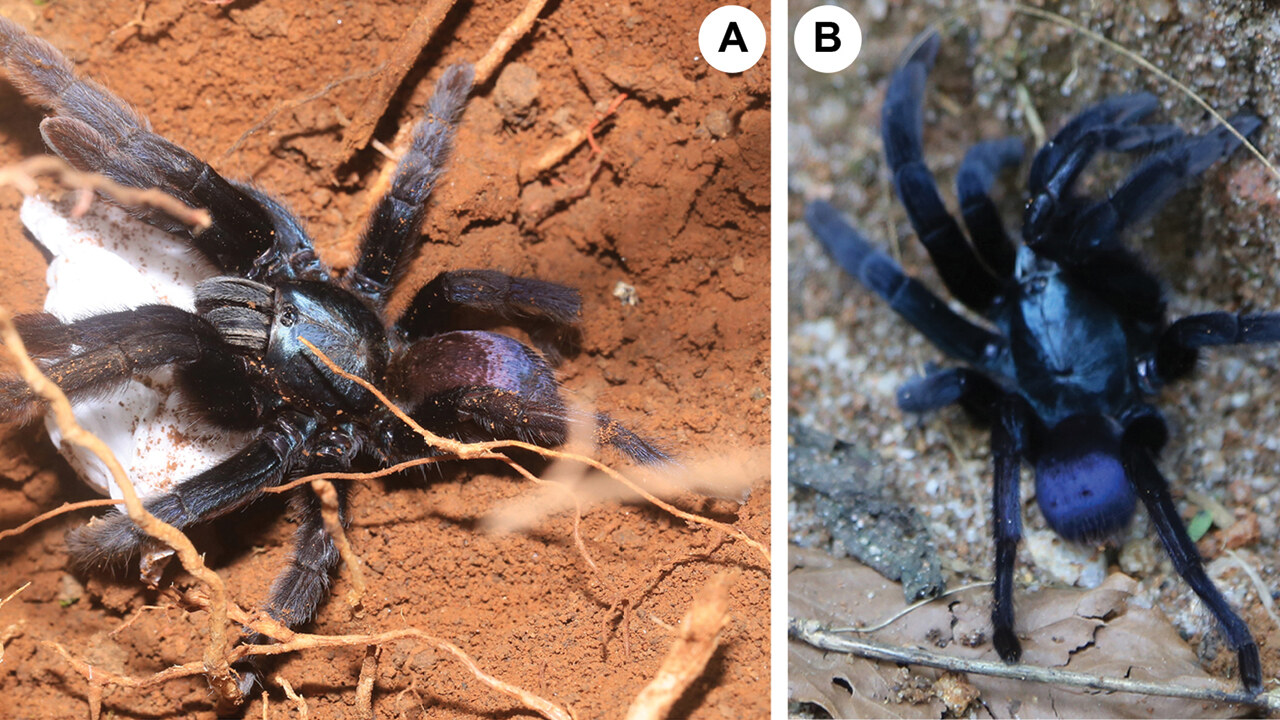
Cilantica devamatha
LSD Earth Tiger
Advanced Demanding or potentially dangerous. May be very fast, defensive, or have medically significant venom. Experienced keepers only. 🕳️ Fossorial Lives underground in deep burrows. Needs deep, packed substrate to dig. You may rarely see them - patience required. 🌍 Old World From Africa, Asia or Australasia: no urticating hairs - defence is speed and a potent bite. Medically significant venom possible. ⚠️ Defensive Will adopt a threat posture (rearing up, showing fangs) when disturbed. May bite if provoked. Approach with care and use a catch cup for rehoming. ⚡ Fast Moves very quickly, especially when startled. Can cross an enclosure in the blink of an eye. Not recommended for handling. 🕸️ Heavy webber Dense, prolific webbing behaviour. Will carpet the entire enclosure in thick silk - this is normal and healthy. Provides a visual indicator of the spider's territory. Old world- Temp
- 22-26°C
- Humidity
- 65-75%
- Adult DLS
- 13-15 cm
- Moult
- Sling ~4w - Adult ~10mo
The LSD Earth Tiger - the hobby's "psychedelic" Indian earth tiger in polychromatic blue and pink forms, from a restricted slice of the southern Western Ghats. Taxonomy note: the valid name is Cilantica devamatha (moved out of Haploclastus in 2024); the "psychadelicus" label on trade lists is a misspelling of a replacement name WSC does NOT accept. A deep-burrowing, fast, defensive Old World with potentially serious venom - expert only. Provenance matters too: Indian export is regulated, so insist on captive-bred stock with paperwork.
-
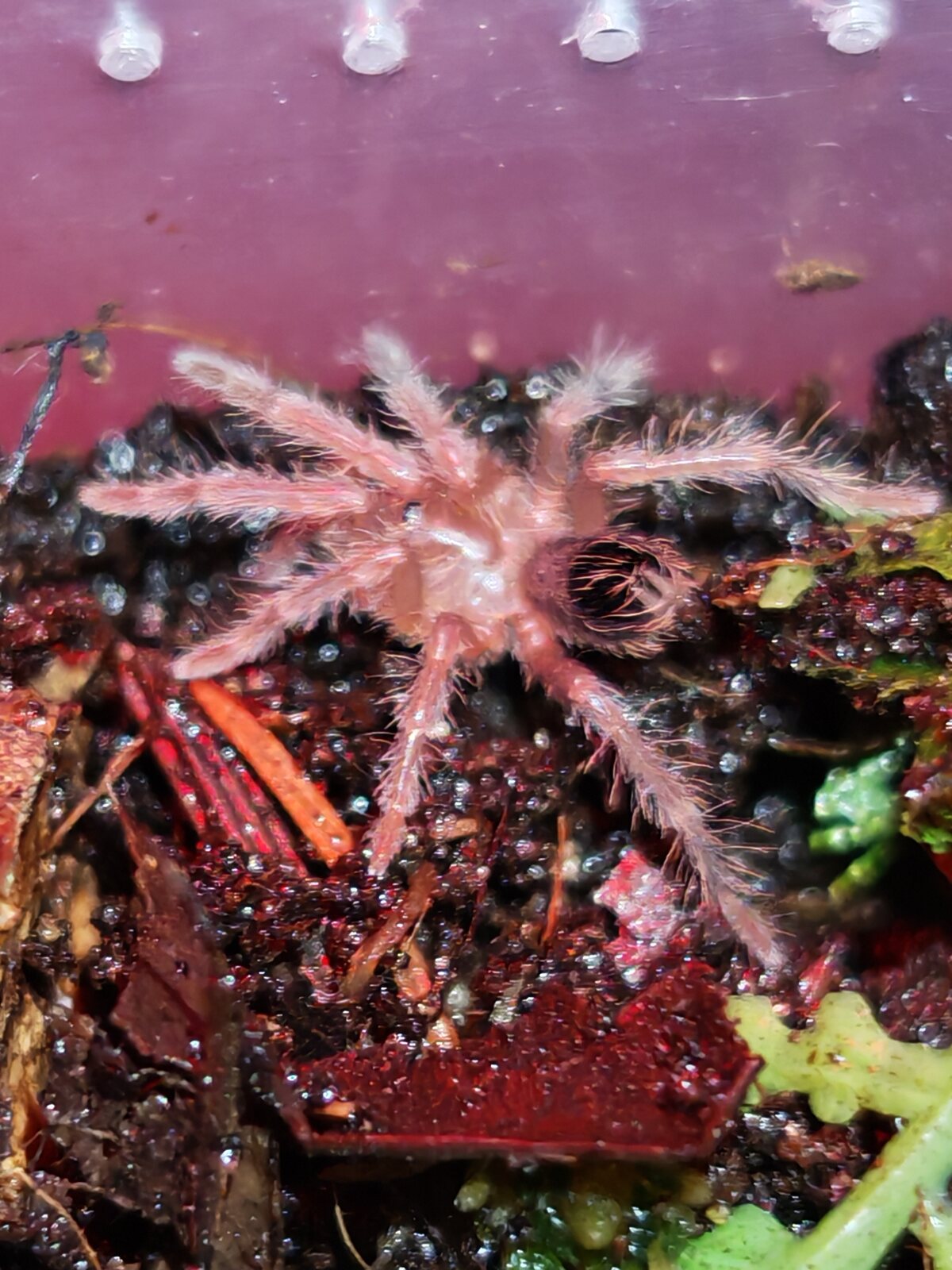 🌍 Terrestrial
Citharacanthus cyaneus
Cuban Orange Violet
Beginner Forgiving of common mistakes. Tolerant of temperature/humidity variation. Great first tarantula. 🌍 Terrestrial Lives on or near the ground. Needs floor space more than height. Falls from height can be fatal - keep décor low. 🌎 New World From the Americas: can flick urticating (irritating) hairs as a first defence, and venom is generally milder. 🟢 Docile Generally slow-moving and tolerant of handling. Rarely threatens or bites. Great for beginners. ⚠️ Flicks hairs Uses urticating (barbed) hairs on the abdomen as a primary defence. These hairs can cause skin irritation and must be kept away from eyes. New World species only.- Temp
- 22-26°C
- Humidity
- 60-75%
- Adult DLS
- 10-13 cm
- Moult
- Sling ~3w - Adult ~11mo
Cuban semi-dwarf with warm orange highlights over violet-blue tones and a dark facial mask - the colour shifts with the light, and the name cyaneus ("blue") undersells the orange. Calm, manageable at 10-13 cm, and content with straightforward tropical husbandry: an underrated, quietly beautiful display species.
-
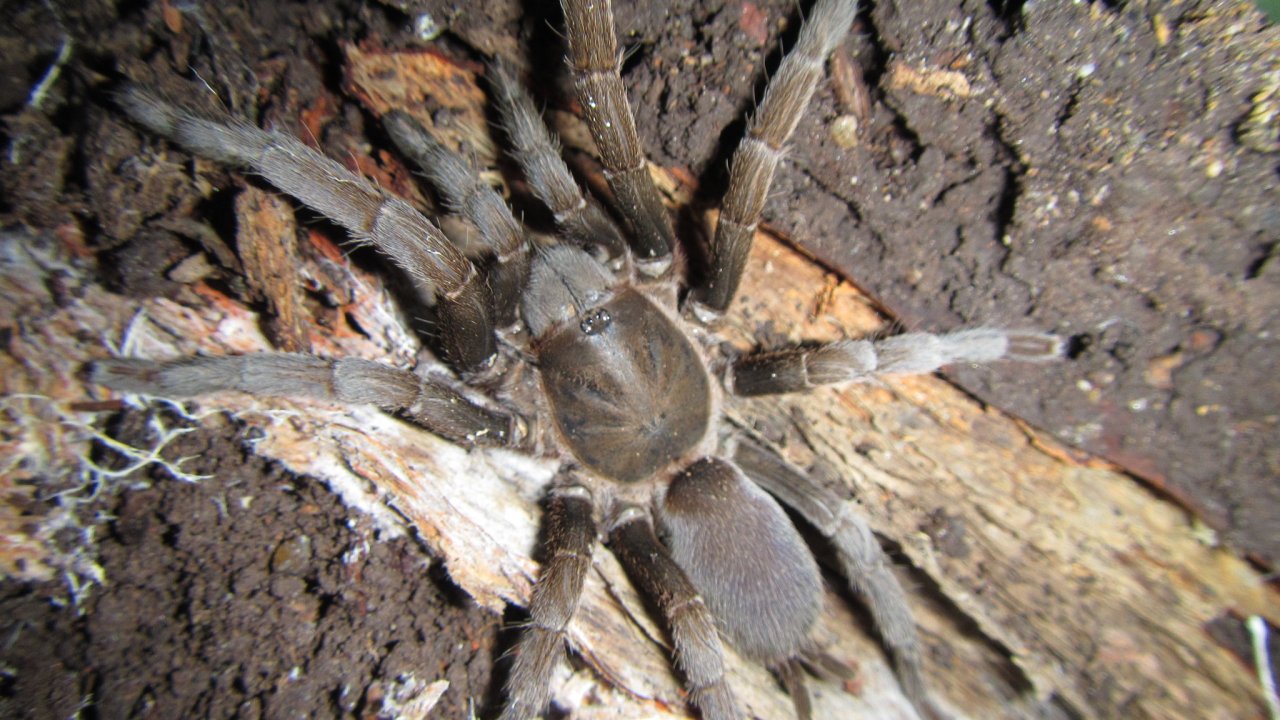 🌍 Terrestrial
Coremiocnemis tropix
Australian Tropical Brushy
Advanced Demanding or potentially dangerous. May be very fast, defensive, or have medically significant venom. Experienced keepers only. 🌍 Terrestrial Lives on or near the ground. Needs floor space more than height. Falls from height can be fatal - keep décor low. 🌍 Old World From Africa, Asia or Australasia: no urticating hairs - defence is speed and a potent bite. Medically significant venom possible. ⚠️ Defensive Will adopt a threat posture (rearing up, showing fangs) when disturbed. May bite if provoked. Approach with care and use a catch cup for rehoming. ☠️ Potent venom Possesses medically significant venom. A bite can cause intense pain, muscle cramps, sweating, and may require medical attention. Old World species typically fall here as they lack urticating hairs. ⚡ Fast Moves very quickly, especially when startled. Can cross an enclosure in the blink of an eye. Not recommended for handling.- Temp
- 22-26°C
- Humidity
- 70-80%
- Adult DLS
- 12-14 cm
- Moult
- Sling ~3w - Adult ~9mo
Brushy-legged Australian fossorial/terrestrial. Rare in the hobby and only sporadically available.
-
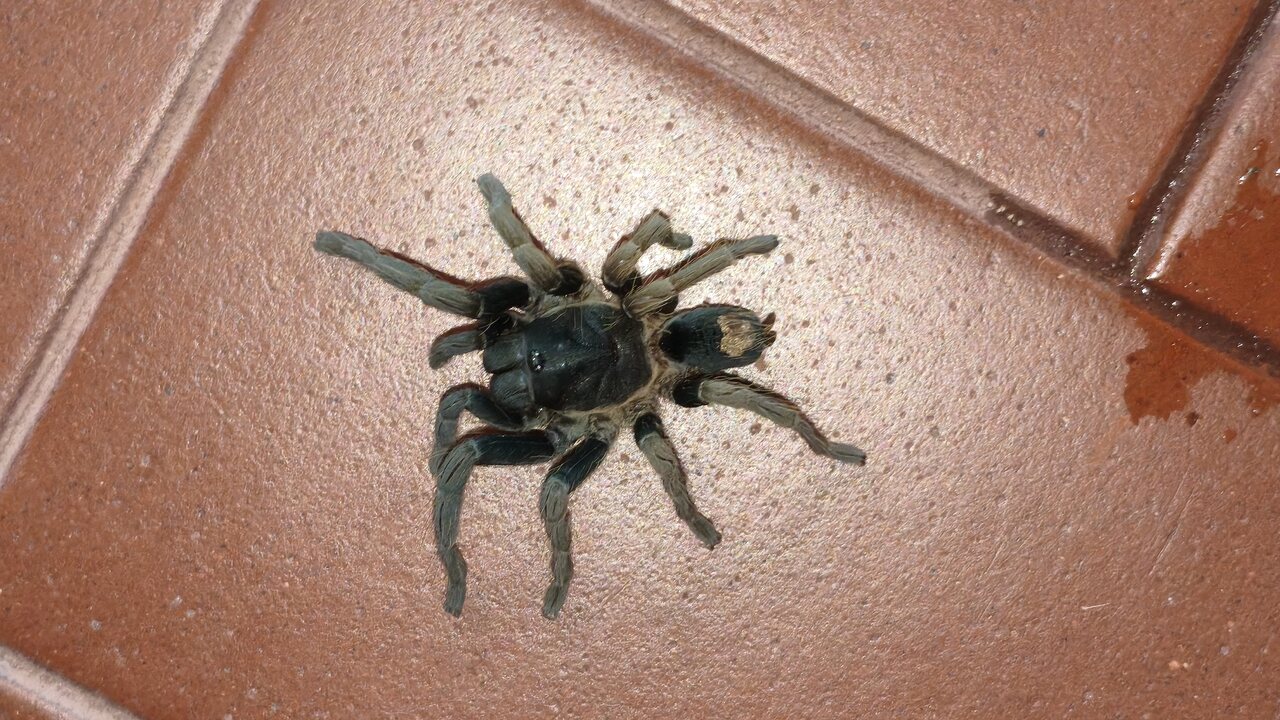 🌍 Terrestrial
Cyriocosmus aueri
Peru Love Heart Dwarf
Beginner Forgiving of common mistakes. Tolerant of temperature/humidity variation. Great first tarantula. 🌍 Terrestrial Lives on or near the ground. Needs floor space more than height. Falls from height can be fatal - keep décor low. 🌎 New World From the Americas: can flick urticating (irritating) hairs as a first defence, and venom is generally milder. 🟢 Docile Generally slow-moving and tolerant of handling. Rarely threatens or bites. Great for beginners. 🟢 Calm Deliberate and unhurried movements. Not easily startled. Usually sits contentedly in the open. 🕸️ Heavy webber Dense, prolific webbing behaviour. Will carpet the entire enclosure in thick silk - this is normal and healthy. Provides a visual indicator of the spider's territory.- Temp
- 21-28°C
- Humidity
- 70-85%
- Adult DLS
- 4-6 cm
- Moult
- Sling ~2w - Adult ~3mo
A jewel of a dwarf from the Peruvian Amazon: barely 4-6 cm with a pale heart-shaped abdominal patch (the "Love Heart" of UK trade), vivid orange-red legs and a bright carapace. One of the fastest-maturing tarantulas known - roughly a year from sling to adult - and easy to breed, so captive-bred slings appear regularly. Escape-proofing and micro-prey are the only real husbandry challenges.
-
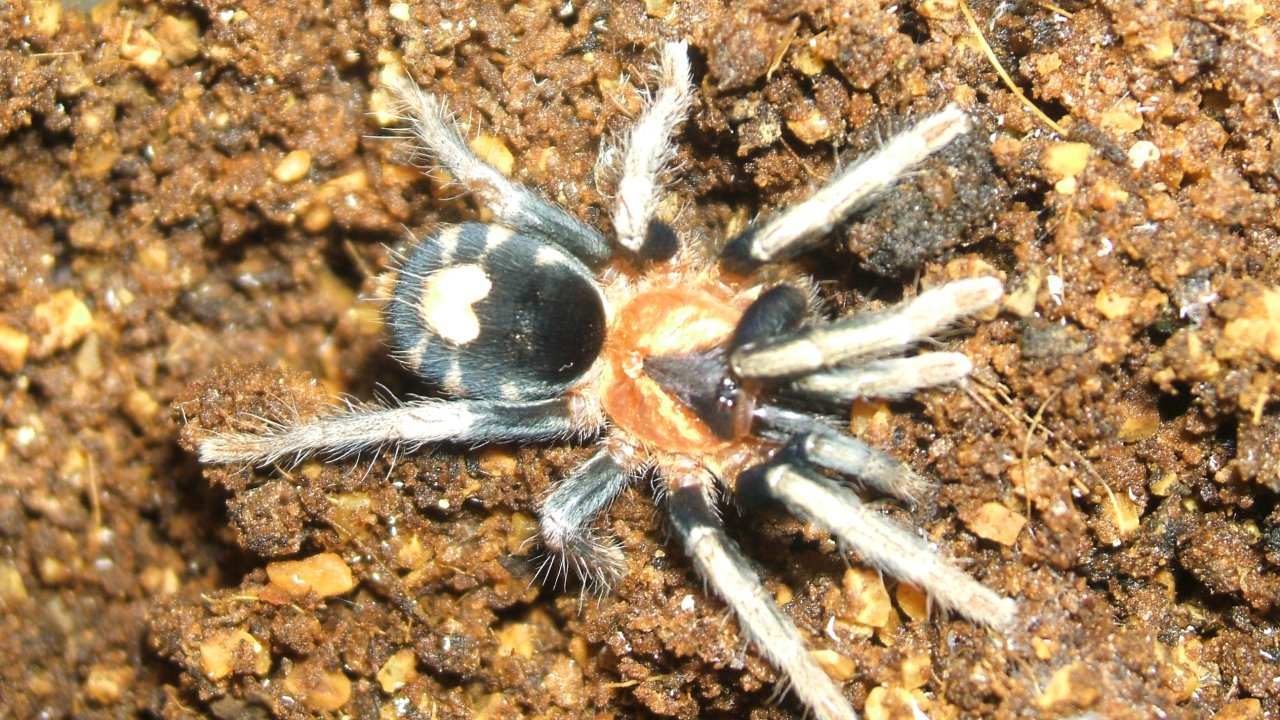 🌍 Terrestrial
Cyriocosmus elegans
Trinidad Dwarf Tiger
Intermediate Requires consistent husbandry - more sensitive to ventilation, humidity, or feeding schedule. Some experience recommended. 🌍 Terrestrial Lives on or near the ground. Needs floor space more than height. Falls from height can be fatal - keep décor low. 🌎 New World From the Americas: can flick urticating (irritating) hairs as a first defence, and venom is generally milder. 💨 Skittish Easily startled - may bolt or dart suddenly when disturbed. Secure lids are essential as they can be escape artists. ⚠️ Flicks hairs Uses urticating (barbed) hairs on the abdomen as a primary defence. These hairs can cause skin irritation and must be kept away from eyes. New World species only.- Temp
- 22-28°C
- Humidity
- 60-75%
- Adult DLS
- 4-6 cm
- Moult
- Sling ~3w - Adult ~12mo
Dwarf tiger rump - tiny terrestrial. Small enclosure (15-20 cm cube), thin substrate, water dish (bottle cap). Shy; feeds on small prey.
-
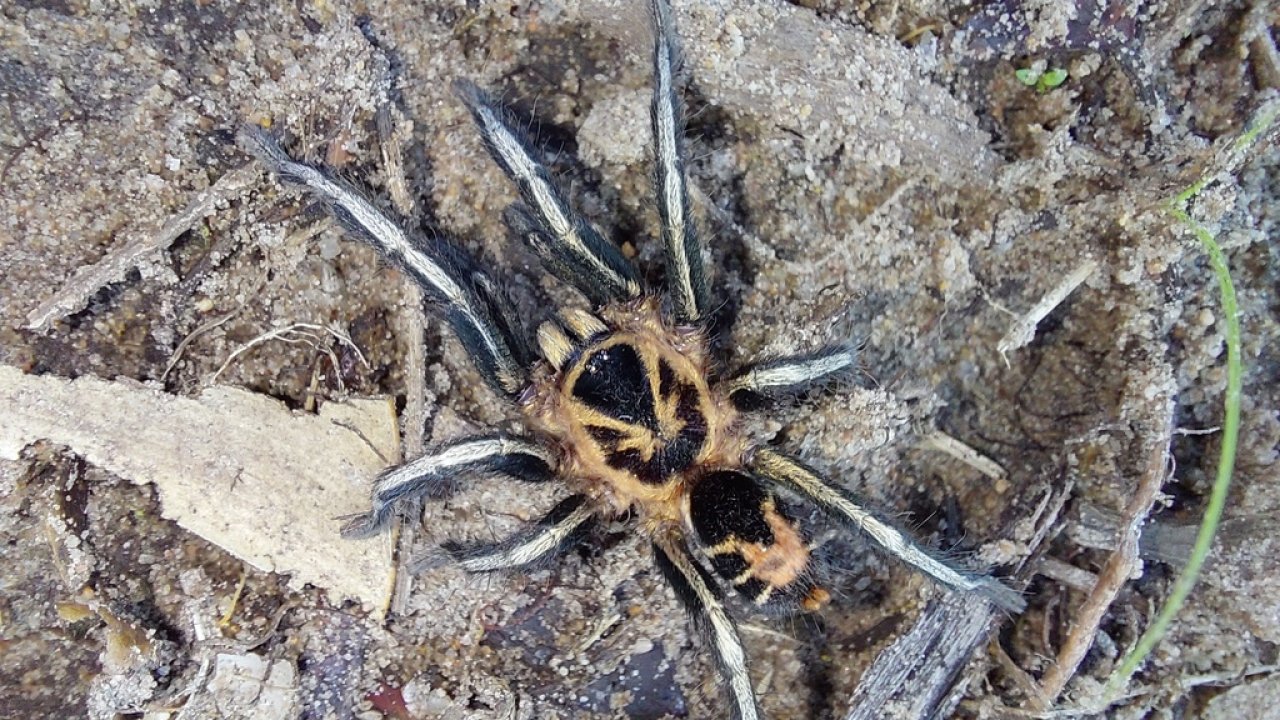 🌍 Terrestrial
Cyriocosmus leetzi
Leetz's Dwarf Tarantula
Intermediate Requires consistent husbandry - more sensitive to ventilation, humidity, or feeding schedule. Some experience recommended. 🌍 Terrestrial Lives on or near the ground. Needs floor space more than height. Falls from height can be fatal - keep décor low. 🌎 New World From the Americas: can flick urticating (irritating) hairs as a first defence, and venom is generally milder. 💨 Skittish Easily startled - may bolt or dart suddenly when disturbed. Secure lids are essential as they can be escape artists. ⚠️ Flicks hairs Uses urticating (barbed) hairs on the abdomen as a primary defence. These hairs can cause skin irritation and must be kept away from eyes. New World species only.- Temp
- 22-28°C
- Humidity
- 60-75%
- Adult DLS
- 4-6 cm
- Moult
- Sling ~3w - Adult ~12mo
Dwarf tiger rump (Bolivian) - tiny terrestrial; small setup, small water dish. Undemanding dwarf.
-
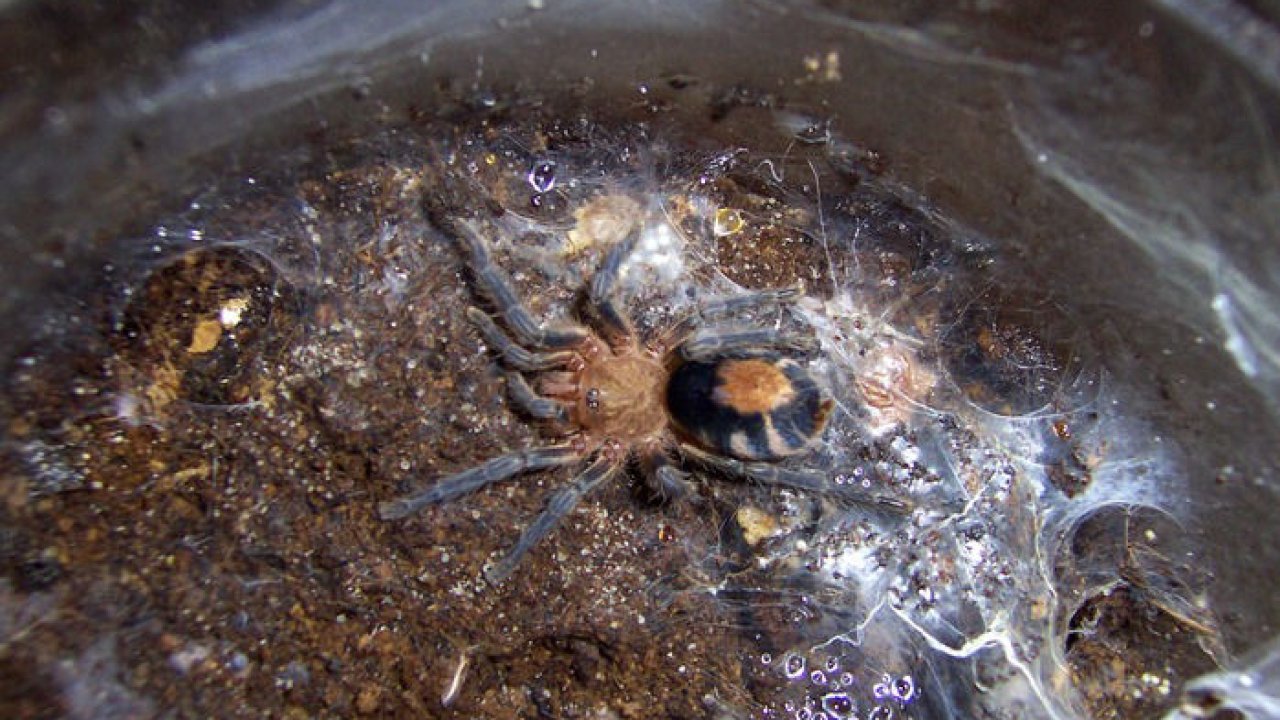 🌍 Terrestrial
Cyriocosmus perezmilesi
Bolivian Dwarf Beauty
Intermediate Requires consistent husbandry - more sensitive to ventilation, humidity, or feeding schedule. Some experience recommended. 🌍 Terrestrial Lives on or near the ground. Needs floor space more than height. Falls from height can be fatal - keep décor low. 🌎 New World From the Americas: can flick urticating (irritating) hairs as a first defence, and venom is generally milder. 💨 Skittish Easily startled - may bolt or dart suddenly when disturbed. Secure lids are essential as they can be escape artists. ⚠️ Flicks hairs Uses urticating (barbed) hairs on the abdomen as a primary defence. These hairs can cause skin irritation and must be kept away from eyes. New World species only.- Temp
- 22-28°C
- Humidity
- 60-75%
- Adult DLS
- 4-5 cm
- Moult
- Sling ~3w - Adult ~12mo
Bolivian dwarf tiger - small terrestrial, standard dwarf care: small enclosure, water cap, small prey weekly.
-
🌍 Terrestrial
Cyriocosmus sp. Oronegro
Golden Heart Dwarf
Beginner Forgiving of common mistakes. Tolerant of temperature/humidity variation. Great first tarantula. 🌍 Terrestrial Lives on or near the ground. Needs floor space more than height. Falls from height can be fatal - keep décor low. 🌎 New World From the Americas: can flick urticating (irritating) hairs as a first defence, and venom is generally milder. 🟢 Docile Generally slow-moving and tolerant of handling. Rarely threatens or bites. Great for beginners. 🟢 Calm Deliberate and unhurried movements. Not easily startled. Usually sits contentedly in the open. 🕸️ Heavy webber Dense, prolific webbing behaviour. Will carpet the entire enclosure in thick silk - this is normal and healthy. Provides a visual indicator of the spider's territory. Dwarf- Temp
- 20-24°C
- Humidity
- 70-80%
- Adult DLS
- 5-6 cm
- Moult
- Sling ~2w - Adult ~4mo
The Golden Heart Dwarf ("Oronegro") - jet black with a metallic gold-to-red "mirror heart" abdominal patch, an undescribed Peruvian Cyriocosmus in the hobby since 2007 and possibly the gentlest dwarf in the trade. Remarkably visible for a dwarf (sits in the open, lightly webbed), grows at ridiculous speed, and breeds readily. £35 slings that become display adults inside a year - a pocket-sized beginner gem.
-
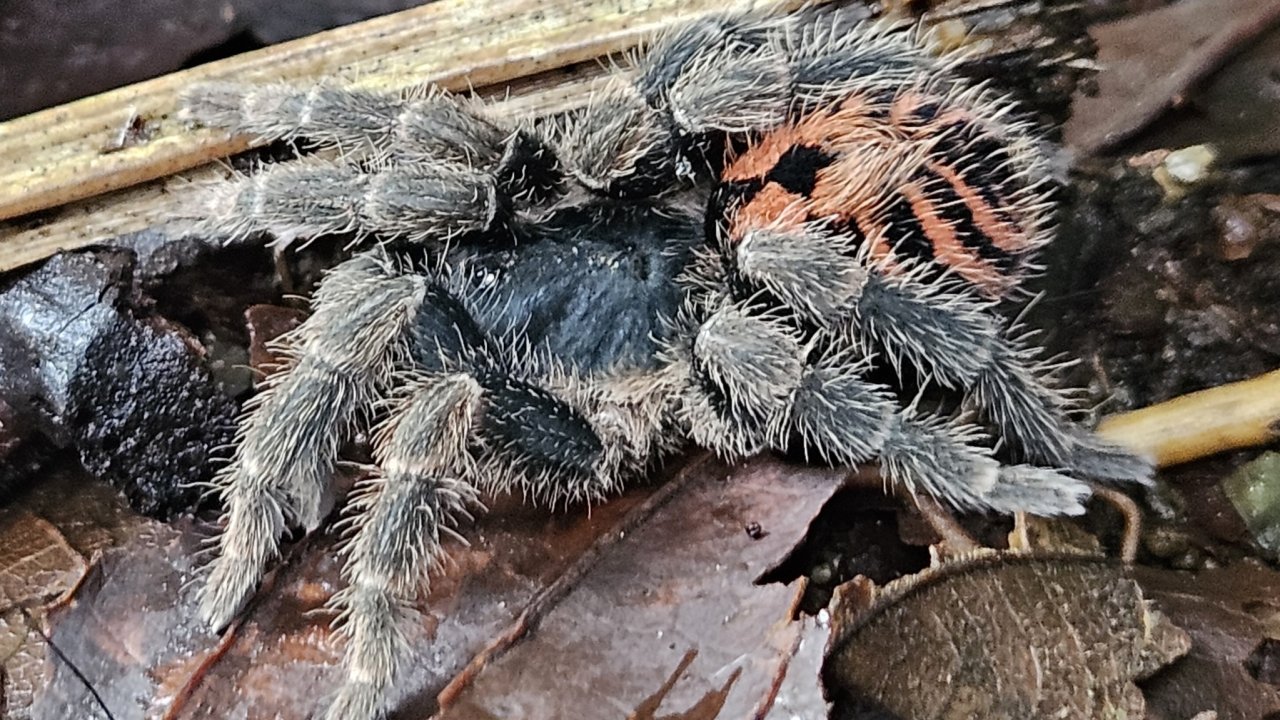 🌍 Terrestrial
Davus fasciatus
Costa Rican Tiger Rump
Beginner Forgiving of common mistakes. Tolerant of temperature/humidity variation. Great first tarantula. 🌍 Terrestrial Lives on or near the ground. Needs floor space more than height. Falls from height can be fatal - keep décor low. 🌎 New World From the Americas: can flick urticating (irritating) hairs as a first defence, and venom is generally milder. 🟢 Docile Generally slow-moving and tolerant of handling. Rarely threatens or bites. Great for beginners. 💨 Skittish Easily startled - may bolt or dart suddenly when disturbed. Secure lids are essential as they can be escape artists. ⚠️ Flicks hairs Uses urticating (barbed) hairs on the abdomen as a primary defence. These hairs can cause skin irritation and must be kept away from eyes. New World species only.- Temp
- 22-26°C
- Humidity
- 70-80%
- Adult DLS
- 10-12 cm
- Moult
- Sling ~3w - Adult ~6mo
Black-and-gold striped abdomen, red setae on the legs. Small, attractive, and active - benefits from a deep substrate for burrowing.
-
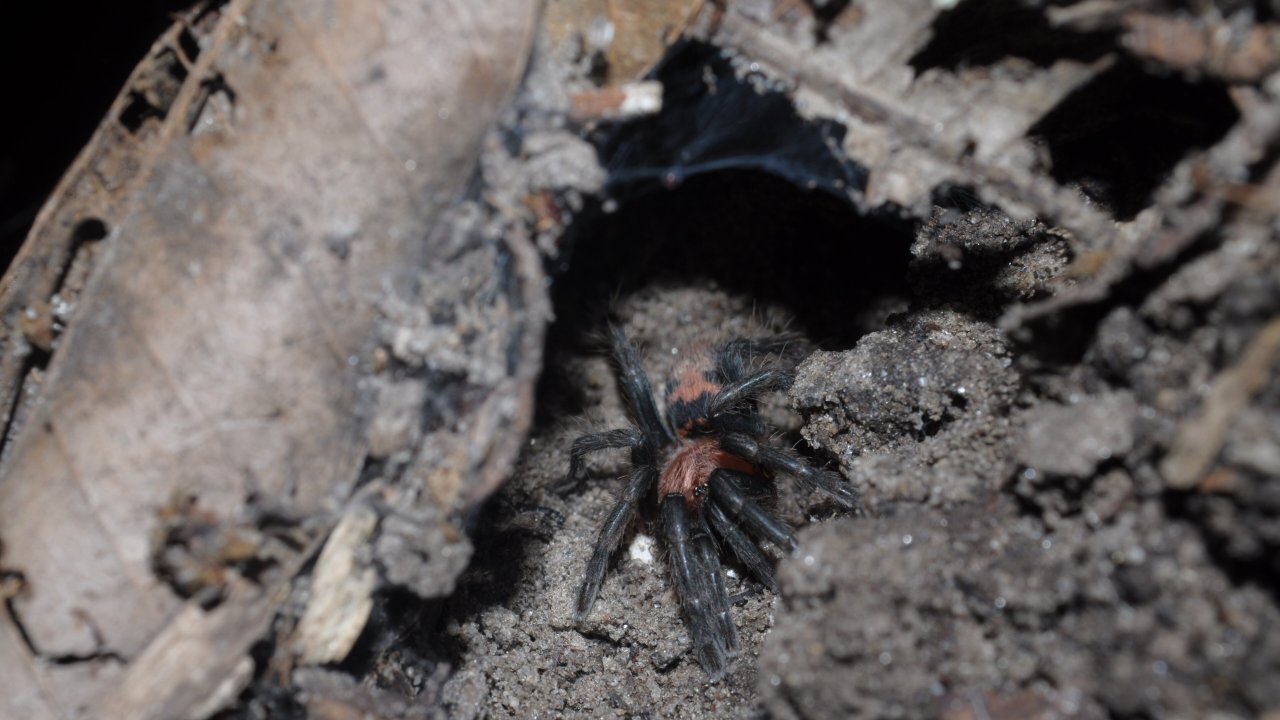 🌍 Terrestrial
Davus pentaloris
Guatemalan Tiger Rump
Intermediate Requires consistent husbandry - more sensitive to ventilation, humidity, or feeding schedule. Some experience recommended. 🌍 Terrestrial Lives on or near the ground. Needs floor space more than height. Falls from height can be fatal - keep décor low. 🌎 New World From the Americas: can flick urticating (irritating) hairs as a first defence, and venom is generally milder. 💨 Skittish Easily startled - may bolt or dart suddenly when disturbed. Secure lids are essential as they can be escape artists. ⚠️ Flicks hairs Uses urticating (barbed) hairs on the abdomen as a primary defence. These hairs can cause skin irritation and must be kept away from eyes. New World species only.- Temp
- 22-28°C
- Humidity
- 60-75%
- Adult DLS
- 13-15 cm
- Moult
- Sling ~3w - Adult ~12mo
Guatemalan tiger rump - small-medium terrestrial. Slightly damp substrate corner, water dish, hide. 70% humidity. Bold for its size.
-
🌍 Terrestrial
Davus sp. Chiapas
Chiapas Tiger Rump
Beginner Forgiving of common mistakes. Tolerant of temperature/humidity variation. Great first tarantula. 🌍 Terrestrial Lives on or near the ground. Needs floor space more than height. Falls from height can be fatal - keep décor low. 🌎 New World From the Americas: can flick urticating (irritating) hairs as a first defence, and venom is generally milder. 🟢 Docile Generally slow-moving and tolerant of handling. Rarely threatens or bites. Great for beginners. 🟢 Calm Deliberate and unhurried movements. Not easily startled. Usually sits contentedly in the open.- Temp
- 23-26°C
- Humidity
- 70-80%
- Adult DLS
- 6-10 cm
- Moult
- Sling ~3w - Adult ~9mo
The Chiapas Tiger Rump - an undescribed Davus from Mexico's Chiapas with bronze carapace, black-and-orange tiger abdomen and startling WHITE legs ("Frozen Flame" in US lists). Size reports conflict (5 cm dwarf vs TSS's 8-10 cm - possibly mixed forms in trade), so treat stats as provisional. Same bulletproof Davus husbandry as pentaloris; docile, active and visibly out and about. Rare and priced to match (£80 slings) after recent first US captive breeding.
-
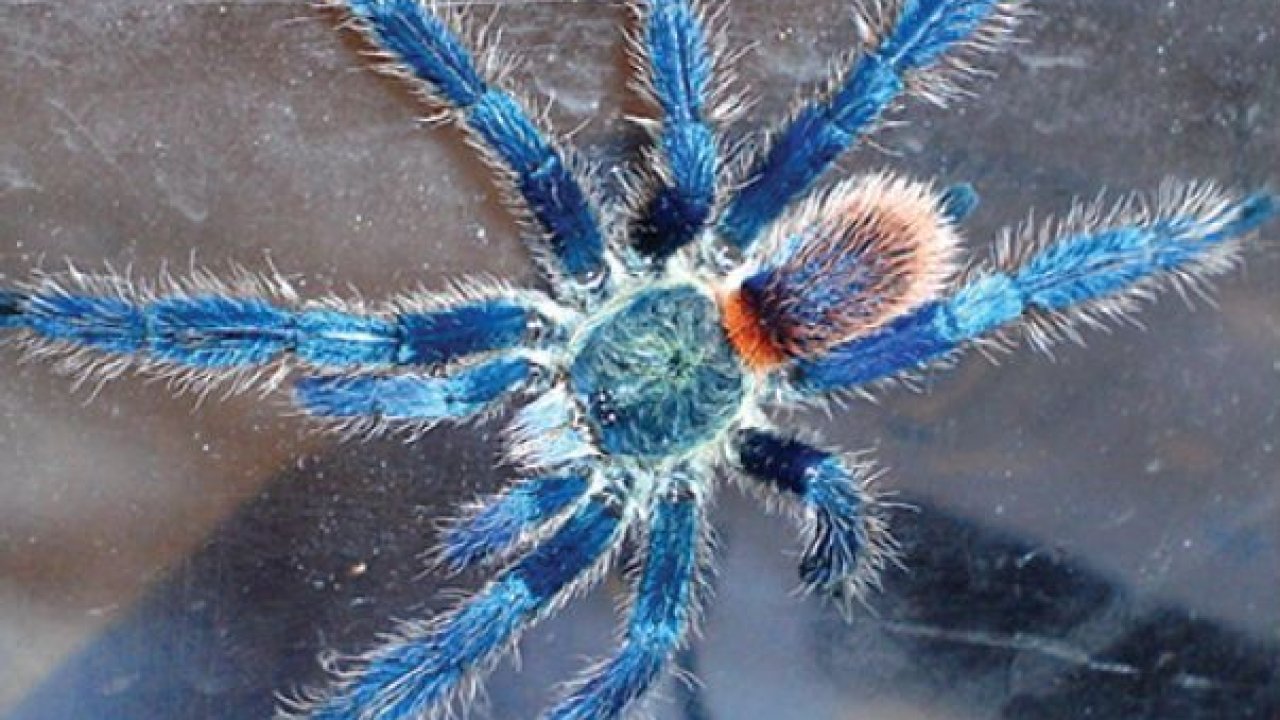 🌍 Terrestrial
Dolichothele diamantinensis
Brazilian Blue Dwarf Beauty
Intermediate Requires consistent husbandry - more sensitive to ventilation, humidity, or feeding schedule. Some experience recommended. 🌍 Terrestrial Lives on or near the ground. Needs floor space more than height. Falls from height can be fatal - keep décor low. 🌎 New World From the Americas: can flick urticating (irritating) hairs as a first defence, and venom is generally milder. 💨 Skittish Easily startled - may bolt or dart suddenly when disturbed. Secure lids are essential as they can be escape artists. ⚠️ Flicks hairs Uses urticating (barbed) hairs on the abdomen as a primary defence. These hairs can cause skin irritation and must be kept away from eyes. New World species only.- Temp
- 22-28°C
- Humidity
- 60-75%
- Adult DLS
- 5-7 cm
- Moult
- Sling ~3w - Adult ~12mo
Brazilian blue dwarf - small terrestrial; small setup, dry substrate, water cap. Fast-growing, bold dwarf.
-
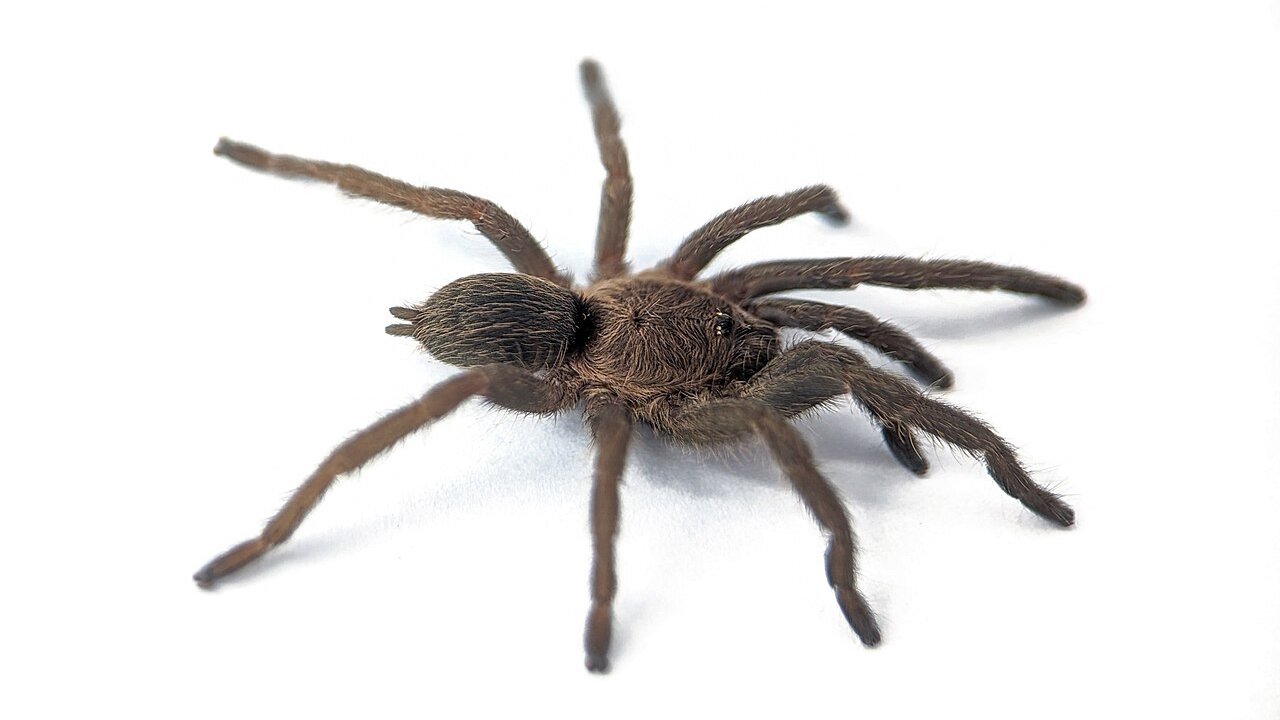 🌍 Terrestrial
Dolichothele exilis
Brazilian Bronze
Beginner Forgiving of common mistakes. Tolerant of temperature/humidity variation. Great first tarantula. 🌍 Terrestrial Lives on or near the ground. Needs floor space more than height. Falls from height can be fatal - keep décor low. 🌎 New World From the Americas: can flick urticating (irritating) hairs as a first defence, and venom is generally milder. 🟢 Docile Generally slow-moving and tolerant of handling. Rarely threatens or bites. Great for beginners. 💨 Skittish Easily startled - may bolt or dart suddenly when disturbed. Secure lids are essential as they can be escape artists. ⚠️ Flicks hairs Uses urticating (barbed) hairs on the abdomen as a primary defence. These hairs can cause skin irritation and must be kept away from eyes. New World species only.- Temp
- 22-26°C
- Humidity
- 60-75%
- Adult DLS
- 5-7 cm
- Moult
- Sling ~3w - Adult ~3mo
Dwarf species previously in Cyclosternum. Striking black-and-white markings on a tiny frame.
-
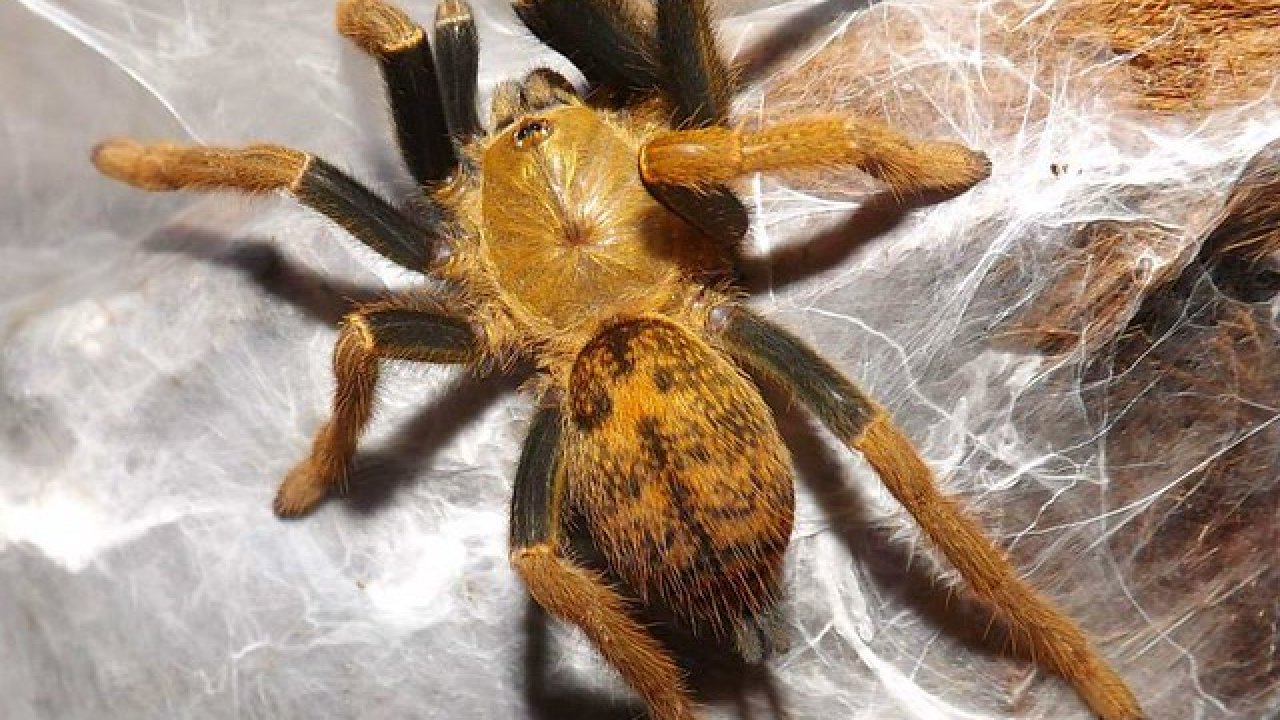 🌳 Arboreal
Encyocratella olivacea
Tanzanian Olive Baboon
Advanced Demanding or potentially dangerous. May be very fast, defensive, or have medically significant venom. Experienced keepers only. 🌳 Arboreal Lives above ground in trees or plants. Needs height and vertical climbing surfaces. Secure lid essential - they climb glass. 🌍 Old World From Africa, Asia or Australasia: no urticating hairs - defence is speed and a potent bite. Medically significant venom possible. ⚠️ Defensive Will adopt a threat posture (rearing up, showing fangs) when disturbed. May bite if provoked. Approach with care and use a catch cup for rehoming. ⚡ Fast Moves very quickly, especially when startled. Can cross an enclosure in the blink of an eye. Not recommended for handling. ☠️ Potent venom Possesses medically significant venom. A bite can cause intense pain, muscle cramps, sweating, and may require medical attention. Old World species typically fall here as they lack urticating hairs. 🕸️ Heavy webber Dense, prolific webbing behaviour. Will carpet the entire enclosure in thick silk - this is normal and healthy. Provides a visual indicator of the spider's territory.- Temp
- 24-28°C
- Humidity
- 70-80%
- Adult DLS
- 12-14 cm
- Moult
- Sling ~3w - Adult ~8mo
Heavy-bodied African arboreal - one of the larger African tree tarantulas. Fast, defensive, potent.
-
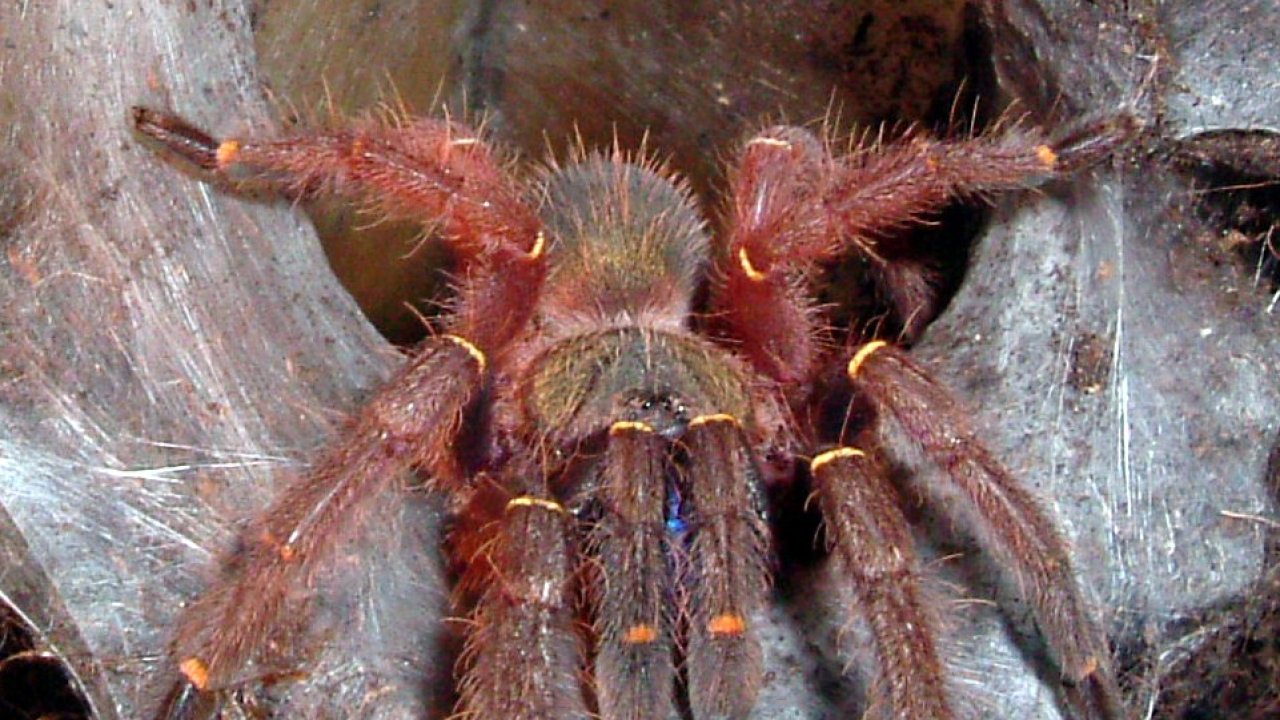 🌍 Terrestrial
Ephebopus cyanognathus
Blue Fang Skeleton
Intermediate Requires consistent husbandry - more sensitive to ventilation, humidity, or feeding schedule. Some experience recommended. 🌍 Terrestrial Lives on or near the ground. Needs floor space more than height. Falls from height can be fatal - keep décor low. 🌎 New World From the Americas: can flick urticating (irritating) hairs as a first defence, and venom is generally milder. 💨 Skittish Easily startled - may bolt or dart suddenly when disturbed. Secure lids are essential as they can be escape artists. ⚠️ Flicks hairs Uses urticating (barbed) hairs on the abdomen as a primary defence. These hairs can cause skin irritation and must be kept away from eyes. New World species only.- Temp
- 22-28°C
- Humidity
- 60-75%
- Adult DLS
- 13-15 cm
- Moult
- Sling ~3w - Adult ~12mo
Blue fang skeleton - fossorial; deep (10 cm) damp substrate with starter retreat, 75-80% humidity. Pedipalp hair-brusher; display species.
-
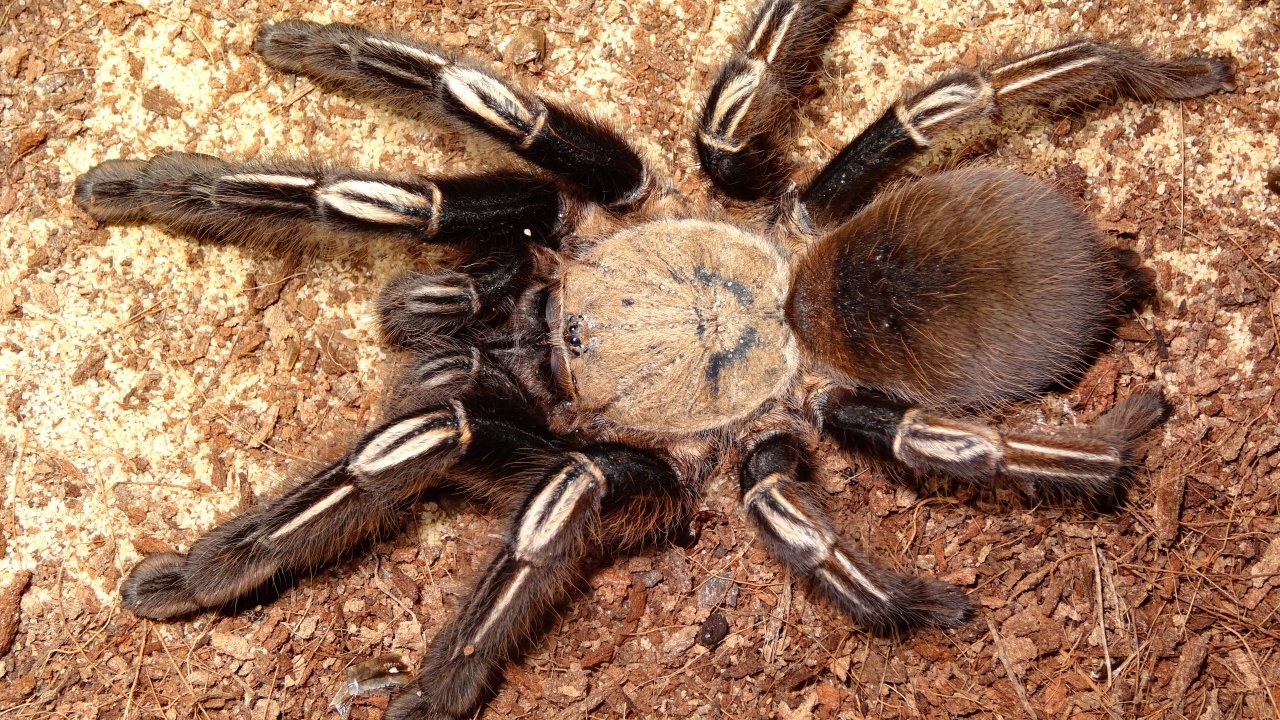 🌍 Terrestrial
Ephebopus murinus
Skeleton Leg Tarantula
Intermediate Requires consistent husbandry - more sensitive to ventilation, humidity, or feeding schedule. Some experience recommended. 🌍 Terrestrial Lives on or near the ground. Needs floor space more than height. Falls from height can be fatal - keep décor low. 🌎 New World From the Americas: can flick urticating (irritating) hairs as a first defence, and venom is generally milder. 💨 Skittish Easily startled - may bolt or dart suddenly when disturbed. Secure lids are essential as they can be escape artists. ⚠️ Flicks hairs Uses urticating (barbed) hairs on the abdomen as a primary defence. These hairs can cause skin irritation and must be kept away from eyes. New World species only.- Temp
- 22-28°C
- Humidity
- 60-75%
- Adult DLS
- 13-15 cm
- Moult
- Sling ~3w - Adult ~12mo
Skeleton - fossorial-terrestrial; deep (10 cm) damp substrate with a starter retreat. 75% humidity. Uniquely brushes urticating hairs from PEDIPALPS - no skin contact.
-
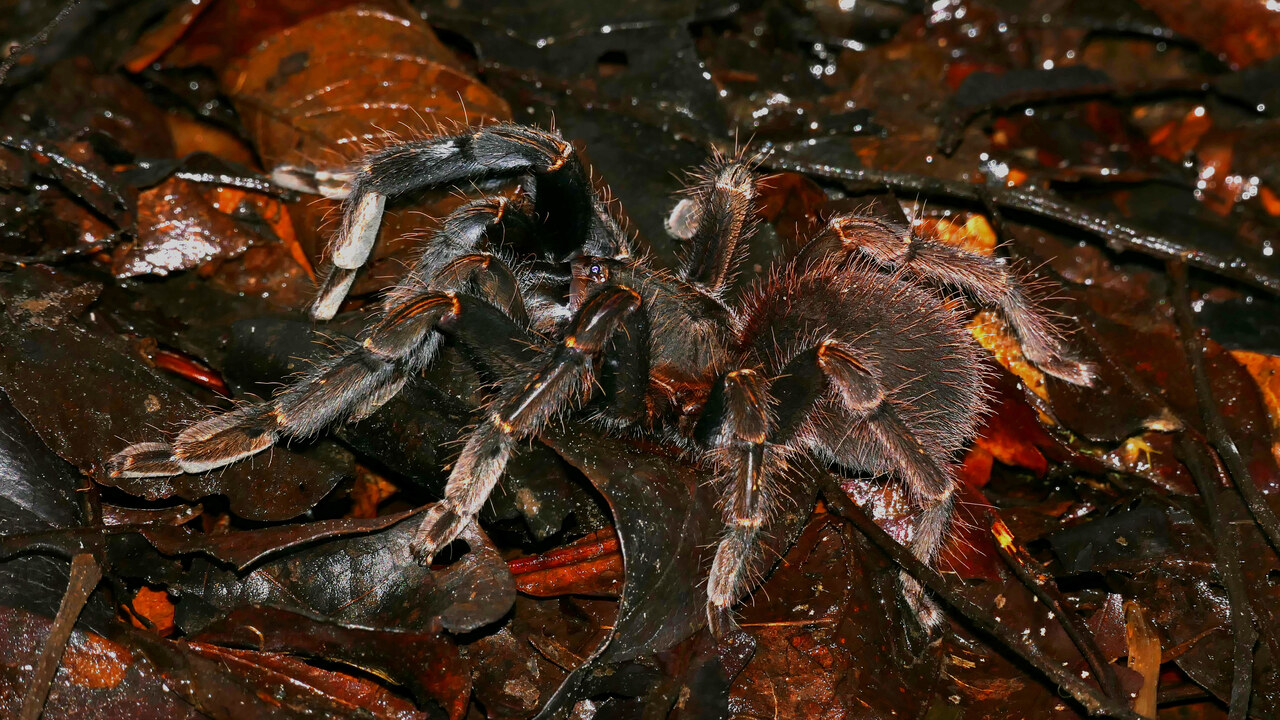 🕳️ Fossorial
Ephebopus rufescens
Red Skeleton
Intermediate Requires consistent husbandry - more sensitive to ventilation, humidity, or feeding schedule. Some experience recommended. 🕳️ Fossorial Lives underground in deep burrows. Needs deep, packed substrate to dig. You may rarely see them - patience required. 🌎 New World From the Americas: can flick urticating (irritating) hairs as a first defence, and venom is generally milder. 💨 Skittish Easily startled - may bolt or dart suddenly when disturbed. Secure lids are essential as they can be escape artists. ⚡ Fast Moves very quickly, especially when startled. Can cross an enclosure in the blink of an eye. Not recommended for handling. ⚠️ Flicks hairs Uses urticating (barbed) hairs on the abdomen as a primary defence. These hairs can cause skin irritation and must be kept away from eyes. New World species only. 🕸️ Heavy webber Dense, prolific webbing behaviour. Will carpet the entire enclosure in thick silk - this is normal and healthy. Provides a visual indicator of the spider's territory.- Temp
- 24-28°C
- Humidity
- 75-85%
- Adult DLS
- 11-14 cm
- Moult
- Sling ~3w - Adult ~9mo
The Red Skeleton (Burgundy Skeleton) - a wine-and-cream fossorial oddity from French Guiana: the "skeleton" leg striping of its genus over deep burgundy, and burrowing habits unusual for the otherwise arboreal spider-clade it belongs to. Its party trick is defensive: like all Ephebopus it carries Type V urticating hairs on its PEDIPALPS and flicks them into the face of anything leaning over the burrow - gloves and eye protection for deep cleans. Secretive, plug-the-burrow behaviour and a ferocious ambush feeding response. A rewarding display-of-nature species rather than a display spider.
-
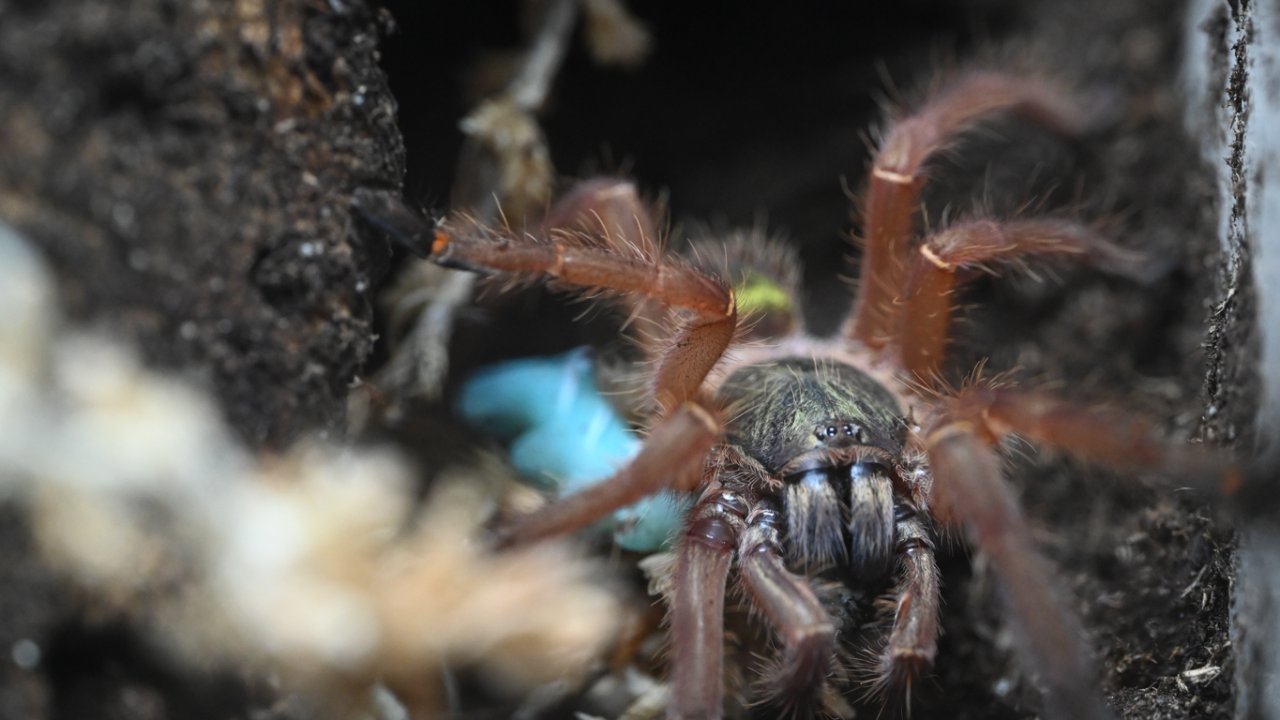 🌍 Terrestrial
Ephebopus uatuman
Emerald Skeleton
Intermediate Requires consistent husbandry - more sensitive to ventilation, humidity, or feeding schedule. Some experience recommended. 🌍 Terrestrial Lives on or near the ground. Needs floor space more than height. Falls from height can be fatal - keep décor low. 🌎 New World From the Americas: can flick urticating (irritating) hairs as a first defence, and venom is generally milder. 💨 Skittish Easily startled - may bolt or dart suddenly when disturbed. Secure lids are essential as they can be escape artists. ⚠️ Flicks hairs Uses urticating (barbed) hairs on the abdomen as a primary defence. These hairs can cause skin irritation and must be kept away from eyes. New World species only.- Temp
- 22-28°C
- Humidity
- 60-75%
- Adult DLS
- 13-15 cm
- Moult
- Sling ~3w - Adult ~12mo
Skeleton (Brazilian) - fossorial; deep damp substrate, starter burrow. 75-80% humidity.
-
🌍 Terrestrial
Euathlus bronce
Chilean Bronze Flame
Beginner Forgiving of common mistakes. Tolerant of temperature/humidity variation. Great first tarantula. 🌍 Terrestrial Lives on or near the ground. Needs floor space more than height. Falls from height can be fatal - keep décor low. 🌎 New World From the Americas: can flick urticating (irritating) hairs as a first defence, and venom is generally milder. 🟢 Docile Generally slow-moving and tolerant of handling. Rarely threatens or bites. Great for beginners. 🟢 Calm Deliberate and unhurried movements. Not easily startled. Usually sits contentedly in the open. ⏳ Long-lived Females can live 15-30+ years with good care. A significant long-term commitment compared to the 2-5 year male lifespan.- Temp
- 18-24°C
- Humidity
- 50-65%
- Adult DLS
- 8-10 cm
- Moult
- Sling ~4w - Adult ~12mo
The Chilean Bronze Flame (trade label "bronce", long sold as "Paraphysa sp. Bronze"; undescribed) - a warm-bronze dwarf with cream knee stripes and an orange abdominal tuft, from the same Andean scrubland as Chile's other Euathlus. Famously "puppy-dog" docile and curious; UK room temperature is its natural climate; hardy even as tiny slings. True dwarf at 8-10 cm with 20-year female potential - a long-term companion species at £50 a sling.
-
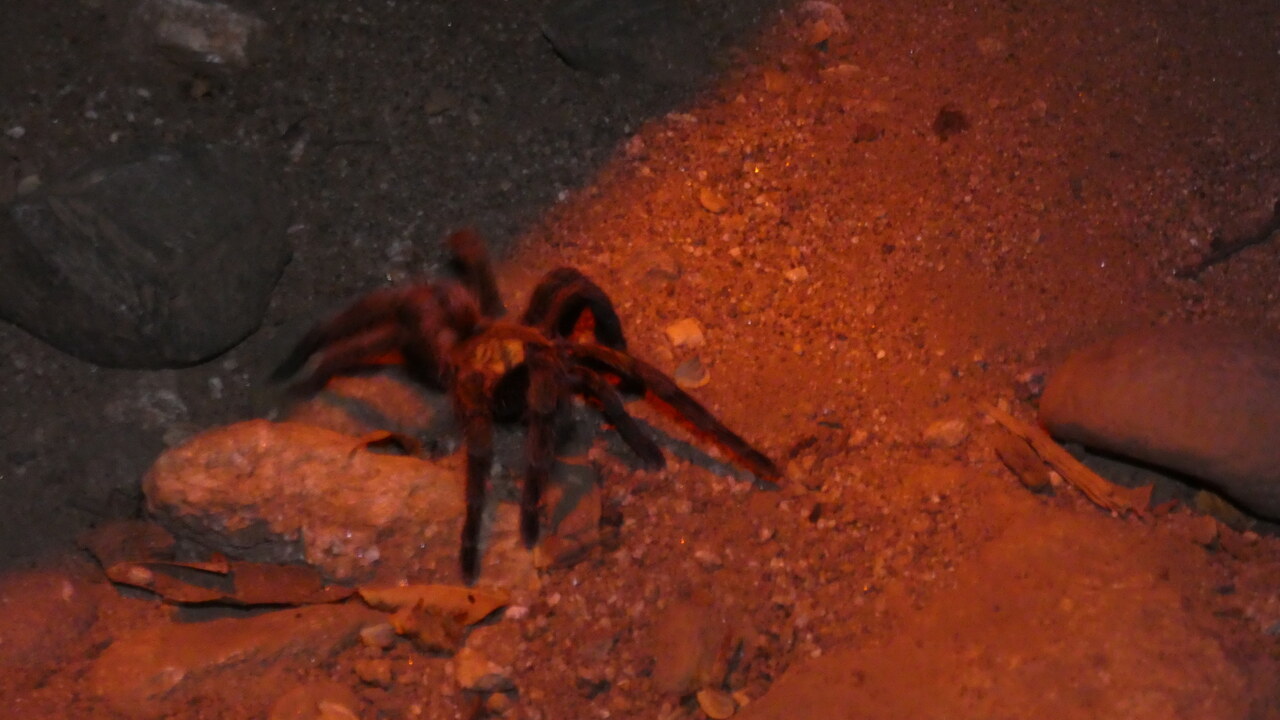 🌍 Terrestrial
Euathlus manicatus black
Chilean Black Flame
Beginner Forgiving of common mistakes. Tolerant of temperature/humidity variation. Great first tarantula. 🌍 Terrestrial Lives on or near the ground. Needs floor space more than height. Falls from height can be fatal - keep décor low. 🌎 New World From the Americas: can flick urticating (irritating) hairs as a first defence, and venom is generally milder. 🟢 Docile Generally slow-moving and tolerant of handling. Rarely threatens or bites. Great for beginners. 🟢 Calm Deliberate and unhurried movements. Not easily startled. Usually sits contentedly in the open. ⏳ Long-lived Females can live 15-30+ years with good care. A significant long-term commitment compared to the 2-5 year male lifespan.- Temp
- 20-24°C
- Humidity
- 55-70%
- Adult DLS
- 8-10 cm
- Moult
- Sling ~4w - Adult ~11mo
The dark colour form of Euathlus manicata - Simon's 1892 species and the type of the old genus Paraphysa, folded into Euathlus in 2014 (WSC now spells it manicatus). "Black Flame" is the UK trade label for the sooty black-and-charcoal form from central Chilean scrubland; the same species also comes in gold and green forms. A docile 8-10 cm dwarf with red-setae flashes on the abdomen, famously calm and slow - genuine guinea-pig territory. Very slow-growing, with females living 15-20 years. Captive-bred slings reach the UK market periodically.
-
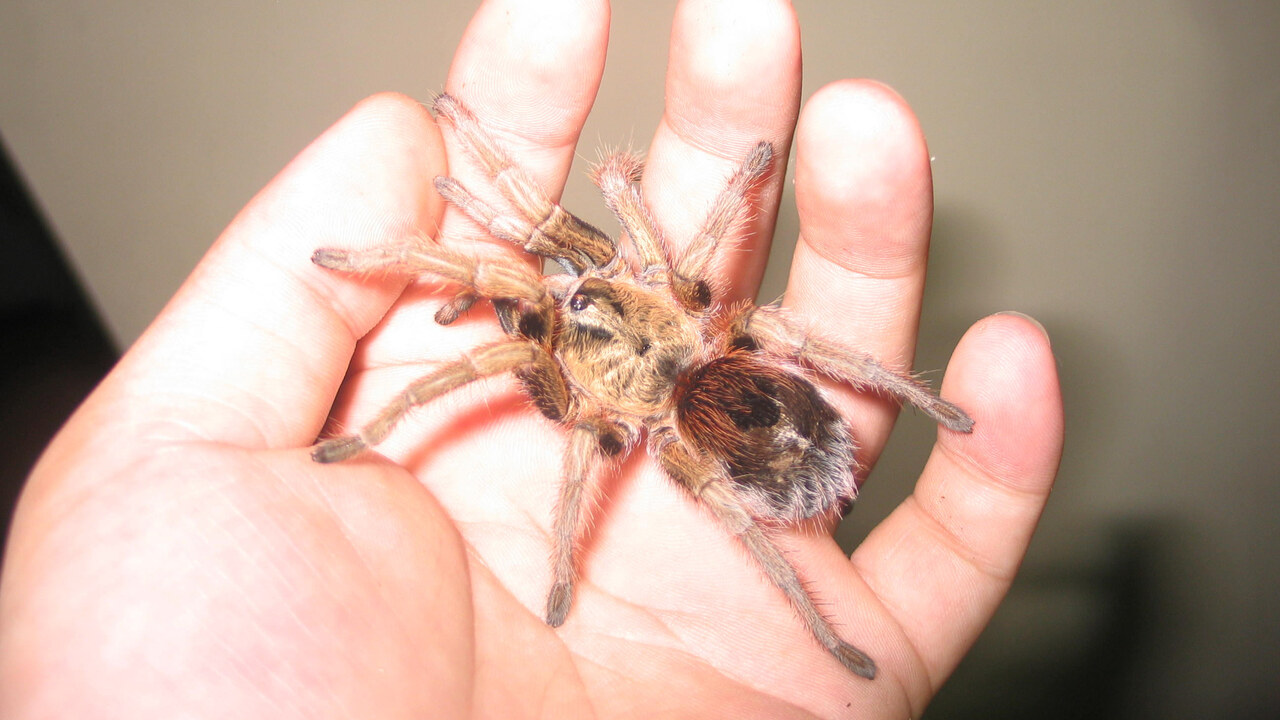 🌍 Terrestrial
Euathlus manicatus gold
Chilean Gold Flame
Beginner Forgiving of common mistakes. Tolerant of temperature/humidity variation. Great first tarantula. 🌍 Terrestrial Lives on or near the ground. Needs floor space more than height. Falls from height can be fatal - keep décor low. 🌎 New World From the Americas: can flick urticating (irritating) hairs as a first defence, and venom is generally milder. 🟢 Docile Generally slow-moving and tolerant of handling. Rarely threatens or bites. Great for beginners. 🟢 Calm Deliberate and unhurried movements. Not easily startled. Usually sits contentedly in the open. ⏳ Long-lived Females can live 15-30+ years with good care. A significant long-term commitment compared to the 2-5 year male lifespan.- Temp
- 20-24°C
- Humidity
- 55-70%
- Adult DLS
- 8-10 cm
- Moult
- Sling ~4w - Adult ~11mo
The gold colour form of Euathlus manicata - a warm golden-tan and bronze dwarf from central Chile, rarer in UK stock than the black form. Identification caveat worth knowing: at least one major UK vendor's "manicata gold" listings are labelled Paraphysa parvula, and some gold stock is likely Euathlus parvulus (Pocock, 1903) - a separate but visually similar species with identical husbandry. Either way you get a glowing, ultra-docile 8-10 cm dwarf with the classic calm Euathlus temperament and 15-20 year female lifespan.
-
🌍 Terrestrial
Euathlus manicatus green
Emerald Flame
Beginner Forgiving of common mistakes. Tolerant of temperature/humidity variation. Great first tarantula. 🌍 Terrestrial Lives on or near the ground. Needs floor space more than height. Falls from height can be fatal - keep décor low. 🌎 New World From the Americas: can flick urticating (irritating) hairs as a first defence, and venom is generally milder. 🟢 Docile Generally slow-moving and tolerant of handling. Rarely threatens or bites. Great for beginners. 🟢 Calm Deliberate and unhurried movements. Not easily startled. Usually sits contentedly in the open. ⏳ Long-lived Females can live 15-30+ years with good care. A significant long-term commitment compared to the 2-5 year male lifespan.- Temp
- 20-24°C
- Humidity
- 55-70%
- Adult DLS
- 8-10 cm
- Moult
- Sling ~4w - Adult ~11mo
The green colour form of Euathlus manicata, sold in the UK as the Emerald Flame - mossy green-grey femora over the dark Euathlus frame. Hobby naming footnote: UK vendor notes record this form being "known for many years as Euathlus truculentus", and colour-form names across this species-group have been shuffled for decades - treat "green" as a trade label for manicata-lineage stock rather than anything formal. The rarest of the three manicata colour forms in UK shops and identical in care: a docile 8-10 cm dwarf, very slow-growing, females 15-20 years.
-
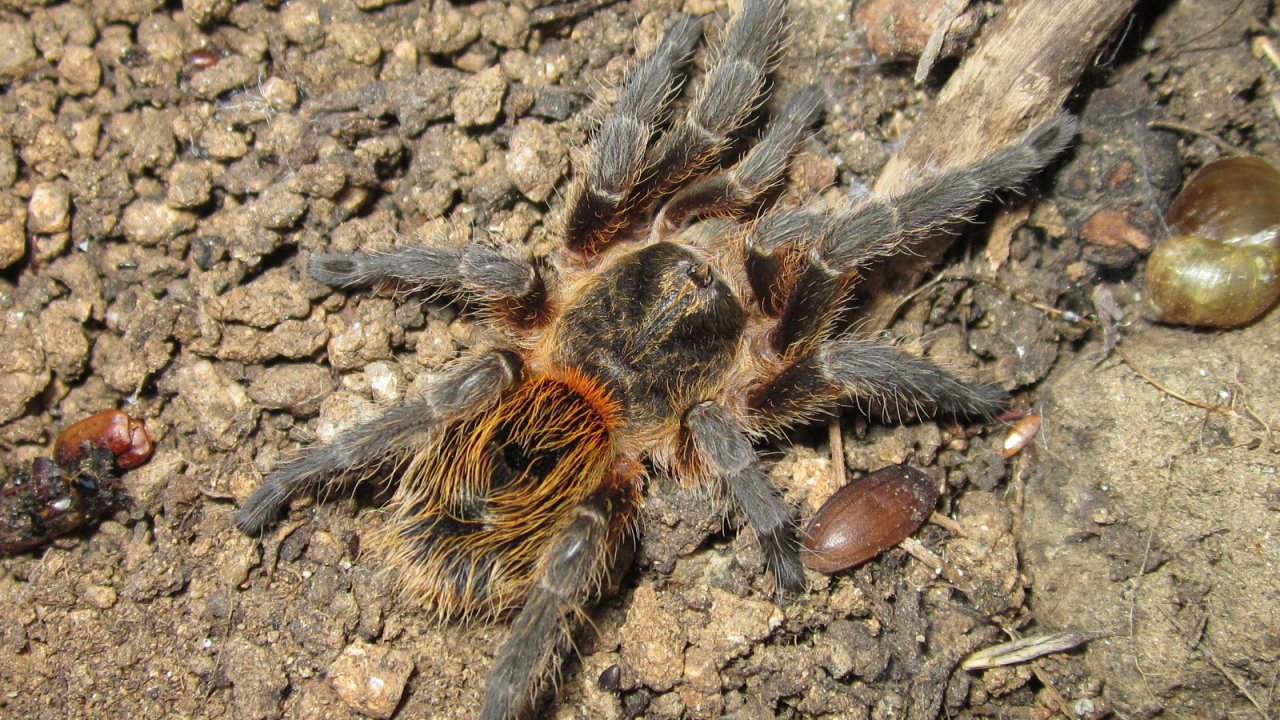 🌍 Terrestrial
Euathlus parvulus
Chilean Flame Tarantula
Intermediate Requires consistent husbandry - more sensitive to ventilation, humidity, or feeding schedule. Some experience recommended. 🌍 Terrestrial Lives on or near the ground. Needs floor space more than height. Falls from height can be fatal - keep décor low. 🌎 New World From the Americas: can flick urticating (irritating) hairs as a first defence, and venom is generally milder. 💨 Skittish Easily startled - may bolt or dart suddenly when disturbed. Secure lids are essential as they can be escape artists. ⚠️ Flicks hairs Uses urticating (barbed) hairs on the abdomen as a primary defence. These hairs can cause skin irritation and must be kept away from eyes. New World species only.- Temp
- 22-28°C
- Humidity
- 60-75%
- Adult DLS
- 13-15 cm
- Moult
- Sling ~3w - Adult ~12mo
Chilean dwarf - small dry setup, water dish. Cool room temperatures suit them; heat stress is the main risk.
-
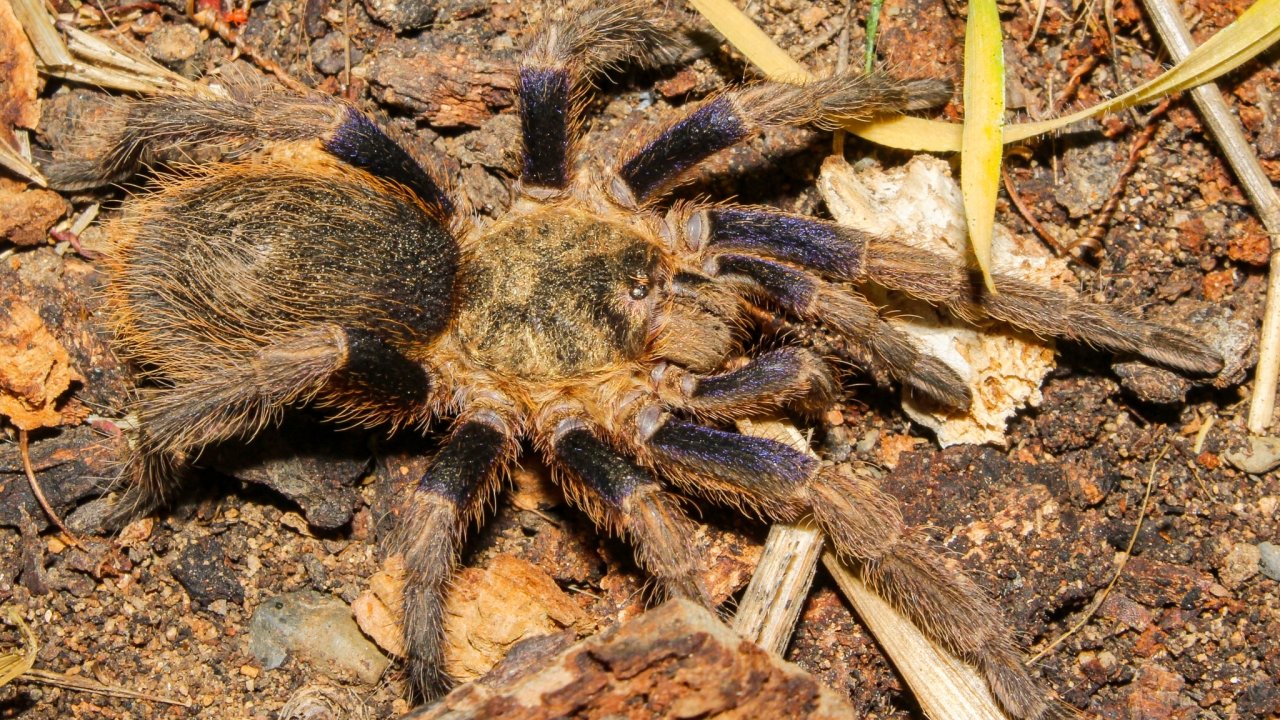 🌍 Terrestrial
Euathlus pulcherrimaklaasi
Chilean Beauty
Intermediate Requires consistent husbandry - more sensitive to ventilation, humidity, or feeding schedule. Some experience recommended. 🌍 Terrestrial Lives on or near the ground. Needs floor space more than height. Falls from height can be fatal - keep décor low. 🌎 New World From the Americas: can flick urticating (irritating) hairs as a first defence, and venom is generally milder. 💨 Skittish Easily startled - may bolt or dart suddenly when disturbed. Secure lids are essential as they can be escape artists. ⚠️ Flicks hairs Uses urticating (barbed) hairs on the abdomen as a primary defence. These hairs can cause skin irritation and must be kept away from eyes. New World species only.- Temp
- 22-28°C
- Humidity
- 60-75%
- Adult DLS
- 13-15 cm
- Moult
- Sling ~3w - Adult ~12mo
Chilean fire leg - dry substrate, water dish, hide. Cool-keeping species; avoid heat. Docile dwarf-medium.


