
Species library
255 species profiled with accurate care data. Click any species to start a specimen record pre-filled.
+ Request a species
-
 🌍 Terrestrial
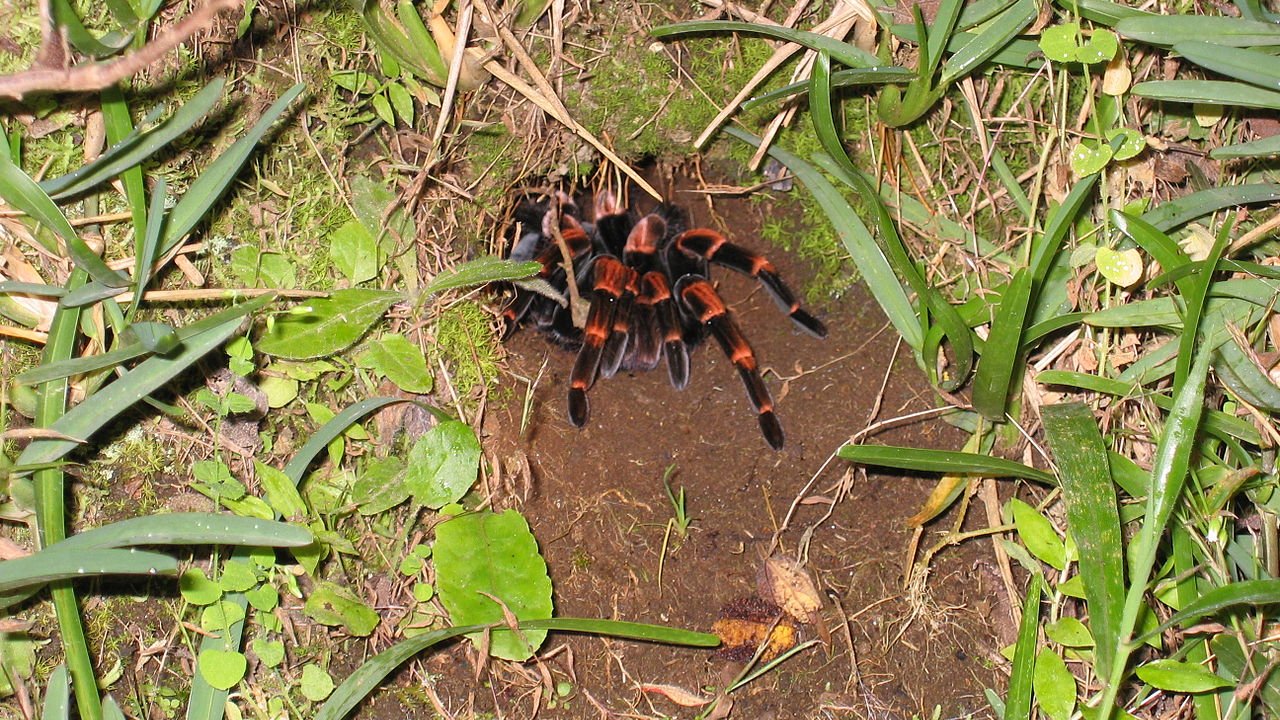
Abdomegaphobema mesomelas
Costa Rican Red Leg
Intermediate Requires consistent husbandry - more sensitive to ventilation, humidity, or feeding schedule. Some experience recommended. 🌍 Terrestrial Lives on or near the ground. Needs floor space more than height. Falls from height can be fatal - keep décor low. 🌎 New World From the Americas: can flick urticating (irritating) hairs as a first defence, and venom is generally milder. 💨 Skittish Easily startled - may bolt or dart suddenly when disturbed. Secure lids are essential as they can be escape artists. ⚠️ Flicks hairs Uses urticating (barbed) hairs on the abdomen as a primary defence. These hairs can cause skin irritation and must be kept away from eyes. New World species only.- Temp
- 22-28°C
- Humidity
- 60-75%
- Adult DLS
- 13-15 cm
- Moult
- Sling ~3w - Adult ~12mo
Costa Rican red and black - large terrestrial, deep substrate, water dish. 75-80% humidity; slightly damper care than Mexican species.
-
 🌍 Terrestrial
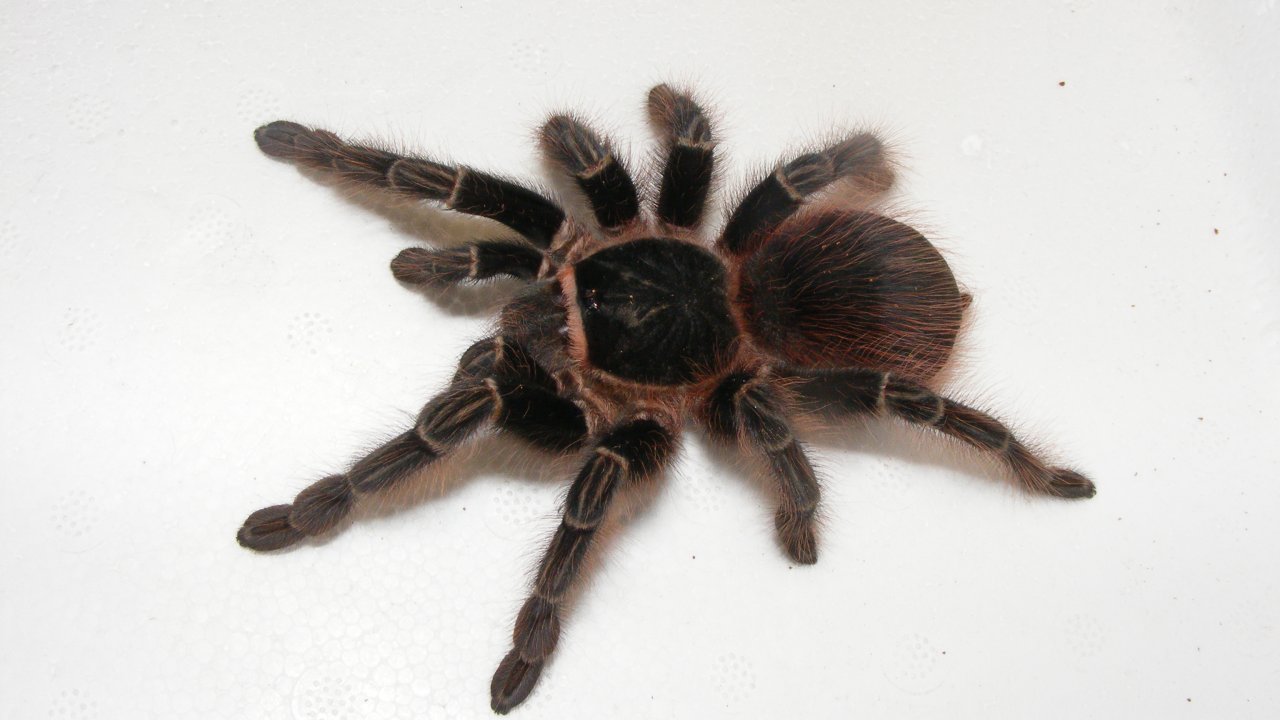
Acanthoscurria chacoana
Bolivian Red Rump
Intermediate Requires consistent husbandry - more sensitive to ventilation, humidity, or feeding schedule. Some experience recommended. 🌍 Terrestrial Lives on or near the ground. Needs floor space more than height. Falls from height can be fatal - keep décor low. 🌎 New World From the Americas: can flick urticating (irritating) hairs as a first defence, and venom is generally milder. 💨 Skittish Easily startled - may bolt or dart suddenly when disturbed. Secure lids are essential as they can be escape artists. ⚠️ Flicks hairs Uses urticating (barbed) hairs on the abdomen as a primary defence. These hairs can cause skin irritation and must be kept away from eyes. New World species only.- Temp
- 22-28°C
- Humidity
- 60-75%
- Adult DLS
- 13-15 cm
- Moult
- Sling ~3w - Adult ~12mo
Bolivian red rump - hardy and fast-growing. Dry substrate with a water dish, standard terrestrial setup. Kicks urticating hairs when disturbed. Adults take large prey fortnightly.
-
 🌍 Terrestrial
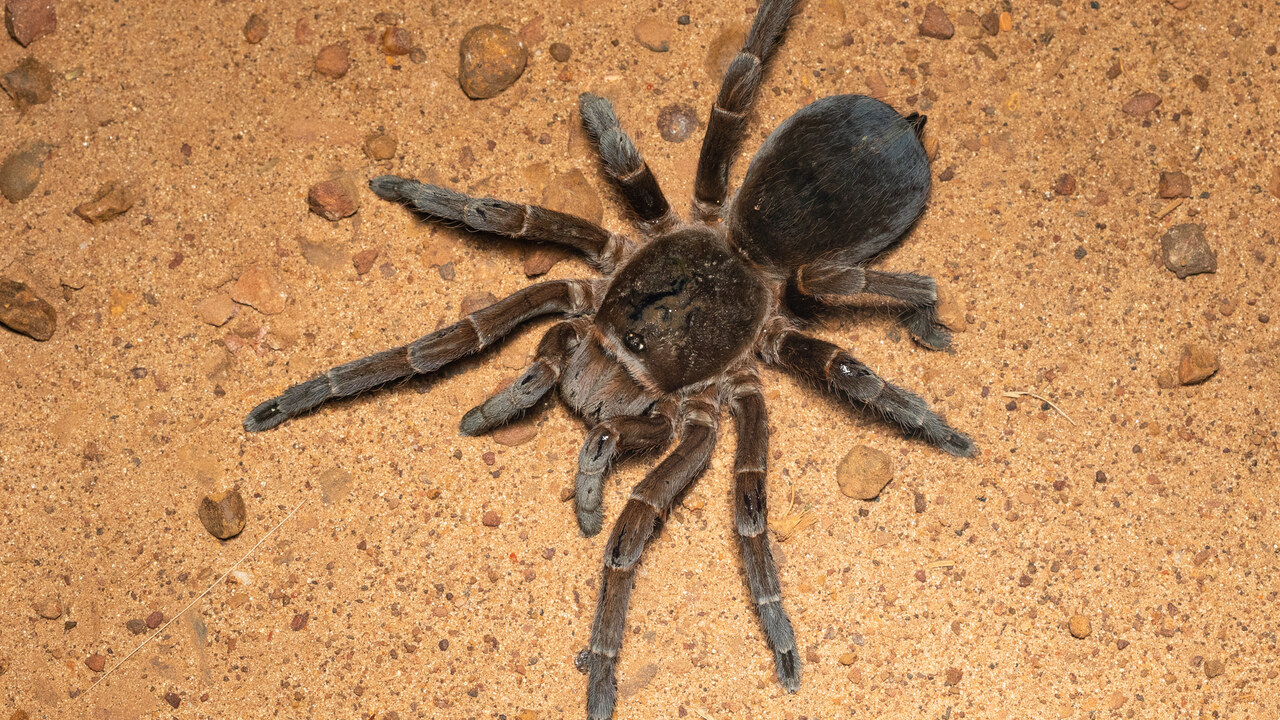
Acanthoscurria cordubensis
Argentinian Bronze Birdeater
Beginner Forgiving of common mistakes. Tolerant of temperature/humidity variation. Great first tarantula. 🌍 Terrestrial Lives on or near the ground. Needs floor space more than height. Falls from height can be fatal - keep décor low. 🌎 New World From the Americas: can flick urticating (irritating) hairs as a first defence, and venom is generally milder. 🟢 Docile Generally slow-moving and tolerant of handling. Rarely threatens or bites. Great for beginners. 🍽️ Voracious eater Aggressive feeding response. Will tackle prey eagerly and rarely refuses a meal. Adjust feeding schedule accordingly - overfeeding shortens lifespan. ⚠️ Flicks hairs Uses urticating (barbed) hairs on the abdomen as a primary defence. These hairs can cause skin irritation and must be kept away from eyes. New World species only.- Temp
- 22-26°C
- Humidity
- 65-75%
- Adult DLS
- 15-18 cm
- Moult
- Sling ~3w - Adult ~10mo
The Argentinian Bronze Birdeater - the pampas powerhouse long traded as "A. suina" before that name sank into its synonymy (Gabriel, 2020). Rusty-bronze, massively built at 15-18 cm, with a growth rate and appetite geniculata keepers will recognise instantly. Famously a "road spider" in Argentina - mature males wander in broad daylight - and in the tub it is a calm, nocturnal, always-visible glutton. One of the best-value big New Worlds: fast, cheap slings at around £30 that become impressive display animals within a couple of years.
-
 🌍 Terrestrial
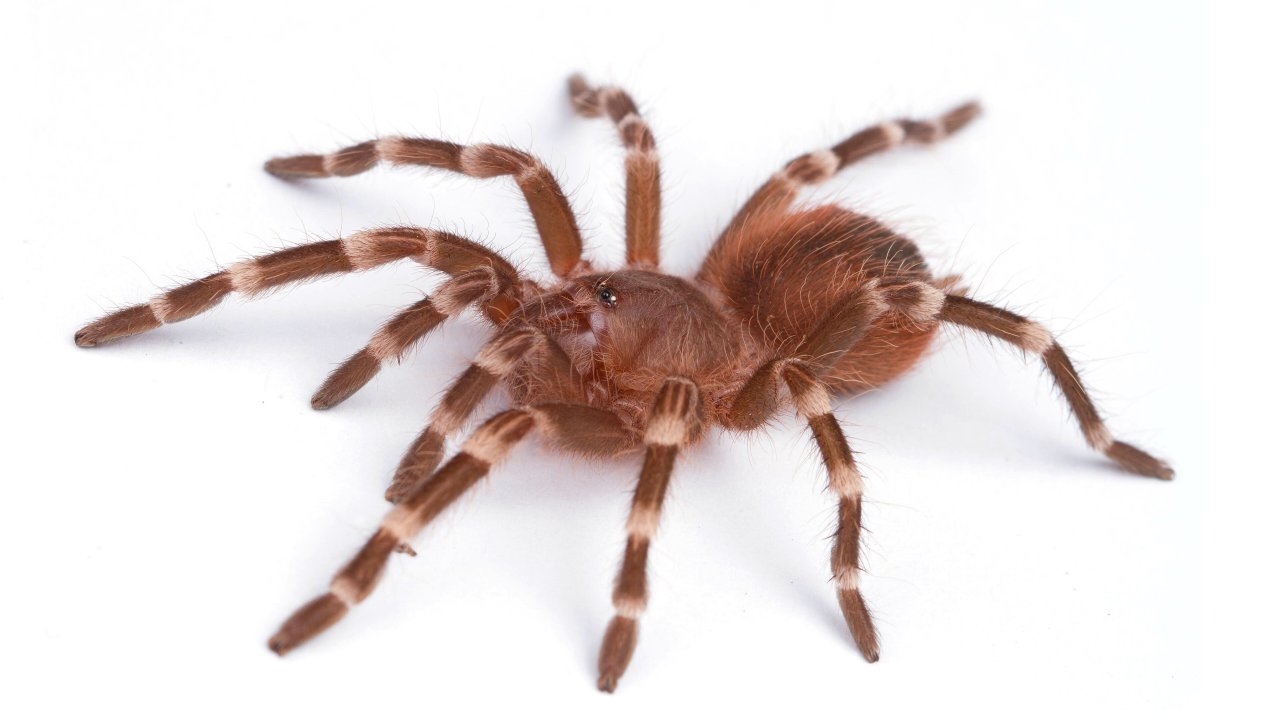
Acanthoscurria geniculata
Brazilian Giant White Knee
Beginner Forgiving of common mistakes. Tolerant of temperature/humidity variation. Great first tarantula. 🌍 Terrestrial Lives on or near the ground. Needs floor space more than height. Falls from height can be fatal - keep décor low. 🌎 New World From the Americas: can flick urticating (irritating) hairs as a first defence, and venom is generally milder. Food-aggressive Bold feeding response: will bolt at anything that moves, including tongs and fingers. Not a handling temperament - feed with long tongs. 🍽️ Voracious eater Aggressive feeding response. Will tackle prey eagerly and rarely refuses a meal. Adjust feeding schedule accordingly - overfeeding shortens lifespan. ⚠️ Flicks hairs Uses urticating (barbed) hairs on the abdomen as a primary defence. These hairs can cause skin irritation and must be kept away from eyes. New World species only.- Temp
- 24-28°C
- Humidity
- 70-80%
- Adult DLS
- 19-23 cm
- Moult
- Sling ~3w - Adult ~8mo
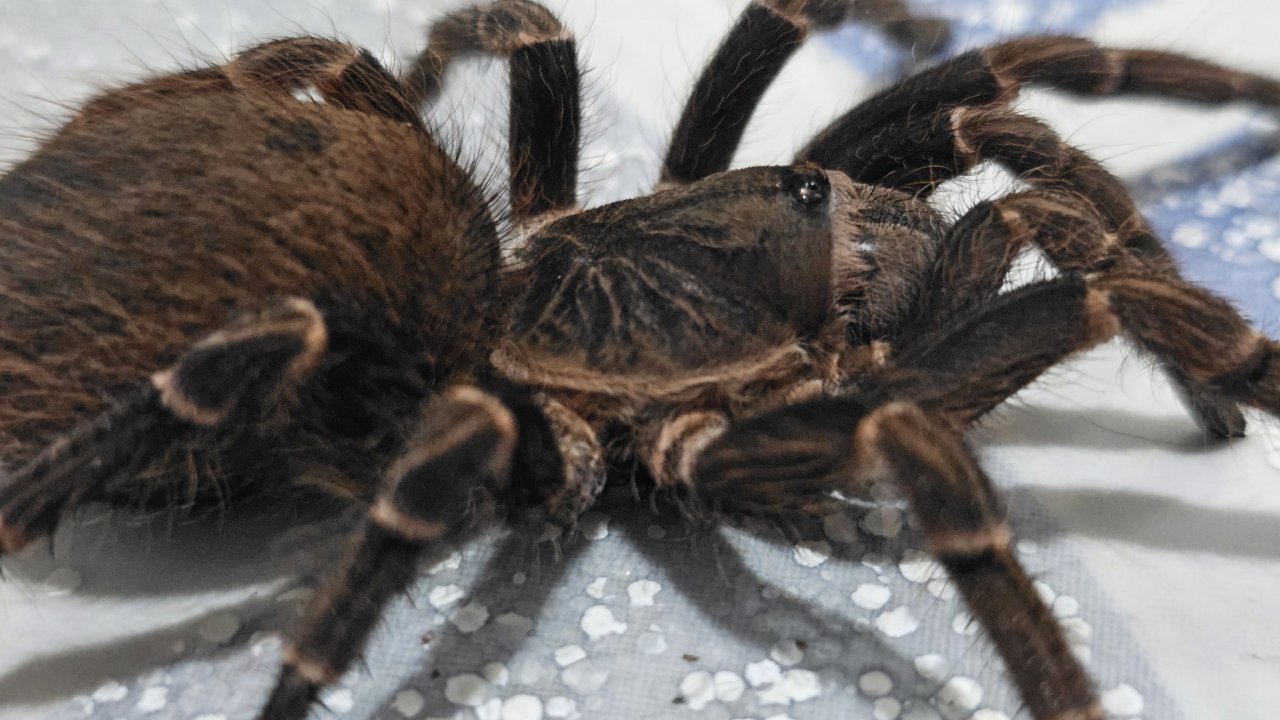
Bone-white bands on every "knee". Fast-growing and ravenous; reaches 21 cm. Provide generous floor space.
-
 🌍 Terrestrial
Acanthoscurria insubtilis
Bolivian Black
Intermediate Requires consistent husbandry - more sensitive to ventilation, humidity, or feeding schedule. Some experience recommended. 🌍 Terrestrial Lives on or near the ground. Needs floor space more than height. Falls from height can be fatal - keep décor low. 🌎 New World From the Americas: can flick urticating (irritating) hairs as a first defence, and venom is generally milder. 💨 Skittish Easily startled - may bolt or dart suddenly when disturbed. Secure lids are essential as they can be escape artists. ⚠️ Flicks hairs Uses urticating (barbed) hairs on the abdomen as a primary defence. These hairs can cause skin irritation and must be kept away from eyes. New World species only.- Temp
- 22-28°C
- Humidity
- 60-75%
- Adult DLS
- 13-15 cm
- Moult
- Sling ~3w - Adult ~12mo
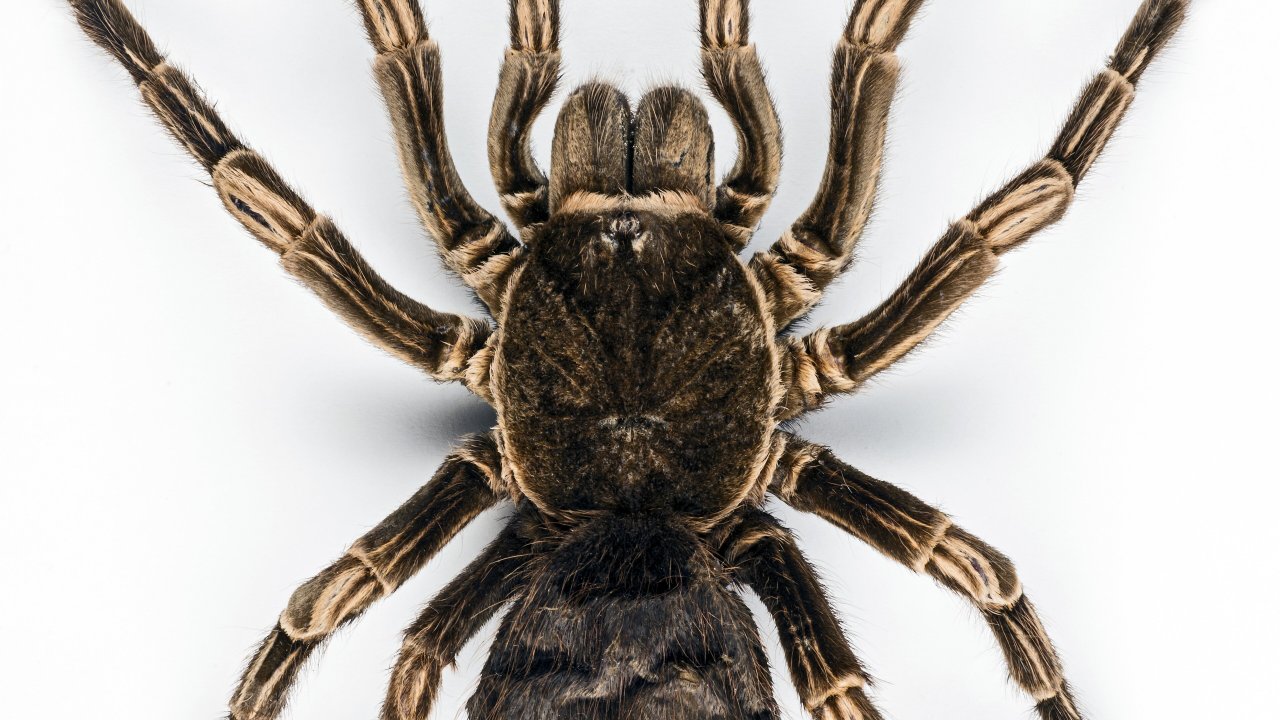
Bolivian black - a robust, undemanding terrestrial. Dry substrate, water dish, hide. Moderate humidity (60-70%) from a damp corner, not misting.
-
 🌍 Terrestrial
Acanthoscurria juruenicola
Juruena White Knee
Intermediate Requires consistent husbandry - more sensitive to ventilation, humidity, or feeding schedule. Some experience recommended. 🌍 Terrestrial Lives on or near the ground. Needs floor space more than height. Falls from height can be fatal - keep décor low. 🌎 New World From the Americas: can flick urticating (irritating) hairs as a first defence, and venom is generally milder. 💨 Skittish Easily startled - may bolt or dart suddenly when disturbed. Secure lids are essential as they can be escape artists. ⚠️ Flicks hairs Uses urticating (barbed) hairs on the abdomen as a primary defence. These hairs can cause skin irritation and must be kept away from eyes. New World species only.- Temp
- 22-28°C
- Humidity
- 60-75%
- Adult DLS
- 13-15 cm
- Moult
- Sling ~3w - Adult ~12mo
A rarer Brazilian white-banded terrestrial. Dry substrate with a water dish and hide; keep similar to other Acanthoscurria. Adults 30x30 cm floor space.
-
 🌍 Terrestrial
Acanthoscurria musculosa
Black Velvet Rump
Beginner Forgiving of common mistakes. Tolerant of temperature/humidity variation. Great first tarantula. 🌍 Terrestrial Lives on or near the ground. Needs floor space more than height. Falls from height can be fatal - keep décor low. 🌎 New World From the Americas: can flick urticating (irritating) hairs as a first defence, and venom is generally milder. 🟢 Docile Generally slow-moving and tolerant of handling. Rarely threatens or bites. Great for beginners. 🍽️ Voracious eater Aggressive feeding response. Will tackle prey eagerly and rarely refuses a meal. Adjust feeding schedule accordingly - overfeeding shortens lifespan.- Temp
- 24-28°C
- Humidity
- 65-75%
- Adult DLS
- 13-16 cm
- Moult
- Sling ~3w - Adult ~11mo
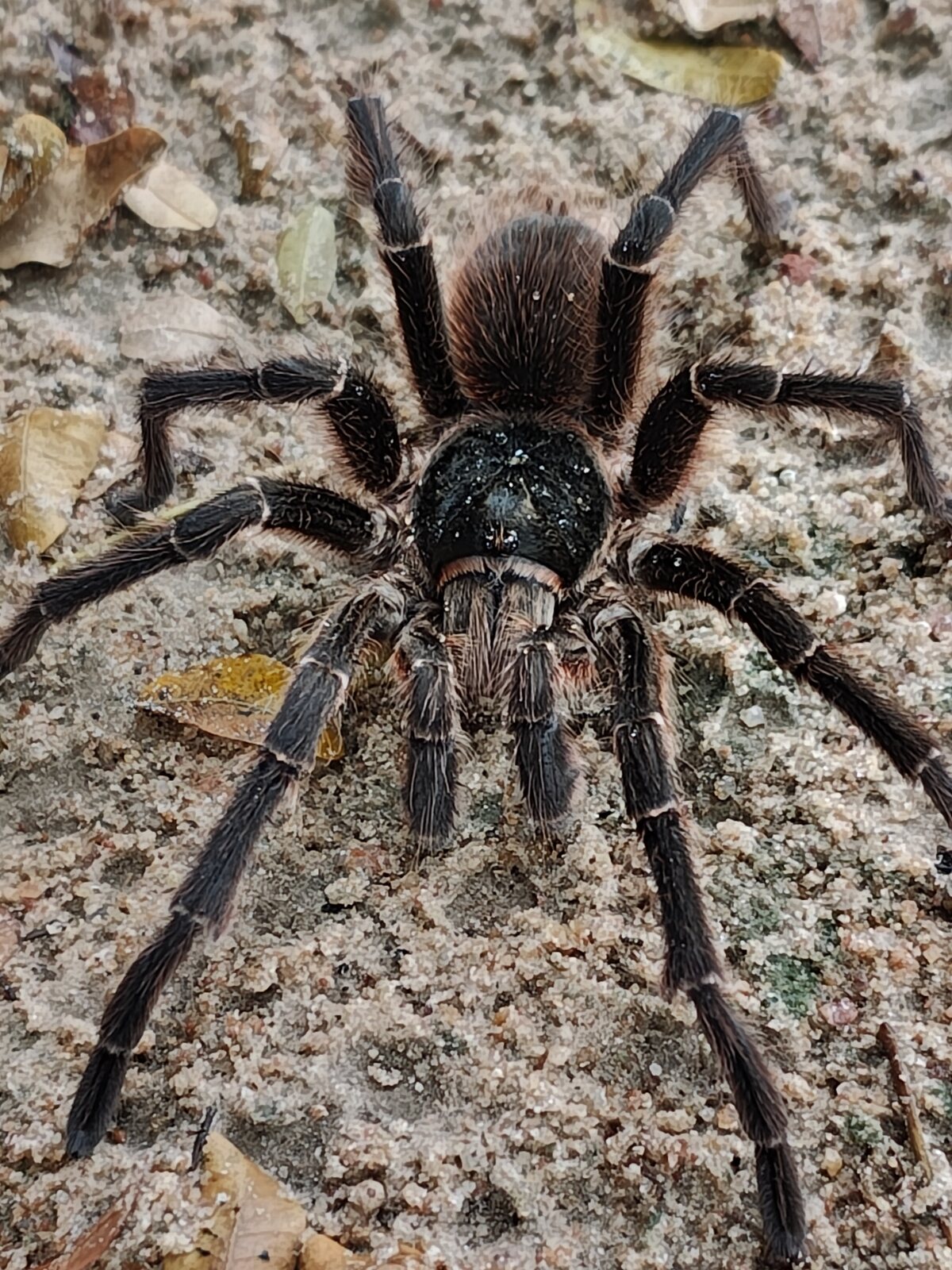
Velvety black rump tarantula from the Chaco of Bolivia, Paraguay and northern Argentina - one of the calmest Acanthoscurria, and the species long traded in the hobby as "A. sternalis" (a synonym). Despite the old "Brazilian Black Velvet" trade name it is not Brazilian. Females reach about 13-15 cm, mature around six years (a published life-cycle study gives roughly 20 moults) and can live well past a decade. A big, docile, always-visible display spider that eats everything offered.
-
 🌍 Terrestrial
Acanthoscurria natalensis
Natal Brown Birdeater
Beginner Forgiving of common mistakes. Tolerant of temperature/humidity variation. Great first tarantula. 🌍 Terrestrial Lives on or near the ground. Needs floor space more than height. Falls from height can be fatal - keep décor low. 🌎 New World From the Americas: can flick urticating (irritating) hairs as a first defence, and venom is generally milder. 🟢 Docile Generally slow-moving and tolerant of handling. Rarely threatens or bites. Great for beginners. 🍽️ Voracious eater Aggressive feeding response. Will tackle prey eagerly and rarely refuses a meal. Adjust feeding schedule accordingly - overfeeding shortens lifespan. ⚠️ Flicks hairs Uses urticating (barbed) hairs on the abdomen as a primary defence. These hairs can cause skin irritation and must be kept away from eyes. New World species only.- Temp
- 22-28°C
- Humidity
- 65-75%
- Adult DLS
- 13-16 cm
- Moult
- Sling ~3w - Adult ~11mo
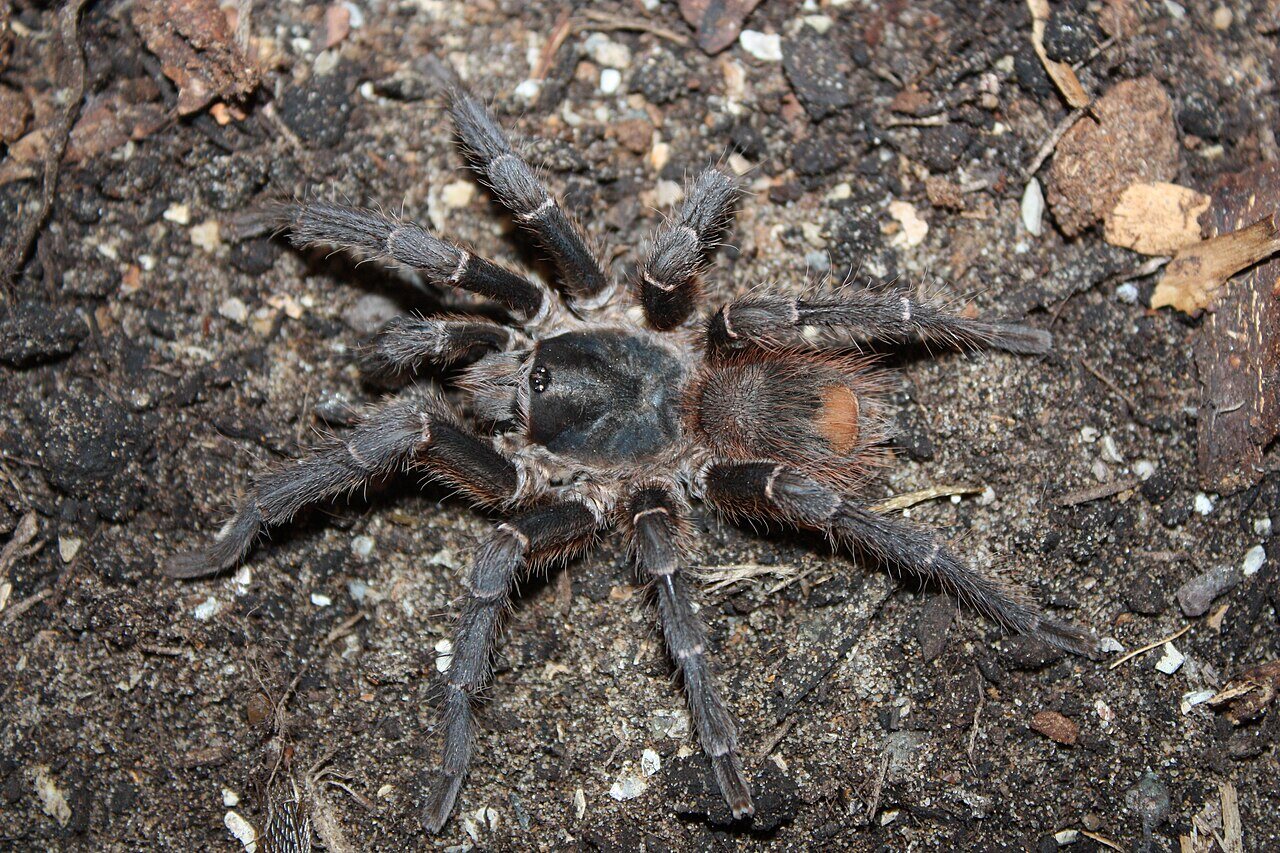
Big brown Brazilian birdeater from the north-east caatinga, and the valid name for the spider the hobby long sold as "A. parahybana" (now a synonym). Dark brown-black body set with white hairs from knee to toe, heavy-bodied and bold at feeding time but relaxed with keepers. Sits in the open, grows to 13-15 cm, and shares the easy husbandry of its genus. Rare in UK shops - a breeder/show species.
-
 🌍 Terrestrial
Acanthoscurria theraphosoides
Giant Whitebanded
Intermediate Requires consistent husbandry - more sensitive to ventilation, humidity, or feeding schedule. Some experience recommended. 🌍 Terrestrial Lives on or near the ground. Needs floor space more than height. Falls from height can be fatal - keep décor low. 🌎 New World From the Americas: can flick urticating (irritating) hairs as a first defence, and venom is generally milder. ⚠️ Defensive Will adopt a threat posture (rearing up, showing fangs) when disturbed. May bite if provoked. Approach with care and use a catch cup for rehoming. ⚠️ Flicks hairs Uses urticating (barbed) hairs on the abdomen as a primary defence. These hairs can cause skin irritation and must be kept away from eyes. New World species only. 🍽️ Voracious eater Aggressive feeding response. Will tackle prey eagerly and rarely refuses a meal. Adjust feeding schedule accordingly - overfeeding shortens lifespan.- Temp
- 22-27°C
- Humidity
- 65-75%
- Adult DLS
- 16-20 cm
- Moult
- Sling ~3w - Adult ~10mo
The giant black-and-white Acanthoscurria described way back in 1871 - the hobby name "brocklehursti" (Giant Whitebanded) is its junior synonym. Narrow white bands at every leg joint over a black frame, an Amazonian giant at 16-20 cm legspan, and hair-flicking to match the size. Bold rather than aggressive, an eating machine. Taxonomy footnote: the huge 18-23 cm "brocklehursti" of old trade lists is now thought to be a wide-banded variant of A. geniculata.
-
 🌳 Arboreal
Amazonius germani
Orange Chevron Tree Spider
Intermediate Requires consistent husbandry - more sensitive to ventilation, humidity, or feeding schedule. Some experience recommended. 🌳 Arboreal Lives above ground in trees or plants. Needs height and vertical climbing surfaces. Secure lid essential - they climb glass. 🌎 New World From the Americas: can flick urticating (irritating) hairs as a first defence, and venom is generally milder. ⚡ Fast Moves very quickly, especially when startled. Can cross an enclosure in the blink of an eye. Not recommended for handling. ⚠️ Defensive Will adopt a threat posture (rearing up, showing fangs) when disturbed. May bite if provoked. Approach with care and use a catch cup for rehoming. 🕸️ Heavy webber Dense, prolific webbing behaviour. Will carpet the entire enclosure in thick silk - this is normal and healthy. Provides a visual indicator of the spider's territory.- Temp
- 23-27°C
- Humidity
- 65-80%
- Adult DLS
- 13-16 cm
- Moult
- Sling ~3w - Adult ~10mo
South American orange tree spider - a bright orange arboreal that comes with genuine speed: one of the fastest genera in the hobby. Described in 2022 from Brazil and French Guiana (old hobby stock circulated as Tapinauchenius/Pseudoclamoris gigas). New World in geography, but as a psalmopoeine it has NO urticating hairs - its defences are teleport-level speed and a willingness to bite. A look-but-don't-touch display animal for keepers comfortable with fast arboreals.
-
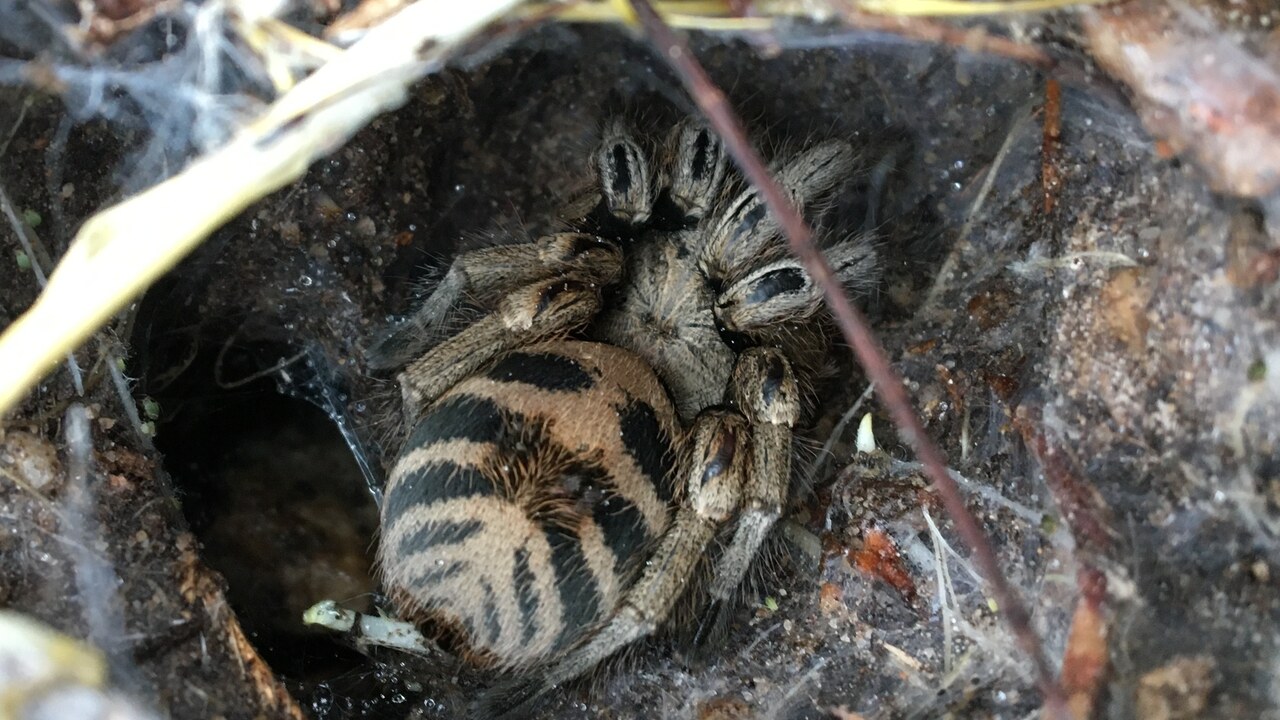 🌍 Terrestrial
Anqasha picta
Blue Femur Tiger Rump
Beginner Forgiving of common mistakes. Tolerant of temperature/humidity variation. Great first tarantula. 🌍 Terrestrial Lives on or near the ground. Needs floor space more than height. Falls from height can be fatal - keep décor low. 🌎 New World From the Americas: can flick urticating (irritating) hairs as a first defence, and venom is generally milder. 💨 Skittish Easily startled - may bolt or dart suddenly when disturbed. Secure lids are essential as they can be escape artists. ⚡ Fast Moves very quickly, especially when startled. Can cross an enclosure in the blink of an eye. Not recommended for handling. 🟢 Docile Generally slow-moving and tolerant of handling. Rarely threatens or bites. Great for beginners.- Temp
- 20-26°C
- Humidity
- 60-70%
- Adult DLS
- 8-10 cm
- Moult
- Sling ~4w - Adult ~10mo
A high-Andean tiger rump dwarf from the Cordillera Blanca of Peru - dark body, metallic blue-grey femora and a red-bronze abdominal pattern, renamed into the genus Anqasha (Sherwood & Gabriel, 2022, after the Quechua word for blue and the Áncash region). Photographed in the wild at 2,500 m, this is a genuinely cool-climate tarantula that thrives at UK room temperature. Quick and flighty rather than defensive, 8-10 cm, and a relative newcomer to UK shops at around £35 a sling. Taxonomic flux note: "picta" stock may also involve the closely related A. lima or A. minaperinensis lineages.
-
🕳️ Fossorial
Antikuna sp. Herradura
Andean Blue Beauty
Beginner Forgiving of common mistakes. Tolerant of temperature/humidity variation. Great first tarantula. 🕳️ Fossorial Lives underground in deep burrows. Needs deep, packed substrate to dig. You may rarely see them - patience required. 🌎 New World From the Americas: can flick urticating (irritating) hairs as a first defence, and venom is generally milder. 🟢 Docile Generally slow-moving and tolerant of handling. Rarely threatens or bites. Great for beginners. Reclusive- Temp
- 18-22°C
- Humidity
- 60-75%
- Adult DLS
- 10-12 cm
- Moult
- Sling ~4w - Adult ~11mo
The Andean Blue Beauty ("Herradura" = horseshoe, after its type locality) - an undescribed Antikuna, the genus that holds the ALTITUDE RECORD for any tarantula (4,689 m in Peru). Gorgeous blue over a fossorial lifestyle: burrows under stones with a light silk collar, disappears for days, then ambushes with a quick lunge. Cool care to the bone (18-22 °C, no heat mat ever) - a British windowsill is practically its homeland. Brand new to the hobby at £60 a sling.
-
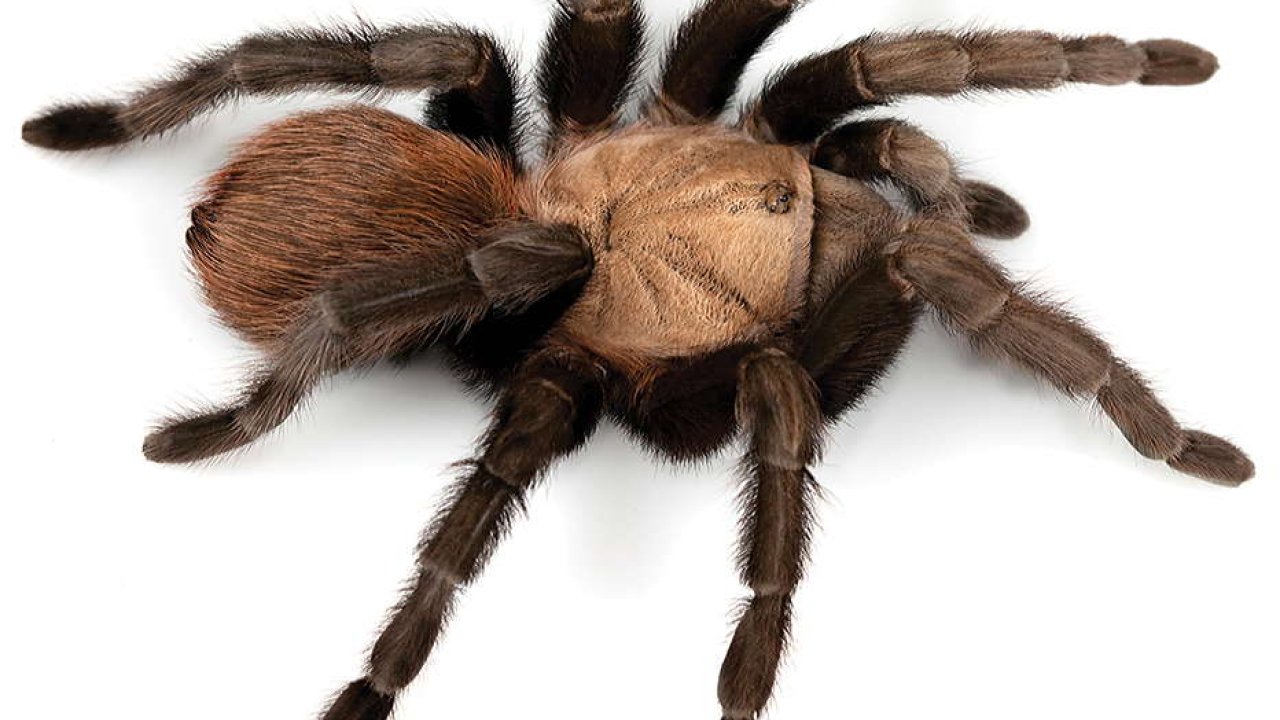 🌍 Terrestrial
Aphonopelma anax
Texas Tan
Beginner Forgiving of common mistakes. Tolerant of temperature/humidity variation. Great first tarantula. 🌍 Terrestrial Lives on or near the ground. Needs floor space more than height. Falls from height can be fatal - keep décor low. 🌎 New World From the Americas: can flick urticating (irritating) hairs as a first defence, and venom is generally milder. 💨 Skittish Easily startled - may bolt or dart suddenly when disturbed. Secure lids are essential as they can be escape artists. ⚠️ Flicks hairs Uses urticating (barbed) hairs on the abdomen as a primary defence. These hairs can cause skin irritation and must be kept away from eyes. New World species only.- Temp
- 22-28°C
- Humidity
- 60-75%
- Adult DLS
- 13-15 cm
- Moult
- Sling ~3w - Adult ~12mo
Texas tan - a slow-growing, drought-tolerant desert species. Bone-dry substrate, small water dish, minimal humidity. Deep substrate optional; they burrow opportunistically.
-
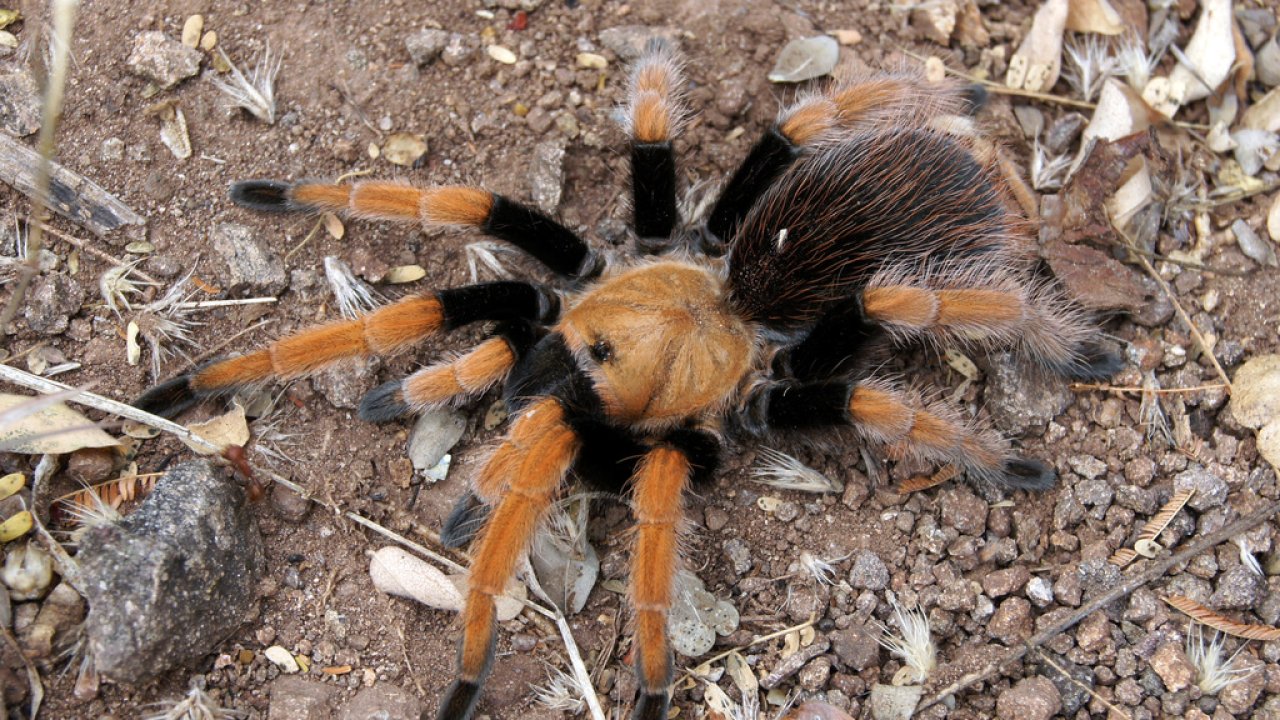 🌍 Terrestrial
Aphonopelma bicoloratum
Mexican Blood Leg
Beginner Forgiving of common mistakes. Tolerant of temperature/humidity variation. Great first tarantula. 🌍 Terrestrial Lives on or near the ground. Needs floor space more than height. Falls from height can be fatal - keep décor low. 🌎 New World From the Americas: can flick urticating (irritating) hairs as a first defence, and venom is generally milder. 💨 Skittish Easily startled - may bolt or dart suddenly when disturbed. Secure lids are essential as they can be escape artists. ⚠️ Flicks hairs Uses urticating (barbed) hairs on the abdomen as a primary defence. These hairs can cause skin irritation and must be kept away from eyes. New World species only.- Temp
- 22-28°C
- Humidity
- 60-75%
- Adult DLS
- 13-15 cm
- Moult
- Sling ~3w - Adult ~12mo
Mexican bloodleg - a slow-growing dwarf-medium desert species. Dry coco fibre substrate, water dish, half-log hide. Patience required - grows very slowly.
-
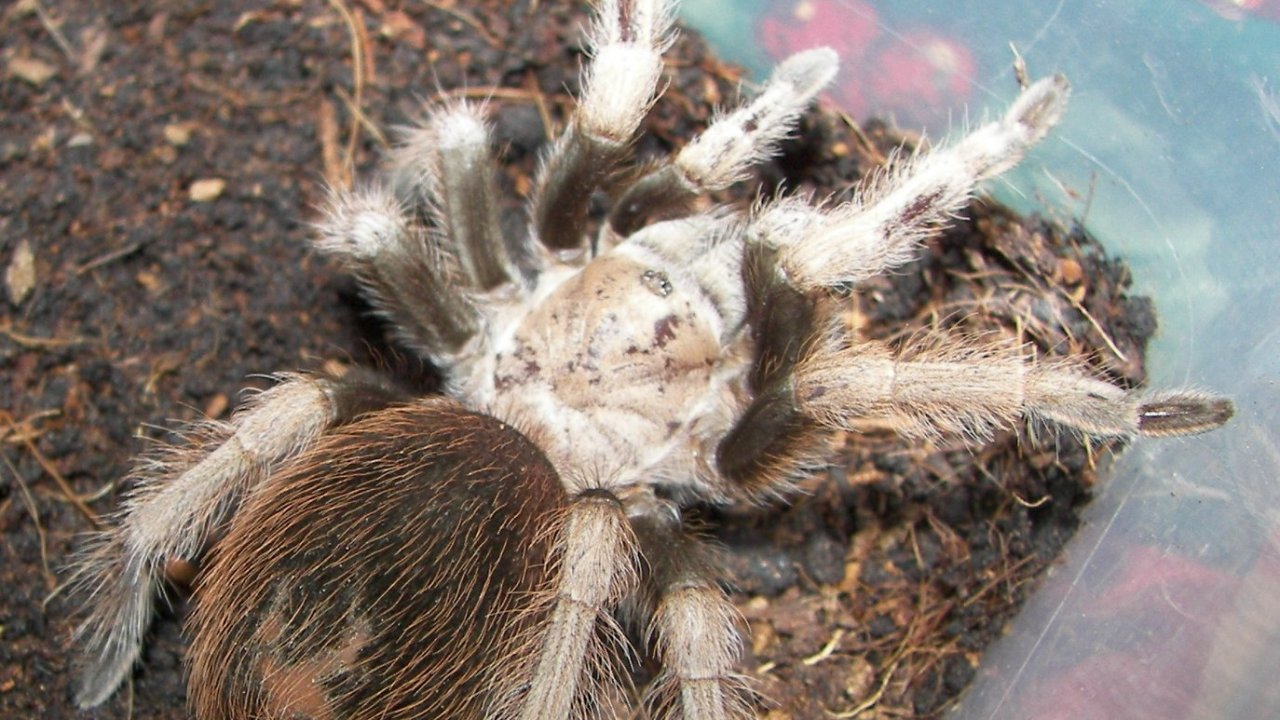 🌍 Terrestrial
Aphonopelma chalcodes
Desert Blonde
Beginner Forgiving of common mistakes. Tolerant of temperature/humidity variation. Great first tarantula. 🌍 Terrestrial Lives on or near the ground. Needs floor space more than height. Falls from height can be fatal - keep décor low. 🌎 New World From the Americas: can flick urticating (irritating) hairs as a first defence, and venom is generally milder. 🟢 Docile Generally slow-moving and tolerant of handling. Rarely threatens or bites. Great for beginners. 🟢 Calm Deliberate and unhurried movements. Not easily startled. Usually sits contentedly in the open. ⏳ Long-lived Females can live 15-30+ years with good care. A significant long-term commitment compared to the 2-5 year male lifespan.- Temp
- 24-28°C
- Humidity
- 40-55%
- Adult DLS
- 13-15 cm
- Moult
- Sling ~3w - Adult ~18mo
Obligate deep-burrower from one of the driest native ranges in the hobby. Keep substrate bone-dry.
-
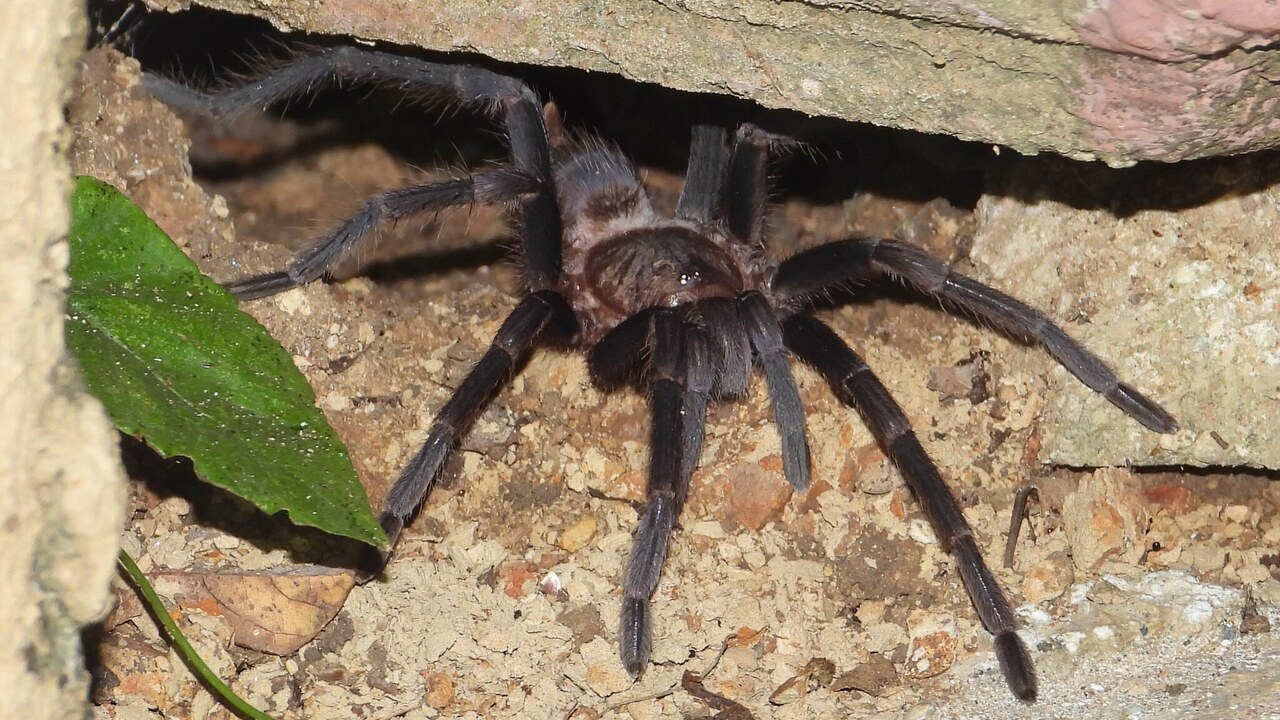 🌍 Terrestrial
Aphonopelma crinirufum
Costa Rican Bluefront
Beginner Forgiving of common mistakes. Tolerant of temperature/humidity variation. Great first tarantula. 🌍 Terrestrial Lives on or near the ground. Needs floor space more than height. Falls from height can be fatal - keep décor low. 🌎 New World From the Americas: can flick urticating (irritating) hairs as a first defence, and venom is generally milder. 🟢 Docile Generally slow-moving and tolerant of handling. Rarely threatens or bites. Great for beginners. 🟢 Calm Deliberate and unhurried movements. Not easily startled. Usually sits contentedly in the open. ⏳ Long-lived Females can live 15-30+ years with good care. A significant long-term commitment compared to the 2-5 year male lifespan.- Temp
- 21-28°C
- Humidity
- 65-75%
- Adult DLS
- 10-13 cm
- Moult
- Sling ~4w - Adult ~11mo
The Costa Rican Bluefront - a chocolate-brown Aphonopelma with striking steel-blue chelicerae and front legs, from Costa Rican dry forest. Classic New World thrift: docile, reclusive, given to sealing its burrow and fasting for weeks on end for no visible reason. Slow-growing even by Aphonopelma standards, with females among the longest-lived spiders in the hobby at 20-30 years. A patient, undemanding species that rewards keepers who like their tarantulas calm and their care schedules relaxed.
-
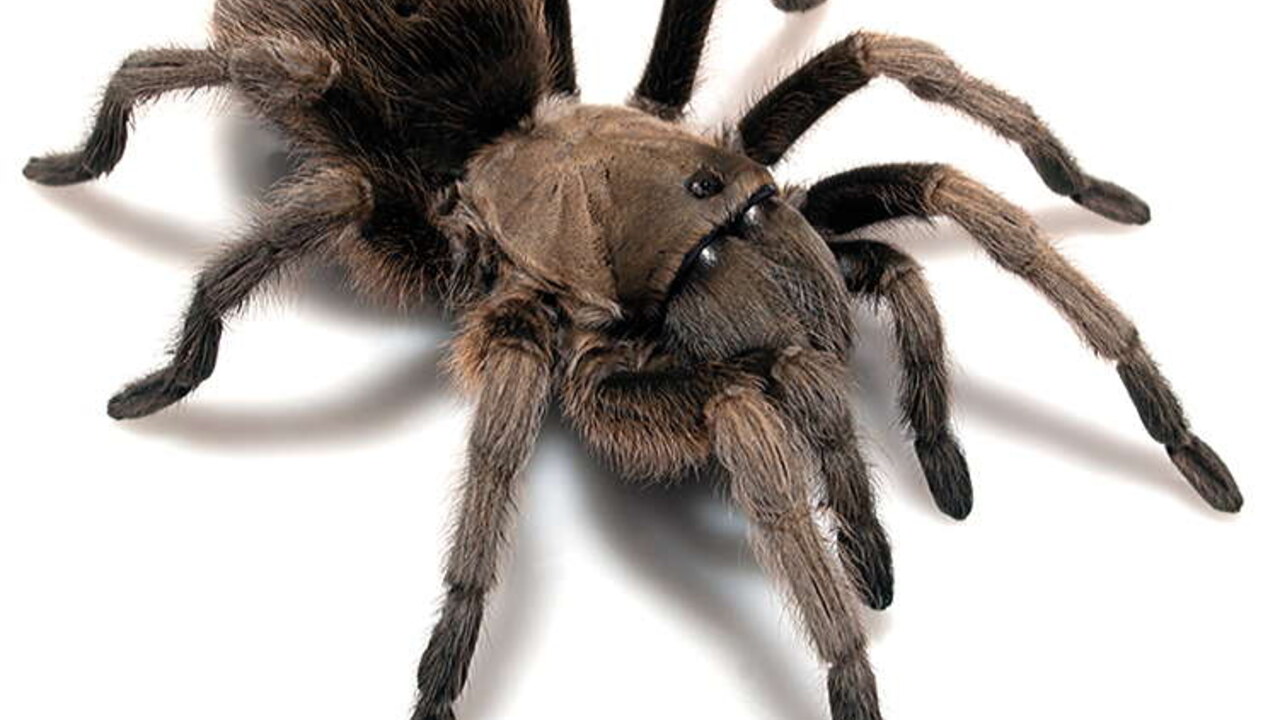 🌍 Terrestrial
Aphonopelma gabeli
Carlsbad Green
Beginner Forgiving of common mistakes. Tolerant of temperature/humidity variation. Great first tarantula. 🌍 Terrestrial Lives on or near the ground. Needs floor space more than height. Falls from height can be fatal - keep décor low. 🌎 New World From the Americas: can flick urticating (irritating) hairs as a first defence, and venom is generally milder. 🟢 Docile Generally slow-moving and tolerant of handling. Rarely threatens or bites. Great for beginners. 🟢 Calm Deliberate and unhurried movements. Not easily startled. Usually sits contentedly in the open. ⏳ Long-lived Females can live 15-30+ years with good care. A significant long-term commitment compared to the 2-5 year male lifespan.- Temp
- 21-27°C
- Humidity
- 40-55%
- Adult DLS
- 12-15 cm
- Moult
- Sling ~4w - Adult ~12mo
The Carlsbad Green (Aphonopelma gabeli, Smith 1995) - a Chihuahuan Desert Aphonopelma with an olive-bronze carapace sheen (brightest fresh after a moult) and comically oversized chelicerae for its frame. Desert-proof in captivity: months-long fasts, bone-dry substrate, decades-long females - US keepers literally call damp substrate the top cause of death for this species. Calm, slow and nearly indestructible, the way only American Aphonopelma are. UK stock is scarce and often wild-caught pairs; CB slings appear rarely and are worth the wait.
-
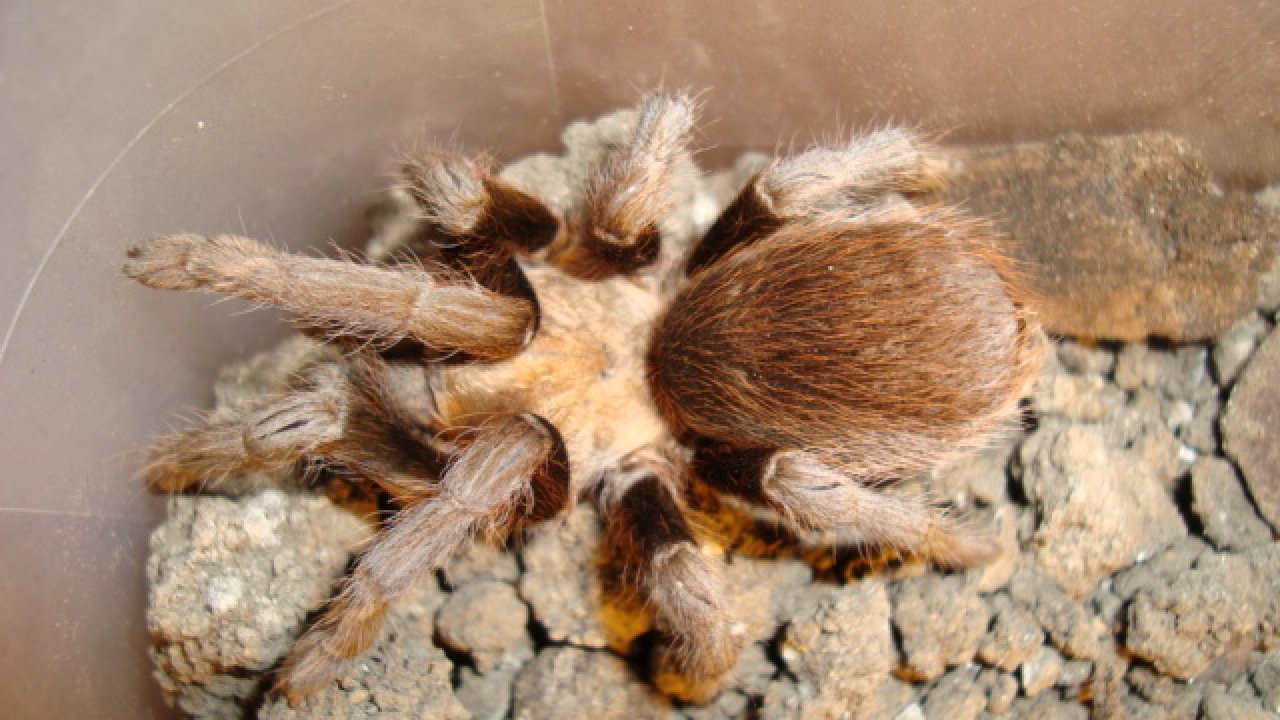 🌍 Terrestrial
Aphonopelma hentzi
Texas Brown
Beginner Forgiving of common mistakes. Tolerant of temperature/humidity variation. Great first tarantula. 🌍 Terrestrial Lives on or near the ground. Needs floor space more than height. Falls from height can be fatal - keep décor low. 🌎 New World From the Americas: can flick urticating (irritating) hairs as a first defence, and venom is generally milder. 💨 Skittish Easily startled - may bolt or dart suddenly when disturbed. Secure lids are essential as they can be escape artists. ⚠️ Flicks hairs Uses urticating (barbed) hairs on the abdomen as a primary defence. These hairs can cause skin irritation and must be kept away from eyes. New World species only.- Temp
- 22-28°C
- Humidity
- 60-75%
- Adult DLS
- 13-15 cm
- Moult
- Sling ~3w - Adult ~12mo
Texas brown - extremely hardy. Bone-dry substrate, water dish, low humidity. Tolerant of room temperature fluctuation; no supplementary heat needed in most homes.
-
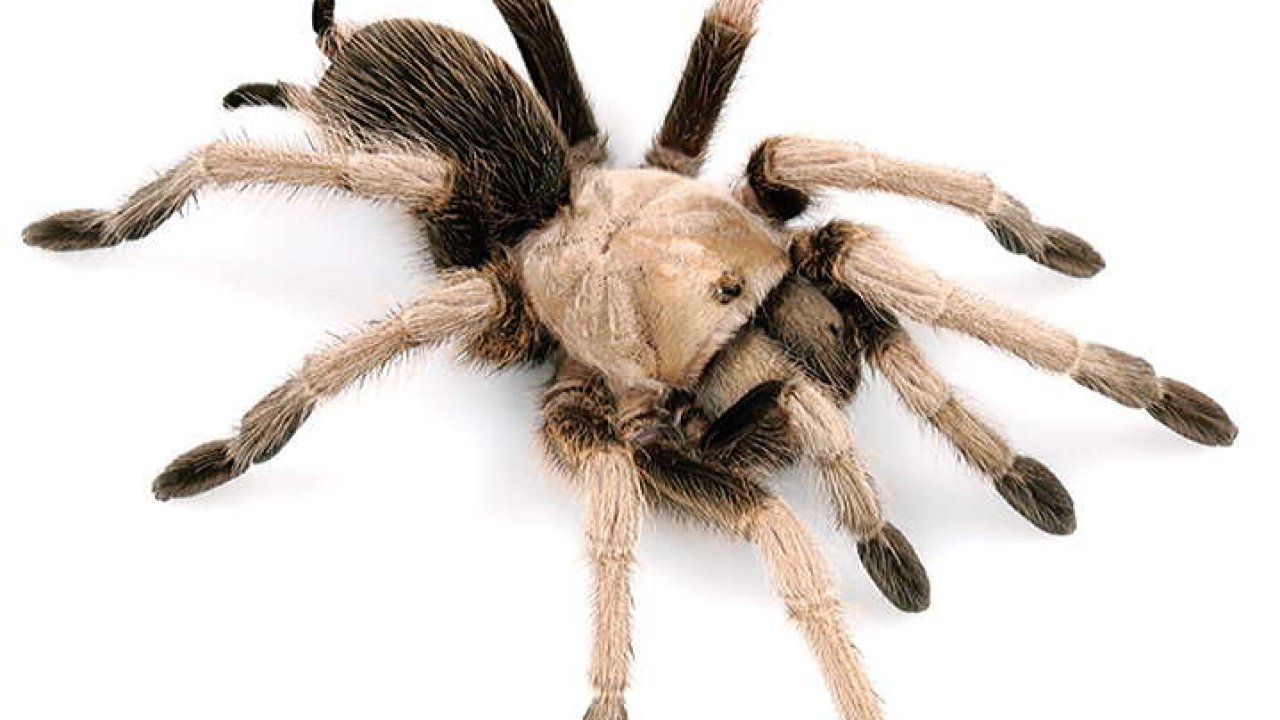 🌍 Terrestrial
Aphonopelma iodius
Nevada Dusty Blonde
Beginner Forgiving of common mistakes. Tolerant of temperature/humidity variation. Great first tarantula. 🌍 Terrestrial Lives on or near the ground. Needs floor space more than height. Falls from height can be fatal - keep décor low. 🌎 New World From the Americas: can flick urticating (irritating) hairs as a first defence, and venom is generally milder. 💨 Skittish Easily startled - may bolt or dart suddenly when disturbed. Secure lids are essential as they can be escape artists. ⚠️ Flicks hairs Uses urticating (barbed) hairs on the abdomen as a primary defence. These hairs can cause skin irritation and must be kept away from eyes. New World species only.- Temp
- 22-28°C
- Humidity
- 60-75%
- Adult DLS
- 13-15 cm
- Moult
- Sling ~3w - Adult ~12mo
Nevada dust - a forgiving arid terrestrial. Dry, well-draining substrate with a water dish. Growth very slow; feeds sparingly as an adult.
-
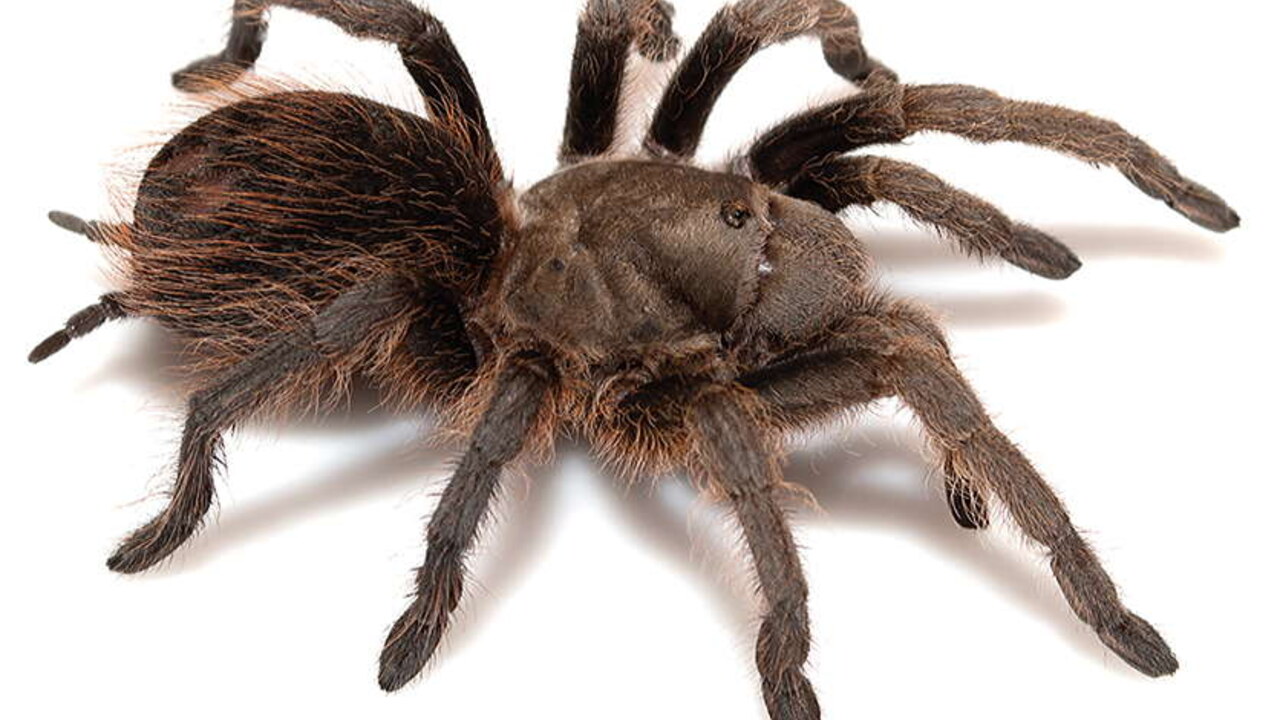 🌍 Terrestrial
Aphonopelma madera
Madera Canyon Black
Beginner Forgiving of common mistakes. Tolerant of temperature/humidity variation. Great first tarantula. 🌍 Terrestrial Lives on or near the ground. Needs floor space more than height. Falls from height can be fatal - keep décor low. 🌎 New World From the Americas: can flick urticating (irritating) hairs as a first defence, and venom is generally milder. 🟢 Docile Generally slow-moving and tolerant of handling. Rarely threatens or bites. Great for beginners. 🟢 Calm Deliberate and unhurried movements. Not easily startled. Usually sits contentedly in the open. ⏳ Long-lived Females can live 15-30+ years with good care. A significant long-term commitment compared to the 2-5 year male lifespan.- Temp
- 20-26°C
- Humidity
- 40-55%
- Adult DLS
- 12-16 cm
- Moult
- Sling ~4w - Adult ~12mo
The Madera Canyon Black - an ebony montane Aphonopelma from a sliver of the Santa Rita Mountains, Arizona, described in the great 2016 US revision. Cool-tolerant by descent (mountain nights are cold), easy by genus tradition: calm, dry-kept, slow-growing, decades-lived. Narrow natural range means CB stock is limited and treasured - UK slings at around £40 vanish quickly. A bulletproof, jet-black American classic in miniature.
-
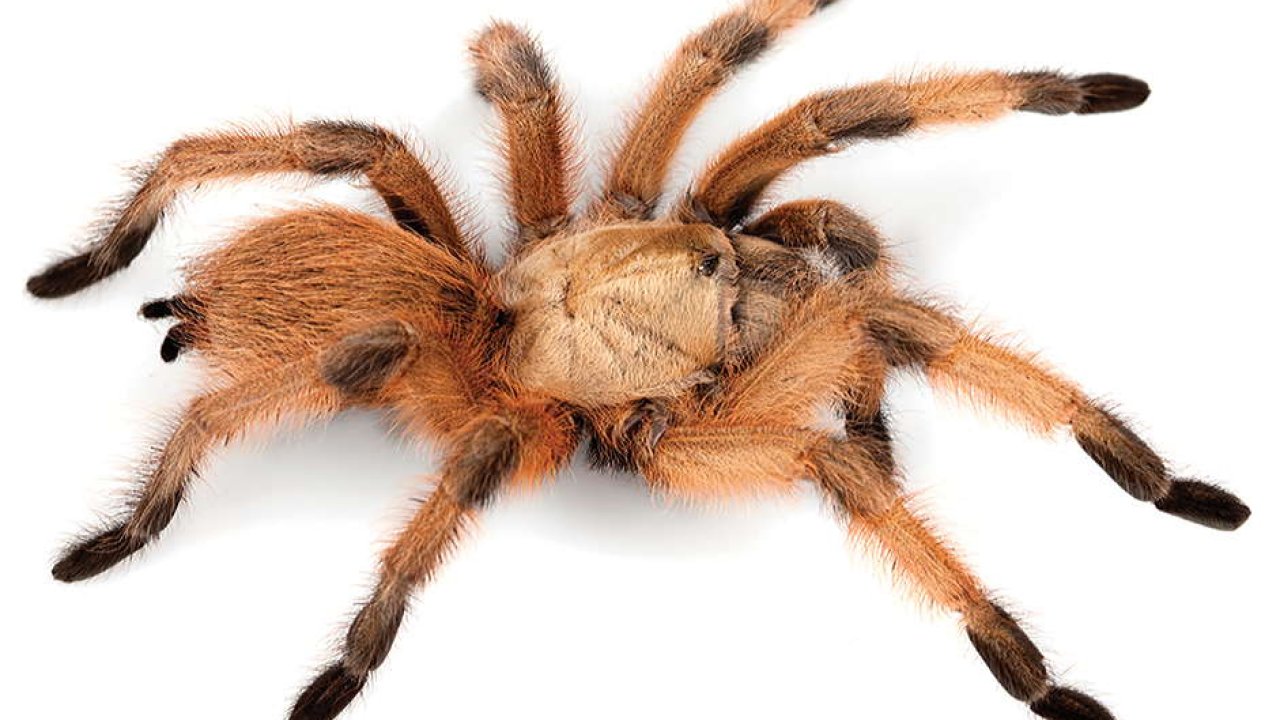 🌍 Terrestrial
Aphonopelma moderatum
Rio Grande Gold
Beginner Forgiving of common mistakes. Tolerant of temperature/humidity variation. Great first tarantula. 🌍 Terrestrial Lives on or near the ground. Needs floor space more than height. Falls from height can be fatal - keep décor low. 🌎 New World From the Americas: can flick urticating (irritating) hairs as a first defence, and venom is generally milder. 💨 Skittish Easily startled - may bolt or dart suddenly when disturbed. Secure lids are essential as they can be escape artists. ⚠️ Flicks hairs Uses urticating (barbed) hairs on the abdomen as a primary defence. These hairs can cause skin irritation and must be kept away from eyes. New World species only.- Temp
- 22-28°C
- Humidity
- 60-75%
- Adult DLS
- 13-15 cm
- Moult
- Sling ~3w - Adult ~12mo
Rio Grande gold - a desert grassland species. Dry substrate, water dish, standard terrestrial floor space. Slow growth and a relaxed disposition.
-
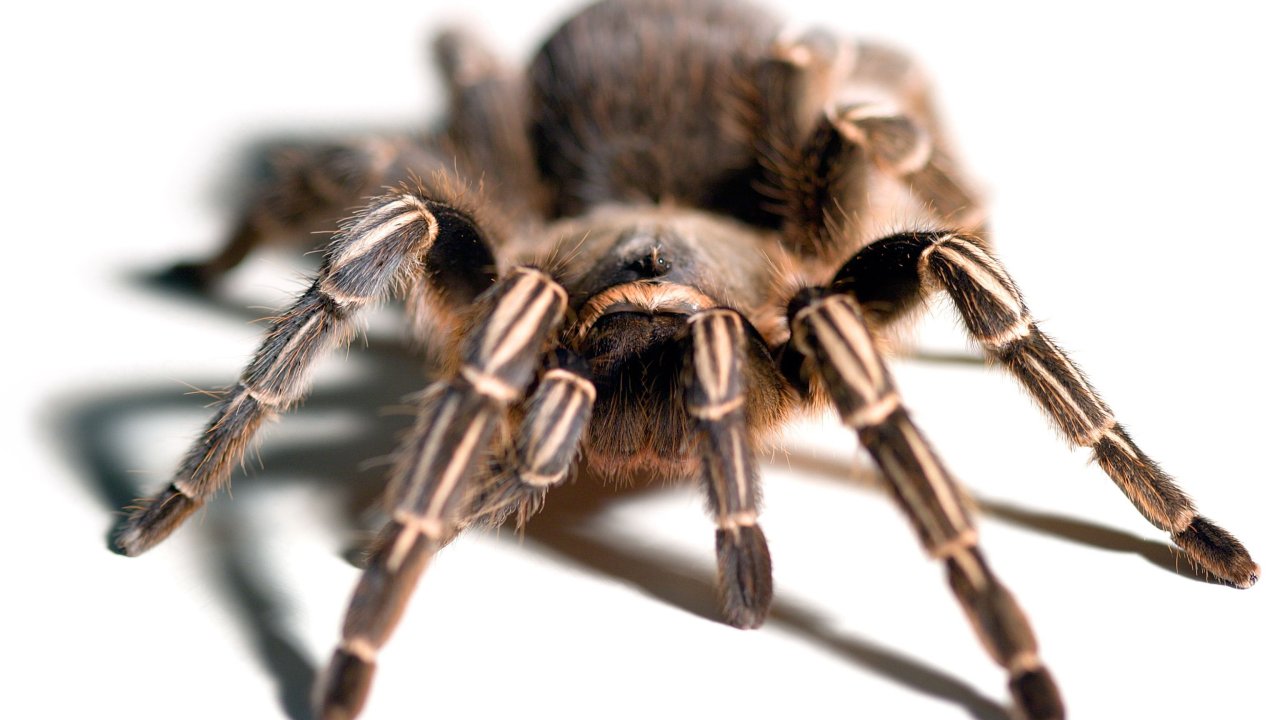 🌍 Terrestrial
Aphonopelma seemanni
Costa Rican Zebra
Beginner Forgiving of common mistakes. Tolerant of temperature/humidity variation. Great first tarantula. 🌍 Terrestrial Lives on or near the ground. Needs floor space more than height. Falls from height can be fatal - keep décor low. 🌎 New World From the Americas: can flick urticating (irritating) hairs as a first defence, and venom is generally milder. 💨 Skittish Easily startled - may bolt or dart suddenly when disturbed. Secure lids are essential as they can be escape artists. ⚠️ Flicks hairs Uses urticating (barbed) hairs on the abdomen as a primary defence. These hairs can cause skin irritation and must be kept away from eyes. New World species only.- Temp
- 22-28°C
- Humidity
- 60-75%
- Adult DLS
- 13-15 cm
- Moult
- Sling ~3w - Adult ~12mo
Costa Rican zebra - a burrower from streamside banks. Give 15-20 cm of slightly damp packed substrate and a starter burrow against the glass; they dig extensively.
-
🌍 Terrestrial
Aphonopelma sp. Chocolate
Yucatan Chocolate
Beginner Forgiving of common mistakes. Tolerant of temperature/humidity variation. Great first tarantula. 🌍 Terrestrial Lives on or near the ground. Needs floor space more than height. Falls from height can be fatal - keep décor low. 🌎 New World From the Americas: can flick urticating (irritating) hairs as a first defence, and venom is generally milder. 🟢 Docile Generally slow-moving and tolerant of handling. Rarely threatens or bites. Great for beginners. 🟢 Calm Deliberate and unhurried movements. Not easily startled. Usually sits contentedly in the open. ⏳ Long-lived Females can live 15-30+ years with good care. A significant long-term commitment compared to the 2-5 year male lifespan.- Temp
- 20-28°C
- Humidity
- 50-60%
- Adult DLS
- 9-12 cm
- Moult
- Sling ~4w - Adult ~12mo
The Yucatan Chocolate - an undescribed Mexican Aphonopelma in rich mahogany-brown, first offered in the UK in 2026. Everything about it follows the genus playbook: docile, slow-growing, decades-lived females, dry easy husbandry. Husbandry history is short (provisional stats throughout) but Aphonopelma are among the most forgiving tarantulas on earth. A rare, pretty curiosity for New World collectors at £70+ a sling.
-
🌍 Terrestrial
Aphonopelma sp. Diamond Back
Veracruz Diamond Back
Beginner Forgiving of common mistakes. Tolerant of temperature/humidity variation. Great first tarantula. 🌍 Terrestrial Lives on or near the ground. Needs floor space more than height. Falls from height can be fatal - keep décor low. 🌎 New World From the Americas: can flick urticating (irritating) hairs as a first defence, and venom is generally milder. 🟢 Docile Generally slow-moving and tolerant of handling. Rarely threatens or bites. Great for beginners. 🟢 Calm Deliberate and unhurried movements. Not easily startled. Usually sits contentedly in the open. ⏳ Long-lived Females can live 15-30+ years with good care. A significant long-term commitment compared to the 2-5 year male lifespan.- Temp
- 20-28°C
- Humidity
- 50-60%
- Adult DLS
- 10-12 cm
- Moult
- Sling ~4w - Adult ~12mo
The Veracruz Diamond Back - another undescribed Mexican Aphonopelma, named for the pale diamond marking on its carapace over dark abdomen and rear legs contrasting with pale front limbs. Sized and coloured like its cousin A. bicoloratum, and equally easy: docile, slow, dry-kept, decades-lived. Rare in the UK - slings are cheap when they appear, adult females command three figures. A low-effort, long-haul New World for patient collectors.
-
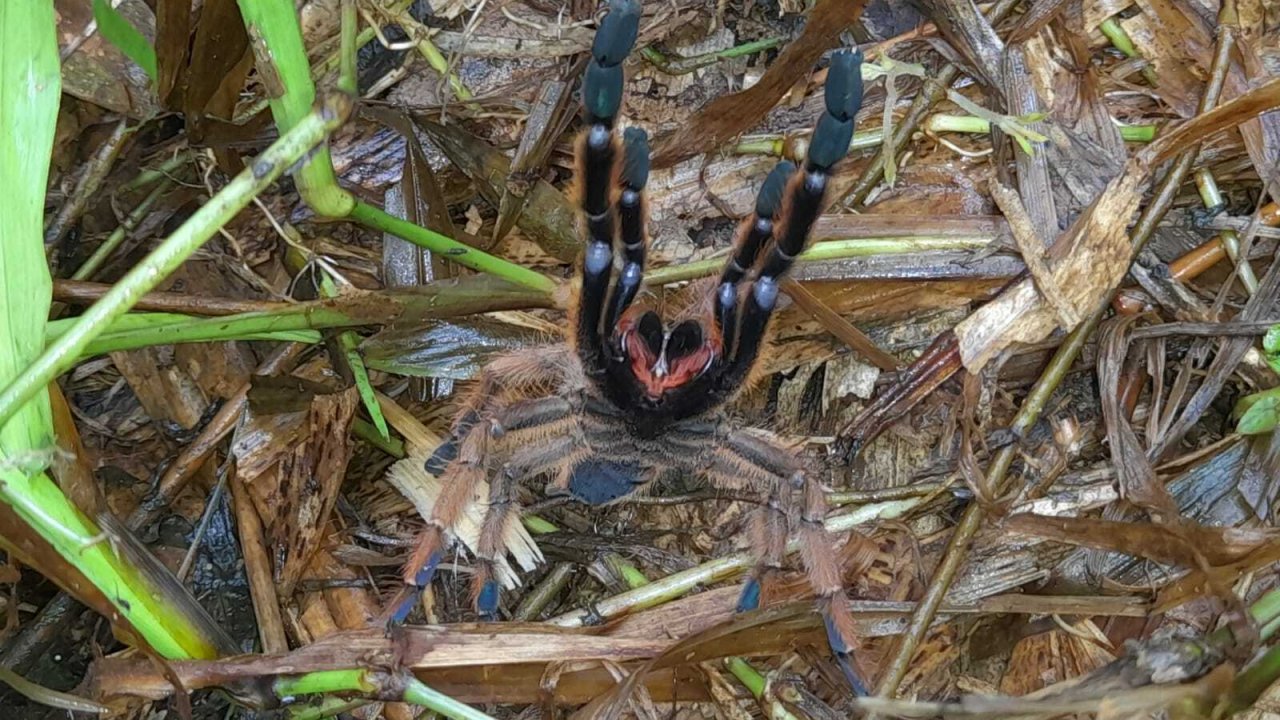 🌳 Arboreal
Aspinochilus rufus
Peach Earth Tiger
Advanced Demanding or potentially dangerous. May be very fast, defensive, or have medically significant venom. Experienced keepers only. 🌳 Arboreal Lives above ground in trees or plants. Needs height and vertical climbing surfaces. Secure lid essential - they climb glass. 🌍 Old World From Africa, Asia or Australasia: no urticating hairs - defence is speed and a potent bite. Medically significant venom possible. ⚠️ Defensive Will adopt a threat posture (rearing up, showing fangs) when disturbed. May bite if provoked. Approach with care and use a catch cup for rehoming. ⚡ Fast Moves very quickly, especially when startled. Can cross an enclosure in the blink of an eye. Not recommended for handling. ☠️ Potent venom Possesses medically significant venom. A bite can cause intense pain, muscle cramps, sweating, and may require medical attention. Old World species typically fall here as they lack urticating hairs. 🕸️ Heavy webber Dense, prolific webbing behaviour. Will carpet the entire enclosure in thick silk - this is normal and healthy. Provides a visual indicator of the spider's territory.- Temp
- 22-28°C
- Humidity
- 70-80%
- Adult DLS
- 13-15 cm
- Moult
- Sling ~3w - Adult ~6mo
Described to science in 2024 from the montane rainforests of East Java - and known in the hobby for years as Phormingochilus sp. "Rufus" - the Peach Earth Tiger is a fast-growing Old World arboreal cloaked in soft peach-orange setae over dark legs. Females reach around 14 cm, web heavily around vertical cork, and are voracious, no-nonsense feeders. Defensive and very quick, with potent venom and no urticating hairs, this is an advanced display species that is rewarding to keep but should never be handled.
-
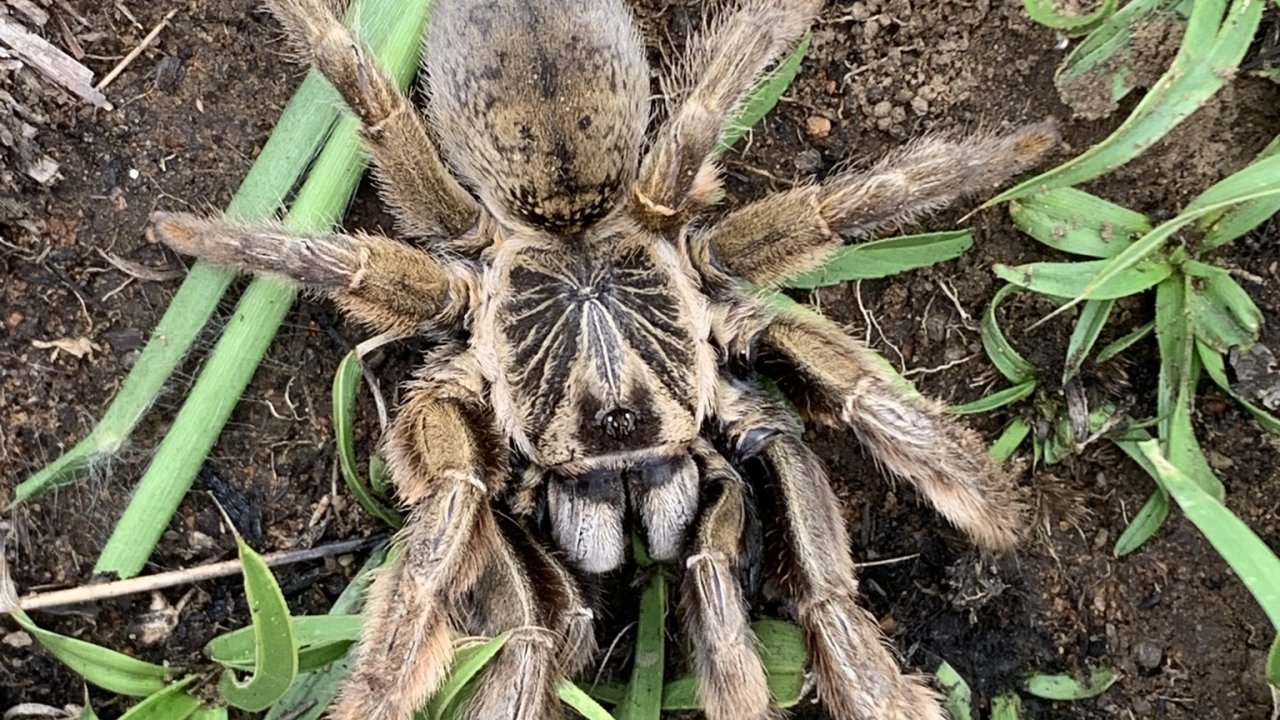 🕳️ Fossorial
Augacephalus ezendami
Mozambique Golden Baboon
Intermediate Requires consistent husbandry - more sensitive to ventilation, humidity, or feeding schedule. Some experience recommended. 🕳️ Fossorial Lives underground in deep burrows. Needs deep, packed substrate to dig. You may rarely see them - patience required. 🌍 Old World From Africa, Asia or Australasia: no urticating hairs - defence is speed and a potent bite. Medically significant venom possible. ⚠️ Defensive Will adopt a threat posture (rearing up, showing fangs) when disturbed. May bite if provoked. Approach with care and use a catch cup for rehoming. ☠️ Potent venom Possesses medically significant venom. A bite can cause intense pain, muscle cramps, sweating, and may require medical attention. Old World species typically fall here as they lack urticating hairs. 🕸️ Heavy webber Dense, prolific webbing behaviour. Will carpet the entire enclosure in thick silk - this is normal and healthy. Provides a visual indicator of the spider's territory.- Temp
- 24-28°C
- Humidity
- 60-70%
- Adult DLS
- 13-15 cm
- Moult
- Sling ~3w - Adult ~9mo
Golden carapace and femurs on a dark body. African fossorial - appreciates deep dry substrate.
-
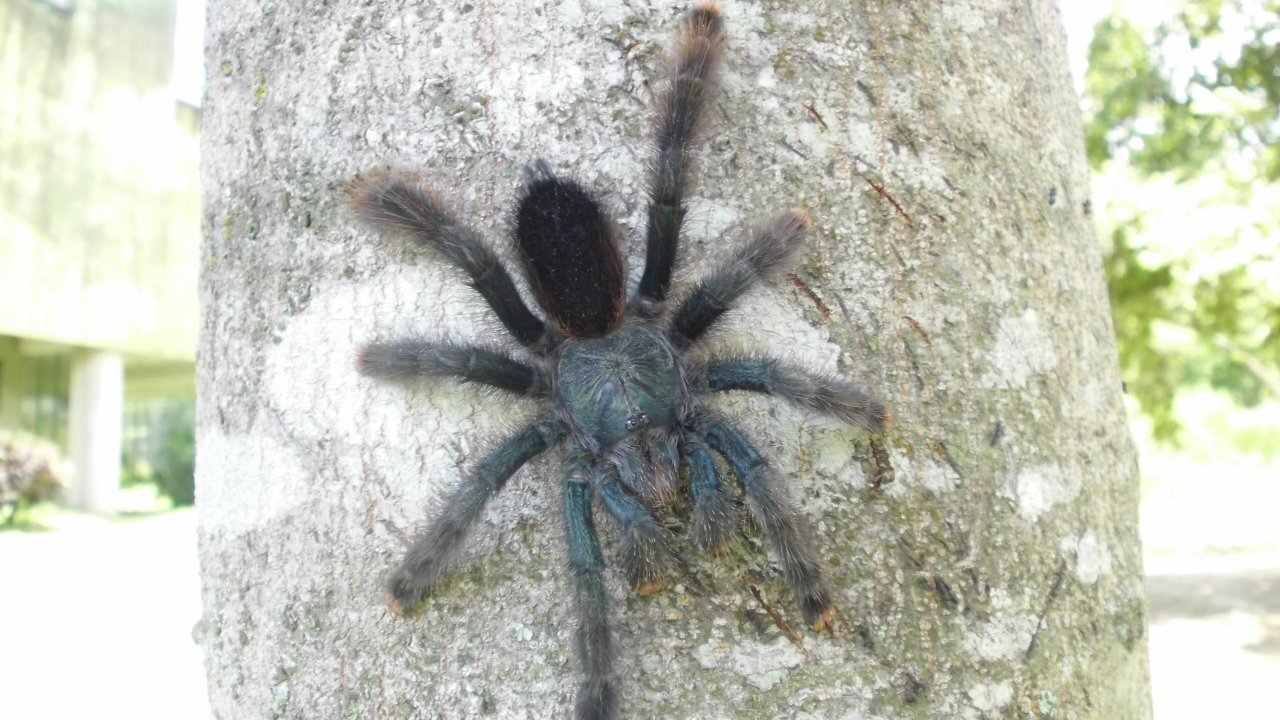 🌳 Arboreal
Avicularia avicularia
Common Pinktoe
Beginner Forgiving of common mistakes. Tolerant of temperature/humidity variation. Great first tarantula. 🌳 Arboreal Lives above ground in trees or plants. Needs height and vertical climbing surfaces. Secure lid essential - they climb glass. 🌎 New World From the Americas: can flick urticating (irritating) hairs as a first defence, and venom is generally milder. 🟢 Docile Generally slow-moving and tolerant of handling. Rarely threatens or bites. Great for beginners. 💨 Skittish Easily startled - may bolt or dart suddenly when disturbed. Secure lids are essential as they can be escape artists. ⚡ Fast Moves very quickly, especially when startled. Can cross an enclosure in the blink of an eye. Not recommended for handling.- Temp
- 22-26°C
- Humidity
- 70-85%
- Adult DLS
- 13-15 cm
- Moult
- Sling ~3w - Adult ~8mo
Classic dark-bodied pink-toed arboreal. Needs strong cross-ventilation - stagnant humidity kills Avicularia.
-
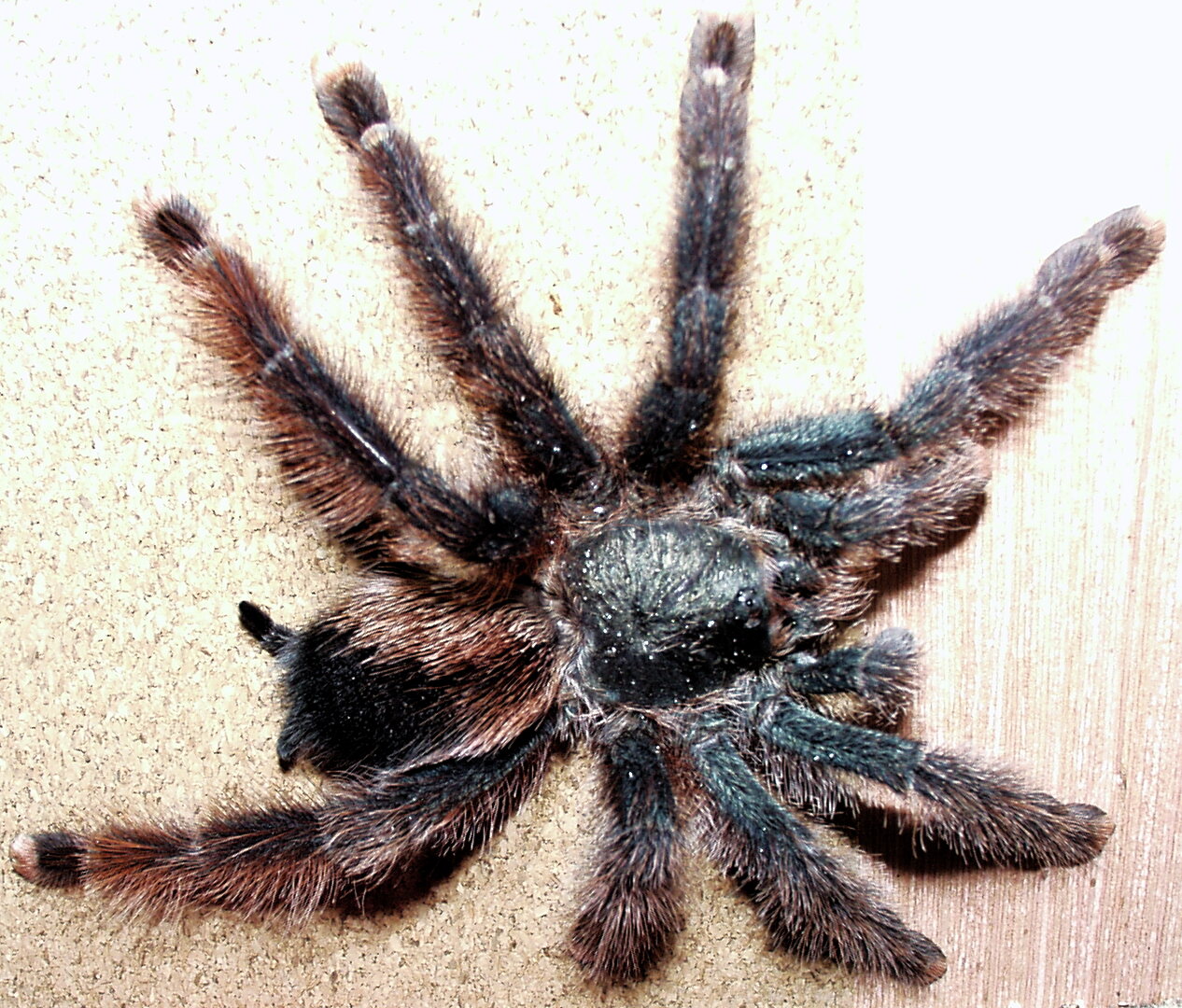 🌳 Arboreal
Avicularia braunshauseni
Giant Pinktoe
Intermediate Requires consistent husbandry - more sensitive to ventilation, humidity, or feeding schedule. Some experience recommended. 🌳 Arboreal Lives above ground in trees or plants. Needs height and vertical climbing surfaces. Secure lid essential - they climb glass. 🌎 New World From the Americas: can flick urticating (irritating) hairs as a first defence, and venom is generally milder. 🟢 Docile Generally slow-moving and tolerant of handling. Rarely threatens or bites. Great for beginners. 💨 Skittish Easily startled - may bolt or dart suddenly when disturbed. Secure lids are essential as they can be escape artists. ⚡ Fast Moves very quickly, especially when startled. Can cross an enclosure in the blink of an eye. Not recommended for handling. 🕸️ Heavy webber Dense, prolific webbing behaviour. Will carpet the entire enclosure in thick silk - this is normal and healthy. Provides a visual indicator of the spider's territory.- Temp
- 22-27°C
- Humidity
- 70-80%
- Adult DLS
- 13-17 cm
- Moult
- Sling ~3w - Adult ~10mo
The Giant Pinktoe - the largest pinktoe in the hobby at 13-17 cm, velvety dark green-grey with peach-pink toe tips. Name caveat: "braunshauseni" is a nomen dubium (the 2017 Avicularia revision found the type was never deposited), so this is a stable hobby label rather than a confirmed species - good captive stock is worth preserving regardless. Classic tall-enclosure pinktoe care: cross-ventilation or it dies, misted walls, and lightning bolts when startled.
-
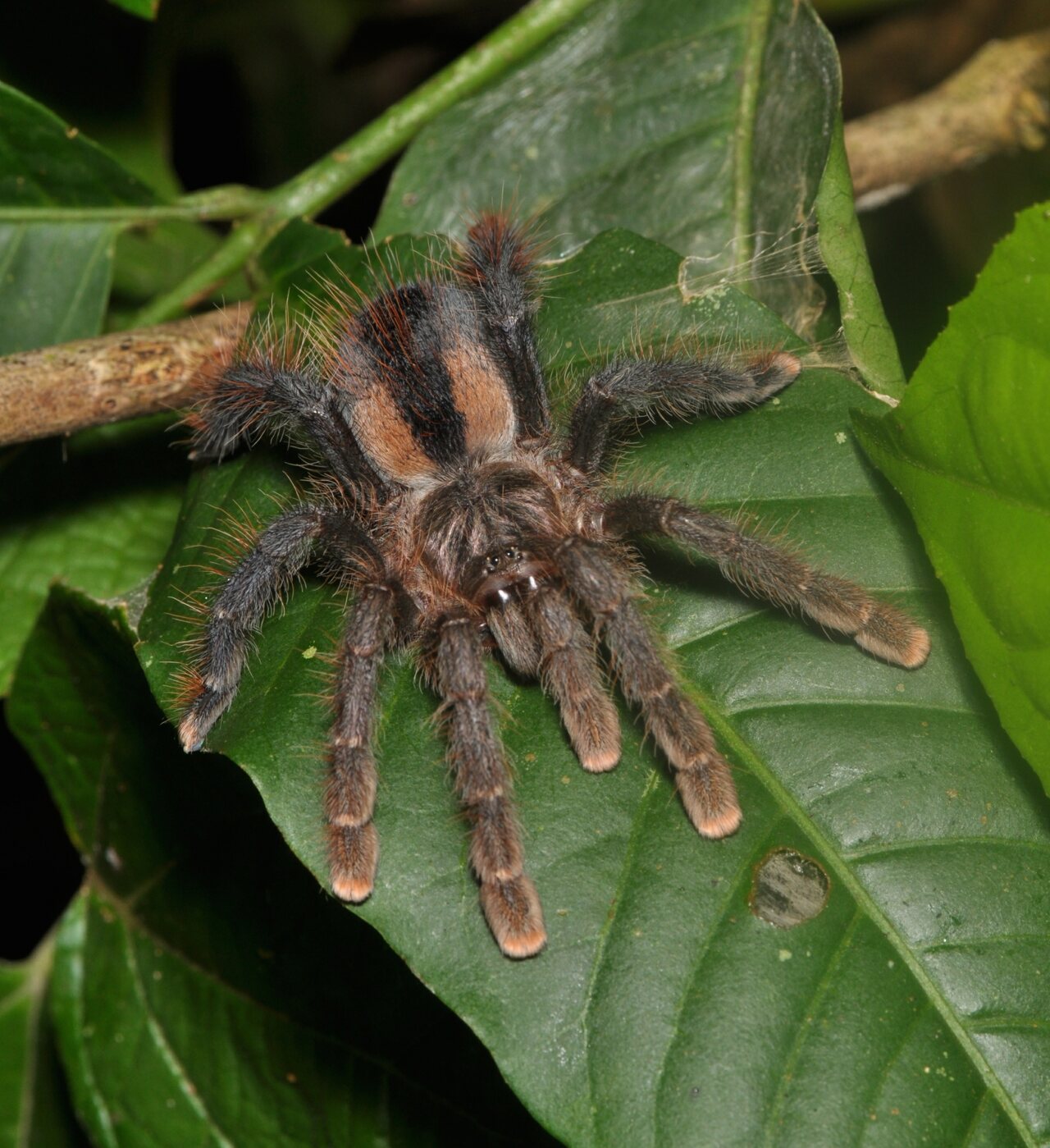 🌳 Arboreal
Avicularia huriana
Ecuadorian Woolly Pinktoe
Intermediate Requires consistent husbandry - more sensitive to ventilation, humidity, or feeding schedule. Some experience recommended. 🌳 Arboreal Lives above ground in trees or plants. Needs height and vertical climbing surfaces. Secure lid essential - they climb glass. 🌎 New World From the Americas: can flick urticating (irritating) hairs as a first defence, and venom is generally milder. 🟢 Docile Generally slow-moving and tolerant of handling. Rarely threatens or bites. Great for beginners. 💨 Skittish Easily startled - may bolt or dart suddenly when disturbed. Secure lids are essential as they can be escape artists. ⚡ Fast Moves very quickly, especially when startled. Can cross an enclosure in the blink of an eye. Not recommended for handling. 🕸️ Heavy webber Dense, prolific webbing behaviour. Will carpet the entire enclosure in thick silk - this is normal and healthy. Provides a visual indicator of the spider's territory.- Temp
- 20-26°C
- Humidity
- 70-80%
- Adult DLS
- 12-17 cm
- Moult
- Sling ~3w - Adult ~10mo
The Woolly Pinktoe - one of the largest Avicularia, steel-black with exceptionally long frosted setae and pink toe pads (owners describe it as a giant pink bog brush). Ecuadorian hobby stock, usually from the Misahualli region. "huriana" is a nomen dubium (type never deposited; excluded from the valid 2017 Avicularia list) so trade animals are honestly Avicularia sp. "huriana" - identical husbandry to the other big pinktoes, and rarely bred.
-
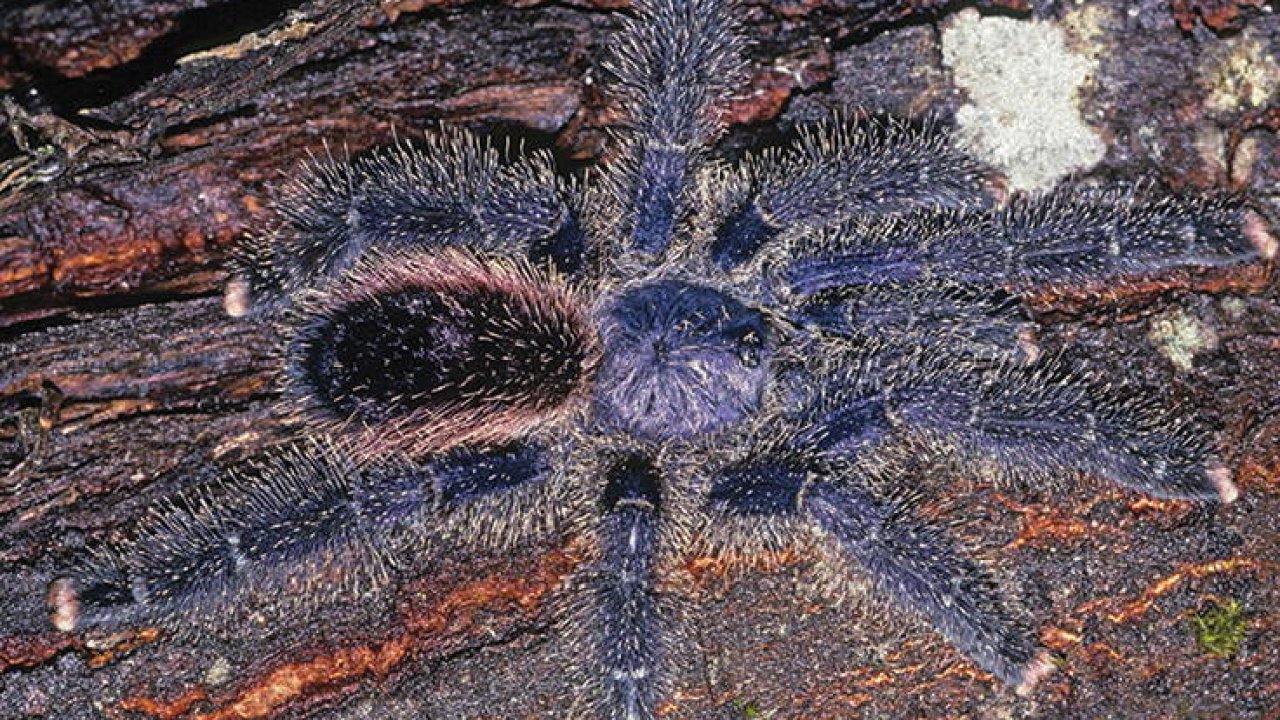 🌳 Arboreal
Avicularia juruensis
Juruá Pinktoe
Intermediate Requires consistent husbandry - more sensitive to ventilation, humidity, or feeding schedule. Some experience recommended. 🌳 Arboreal Lives above ground in trees or plants. Needs height and vertical climbing surfaces. Secure lid essential - they climb glass. 🌎 New World From the Americas: can flick urticating (irritating) hairs as a first defence, and venom is generally milder. 💨 Skittish Easily startled - may bolt or dart suddenly when disturbed. Secure lids are essential as they can be escape artists. ⚠️ Flicks hairs Uses urticating (barbed) hairs on the abdomen as a primary defence. These hairs can cause skin irritation and must be kept away from eyes. New World species only.- Temp
- 22-28°C
- Humidity
- 70-85%
- Adult DLS
- 14-17 cm
- Moult
- Sling ~3w - Adult ~12mo
Amazon pinktoe - same care as A. avicularia but slightly warmer (24-28 C). Tall, airy arboreal setup, vertical cork tube, one wall misted and allowed to dry.


