
Species library
255 species profiled with accurate care data. Click any species to start a specimen record pre-filled.
+ Request a species
-
 🌍 Terrestrial
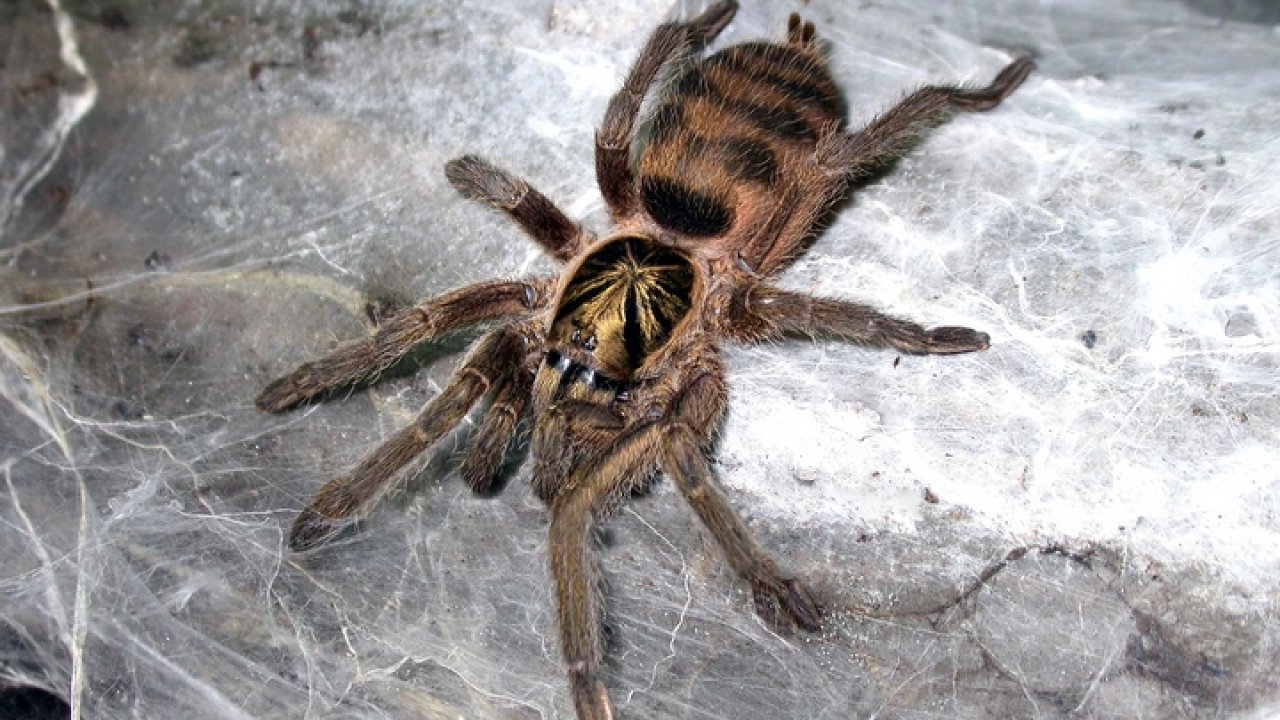
Neoholothele incei
Trinidad Dwarf
Beginner Forgiving of common mistakes. Tolerant of temperature/humidity variation. Great first tarantula. 🌍 Terrestrial Lives on or near the ground. Needs floor space more than height. Falls from height can be fatal - keep décor low. 🌎 New World From the Americas: can flick urticating (irritating) hairs as a first defence, and venom is generally milder. ⚡ Fast Moves very quickly, especially when startled. Can cross an enclosure in the blink of an eye. Not recommended for handling. 💨 Skittish Easily startled - may bolt or dart suddenly when disturbed. Secure lids are essential as they can be escape artists. 🕸️ Heavy webber Dense, prolific webbing behaviour. Will carpet the entire enclosure in thick silk - this is normal and healthy. Provides a visual indicator of the spider's territory. 👥 Communal (possible) Can sometimes be kept in groups with careful management (ample space, consistent food, siblings raised together). Not guaranteed - always have backup enclosures ready. 🍽️ Voracious eater Aggressive feeding response. Will tackle prey eagerly and rarely refuses a meal. Adjust feeding schedule accordingly - overfeeding shortens lifespan.- Temp
- 24-28°C
- Humidity
- 70-80%
- Adult DLS
- 5-7 cm
- Moult
- Sling ~3w - Adult ~3mo
Gold-form or olive dwarf. Prolific webber and one of the few species regularly kept communally.
-
 🌍 Terrestrial
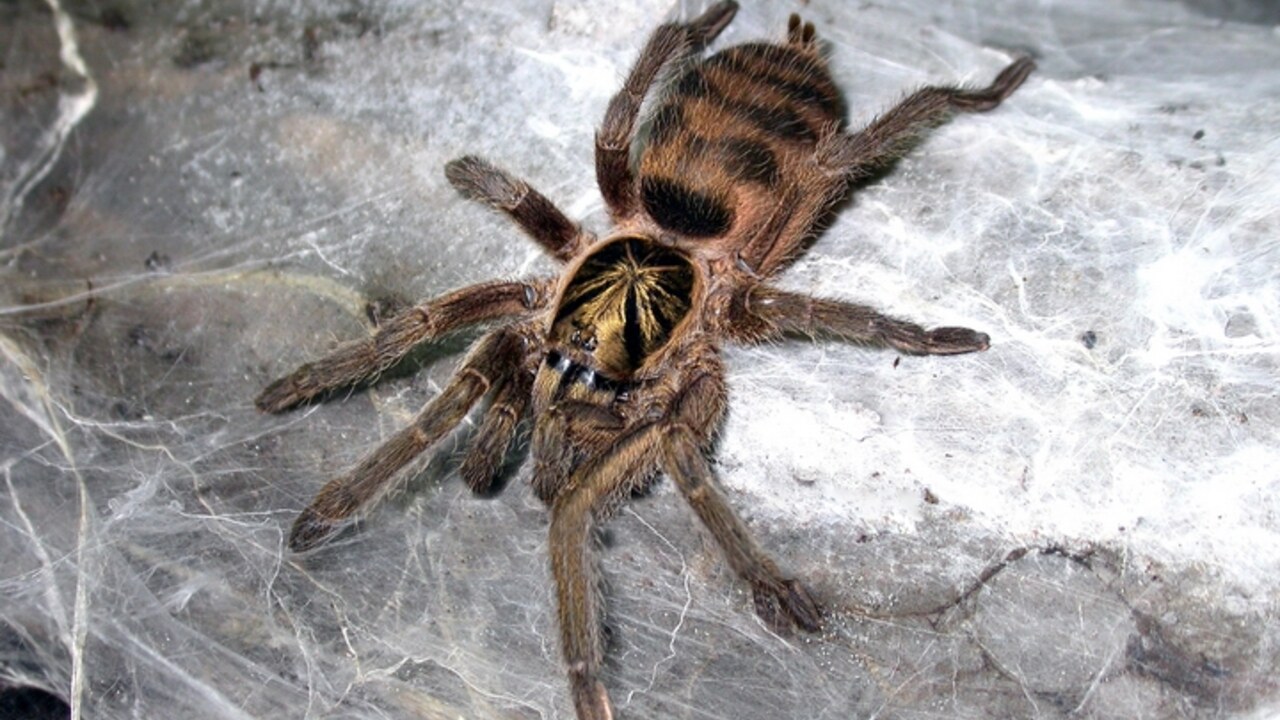
Neoholothele incei gold
Trinidad Gold
Beginner Forgiving of common mistakes. Tolerant of temperature/humidity variation. Great first tarantula. 🌍 Terrestrial Lives on or near the ground. Needs floor space more than height. Falls from height can be fatal - keep décor low. 🌎 New World From the Americas: can flick urticating (irritating) hairs as a first defence, and venom is generally milder. 💨 Skittish Easily startled - may bolt or dart suddenly when disturbed. Secure lids are essential as they can be escape artists. ⚡ Fast Moves very quickly, especially when startled. Can cross an enclosure in the blink of an eye. Not recommended for handling. 🕸️ Heavy webber Dense, prolific webbing behaviour. Will carpet the entire enclosure in thick silk - this is normal and healthy. Provides a visual indicator of the spider's territory. Dwarf- Temp
- 22-26°C
- Humidity
- 70-80%
- Adult DLS
- 6-8 cm
- Moult
- Sling ~2w - Adult ~3mo
The Gold form of Neoholothele incei - the beloved Trinidad dwarf in a buttery gold instead of the nominate olive. Everything that made the species a hobby favourite applies: crazy-fast growth (adult in a year), carpets of webbing, deep burrow architecture, one of the few genuinely communal-tolerant tarantulas, and matings that produce enormous sacs. A 7 cm bullet with a beginner-safe temperament - the gateway drug to dwarf and communal keeping. Colour form note: "Gold" is a captive morph, not a taxon.
-
 🌍 Terrestrial
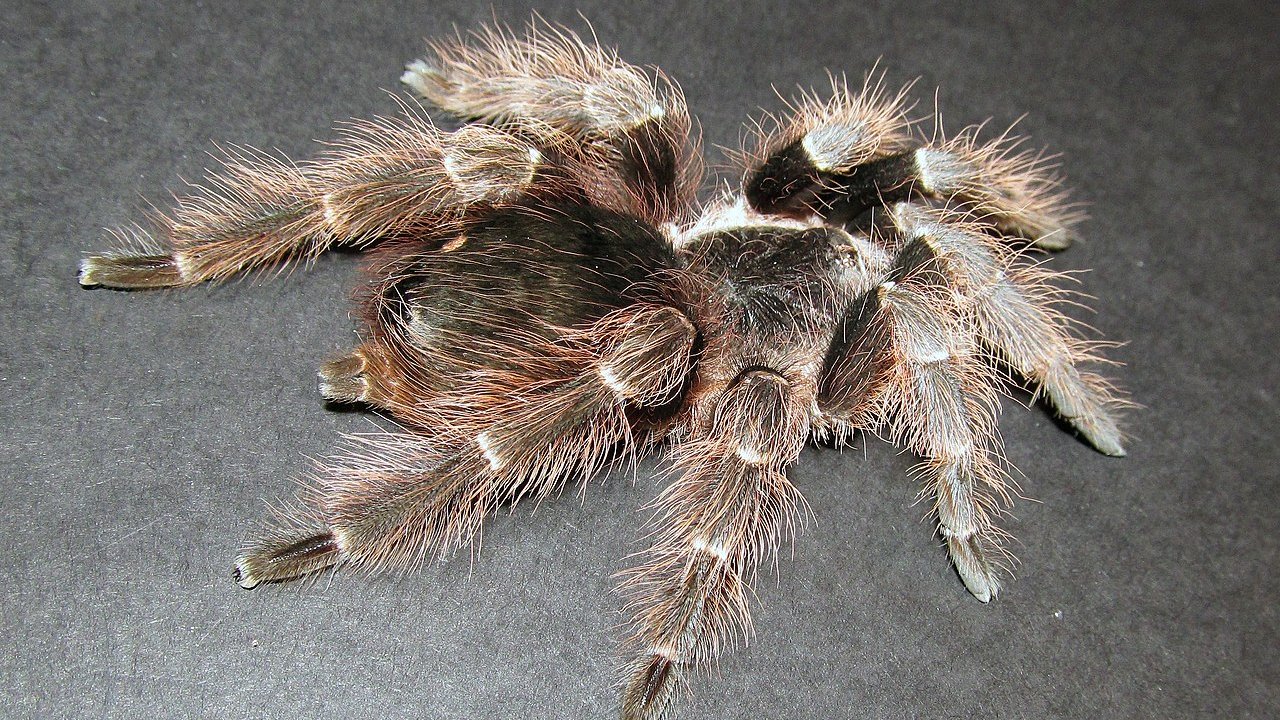
Nhandu carapoensis
Brazilian Giant Red
Intermediate Requires consistent husbandry - more sensitive to ventilation, humidity, or feeding schedule. Some experience recommended. 🌍 Terrestrial Lives on or near the ground. Needs floor space more than height. Falls from height can be fatal - keep décor low. 🌎 New World From the Americas: can flick urticating (irritating) hairs as a first defence, and venom is generally milder. 💨 Skittish Easily startled - may bolt or dart suddenly when disturbed. Secure lids are essential as they can be escape artists. ⚠️ Flicks hairs Uses urticating (barbed) hairs on the abdomen as a primary defence. These hairs can cause skin irritation and must be kept away from eyes. New World species only.- Temp
- 22-28°C
- Humidity
- 60-75%
- Adult DLS
- 13-15 cm
- Moult
- Sling ~3w - Adult ~12mo
Brazilian giant - large terrestrial, deep substrate, water dish. 65-75% humidity. Fast-growing and hungry.
-
 🌍 Terrestrial
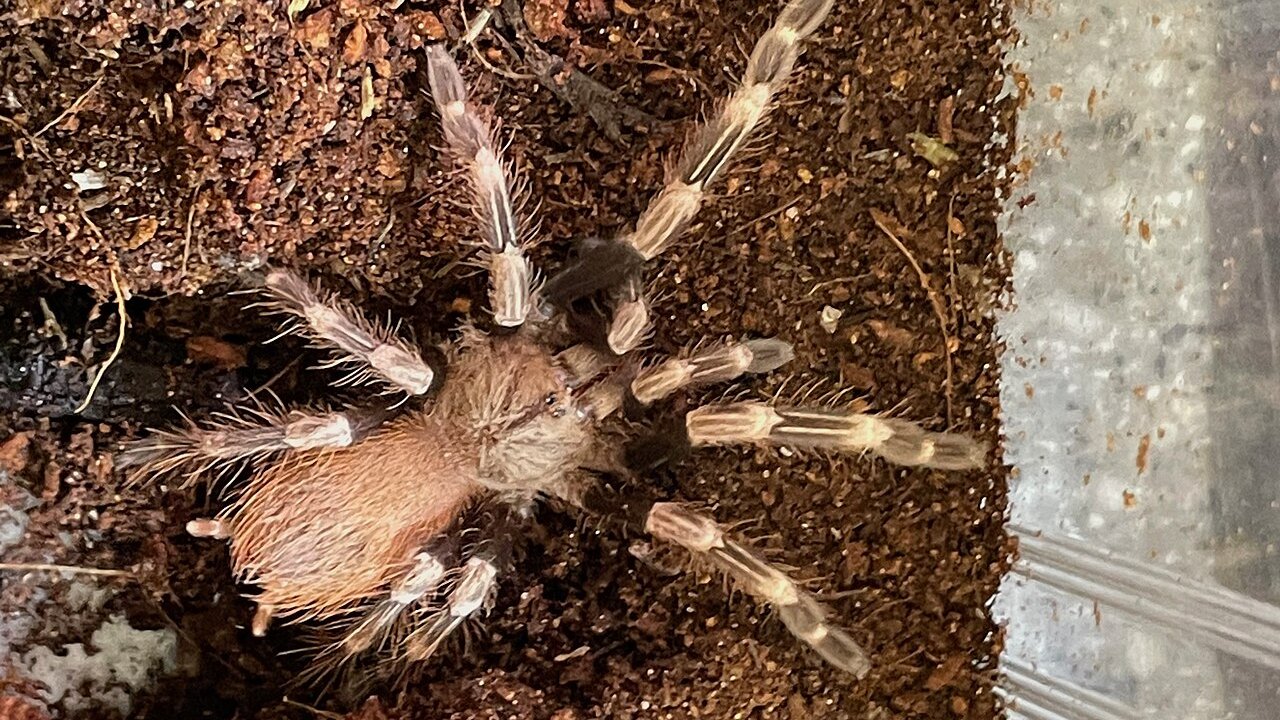
Nhandu chromatus
Brazilian Red and White
Beginner Forgiving of common mistakes. Tolerant of temperature/humidity variation. Great first tarantula. 🌍 Terrestrial Lives on or near the ground. Needs floor space more than height. Falls from height can be fatal - keep décor low. 🌎 New World From the Americas: can flick urticating (irritating) hairs as a first defence, and venom is generally milder. ⚠️ Defensive Will adopt a threat posture (rearing up, showing fangs) when disturbed. May bite if provoked. Approach with care and use a catch cup for rehoming. ⚠️ Flicks hairs Uses urticating (barbed) hairs on the abdomen as a primary defence. These hairs can cause skin irritation and must be kept away from eyes. New World species only. 🍽️ Voracious eater Aggressive feeding response. Will tackle prey eagerly and rarely refuses a meal. Adjust feeding schedule accordingly - overfeeding shortens lifespan.- Temp
- 24-28°C
- Humidity
- 65-75%
- Adult DLS
- 15-19 cm
- Moult
- Sling ~3w - Adult ~9mo
Bold red hairs on a white-striped leg pattern. Hardy and big; loves a deep water dish and dry corners.
-
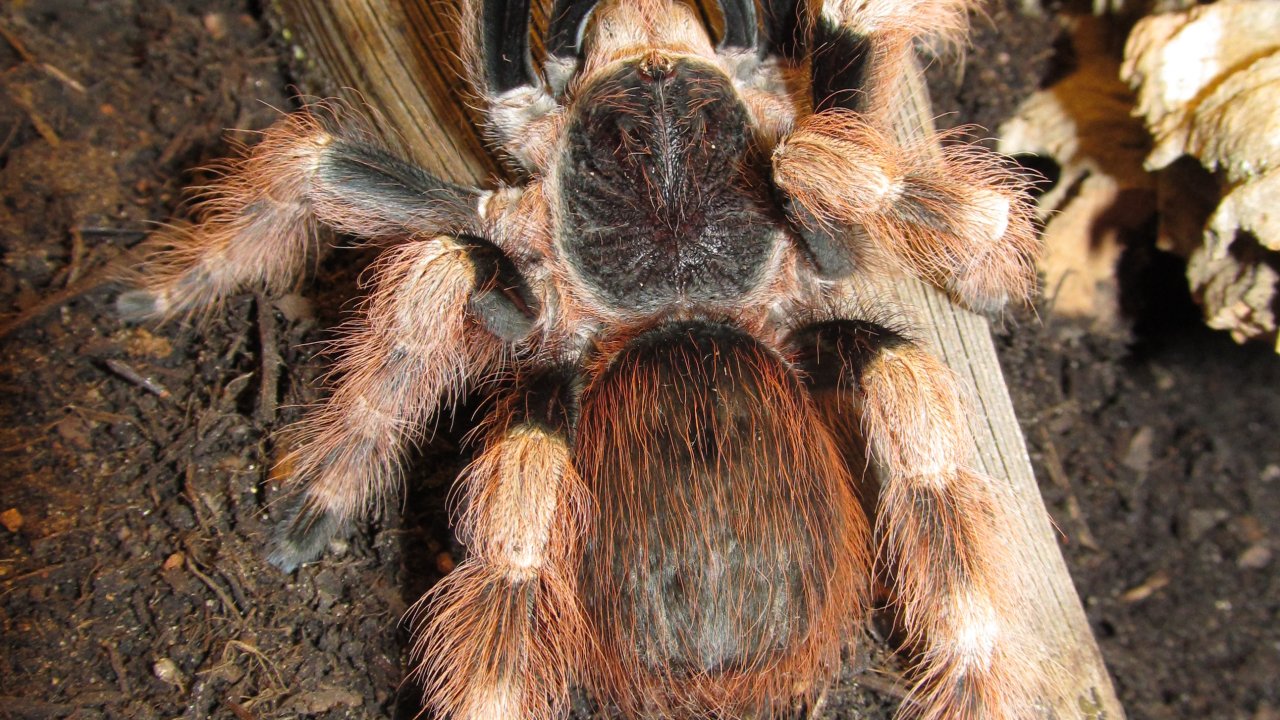 🌍 Terrestrial
Nhandu coloratovillosus
Brazilian Black and White
Intermediate Requires consistent husbandry - more sensitive to ventilation, humidity, or feeding schedule. Some experience recommended. 🌍 Terrestrial Lives on or near the ground. Needs floor space more than height. Falls from height can be fatal - keep décor low. 🌎 New World From the Americas: can flick urticating (irritating) hairs as a first defence, and venom is generally milder. ⚠️ Defensive Will adopt a threat posture (rearing up, showing fangs) when disturbed. May bite if provoked. Approach with care and use a catch cup for rehoming. ⚠️ Flicks hairs Uses urticating (barbed) hairs on the abdomen as a primary defence. These hairs can cause skin irritation and must be kept away from eyes. New World species only.- Temp
- 24-28°C
- Humidity
- 65-75%
- Adult DLS
- 17-21 cm
- Moult
- Sling ~3w - Adult ~9mo
Long white striped legs with black "socks". Larger and slower than N. chromatus; likes slightly more humidity.
-
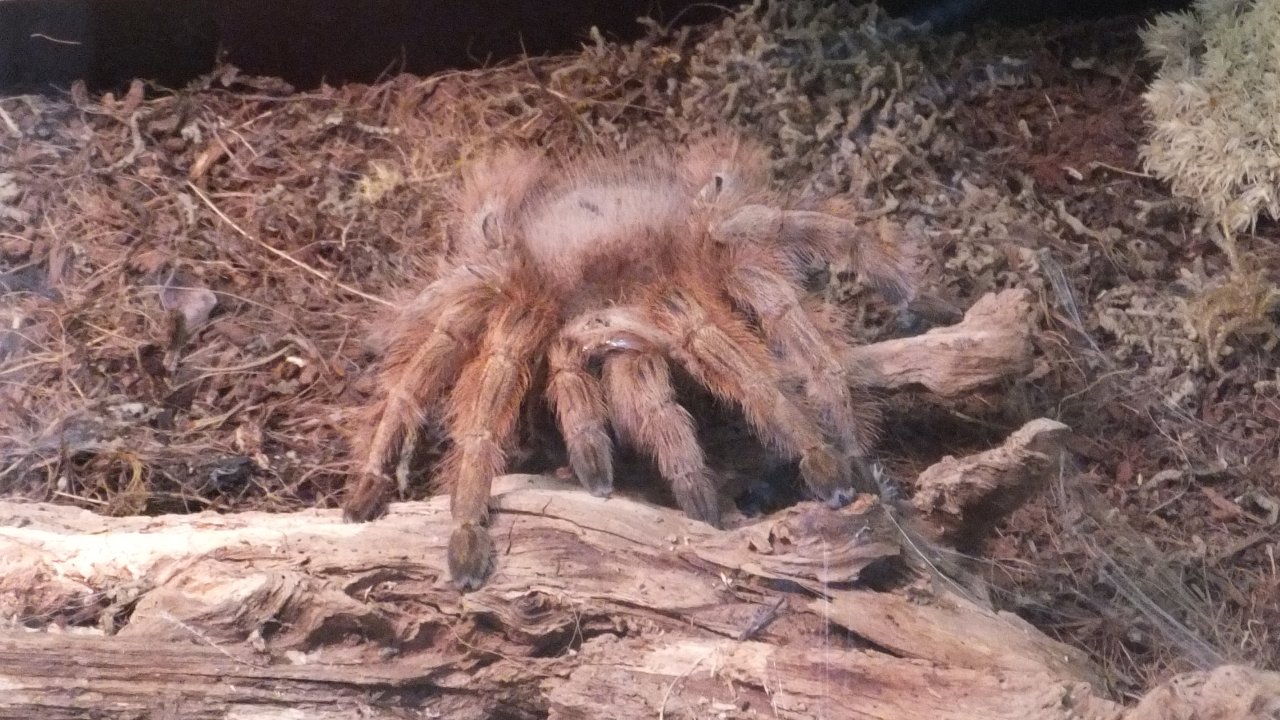 🌍 Terrestrial
Nhandu tripepii
Brazilian Giant Blonde
Intermediate Requires consistent husbandry - more sensitive to ventilation, humidity, or feeding schedule. Some experience recommended. 🌍 Terrestrial Lives on or near the ground. Needs floor space more than height. Falls from height can be fatal - keep décor low. 🌎 New World From the Americas: can flick urticating (irritating) hairs as a first defence, and venom is generally milder. 💨 Skittish Easily startled - may bolt or dart suddenly when disturbed. Secure lids are essential as they can be escape artists. ⚠️ Flicks hairs Uses urticating (barbed) hairs on the abdomen as a primary defence. These hairs can cause skin irritation and must be kept away from eyes. New World species only.- Temp
- 22-28°C
- Humidity
- 60-75%
- Adult DLS
- 13-15 cm
- Moult
- Sling ~3w - Adult ~12mo
Brazilian giant salmon - large terrestrial; deep substrate, water dish, 65-75% humidity. Hair-kicker.
-
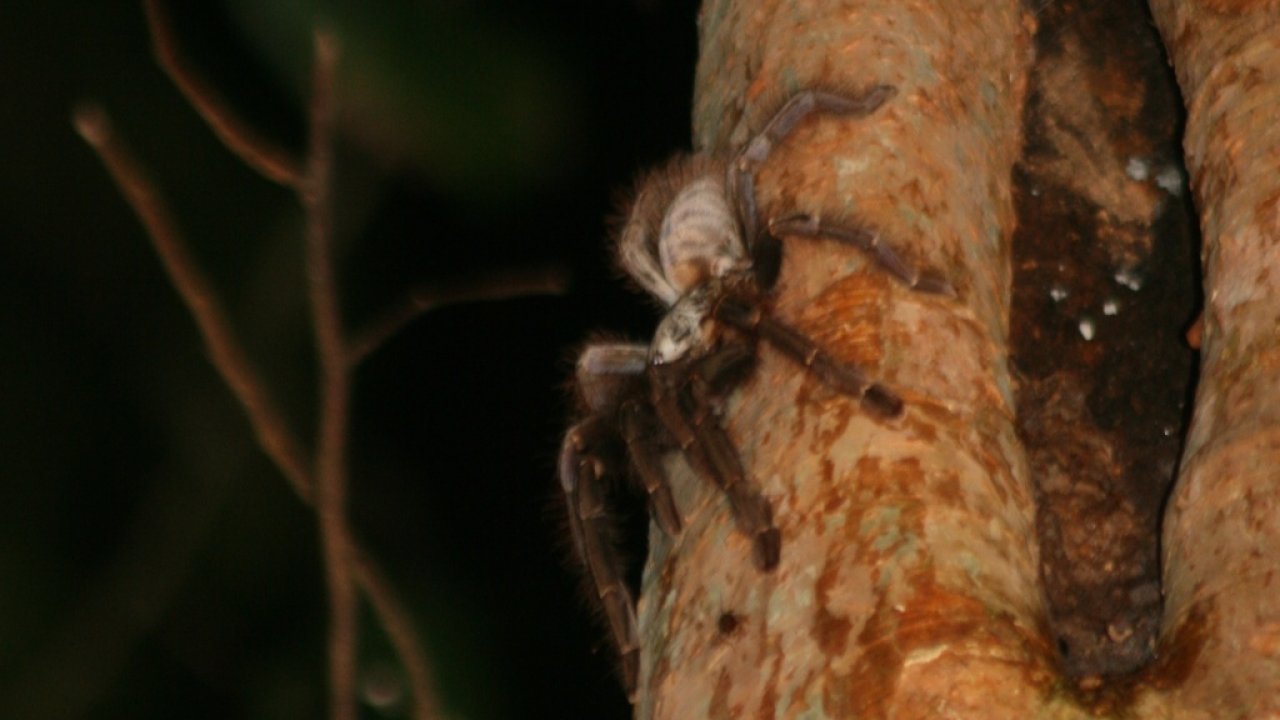 🌳 Arboreal
Omothymus schioedtei
Malaysian Earth Tiger
Advanced Demanding or potentially dangerous. May be very fast, defensive, or have medically significant venom. Experienced keepers only. 🌳 Arboreal Lives above ground in trees or plants. Needs height and vertical climbing surfaces. Secure lid essential - they climb glass. 🌍 Old World From Africa, Asia or Australasia: no urticating hairs - defence is speed and a potent bite. Medically significant venom possible. ⚠️ Defensive Will adopt a threat posture (rearing up, showing fangs) when disturbed. May bite if provoked. Approach with care and use a catch cup for rehoming. ⚡ Fast Moves very quickly, especially when startled. Can cross an enclosure in the blink of an eye. Not recommended for handling. ☠️ Potent venom Possesses medically significant venom. A bite can cause intense pain, muscle cramps, sweating, and may require medical attention. Old World species typically fall here as they lack urticating hairs.- Temp
- 22-28°C
- Humidity
- 70-85%
- Adult DLS
- 14-17 cm
- Moult
- Sling ~3w - Adult ~12mo
Malaysian earthtiger - large arboreal. Tall setup with cork tubes, 75-80% humidity, strong cross-ventilation. Males mature green carapace, females tan.
-
 🌍 Terrestrial
Omothymus sp. Magnus
Magnus Earth Tiger
Advanced Demanding or potentially dangerous. May be very fast, defensive, or have medically significant venom. Experienced keepers only. 🌍 Terrestrial Lives on or near the ground. Needs floor space more than height. Falls from height can be fatal - keep décor low. 🌍 Old World From Africa, Asia or Australasia: no urticating hairs - defence is speed and a potent bite. Medically significant venom possible. ⚠️ Defensive Will adopt a threat posture (rearing up, showing fangs) when disturbed. May bite if provoked. Approach with care and use a catch cup for rehoming. ⚡ Fast Moves very quickly, especially when startled. Can cross an enclosure in the blink of an eye. Not recommended for handling. 🕸️ Heavy webber Dense, prolific webbing behaviour. Will carpet the entire enclosure in thick silk - this is normal and healthy. Provides a visual indicator of the spider's territory. Old world- Temp
- 24-28°C
- Humidity
- 75-85%
- Adult DLS
- 18-22 cm
- Moult
- Sling ~3w - Adult ~9mo
The Magnus Earth Tiger - a huge slate-and-cream Sumatran form that hit the UK trade in 2025 and may be (or be close to) Omothymus rafni. Conflicting hobby reports about whether it is more arboreal or fossorial - the safe answer is both: give height AND deep substrate and let the spider choose. Either way you get one of the largest Old World forms in the hobby (up to 22 cm), a monstrous feeding response, defensive speed and no urticating hairs. Rare, expensive (£75+ slings) and firmly for experienced Old World keepers.
-
🕳️ Fossorial
Ornithoctoninae sp. Ho Chi Minh
Ho Chi Minh Earth Tiger
Advanced Demanding or potentially dangerous. May be very fast, defensive, or have medically significant venom. Experienced keepers only. 🕳️ Fossorial Lives underground in deep burrows. Needs deep, packed substrate to dig. You may rarely see them - patience required. 🌍 Old World From Africa, Asia or Australasia: no urticating hairs - defence is speed and a potent bite. Medically significant venom possible. ⚠️ Defensive Will adopt a threat posture (rearing up, showing fangs) when disturbed. May bite if provoked. Approach with care and use a catch cup for rehoming. ⚡ Fast Moves very quickly, especially when startled. Can cross an enclosure in the blink of an eye. Not recommended for handling. 🕸️ Heavy webber Dense, prolific webbing behaviour. Will carpet the entire enclosure in thick silk - this is normal and healthy. Provides a visual indicator of the spider's territory. Old world- Temp
- 15-24°C
- Humidity
- 65-85%
- Adult DLS
- 14-16 cm
- Moult
- Sling ~3w - Adult ~9mo
The Ho Chi Minh Earth Tiger - an undescribed Vietnamese ornithoctonine with black femurs and orange knee banding, genus placement unresolved (hence the subfamily label). Vendor disposition rating: colourful. "Feeding response of a viper" and a defensive attitude to match - advanced keepers only. The cool end of its panel (15-24 °C) suggests highland Vietnamese stock; £20 CB slings.
-
🕳️ Fossorial
Ornithoctoninae sp. Nhen Dep
Nhen Dep Earth Tiger
Advanced Demanding or potentially dangerous. May be very fast, defensive, or have medically significant venom. Experienced keepers only. 🕳️ Fossorial Lives underground in deep burrows. Needs deep, packed substrate to dig. You may rarely see them - patience required. 🌍 Old World From Africa, Asia or Australasia: no urticating hairs - defence is speed and a potent bite. Medically significant venom possible. ⚠️ Defensive Will adopt a threat posture (rearing up, showing fangs) when disturbed. May bite if provoked. Approach with care and use a catch cup for rehoming. ⚡ Fast Moves very quickly, especially when startled. Can cross an enclosure in the blink of an eye. Not recommended for handling. 🕸️ Heavy webber Dense, prolific webbing behaviour. Will carpet the entire enclosure in thick silk - this is normal and healthy. Provides a visual indicator of the spider's territory. Old world- Temp
- 24-28°C
- Humidity
- 70-80%
- Adult DLS
- 13-15 cm
- Moult
- Sling ~3w - Adult ~9mo
The Nhen Dep Earth Tiger - "nhện đẹp" is Vietnamese for "beautiful spider", and this recently discovered fossorial lives up to it. Trade-label footnote: sold under the defunct genus "Haplopelma", which WSC no longer recognises (absorbed into Cyriopagopus and kin), so it is entered here at subfamily level pending formal description. Bitey (4/5), deep-burrowing, cheap slings (£10) with adult females at £85. Standard Vietnamese earth-tiger husbandry and respect.
-
🌍 Terrestrial
Ornithoctoninae sp. Vietnam Silver
Vietnam Silver
Intermediate Requires consistent husbandry - more sensitive to ventilation, humidity, or feeding schedule. Some experience recommended. 🌍 Terrestrial Lives on or near the ground. Needs floor space more than height. Falls from height can be fatal - keep décor low. 🌍 Old World From Africa, Asia or Australasia: no urticating hairs - defence is speed and a potent bite. Medically significant venom possible. 🟢 Docile Generally slow-moving and tolerant of handling. Rarely threatens or bites. Great for beginners. 🕸️ Heavy webber Dense, prolific webbing behaviour. Will carpet the entire enclosure in thick silk - this is normal and healthy. Provides a visual indicator of the spider's territory. Old world- Temp
- 24-28°C
- Humidity
- 75-85%
- Adult DLS
- 11-13 cm
- Moult
- Sling ~3w - Adult ~9mo
The Vietnam Silver - a recently discovered, still-undescribed ornithoctonine glowing silver-blue with orange setae: one of the calmer Old World forms on any vendor list (vendor rating "shy"). Smallish at 12 cm, fast-growing, warm and humid. £22 CB slings - an approachable piece of the Asian silver-blue collection for intermediate keepers moving up from New Worlds.
-
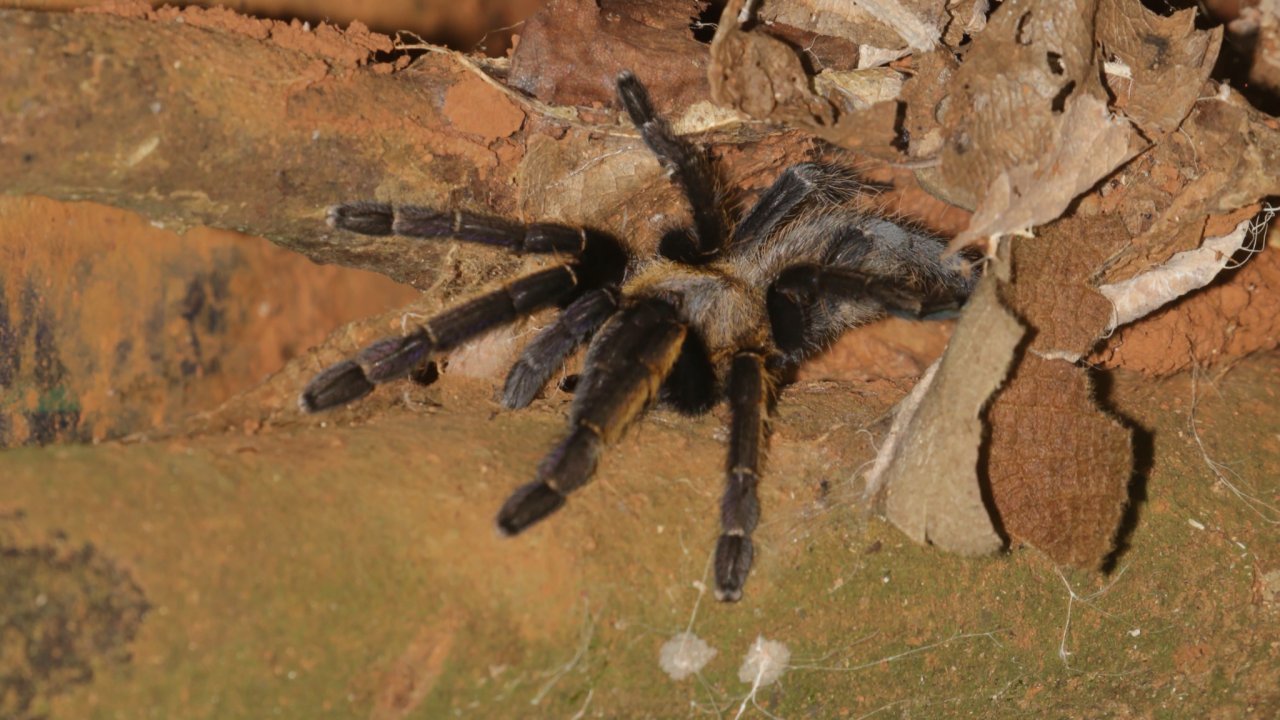 🕳️ Fossorial
Ornithoctonus aureotibialis
Thai Golden Fringe
Advanced Demanding or potentially dangerous. May be very fast, defensive, or have medically significant venom. Experienced keepers only. 🕳️ Fossorial Lives underground in deep burrows. Needs deep, packed substrate to dig. You may rarely see them - patience required. 🌍 Old World From Africa, Asia or Australasia: no urticating hairs - defence is speed and a potent bite. Medically significant venom possible. ⚠️ Defensive Will adopt a threat posture (rearing up, showing fangs) when disturbed. May bite if provoked. Approach with care and use a catch cup for rehoming. ☠️ Potent venom Possesses medically significant venom. A bite can cause intense pain, muscle cramps, sweating, and may require medical attention. Old World species typically fall here as they lack urticating hairs. ⚡ Fast Moves very quickly, especially when startled. Can cross an enclosure in the blink of an eye. Not recommended for handling.- Temp
- 24-28°C
- Humidity
- 70-80%
- Adult DLS
- 14-17 cm
- Moult
- Sling ~3w - Adult ~9mo
Dark body with striking mustard-yellow stripe on the knees. Old World burrower with potent venom.
-
🌍 Terrestrial
Ornithoctonus costalis
Asian Mustard
Intermediate Requires consistent husbandry - more sensitive to ventilation, humidity, or feeding schedule. Some experience recommended. 🌍 Terrestrial Lives on or near the ground. Needs floor space more than height. Falls from height can be fatal - keep décor low. 🌍 Old World From Africa, Asia or Australasia: no urticating hairs - defence is speed and a potent bite. Medically significant venom possible. ⚠️ Defensive Will adopt a threat posture (rearing up, showing fangs) when disturbed. May bite if provoked. Approach with care and use a catch cup for rehoming. ⚡ Fast Moves very quickly, especially when startled. Can cross an enclosure in the blink of an eye. Not recommended for handling. 🕸️ Heavy webber Dense, prolific webbing behaviour. Will carpet the entire enclosure in thick silk - this is normal and healthy. Provides a visual indicator of the spider's territory. Old world Dwarf- Temp
- 22-26°C
- Humidity
- 70-80%
- Adult DLS
- 7-9 cm
- Moult
- Sling ~3w - Adult ~9mo
The Thai Silver Earth Tiger (Ornithoctonus costalis, valid since 1998) - a DWARF earth tiger at just 8 cm, wearing silvery-grey setae over the classic tiger frame. All the Old World attitude in a pocket body: rears up readily, bolts like lightning, but with less margin for error thanks to the size. Often suggested as a "starter earth tiger with respect" for keepers graduating from New Worlds. WC females surface occasionally at £49; CB slings are the better buy.
-
🕳️ Fossorial
Ornithoctonus sp. Blue Femur
Thai Blue Femur
Advanced Demanding or potentially dangerous. May be very fast, defensive, or have medically significant venom. Experienced keepers only. 🕳️ Fossorial Lives underground in deep burrows. Needs deep, packed substrate to dig. You may rarely see them - patience required. 🌍 Old World From Africa, Asia or Australasia: no urticating hairs - defence is speed and a potent bite. Medically significant venom possible. ⚠️ Defensive Will adopt a threat posture (rearing up, showing fangs) when disturbed. May bite if provoked. Approach with care and use a catch cup for rehoming. ⚡ Fast Moves very quickly, especially when startled. Can cross an enclosure in the blink of an eye. Not recommended for handling. 🕸️ Heavy webber Dense, prolific webbing behaviour. Will carpet the entire enclosure in thick silk - this is normal and healthy. Provides a visual indicator of the spider's territory. Old world- Temp
- 24-27°C
- Humidity
- 60-75%
- Adult DLS
- 12-15 cm
- Moult
- Sling ~3w - Adult ~9mo
The Malaysian Blue Femur - a bulky, dark-striped earth tiger with brilliant blue rear legs, sold in the UK for years under the label "Haplopelma robustum". Taxonomy reality check: H. robustum is a nomen dubium from Singapore that matches no trade stock - this animal is an undescribed Ornithoctonus from Malaysia that has not been formally seen in the trade for years until recently. Super-defensive, deep-burrowing, medically significant venom, and a genuinely striking pet hole for advanced keepers.
-
🌳 Arboreal
Ornithoctonus sp. Phan Cay Blue
Phan Cay Blue
Advanced Demanding or potentially dangerous. May be very fast, defensive, or have medically significant venom. Experienced keepers only. 🌳 Arboreal Lives above ground in trees or plants. Needs height and vertical climbing surfaces. Secure lid essential - they climb glass. 🌍 Old World From Africa, Asia or Australasia: no urticating hairs - defence is speed and a potent bite. Medically significant venom possible. ⚠️ Defensive Will adopt a threat posture (rearing up, showing fangs) when disturbed. May bite if provoked. Approach with care and use a catch cup for rehoming. ⚡ Fast Moves very quickly, especially when startled. Can cross an enclosure in the blink of an eye. Not recommended for handling. 🕸️ Heavy webber Dense, prolific webbing behaviour. Will carpet the entire enclosure in thick silk - this is normal and healthy. Provides a visual indicator of the spider's territory. Old world- Temp
- 26-28°C
- Humidity
- 70-80%
- Adult DLS
- 16-18 cm
- Moult
- Sling ~3w - Adult ~9mo
Phan Cay Blue - an arboreal Vietnamese ornithoctonine (the name garbles a Vietnamese locality; genus placement open) and one of only two tree-dwellers in this whole final batch: a big 18 cm blue Old World with a 4/5 "bitey" vendor rating. Warm, humid, vertical - a Lampropelma-style setup with an earth-tiger temperament inside. £36 slings; strictly for experienced arboreal Old World keepers.
-
🌳 Arboreal
Ornithoctonus sp. Phan Cay Red
Phan Cay Red
Advanced Demanding or potentially dangerous. May be very fast, defensive, or have medically significant venom. Experienced keepers only. 🌳 Arboreal Lives above ground in trees or plants. Needs height and vertical climbing surfaces. Secure lid essential - they climb glass. 🌍 Old World From Africa, Asia or Australasia: no urticating hairs - defence is speed and a potent bite. Medically significant venom possible. ⚠️ Defensive Will adopt a threat posture (rearing up, showing fangs) when disturbed. May bite if provoked. Approach with care and use a catch cup for rehoming. ⚡ Fast Moves very quickly, especially when startled. Can cross an enclosure in the blink of an eye. Not recommended for handling. 🕸️ Heavy webber Dense, prolific webbing behaviour. Will carpet the entire enclosure in thick silk - this is normal and healthy. Provides a visual indicator of the spider's territory. Old world- Temp
- 26-28°C
- Humidity
- 70-80%
- Adult DLS
- 16-18 cm
- Moult
- Sling ~3w - Adult ~9mo
Phan Cay Red - the red counterpart of the Phan Cay Blue: same garbled Vietnamese locality name, same arboreal 18 cm "bitey" (4/5) biology, warmer red setae over the dark frame. Presumably one locality complex with its blue sibling - nobody knows until somebody formally describes them. £36 slings for advanced arboreal Old World keepers.
-
🕳️ Fossorial
Ornithoctonus sp. Ranong
Ranong Earth Tiger
Advanced Demanding or potentially dangerous. May be very fast, defensive, or have medically significant venom. Experienced keepers only. 🕳️ Fossorial Lives underground in deep burrows. Needs deep, packed substrate to dig. You may rarely see them - patience required. 🌍 Old World From Africa, Asia or Australasia: no urticating hairs - defence is speed and a potent bite. Medically significant venom possible. ⚠️ Defensive Will adopt a threat posture (rearing up, showing fangs) when disturbed. May bite if provoked. Approach with care and use a catch cup for rehoming. ⚡ Fast Moves very quickly, especially when startled. Can cross an enclosure in the blink of an eye. Not recommended for handling. 🕸️ Heavy webber Dense, prolific webbing behaviour. Will carpet the entire enclosure in thick silk - this is normal and healthy. Provides a visual indicator of the spider's territory. Old world- Temp
- 22-26°C
- Humidity
- 70-80%
- Adult DLS
- 13-15 cm
- Moult
- Sling ~3w - Adult ~9mo
The Ranong Earth Tiger - a smaller, bluish undescribed Thai Ornithoctonus from the aureotibialis complex, sold by the vendor with the warning "angry isn't the word, these guys hate everything." Deep moist burrows with silk-matted entrances, teleport speed, and a genuinely committed threat posture. £15 WC slings - cheap to buy, demanding to keep, deeply satisfying for earth-tiger specialists.
-
🕳️ Fossorial
Ornithoctonus sp. Siam Satu
Siam Satu Earth Tiger
Advanced Demanding or potentially dangerous. May be very fast, defensive, or have medically significant venom. Experienced keepers only. 🕳️ Fossorial Lives underground in deep burrows. Needs deep, packed substrate to dig. You may rarely see them - patience required. 🌍 Old World From Africa, Asia or Australasia: no urticating hairs - defence is speed and a potent bite. Medically significant venom possible. ⚠️ Defensive Will adopt a threat posture (rearing up, showing fangs) when disturbed. May bite if provoked. Approach with care and use a catch cup for rehoming. ⚡ Fast Moves very quickly, especially when startled. Can cross an enclosure in the blink of an eye. Not recommended for handling. 🕸️ Heavy webber Dense, prolific webbing behaviour. Will carpet the entire enclosure in thick silk - this is normal and healthy. Provides a visual indicator of the spider's territory. Old world- Temp
- 22-26°C
- Humidity
- 70-80%
- Adult DLS
- 13-15 cm
- Moult
- Sling ~3w - Adult ~9mo
The Siam Satu Earth Tiger - an undescribed Asian fossorial whose trade name is geographic nonsense ("Siam" = Thailand, "satu" = Malay for one, vendor origin panel: Vietnam) - typical of pre-formal-description naming. Defensive, deep-burrowing, fast-growing, £35 CB slings. Standard earth-tiger husbandry and respect; the description flags the naming muddle for the record.
-
🌍 Terrestrial
Ornithoctonus sp. Uthai Thani
Dancing Earth Tiger
Advanced Demanding or potentially dangerous. May be very fast, defensive, or have medically significant venom. Experienced keepers only. 🌍 Terrestrial Lives on or near the ground. Needs floor space more than height. Falls from height can be fatal - keep décor low. 🌍 Old World From Africa, Asia or Australasia: no urticating hairs - defence is speed and a potent bite. Medically significant venom possible. ⚠️ Defensive Will adopt a threat posture (rearing up, showing fangs) when disturbed. May bite if provoked. Approach with care and use a catch cup for rehoming. ⚡ Fast Moves very quickly, especially when startled. Can cross an enclosure in the blink of an eye. Not recommended for handling. 🕸️ Heavy webber Dense, prolific webbing behaviour. Will carpet the entire enclosure in thick silk - this is normal and healthy. Provides a visual indicator of the spider's territory. Old world- Temp
- 22-26°C
- Humidity
- 70-80%
- Adult DLS
- 12-15 cm
- Moult
- Sling ~3w - Adult ~9mo
The Dancing Earth Tiger ("Uthai Thani") - an undescribed Thai Ornithoctonus and the cheapest Old World on the UK market at £8 a sling. The "dancing" is the threat display: rearing, pacing, and an attitude the vendor rates bluntly. All the standard earth-tiger requirements in a starter-priced package - the classic "first aggressive Asian" for keepers who are honest with themselves about readiness.
-
🕳️ Fossorial
Orphnaecus philippinus
Philippine Tangerine
Advanced Demanding or potentially dangerous. May be very fast, defensive, or have medically significant venom. Experienced keepers only. 🕳️ Fossorial Lives underground in deep burrows. Needs deep, packed substrate to dig. You may rarely see them - patience required. 🌍 Old World From Africa, Asia or Australasia: no urticating hairs - defence is speed and a potent bite. Medically significant venom possible. ⚠️ Defensive Will adopt a threat posture (rearing up, showing fangs) when disturbed. May bite if provoked. Approach with care and use a catch cup for rehoming. ⚡ Fast Moves very quickly, especially when startled. Can cross an enclosure in the blink of an eye. Not recommended for handling. 🕸️ Heavy webber Dense, prolific webbing behaviour. Will carpet the entire enclosure in thick silk - this is normal and healthy. Provides a visual indicator of the spider's territory. Reclusive Old world 🍽️ Voracious eater Aggressive feeding response. Will tackle prey eagerly and rarely refuses a meal. Adjust feeding schedule accordingly - overfeeding shortens lifespan.- Temp
- 22-27°C
- Humidity
- 65-80%
- Adult DLS
- 10-13 cm
- Moult
- Sling ~3w - Adult ~8mo
The Philippine Tangerine (also sold as Philippine Orange or Neon Orange) is a vivid orange Old World burrower from Negros and Panay. Described by Schmidt in 1999 and moved into Orphnaecus in 2012, a 2025 revision revalidated it as Selenobrachys philippinus - UK shops still label it Orphnaecus, so expect both names on lineage records. Females reach 10-13 cm DLS, live around 12 years and spend most of their time at the burrow mouth under heavy sheet webbing, with the full tangerine glow usually on show in the evening. Fast, reclusive and genuinely defensive with a medically significant bite risk - an advanced display species, not a handling one. UK captive-bred slings appear regularly at around £10.
-
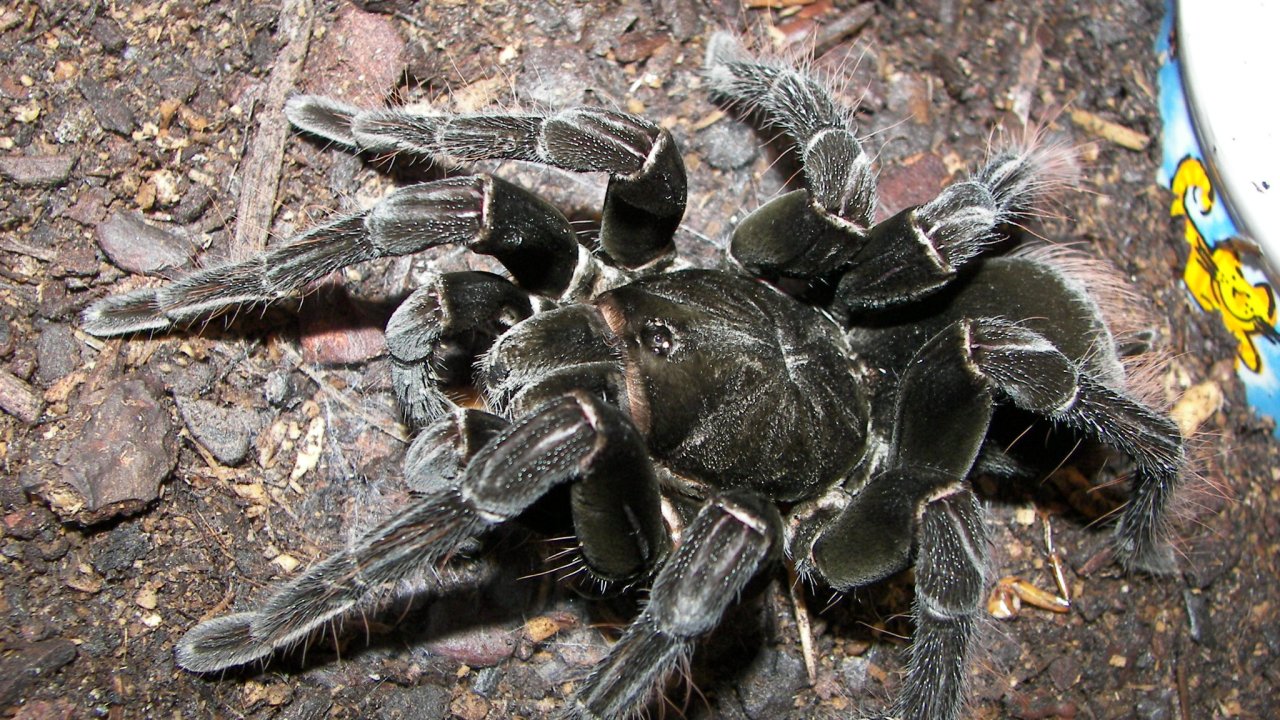 🌍 Terrestrial
Pamphobeteus antinous
Steely Blue Leg
Intermediate Requires consistent husbandry - more sensitive to ventilation, humidity, or feeding schedule. Some experience recommended. 🌍 Terrestrial Lives on or near the ground. Needs floor space more than height. Falls from height can be fatal - keep décor low. 🌎 New World From the Americas: can flick urticating (irritating) hairs as a first defence, and venom is generally milder. 💨 Skittish Easily startled - may bolt or dart suddenly when disturbed. Secure lids are essential as they can be escape artists. ⚠️ Flicks hairs Uses urticating (barbed) hairs on the abdomen as a primary defence. These hairs can cause skin irritation and must be kept away from eyes. New World species only.- Temp
- 22-28°C
- Humidity
- 60-75%
- Adult DLS
- 22-26 cm
- Moult
- Sling ~3w - Adult ~12mo
Bolivian blue black - large terrestrial; deep substrate, water dish, damp corner, 70-75% humidity. Males stunning purple. Defensive hair-kicker.
-
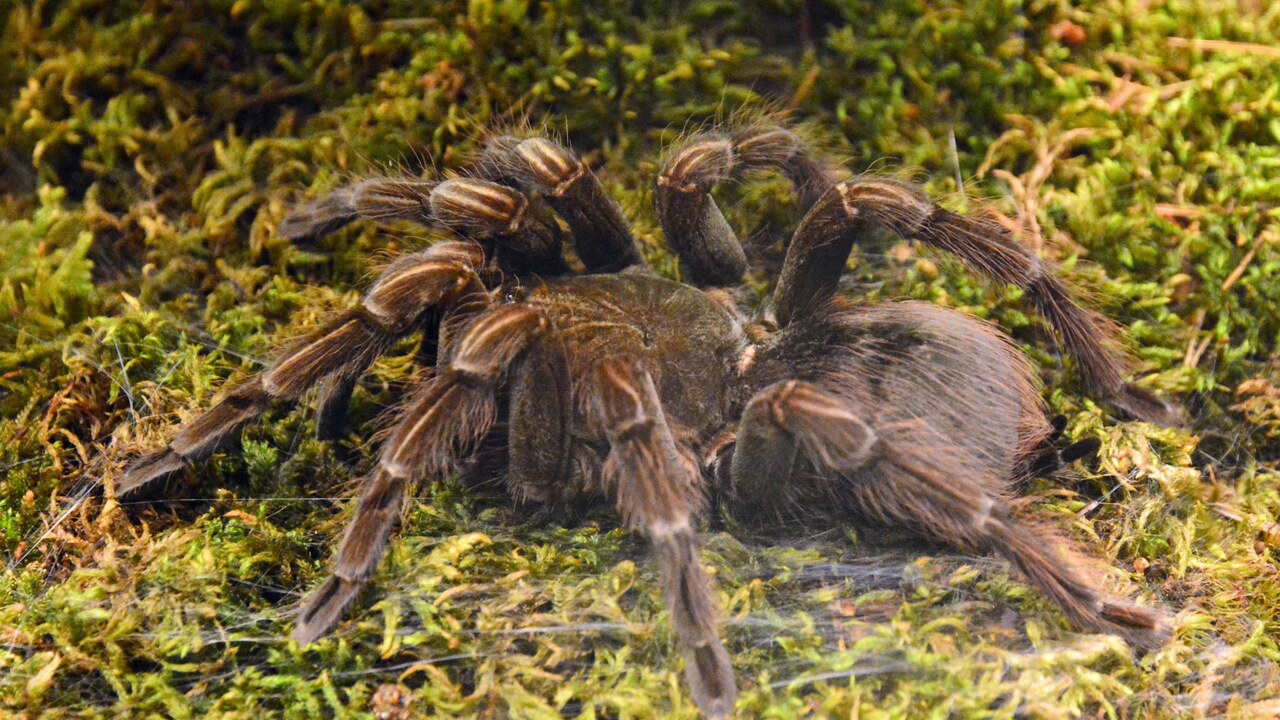 🌍 Terrestrial
Pamphobeteus insignis
Ecuador Birdeater
Beginner Forgiving of common mistakes. Tolerant of temperature/humidity variation. Great first tarantula. 🌍 Terrestrial Lives on or near the ground. Needs floor space more than height. Falls from height can be fatal - keep décor low. 🌎 New World From the Americas: can flick urticating (irritating) hairs as a first defence, and venom is generally milder. ⚠️ Flicks hairs Uses urticating (barbed) hairs on the abdomen as a primary defence. These hairs can cause skin irritation and must be kept away from eyes. New World species only. 🟢 Docile Generally slow-moving and tolerant of handling. Rarely threatens or bites. Great for beginners. 🍽️ Voracious eater Aggressive feeding response. Will tackle prey eagerly and rarely refuses a meal. Adjust feeding schedule accordingly - overfeeding shortens lifespan.- Temp
- 20-24°C
- Humidity
- 70-80%
- Adult DLS
- 17-20 cm
- Moult
- Sling ~4w - Adult ~11mo
The Ecuador Birdeater - big, stocky, dark-bronze Pamphobeteus stock sold in the UK under an "insignis-type" label. Taxonomy footnote: true P. insignis (Pocock, 1903) is a valid Colombian species, but UK stock originates from Ecuador and may match one of the wave of newly described Ecuadorian Pamphobeteus rather than confirmed insignis - hence the "sp." prefix. The same cool-loving constitution as its relatives: genuinely happy at 20-22 °C, feeding relentlessly, and flicking hairs at every opportunity. Cheap slings (around £30) make it an accessible giant.
-
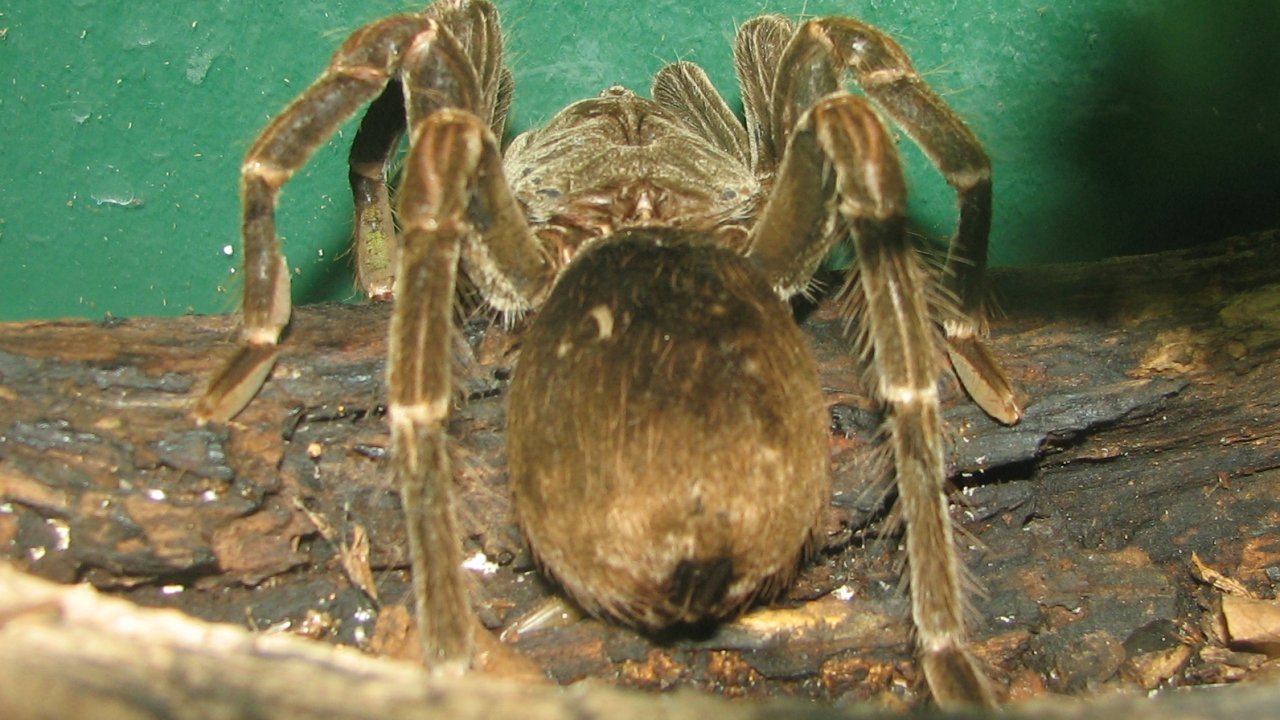 🌍 Terrestrial
Pamphobeteus nigricolor
Black Birdeater
Intermediate Requires consistent husbandry - more sensitive to ventilation, humidity, or feeding schedule. Some experience recommended. 🌍 Terrestrial Lives on or near the ground. Needs floor space more than height. Falls from height can be fatal - keep décor low. 🌎 New World From the Americas: can flick urticating (irritating) hairs as a first defence, and venom is generally milder. 💨 Skittish Easily startled - may bolt or dart suddenly when disturbed. Secure lids are essential as they can be escape artists. ⚠️ Flicks hairs Uses urticating (barbed) hairs on the abdomen as a primary defence. These hairs can cause skin irritation and must be kept away from eyes. New World species only.- Temp
- 22-28°C
- Humidity
- 60-75%
- Adult DLS
- 22-26 cm
- Moult
- Sling ~3w - Adult ~12mo
Colombian black - large terrestrial; deep substrate, generous floor space, water dish. 70-75% humidity.
-
🌍 Terrestrial
Pamphobeteus sp. Dark
Copperhead Birdeater
Intermediate Requires consistent husbandry - more sensitive to ventilation, humidity, or feeding schedule. Some experience recommended. 🌍 Terrestrial Lives on or near the ground. Needs floor space more than height. Falls from height can be fatal - keep décor low. 🌎 New World From the Americas: can flick urticating (irritating) hairs as a first defence, and venom is generally milder. ⚠️ Defensive Will adopt a threat posture (rearing up, showing fangs) when disturbed. May bite if provoked. Approach with care and use a catch cup for rehoming. 🍽️ Voracious eater Aggressive feeding response. Will tackle prey eagerly and rarely refuses a meal. Adjust feeding schedule accordingly - overfeeding shortens lifespan. ⚠️ Flicks hairs Uses urticating (barbed) hairs on the abdomen as a primary defence. These hairs can cause skin irritation and must be kept away from eyes. New World species only.- Temp
- 20-24°C
- Humidity
- 70-80%
- Adult DLS
- 20-22 cm
- Moult
- Sling ~4w - Adult ~11mo
The Copperhead Birdeater ("Pamphobeteus sp. Dark") - one of The Spider Shop's newest Ecuadorian Pamphobeteus imports, a big copper-toned giant at up to 22 cm rated "fearless" by the vendor. All the genus virtues: gluttonous feeding, impressive size, cool-tolerant Andean-foothill husbandry, and the usual hair-flicking response to disturbance. £50 for 3 cm slings; undescribed, so the "Dark" label is pure trade nomenclature.
-
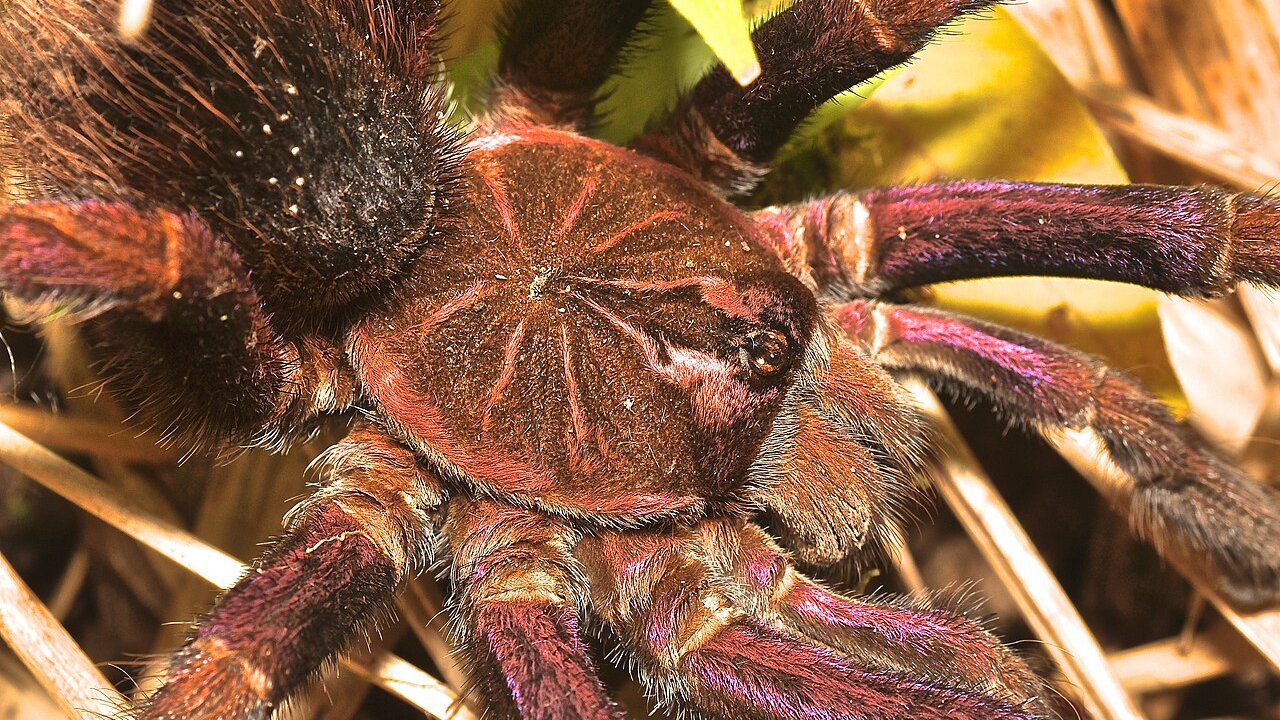 🌍 Terrestrial
Pamphobeteus sp. Machala
Machala Birdeater
Intermediate Requires consistent husbandry - more sensitive to ventilation, humidity, or feeding schedule. Some experience recommended. 🌍 Terrestrial Lives on or near the ground. Needs floor space more than height. Falls from height can be fatal - keep décor low. 🌎 New World From the Americas: can flick urticating (irritating) hairs as a first defence, and venom is generally milder. 💨 Skittish Easily startled - may bolt or dart suddenly when disturbed. Secure lids are essential as they can be escape artists. ⚠️ Flicks hairs Uses urticating (barbed) hairs on the abdomen as a primary defence. These hairs can cause skin irritation and must be kept away from eyes. New World species only.- Temp
- 22-28°C
- Humidity
- 60-75%
- Adult DLS
- 22-26 cm
- Moult
- Sling ~3w - Adult ~12mo
Machala purple - large terrestrial; deep substrate, water dish, 70-75% humidity. Standard Pamphobeteus care.
-
🌍 Terrestrial
Pamphobeteus sp. Magnanegra
Ecuador Black Beauty
Intermediate Requires consistent husbandry - more sensitive to ventilation, humidity, or feeding schedule. Some experience recommended. 🌍 Terrestrial Lives on or near the ground. Needs floor space more than height. Falls from height can be fatal - keep décor low. 🌎 New World From the Americas: can flick urticating (irritating) hairs as a first defence, and venom is generally milder. ⚠️ Defensive Will adopt a threat posture (rearing up, showing fangs) when disturbed. May bite if provoked. Approach with care and use a catch cup for rehoming. 🍽️ Voracious eater Aggressive feeding response. Will tackle prey eagerly and rarely refuses a meal. Adjust feeding schedule accordingly - overfeeding shortens lifespan. ⚠️ Flicks hairs Uses urticating (barbed) hairs on the abdomen as a primary defence. These hairs can cause skin irritation and must be kept away from eyes. New World species only.- Temp
- 20-24°C
- Humidity
- 70-80%
- Adult DLS
- 20-22 cm
- Moult
- Sling ~4w - Adult ~11mo
The Ecuador Black Beauty ("Magnanegra") - a near-black Pamphobeteus from humid rainforest around Ecuadorian waterfalls, first captive-bred in 2013 and still genuinely rare. Same cool-kept, gluttonous, hair-flicking genus character on a jet-black 22 cm frame; males develop purple tones at maturity. £28 slings when they appear. One for genus collectors who want the darkest paint job in the drawer.
-
🌍 Terrestrial
Pamphobeteus sp. Mascara
Mascara Birdeater
Beginner Forgiving of common mistakes. Tolerant of temperature/humidity variation. Great first tarantula. 🌍 Terrestrial Lives on or near the ground. Needs floor space more than height. Falls from height can be fatal - keep décor low. 🌎 New World From the Americas: can flick urticating (irritating) hairs as a first defence, and venom is generally milder. ⚠️ Flicks hairs Uses urticating (barbed) hairs on the abdomen as a primary defence. These hairs can cause skin irritation and must be kept away from eyes. New World species only. 🟢 Docile Generally slow-moving and tolerant of handling. Rarely threatens or bites. Great for beginners. 🍽️ Voracious eater Aggressive feeding response. Will tackle prey eagerly and rarely refuses a meal. Adjust feeding schedule accordingly - overfeeding shortens lifespan.- Temp
- 10-24°C
- Humidity
- 70-80%
- Adult DLS
- 18-20 cm
- Moult
- Sling ~4w - Adult ~10mo
The Mascara Birdeater - a two-toned Ecuadorian Pamphobeteus from drier coastal forest, with the widest temperature tolerance of the genus forms (10-24 °C on the vendor panel - genuinely cool-tolerant). Grows fast for a Pamphobeteus, hatches unusually large slings, and flicks hairs at every opportunity. £22 for 2 cm juveniles - one of the cheaper entry points into the giant South Americans.
-
🌍 Terrestrial
Pamphobeteus sp. Nopa
Nopa Birdeater
Intermediate Requires consistent husbandry - more sensitive to ventilation, humidity, or feeding schedule. Some experience recommended. 🌍 Terrestrial Lives on or near the ground. Needs floor space more than height. Falls from height can be fatal - keep décor low. 🌎 New World From the Americas: can flick urticating (irritating) hairs as a first defence, and venom is generally milder. ⚠️ Defensive Will adopt a threat posture (rearing up, showing fangs) when disturbed. May bite if provoked. Approach with care and use a catch cup for rehoming. 🍽️ Voracious eater Aggressive feeding response. Will tackle prey eagerly and rarely refuses a meal. Adjust feeding schedule accordingly - overfeeding shortens lifespan. ⚠️ Flicks hairs Uses urticating (barbed) hairs on the abdomen as a primary defence. These hairs can cause skin irritation and must be kept away from eyes. New World species only.- Temp
- 20-24°C
- Humidity
- 70-80%
- Adult DLS
- 20-22 cm
- Moult
- Sling ~4w - Adult ~11mo
The Nopa Birdeater - a big, fearless Ecuadorian Pamphobeteus from the Santo Domingo mountain range (Ecuador's Santo Domingo de los Colorados, NOT the Caribbean - a common mix-up with its trade-label sibling). Same cool-kept giant formula: 22 cm, gluttonous, hair-flicking, £75 for 5 cm slings. The genus label and locality naming predate any formal description - pure trade nomenclature.
-
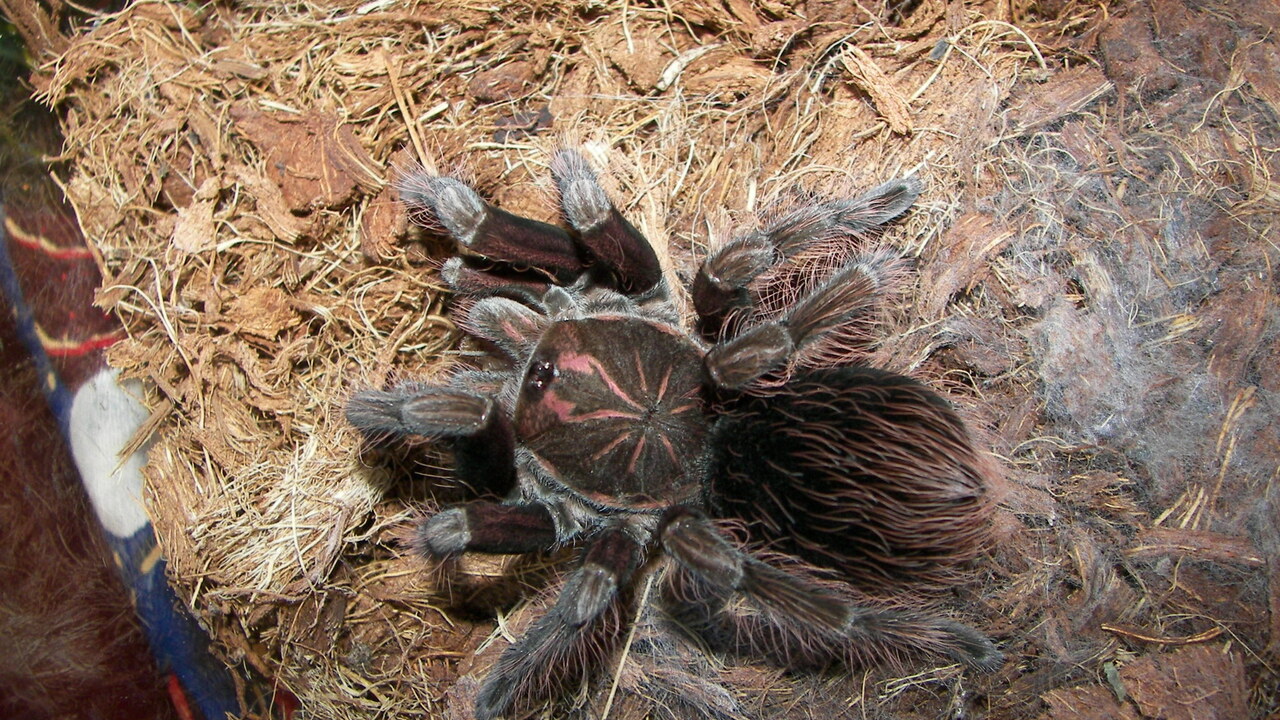 🌍 Terrestrial
Pamphobeteus sp. platyomma
Brazilian Pink Bloom
Beginner Forgiving of common mistakes. Tolerant of temperature/humidity variation. Great first tarantula. 🌍 Terrestrial Lives on or near the ground. Needs floor space more than height. Falls from height can be fatal - keep décor low. 🌎 New World From the Americas: can flick urticating (irritating) hairs as a first defence, and venom is generally milder. ⚠️ Flicks hairs Uses urticating (barbed) hairs on the abdomen as a primary defence. These hairs can cause skin irritation and must be kept away from eyes. New World species only. 🟢 Docile Generally slow-moving and tolerant of handling. Rarely threatens or bites. Great for beginners. 🍽️ Voracious eater Aggressive feeding response. Will tackle prey eagerly and rarely refuses a meal. Adjust feeding schedule accordingly - overfeeding shortens lifespan.- Temp
- 20-25°C
- Humidity
- 70-80%
- Adult DLS
- 18-22 cm
- Moult
- Sling ~4w - Adult ~11mo
The Brazilian Pink Bloom - one of the most coveted Pamphobeteus in the hobby: dark frame, pink starburst carapace, and mature males that blaze vivid pink. Taxonomy footnote: there is no valid Pamphobeteus platyomma - the name survives only as Vitalius platyomma (a nomen dubium) - so this is an undescribed Brazilian Pamphobeteus sold on a decades-old trade label. A cool-tolerant giant at up to 22 cm that feeds like a Geniculata and flicks hairs with the same enthusiasm. Juvenile females are pricey; slings appear periodically at around £30-60.
-
🌍 Terrestrial
Pamphobeteus sp. Santa Domingo Goliath
Santa Domingo Goliath
Intermediate Requires consistent husbandry - more sensitive to ventilation, humidity, or feeding schedule. Some experience recommended. 🌍 Terrestrial Lives on or near the ground. Needs floor space more than height. Falls from height can be fatal - keep décor low. 🌎 New World From the Americas: can flick urticating (irritating) hairs as a first defence, and venom is generally milder. ⚠️ Flicks hairs Uses urticating (barbed) hairs on the abdomen as a primary defence. These hairs can cause skin irritation and must be kept away from eyes. New World species only. ⚠️ Defensive Will adopt a threat posture (rearing up, showing fangs) when disturbed. May bite if provoked. Approach with care and use a catch cup for rehoming. 🍽️ Voracious eater Aggressive feeding response. Will tackle prey eagerly and rarely refuses a meal. Adjust feeding schedule accordingly - overfeeding shortens lifespan.- Temp
- 20-22°C
- Humidity
- 70-80%
- Adult DLS
- 21-25 cm
- Moult
- Sling ~4w - Adult ~11mo
The Santa Domingo Goliath - the biggest number on any vendor's Pamphobeteus list: a claimed 25 cm, named for Santo Domingo de los Colorados in ECUADOR (not the Dominican Republic, despite the trade spelling). Cool-kept like its siblings but faster-growing and heavier-bodied, with the "Christmas tree" sling patterning retained longer than any other form. £85 for 5 cm slings buys you one of the largest captive-bred tarantulas money can get.


