
Species library
255 species profiled with accurate care data. Click any species to start a specimen record pre-filled.
+ Request a species
-
 🌳 Arboreal
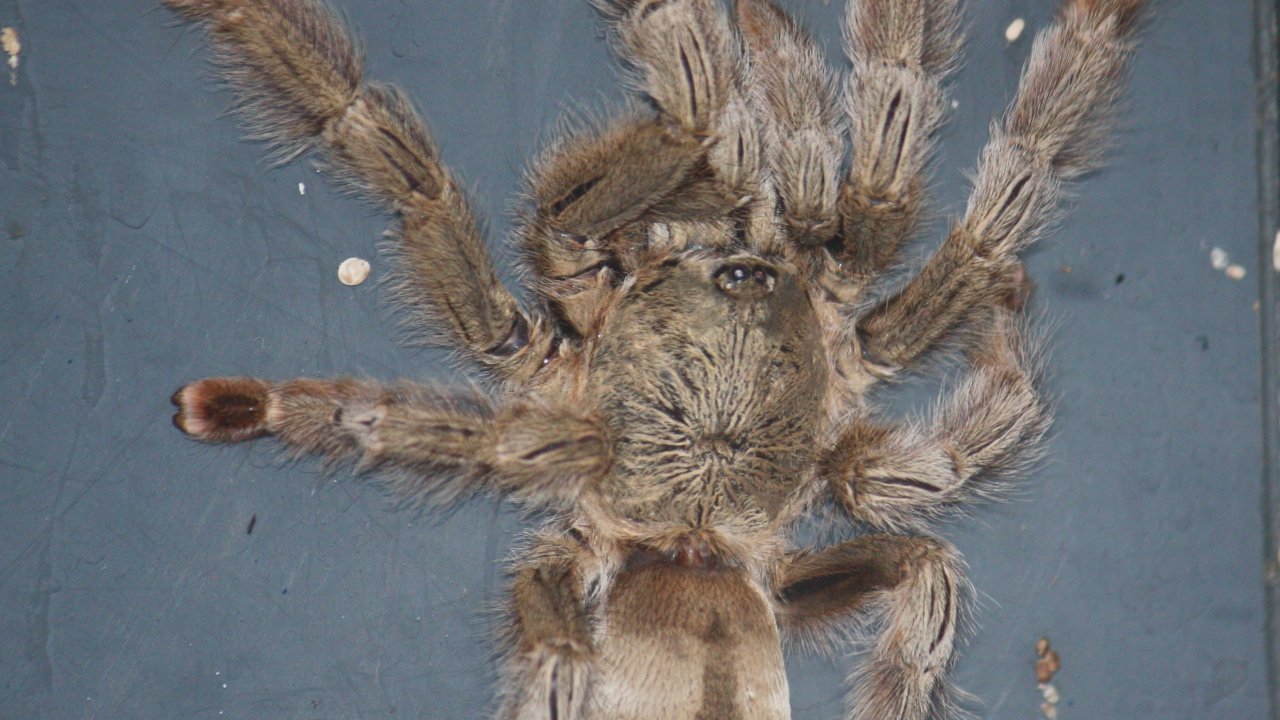
Psalmopoeus pulcher
Panama Blonde
Intermediate Requires consistent husbandry - more sensitive to ventilation, humidity, or feeding schedule. Some experience recommended. 🌳 Arboreal Lives above ground in trees or plants. Needs height and vertical climbing surfaces. Secure lid essential - they climb glass. 🌎 New World From the Americas: can flick urticating (irritating) hairs as a first defence, and venom is generally milder. 💨 Skittish Easily startled - may bolt or dart suddenly when disturbed. Secure lids are essential as they can be escape artists. ⚠️ Flicks hairs Uses urticating (barbed) hairs on the abdomen as a primary defence. These hairs can cause skin irritation and must be kept away from eyes. New World species only.- Temp
- 22-28°C
- Humidity
- 70-85%
- Adult DLS
- 14-17 cm
- Moult
- Sling ~3w - Adult ~12mo
Emperor suntiger - fast arboreal; tall setup with vertical cork and webbing anchors. 75-80% humidity, strong ventilation. No urticating hairs - bites.
-
 🌳 Arboreal
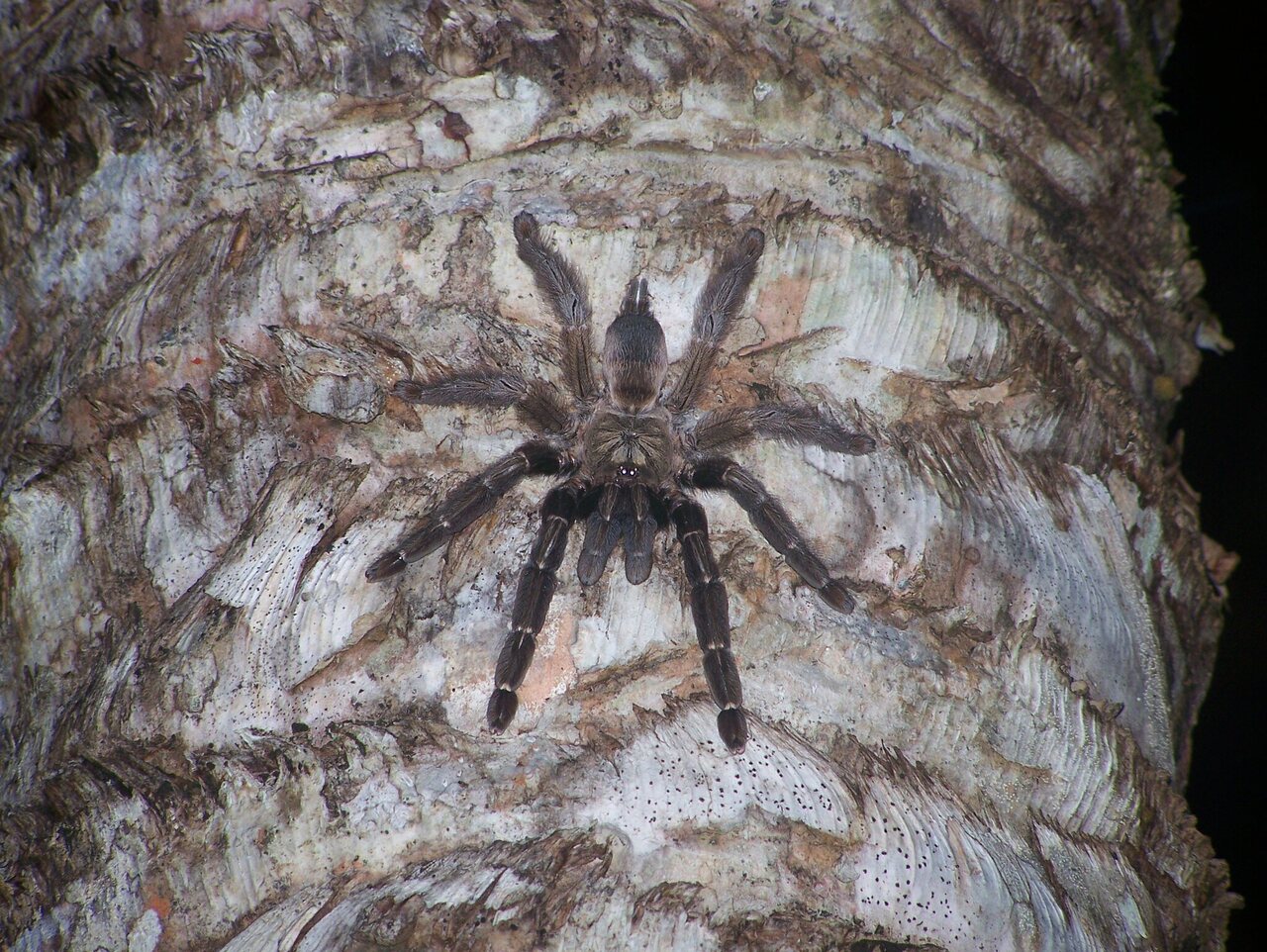
Psalmopoeus reduncus
Orange Mouth
Intermediate Requires consistent husbandry - more sensitive to ventilation, humidity, or feeding schedule. Some experience recommended. 🌳 Arboreal Lives above ground in trees or plants. Needs height and vertical climbing surfaces. Secure lid essential - they climb glass. 🌎 New World From the Americas: can flick urticating (irritating) hairs as a first defence, and venom is generally milder. ⚡ Fast Moves very quickly, especially when startled. Can cross an enclosure in the blink of an eye. Not recommended for handling. 💨 Skittish Easily startled - may bolt or dart suddenly when disturbed. Secure lids are essential as they can be escape artists. 🕸️ Heavy webber Dense, prolific webbing behaviour. Will carpet the entire enclosure in thick silk - this is normal and healthy. Provides a visual indicator of the spider's territory.- Temp
- 24-28°C
- Humidity
- 65-80%
- Adult DLS
- 12-15 cm
- Moult
- Sling ~3w - Adult ~10mo
Costa Rican tree spider whose calling card is right there in the name: bright orange-red setae around the mouth, visible from the sling stage and flashed during its threat display. Dark chestnut body with bronze highlights, slender legs, and the classic Psalmopoeus build - fast, reclusive and completely without urticating hairs, so its defences are pure speed and a memorable bite. Scarce in UK shops; usually appears via specialist breeders.
-
 🌳 Arboreal
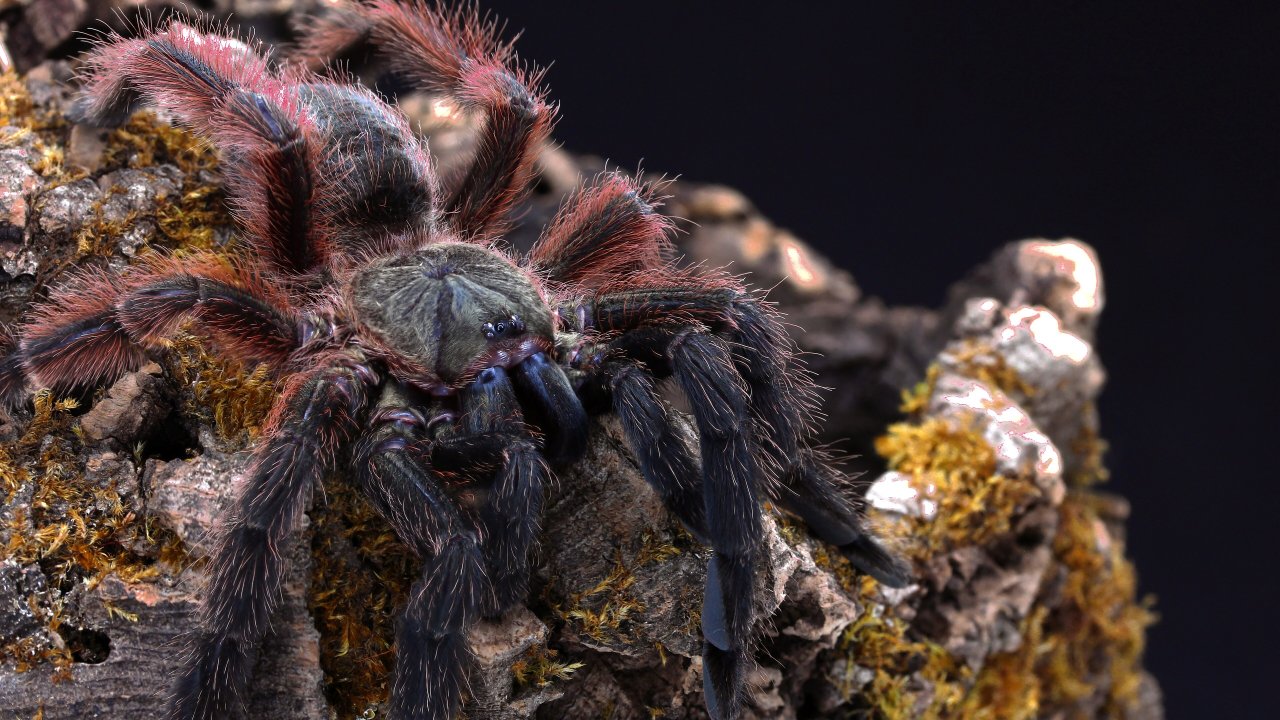
Psalmopoeus victori
Mexican Half-and-Half
Intermediate Requires consistent husbandry - more sensitive to ventilation, humidity, or feeding schedule. Some experience recommended. 🌳 Arboreal Lives above ground in trees or plants. Needs height and vertical climbing surfaces. Secure lid essential - they climb glass. 🌎 New World From the Americas: can flick urticating (irritating) hairs as a first defence, and venom is generally milder. 💨 Skittish Easily startled - may bolt or dart suddenly when disturbed. Secure lids are essential as they can be escape artists. ⚠️ Flicks hairs Uses urticating (barbed) hairs on the abdomen as a primary defence. These hairs can cause skin irritation and must be kept away from eyes. New World species only.- Temp
- 22-28°C
- Humidity
- 70-85%
- Adult DLS
- 14-17 cm
- Moult
- Sling ~3w - Adult ~12mo
Victors suntiger - newly described (2020) Mexican arboreal; tall setup with vertical cork, 75-80% humidity with airflow.
-
 🕳️ Fossorial
Psednocnemis brachyramosa
Malaysian Blue Femur
Advanced Demanding or potentially dangerous. May be very fast, defensive, or have medically significant venom. Experienced keepers only. 🕳️ Fossorial Lives underground in deep burrows. Needs deep, packed substrate to dig. You may rarely see them - patience required. 🌍 Old World From Africa, Asia or Australasia: no urticating hairs - defence is speed and a potent bite. Medically significant venom possible. ⚠️ Defensive Will adopt a threat posture (rearing up, showing fangs) when disturbed. May bite if provoked. Approach with care and use a catch cup for rehoming. 🕸️ Heavy webber Dense, prolific webbing behaviour. Will carpet the entire enclosure in thick silk - this is normal and healthy. Provides a visual indicator of the spider's territory. Old world- Temp
- 20-26°C
- Humidity
- 70-80%
- Adult DLS
- 10-12 cm
- Moult
- Sling ~4w - Adult ~10mo
The Malaysian Blue Femur (Psednocnemis brachyramosa, ex-Coremiocnemis) - a compact Fraser's Hill highlander whose drab brown slings transform into adults with iridescent blue femurs banded in gold. Relatively docile FOR an Old World (bolter more than brawler), but still fast with medically significant venom and a deep-burrow, seen-once-a-month lifestyle. Care-sheet sources conflict wildly on temperature - a moderate 20-26 °C with moist substrate is the safe highland compromise. Rare at £45 a sling; a gem for genus collectors.
-
🌍 Terrestrial
Pseudhapalopus sp. Blue
Colombian Bluebottle
Intermediate Requires consistent husbandry - more sensitive to ventilation, humidity, or feeding schedule. Some experience recommended. 🌍 Terrestrial Lives on or near the ground. Needs floor space more than height. Falls from height can be fatal - keep décor low. 🌎 New World From the Americas: can flick urticating (irritating) hairs as a first defence, and venom is generally milder. 💨 Skittish Easily startled - may bolt or dart suddenly when disturbed. Secure lids are essential as they can be escape artists. ⚡ Fast Moves very quickly, especially when startled. Can cross an enclosure in the blink of an eye. Not recommended for handling. Dwarf 🕸️ Heavy webber Dense, prolific webbing behaviour. Will carpet the entire enclosure in thick silk - this is normal and healthy. Provides a visual indicator of the spider's territory.- Temp
- 22-26°C
- Humidity
- 65-75%
- Adult DLS
- 6-8 cm
- Moult
- Sling ~3w - Adult ~10mo
The Colombian Bluebottle is an undescribed dwarf from Boyacá, Colombia, sold across the UK hobby as Pseudhapalopus sp. "Blue" - recent Theraphosid Research Team work suggests it actually belongs in Spinosatibiapalpus, so expect the label to shift eventually. The metallic blue sits on the abdomen against grey-brown legs and deepens with every moult; females top out at a dainty 6-8 cm DLS with a calm-but-jumpy demeanour and heavy webbing around their retreat. Tiny 0.5 cm slings need fruit-fly-scale prey, which is the main reason this is rated intermediate rather than beginner. UK captive-bred stock sells out fast - roughly £16 a sling, with sexed sub-adult females commanding £100+ because males are short-lived.
-
 🌍 Terrestrial
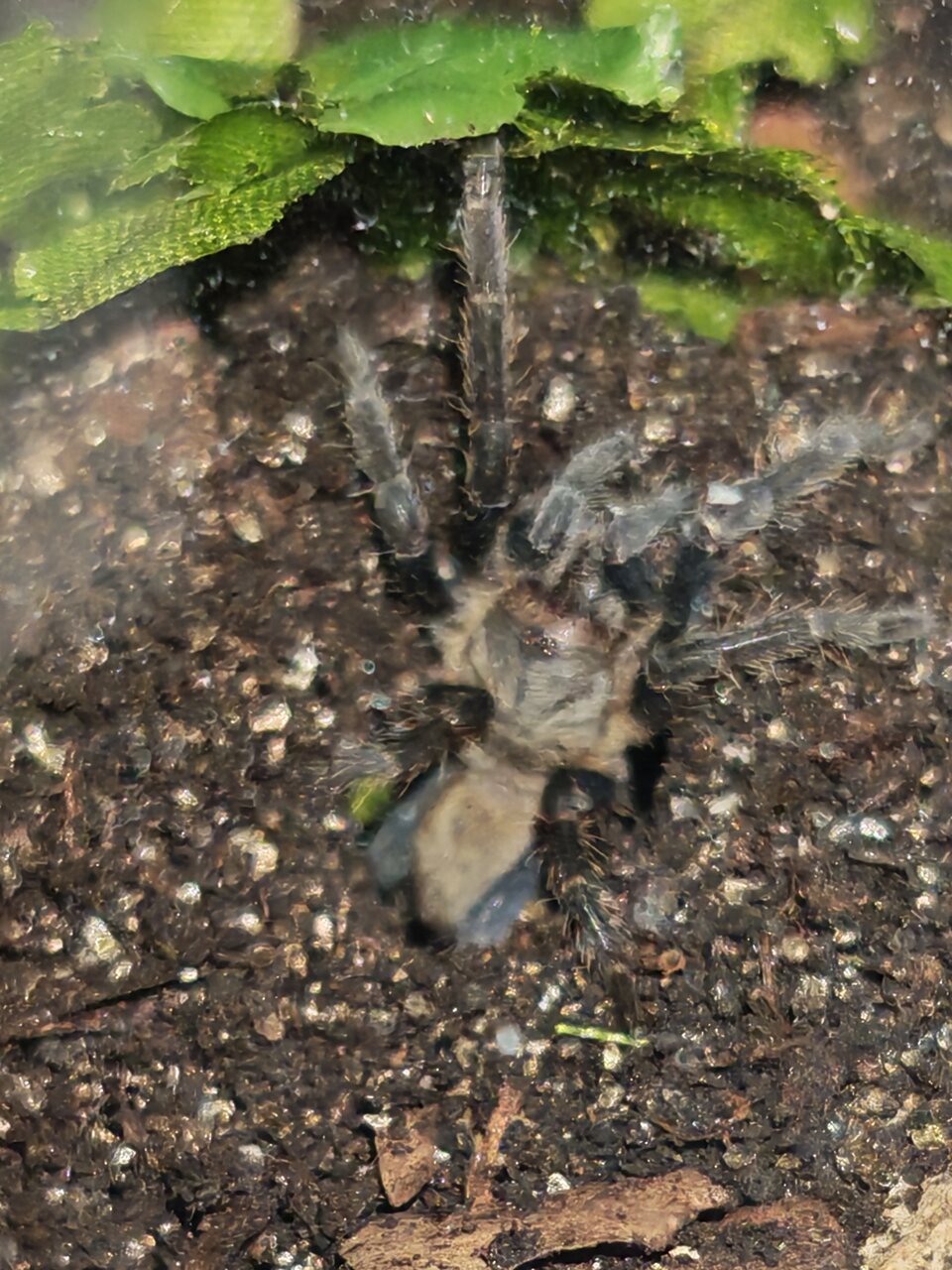
Pseudhapalopus sp. Kurzhaar
Colombian Short-hair
Beginner Forgiving of common mistakes. Tolerant of temperature/humidity variation. Great first tarantula. 🌍 Terrestrial Lives on or near the ground. Needs floor space more than height. Falls from height can be fatal - keep décor low. 🌎 New World From the Americas: can flick urticating (irritating) hairs as a first defence, and venom is generally milder. 💨 Skittish Easily startled - may bolt or dart suddenly when disturbed. Secure lids are essential as they can be escape artists. ⚡ Fast Moves very quickly, especially when startled. Can cross an enclosure in the blink of an eye. Not recommended for handling.- Temp
- 24-28°C
- Humidity
- 70-80%
- Adult DLS
- 4-5 cm
- Moult
- Sling ~4w - Adult ~15mo
Colombian dwarf with a subtle grey-brown base and a blue-violet flush on the legs after a fresh moult. "Kurzhaar" is German for short-haired, and the species is still scientifically undescribed (trade genus sometimes listed as Spinosatibiapalpus after the 2020 revision). An opportunistic burrower that stays under 5 cm: small enclosure, deep damp substrate, and famously glacial growth - a female can take five years to mature.
-
 🌍 Terrestrial
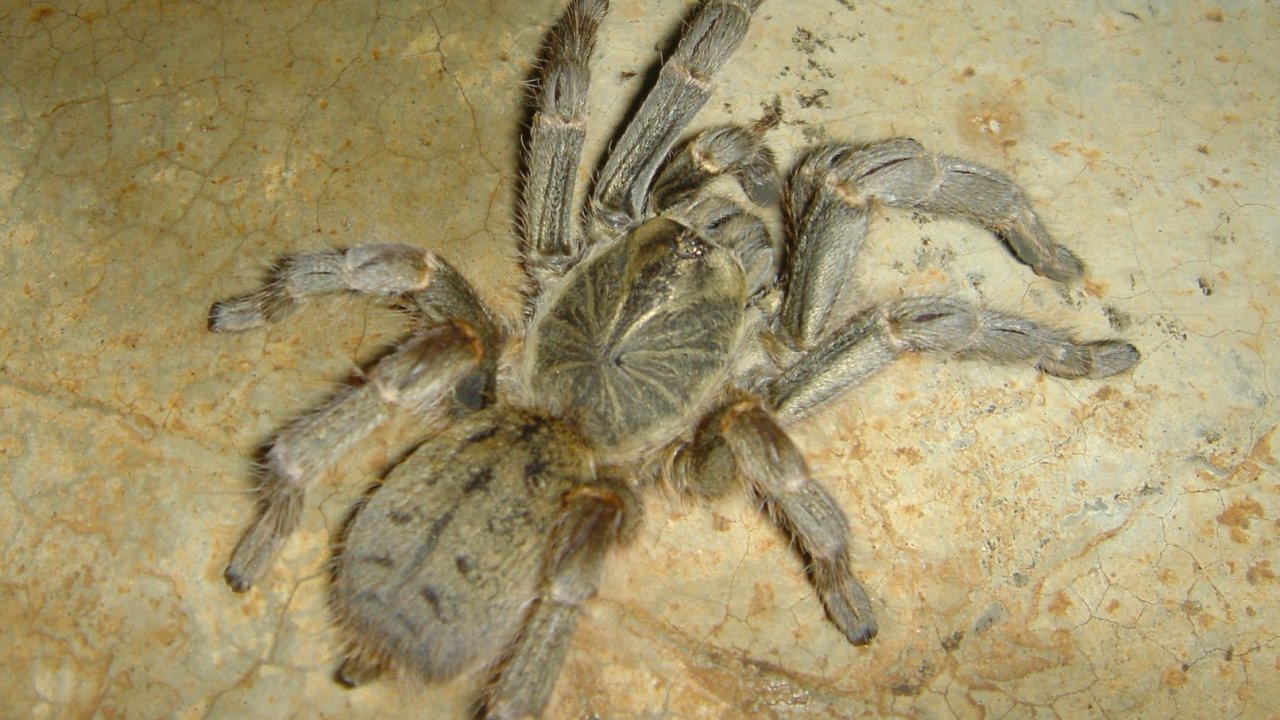
Pterinochilus lugardi
Tanzanian Blonde Baboon
Intermediate Requires consistent husbandry - more sensitive to ventilation, humidity, or feeding schedule. Some experience recommended. 🌍 Terrestrial Lives on or near the ground. Needs floor space more than height. Falls from height can be fatal - keep décor low. 🌍 Old World From Africa, Asia or Australasia: no urticating hairs - defence is speed and a potent bite. Medically significant venom possible. ⚠️ Defensive Will adopt a threat posture (rearing up, showing fangs) when disturbed. May bite if provoked. Approach with care and use a catch cup for rehoming. ⚡ Fast Moves very quickly, especially when startled. Can cross an enclosure in the blink of an eye. Not recommended for handling. ☠️ Potent venom Possesses medically significant venom. A bite can cause intense pain, muscle cramps, sweating, and may require medical attention. Old World species typically fall here as they lack urticating hairs. 🕸️ Heavy webber Dense, prolific webbing behaviour. Will carpet the entire enclosure in thick silk - this is normal and healthy. Provides a visual indicator of the spider's territory.- Temp
- 24-28°C
- Humidity
- 55-65%
- Adult DLS
- 12-14 cm
- Moult
- Sling ~3w - Adult ~8mo
Blonde-bodied African baboon - calmer than OBT but still fast with potent venom. Easy to keep dry.
-
 🌍 Terrestrial
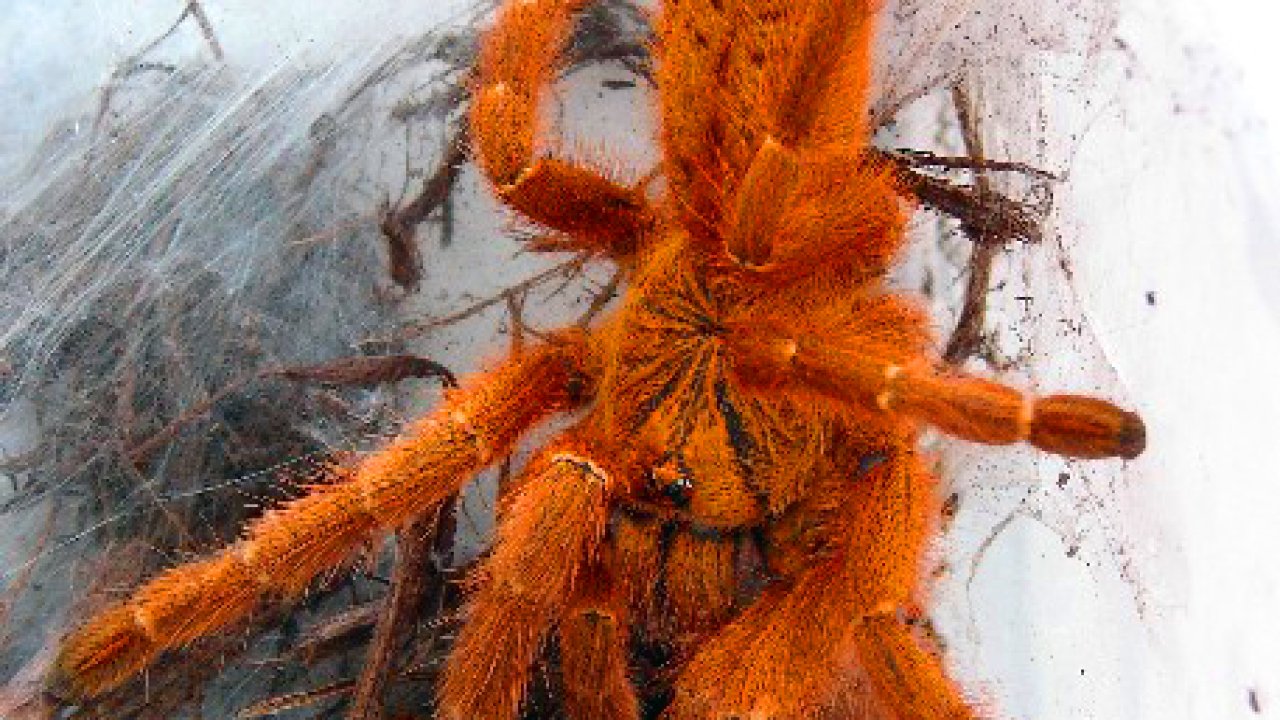
Pterinochilus murinus
Orange Baboon Tarantula (OBT)
Advanced Demanding or potentially dangerous. May be very fast, defensive, or have medically significant venom. Experienced keepers only. 🌍 Terrestrial Lives on or near the ground. Needs floor space more than height. Falls from height can be fatal - keep décor low. 🌍 Old World From Africa, Asia or Australasia: no urticating hairs - defence is speed and a potent bite. Medically significant venom possible. ⚠️ Defensive Will adopt a threat posture (rearing up, showing fangs) when disturbed. May bite if provoked. Approach with care and use a catch cup for rehoming. ⚡ Fast Moves very quickly, especially when startled. Can cross an enclosure in the blink of an eye. Not recommended for handling. ☠️ Potent venom Possesses medically significant venom. A bite can cause intense pain, muscle cramps, sweating, and may require medical attention. Old World species typically fall here as they lack urticating hairs. 🕸️ Heavy webber Dense, prolific webbing behaviour. Will carpet the entire enclosure in thick silk - this is normal and healthy. Provides a visual indicator of the spider's territory. 🍽️ Voracious eater Aggressive feeding response. Will tackle prey eagerly and rarely refuses a meal. Adjust feeding schedule accordingly - overfeeding shortens lifespan. 🔴 Aggressive Actively moves toward perceived threats rather than retreating. May bite without much provocation. Experienced keepers only - always use tools, never hands.- Temp
- 24-28°C
- Humidity
- 60-70%
- Adult DLS
- 13-15 cm
- Moult
- Sling ~3w - Adult ~8mo
Vivid orange "Orange Bitey Thing". Fast, defensive, and a prolific webber. No urticating hairs - potent bite instead.
-
🌍 Terrestrial
Pterinochilus murinus DCF
Kigoma Starburst Baboon
Advanced Demanding or potentially dangerous. May be very fast, defensive, or have medically significant venom. Experienced keepers only. 🌍 Terrestrial Lives on or near the ground. Needs floor space more than height. Falls from height can be fatal - keep décor low. 🌍 Old World From Africa, Asia or Australasia: no urticating hairs - defence is speed and a potent bite. Medically significant venom possible. ⚠️ Defensive Will adopt a threat posture (rearing up, showing fangs) when disturbed. May bite if provoked. Approach with care and use a catch cup for rehoming. ⚡ Fast Moves very quickly, especially when startled. Can cross an enclosure in the blink of an eye. Not recommended for handling. 🕸️ Heavy webber Dense, prolific webbing behaviour. Will carpet the entire enclosure in thick silk - this is normal and healthy. Provides a visual indicator of the spider's territory. Old world 🍽️ Voracious eater Aggressive feeding response. Will tackle prey eagerly and rarely refuses a meal. Adjust feeding schedule accordingly - overfeeding shortens lifespan.- Temp
- 24-28°C
- Humidity
- 60-70%
- Adult DLS
- 11-14 cm
- Moult
- Sling ~2w - Adult ~8mo
The Kigoma Starburst Baboon - the DARK colour form (DCF) of Pterinochilus murinus from Kigoma, Tanzania, and southward into Botswana and Zimbabwe: charcoal-grey setae with the starburst pattern in gunmetal rather than orange. Same animal, different paint - and a slightly more subdued look that many keepers prefer. Full OBT behaviour and ease of care; a little harder to find than the orange forms (around £28 for juveniles).
-
 🌍 Terrestrial
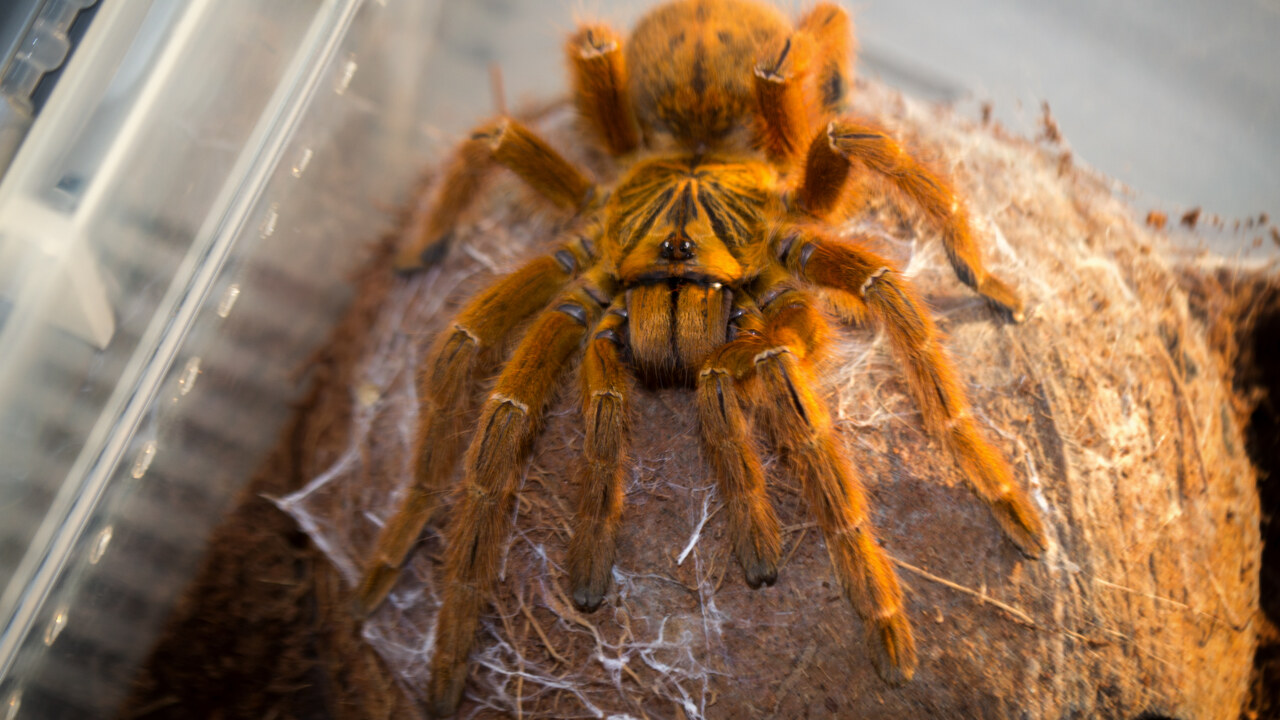
Pterinochilus murinus RCF
Usambara Baboon
Advanced Demanding or potentially dangerous. May be very fast, defensive, or have medically significant venom. Experienced keepers only. 🌍 Terrestrial Lives on or near the ground. Needs floor space more than height. Falls from height can be fatal - keep décor low. 🌍 Old World From Africa, Asia or Australasia: no urticating hairs - defence is speed and a potent bite. Medically significant venom possible. ⚠️ Defensive Will adopt a threat posture (rearing up, showing fangs) when disturbed. May bite if provoked. Approach with care and use a catch cup for rehoming. ⚡ Fast Moves very quickly, especially when startled. Can cross an enclosure in the blink of an eye. Not recommended for handling. 🕸️ Heavy webber Dense, prolific webbing behaviour. Will carpet the entire enclosure in thick silk - this is normal and healthy. Provides a visual indicator of the spider's territory. Old world 🍽️ Voracious eater Aggressive feeding response. Will tackle prey eagerly and rarely refuses a meal. Adjust feeding schedule accordingly - overfeeding shortens lifespan.- Temp
- 24-28°C
- Humidity
- 60-70%
- Adult DLS
- 11-14 cm
- Moult
- Sling ~2w - Adult ~8mo
The Usambara Baboon - the RED colour form (RCF) of Pterinochilus murinus from Tanzania's Usambara Mountains: deep red-orange setae over the classic OBT frame, arguably the prettiest form of the species everyone loves to fear. The full "Orange Bitey Thing" experience: web fortresses, teleport speed, willingness to bite without a threat posture, and medically significant venom. Also one of the easiest tarantulas on earth to breed and keep alive - £6 slings, bulletproof health, endless entertainment. Respect required; experience recommended.
-
 🌍 Terrestrial
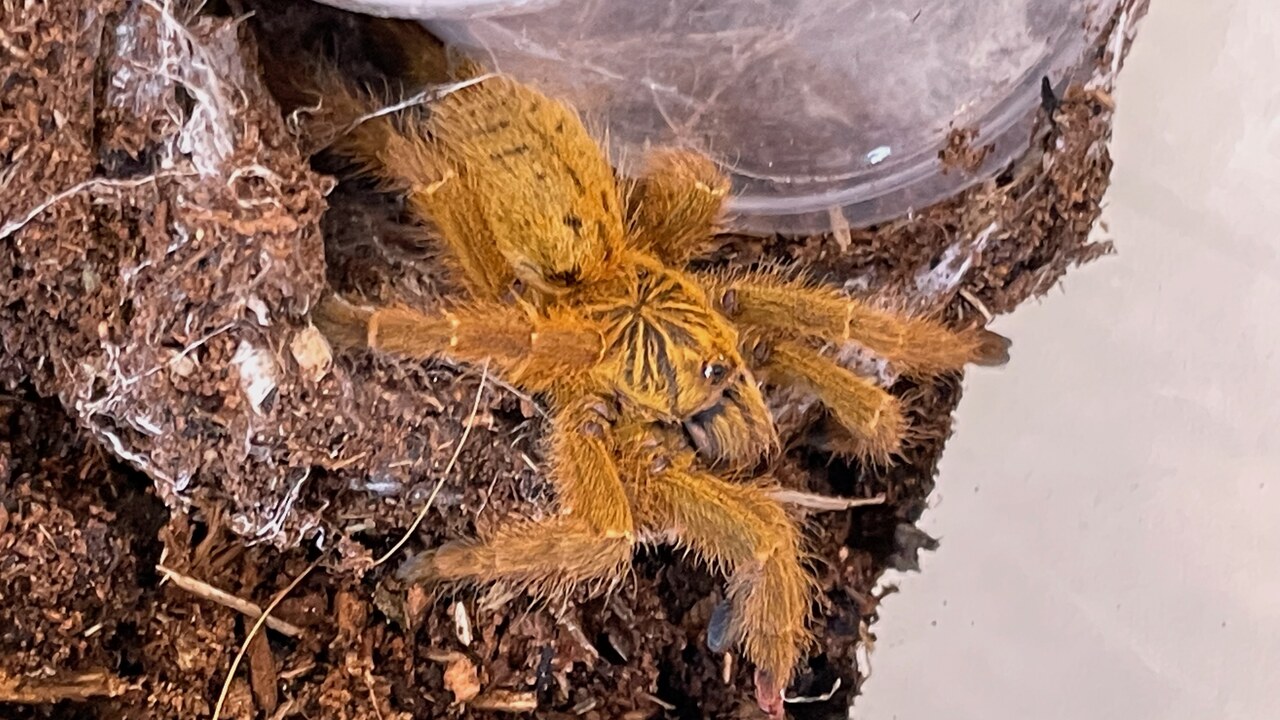
Pterinochilus murinus TCF
Kenyan Starburst Baboon
Advanced Demanding or potentially dangerous. May be very fast, defensive, or have medically significant venom. Experienced keepers only. 🌍 Terrestrial Lives on or near the ground. Needs floor space more than height. Falls from height can be fatal - keep décor low. 🌍 Old World From Africa, Asia or Australasia: no urticating hairs - defence is speed and a potent bite. Medically significant venom possible. ⚠️ Defensive Will adopt a threat posture (rearing up, showing fangs) when disturbed. May bite if provoked. Approach with care and use a catch cup for rehoming. ⚡ Fast Moves very quickly, especially when startled. Can cross an enclosure in the blink of an eye. Not recommended for handling. 🕸️ Heavy webber Dense, prolific webbing behaviour. Will carpet the entire enclosure in thick silk - this is normal and healthy. Provides a visual indicator of the spider's territory. Old world 🍽️ Voracious eater Aggressive feeding response. Will tackle prey eagerly and rarely refuses a meal. Adjust feeding schedule accordingly - overfeeding shortens lifespan.- Temp
- 24-28°C
- Humidity
- 60-70%
- Adult DLS
- 12-15 cm
- Moult
- Sling ~2w - Adult ~8mo
The Kenyan Starburst Baboon - the TYPICAL colour form (TCF) of Pterinochilus murinus, and the biggest: the classic blazing orange-gold "starburst" OBT of hobby legend, at up to 15 cm. Colour forms are locality variants, not subspecies - TCF hails from Kenya and Mozambique. Same species, same rules: fortress webbing, insane speed, hair-trigger defence, medically significant venom, and zero difficulty keeping it alive. The £7 sling that becomes the most dramatic animal in the room.
-
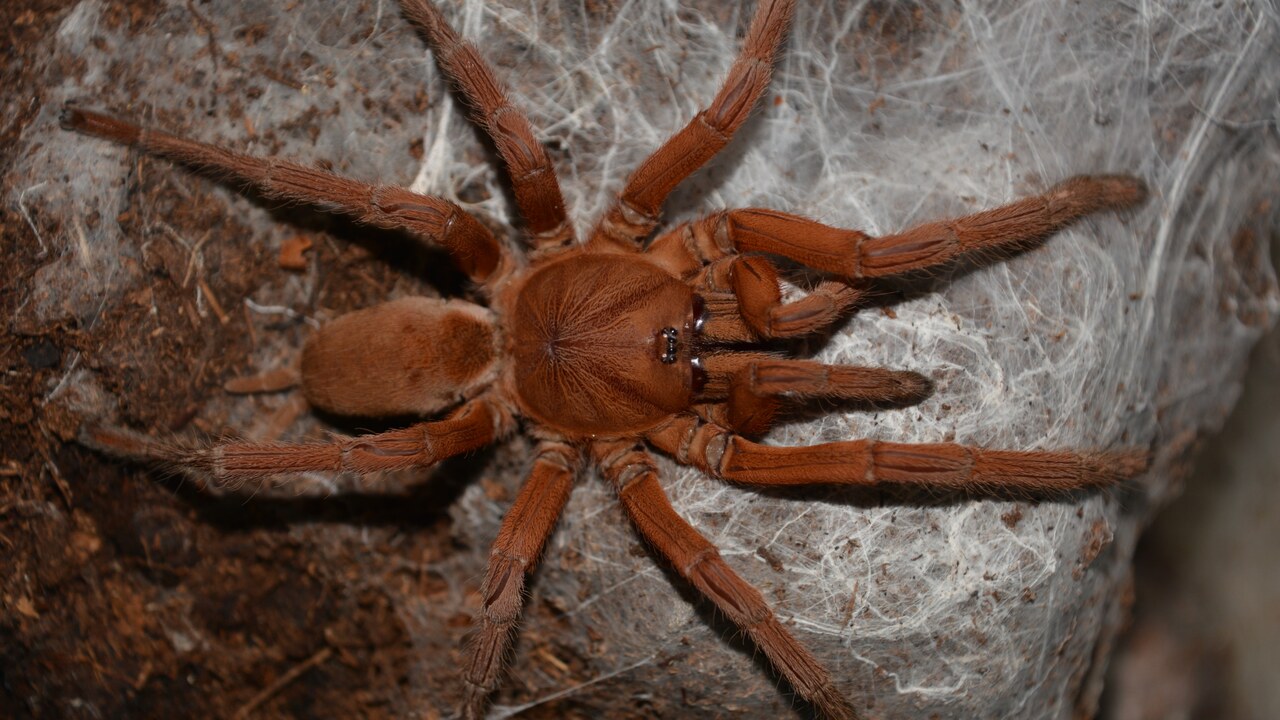 🌍 Terrestrial
Selenobrachys philippinus
Philippine Orange
Advanced Demanding or potentially dangerous. May be very fast, defensive, or have medically significant venom. Experienced keepers only. 🌍 Terrestrial Lives on or near the ground. Needs floor space more than height. Falls from height can be fatal - keep décor low. 🌍 Old World From Africa, Asia or Australasia: no urticating hairs - defence is speed and a potent bite. Medically significant venom possible. ⚠️ Defensive Will adopt a threat posture (rearing up, showing fangs) when disturbed. May bite if provoked. Approach with care and use a catch cup for rehoming. ⚡ Fast Moves very quickly, especially when startled. Can cross an enclosure in the blink of an eye. Not recommended for handling. 🕸️ Heavy webber Dense, prolific webbing behaviour. Will carpet the entire enclosure in thick silk - this is normal and healthy. Provides a visual indicator of the spider's territory. Old world- Temp
- 24-28°C
- Humidity
- 80-85%
- Adult DLS
- 13-16 cm
- Moult
- Sling ~3w - Adult ~9mo
The Philippine Orange (Selenobrachys philippinus) - freshly moulted specimens glow fluorescent tangerine, one of the most genuinely orange tarantulas. The name journey matters: described as Selenobrachys in 1999, folded into Orphnaecus in 2012, and RETURNED to Selenobrachys by the April 2025 revision - UK vendors still use the old label. A fast, defensive Philippine terrestrial from Negros that thrives in root-tangle setups with high humidity. Cheap (£10 slings), undemanding to keep alive, demanding to respect.
-
🌍 Terrestrial
Selenocosmia arndsti
New Guinea Rust Orange
Advanced Demanding or potentially dangerous. May be very fast, defensive, or have medically significant venom. Experienced keepers only. 🌍 Terrestrial Lives on or near the ground. Needs floor space more than height. Falls from height can be fatal - keep décor low. 🌍 Old World From Africa, Asia or Australasia: no urticating hairs - defence is speed and a potent bite. Medically significant venom possible. ⚠️ Defensive Will adopt a threat posture (rearing up, showing fangs) when disturbed. May bite if provoked. Approach with care and use a catch cup for rehoming. ⚡ Fast Moves very quickly, especially when startled. Can cross an enclosure in the blink of an eye. Not recommended for handling. 🕸️ Heavy webber Dense, prolific webbing behaviour. Will carpet the entire enclosure in thick silk - this is normal and healthy. Provides a visual indicator of the spider's territory. Old world- Temp
- 24-27°C
- Humidity
- 70-80%
- Adult DLS
- 15-18 cm
- Moult
- Sling ~3w - Adult ~9mo
The New Guinea Rust Orange ("Rusty Striker") - bright orange legs and carapace against pitch-black femora and abdomen, on a slender 15-18 cm frame. UK vendor disposition: "Psycho" - skittish, defensive, bolts first and stridulates when cornered, with potent Old World venom and no urticating hairs. Straightforward warm-and-humid husbandry with WC slings cheap at £25; the challenge is respect, not care. Advanced keepers.
-
 🕳️ Fossorial
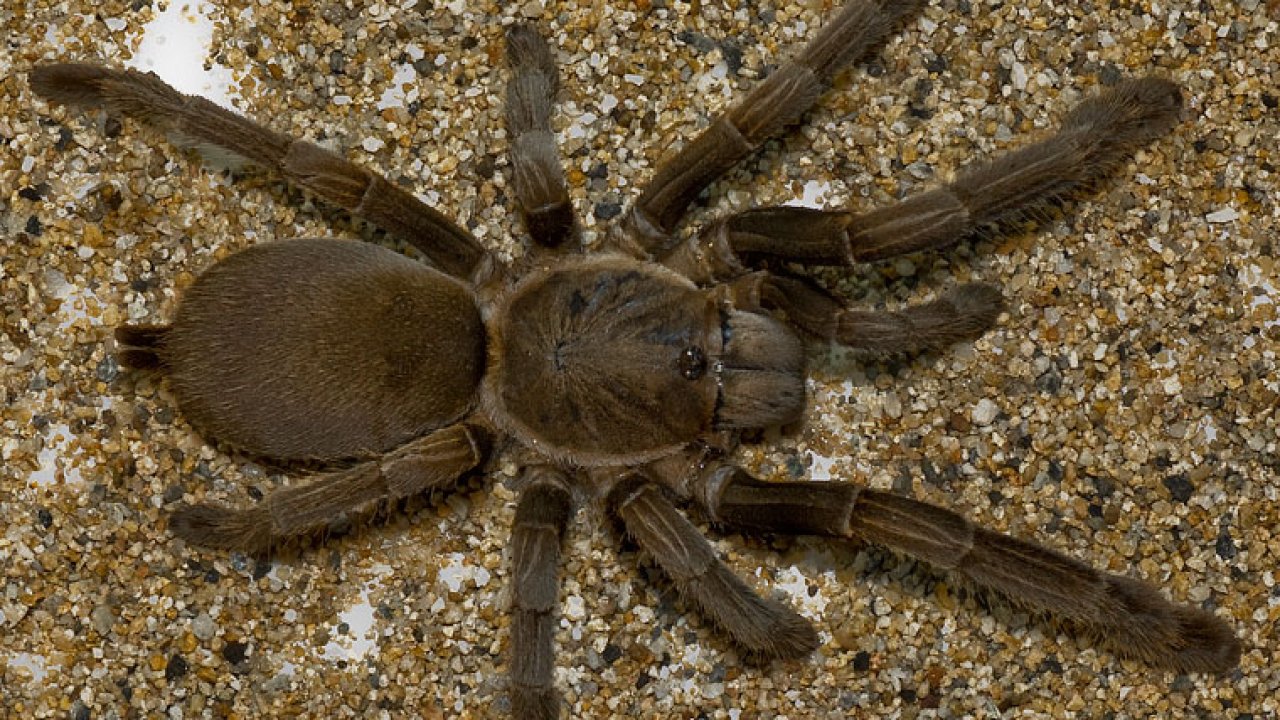
Selenocosmia crassipes
Australian Whistling Tarantula
Advanced Demanding or potentially dangerous. May be very fast, defensive, or have medically significant venom. Experienced keepers only. 🕳️ Fossorial Lives underground in deep burrows. Needs deep, packed substrate to dig. You may rarely see them - patience required. 🌍 Old World From Africa, Asia or Australasia: no urticating hairs - defence is speed and a potent bite. Medically significant venom possible. 🔴 Aggressive Actively moves toward perceived threats rather than retreating. May bite without much provocation. Experienced keepers only - always use tools, never hands. ☠️ Potent venom Possesses medically significant venom. A bite can cause intense pain, muscle cramps, sweating, and may require medical attention. Old World species typically fall here as they lack urticating hairs. ⚠️ Defensive Will adopt a threat posture (rearing up, showing fangs) when disturbed. May bite if provoked. Approach with care and use a catch cup for rehoming.- Temp
- 22-26°C
- Humidity
- 65-75%
- Adult DLS
- 14-18 cm
- Moult
- Sling ~3w - Adult ~12mo
Australian tarantula with stridulating hairs that "hiss" when threatened. Rarely exported now.
-
 🕳️ Fossorial
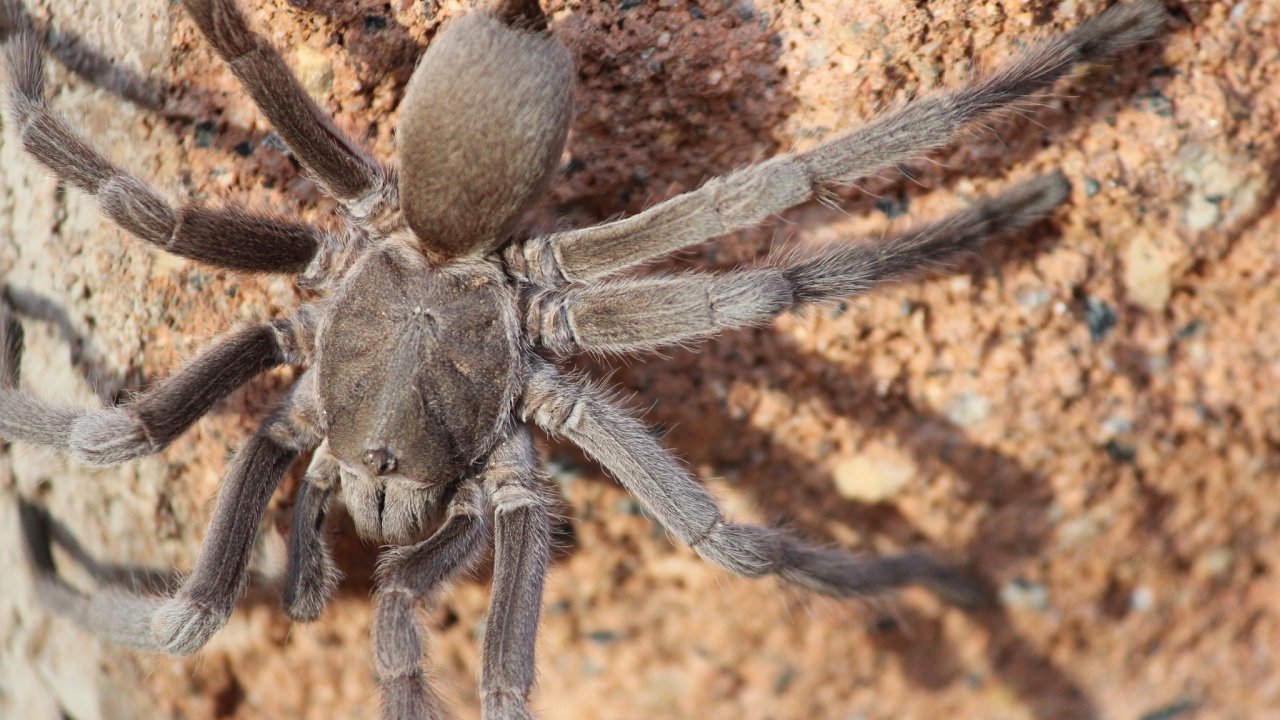
Selenotholus foelschei
Foelsche's Whistling Tarantula
Advanced Demanding or potentially dangerous. May be very fast, defensive, or have medically significant venom. Experienced keepers only. 🕳️ Fossorial Lives underground in deep burrows. Needs deep, packed substrate to dig. You may rarely see them - patience required. 🌍 Old World From Africa, Asia or Australasia: no urticating hairs - defence is speed and a potent bite. Medically significant venom possible. 🔴 Aggressive Actively moves toward perceived threats rather than retreating. May bite without much provocation. Experienced keepers only - always use tools, never hands. ☠️ Potent venom Possesses medically significant venom. A bite can cause intense pain, muscle cramps, sweating, and may require medical attention. Old World species typically fall here as they lack urticating hairs. ⚠️ Defensive Will adopt a threat posture (rearing up, showing fangs) when disturbed. May bite if provoked. Approach with care and use a catch cup for rehoming.- Temp
- 24-28°C
- Humidity
- 55-65%
- Adult DLS
- 13-15 cm
- Moult
- Sling ~3w - Adult ~12mo
Copper-coloured Australian fossorial - rare in the European hobby. Dry conditions and deep substrate.
-
 🌍 Terrestrial
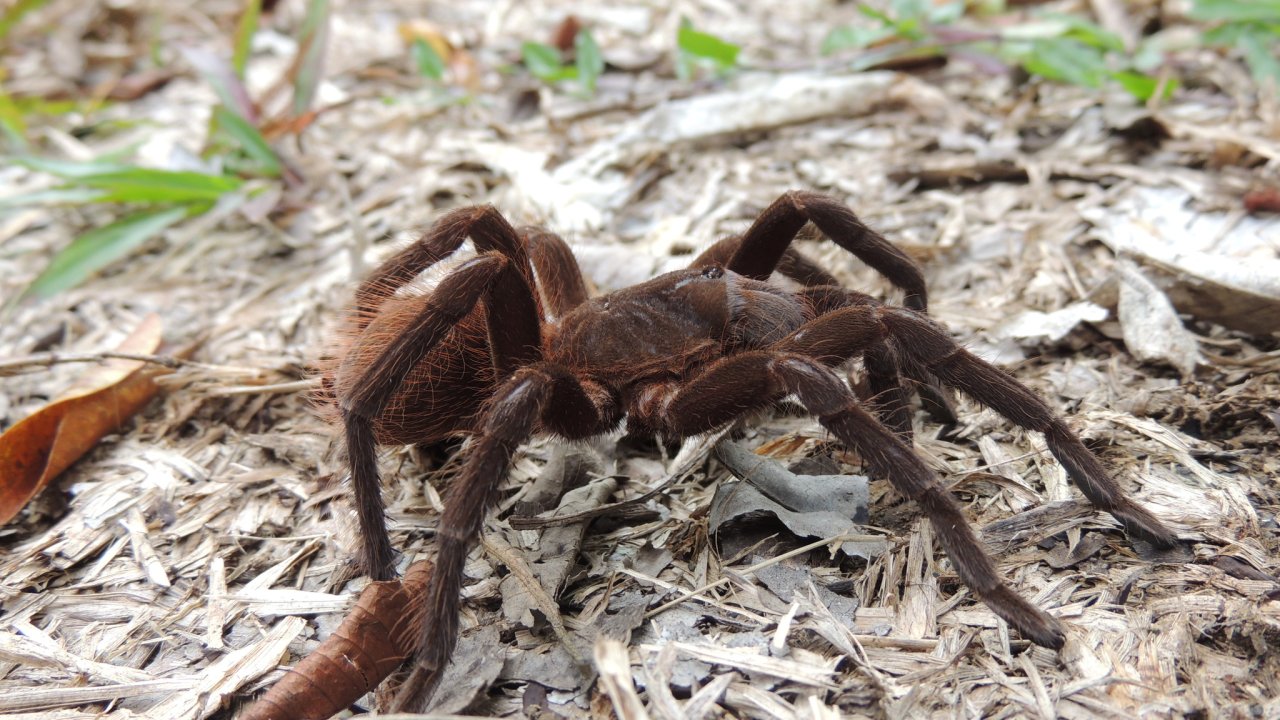
Sericopelma rubronitens
Panama Giant Red Rump
Intermediate Requires consistent husbandry - more sensitive to ventilation, humidity, or feeding schedule. Some experience recommended. 🌍 Terrestrial Lives on or near the ground. Needs floor space more than height. Falls from height can be fatal - keep décor low. 🌎 New World From the Americas: can flick urticating (irritating) hairs as a first defence, and venom is generally milder. 💨 Skittish Easily startled - may bolt or dart suddenly when disturbed. Secure lids are essential as they can be escape artists. ⚠️ Flicks hairs Uses urticating (barbed) hairs on the abdomen as a primary defence. These hairs can cause skin irritation and must be kept away from eyes. New World species only.- Temp
- 22-28°C
- Humidity
- 60-75%
- Adult DLS
- 13-15 cm
- Moult
- Sling ~3w - Adult ~12mo
Panamanian red - large terrestrial; deep substrate, water dish, 70-75% humidity. Hair-kicker.
-
🌍 Terrestrial
Spinosatibiapalpus sp. Colombia
Yellow Blue Bottle
Beginner Forgiving of common mistakes. Tolerant of temperature/humidity variation. Great first tarantula. 🌍 Terrestrial Lives on or near the ground. Needs floor space more than height. Falls from height can be fatal - keep décor low. 🌎 New World From the Americas: can flick urticating (irritating) hairs as a first defence, and venom is generally milder. 🟢 Docile Generally slow-moving and tolerant of handling. Rarely threatens or bites. Great for beginners. 💨 Skittish Easily startled - may bolt or dart suddenly when disturbed. Secure lids are essential as they can be escape artists. Dwarf- Temp
- 22-24°C
- Humidity
- 70-80%
- Adult DLS
- 6-8 cm
- Moult
- Sling ~3w - Adult ~7mo
The Colombian Strawberry Blonde - metallic blue-purple and gold on a semi-dwarf frame (ex-"Pseudhapalopus sp. Colombia", moved into the palpal-spined genus Spinosatibiapalpus in 2020). The "hot strawberry blonde cousin" of the Colombian Blue Bottle, docile and quick-growing, and a staple dwarf breeding project. Slings hatch tiny (0.5 cm) at £20 each - rear on micro prey and enjoy the colour development.
-
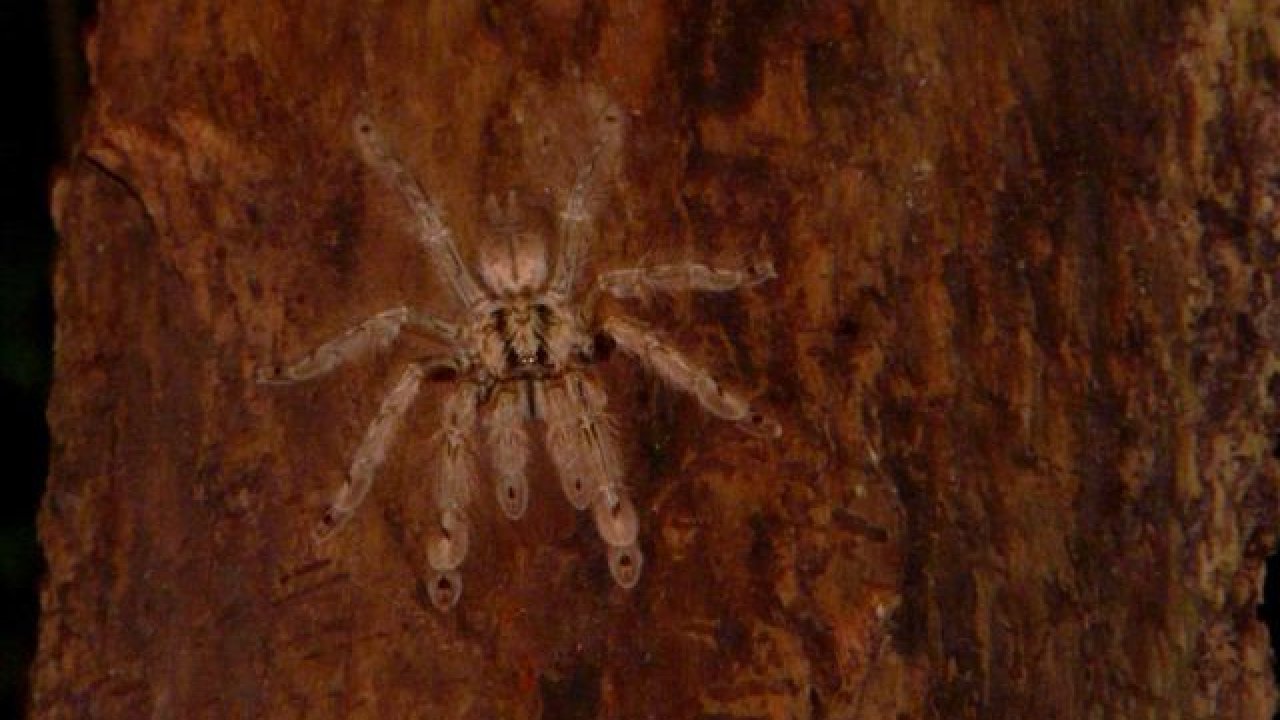 🌳 Arboreal
Stromatopelma calceatum
Featherleg Baboon
Advanced Demanding or potentially dangerous. May be very fast, defensive, or have medically significant venom. Experienced keepers only. 🌳 Arboreal Lives above ground in trees or plants. Needs height and vertical climbing surfaces. Secure lid essential - they climb glass. 🌍 Old World From Africa, Asia or Australasia: no urticating hairs - defence is speed and a potent bite. Medically significant venom possible. ⚠️ Defensive Will adopt a threat posture (rearing up, showing fangs) when disturbed. May bite if provoked. Approach with care and use a catch cup for rehoming. ⚡ Fast Moves very quickly, especially when startled. Can cross an enclosure in the blink of an eye. Not recommended for handling. ☠️ Potent venom Possesses medically significant venom. A bite can cause intense pain, muscle cramps, sweating, and may require medical attention. Old World species typically fall here as they lack urticating hairs. 🕸️ Heavy webber Dense, prolific webbing behaviour. Will carpet the entire enclosure in thick silk - this is normal and healthy. Provides a visual indicator of the spider's territory.- Temp
- 24-28°C
- Humidity
- 65-75%
- Adult DLS
- 11-13 cm
- Moult
- Sling ~3w - Adult ~8mo
African arboreal with feathered rear legs. Lightning-fast with medically significant venom.
-
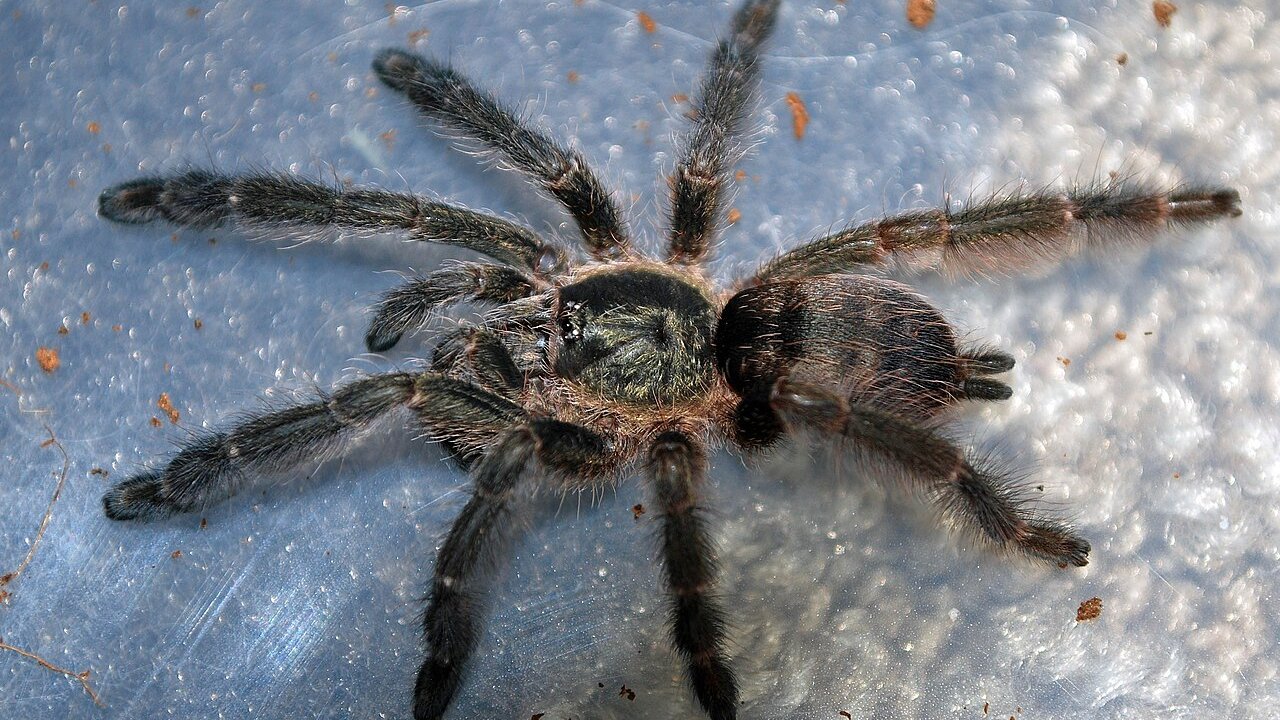 🌳 Arboreal
Tapinauchenius cupreus
Orange Tree Spider
Intermediate Requires consistent husbandry - more sensitive to ventilation, humidity, or feeding schedule. Some experience recommended. 🌳 Arboreal Lives above ground in trees or plants. Needs height and vertical climbing surfaces. Secure lid essential - they climb glass. 🌎 New World From the Americas: can flick urticating (irritating) hairs as a first defence, and venom is generally milder. ⚡ Fast Moves very quickly, especially when startled. Can cross an enclosure in the blink of an eye. Not recommended for handling. 💨 Skittish Easily startled - may bolt or dart suddenly when disturbed. Secure lids are essential as they can be escape artists. 🕸️ Heavy webber Dense, prolific webbing behaviour. Will carpet the entire enclosure in thick silk - this is normal and healthy. Provides a visual indicator of the spider's territory.- Temp
- 24-28°C
- Humidity
- 65-80%
- Adult DLS
- 11-13 cm
- Moult
- Sling ~3w - Adult ~5mo
Copper-orange tree-dweller; one of the fastest spiders in the hobby. Same husbandry as Psalmopoeus but smaller.
-
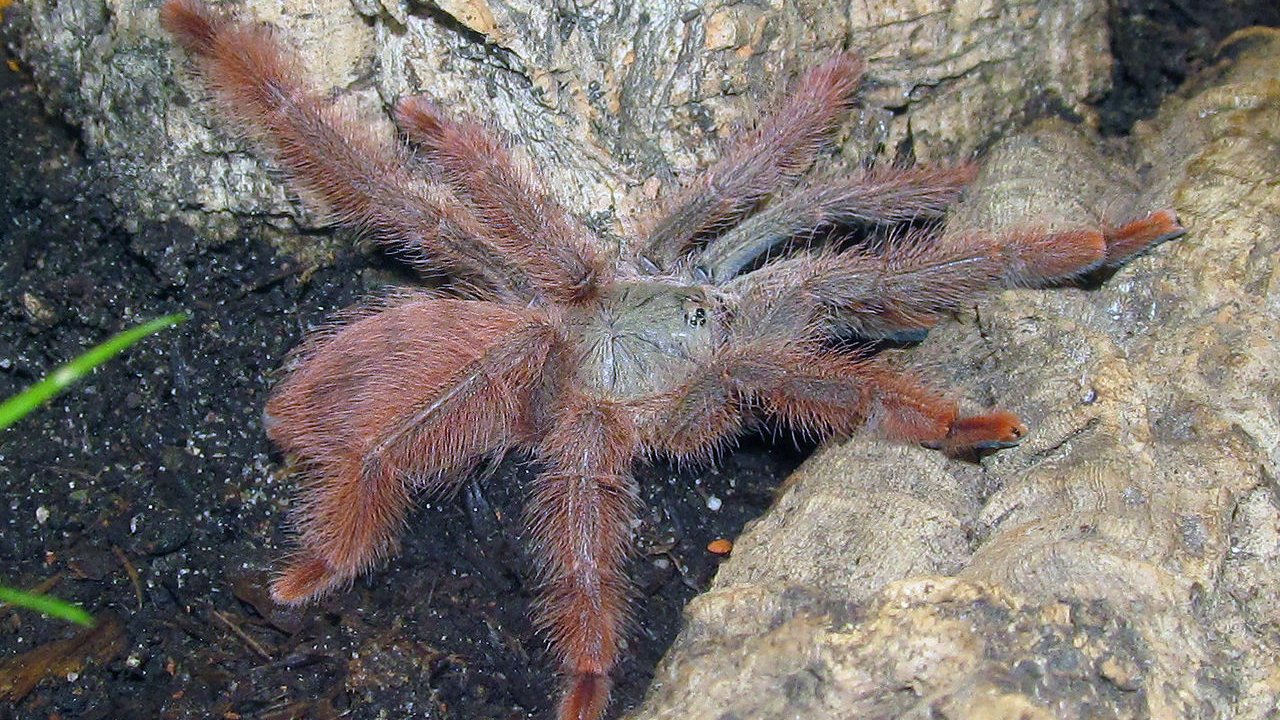 🌳 Arboreal
Tapinauchenius gigas
Goliath Pinktoe
Intermediate Requires consistent husbandry - more sensitive to ventilation, humidity, or feeding schedule. Some experience recommended. 🌳 Arboreal Lives above ground in trees or plants. Needs height and vertical climbing surfaces. Secure lid essential - they climb glass. 🌎 New World From the Americas: can flick urticating (irritating) hairs as a first defence, and venom is generally milder. ⚡ Fast Moves very quickly, especially when startled. Can cross an enclosure in the blink of an eye. Not recommended for handling. 💨 Skittish Easily startled - may bolt or dart suddenly when disturbed. Secure lids are essential as they can be escape artists. 🕸️ Heavy webber Dense, prolific webbing behaviour. Will carpet the entire enclosure in thick silk - this is normal and healthy. Provides a visual indicator of the spider's territory.- Temp
- 24-28°C
- Humidity
- 65-80%
- Adult DLS
- 11-13 cm
- Moult
- Sling ~3w - Adult ~5mo
Similar care to T. cupreus - bright orange, blisteringly fast arboreal.
-
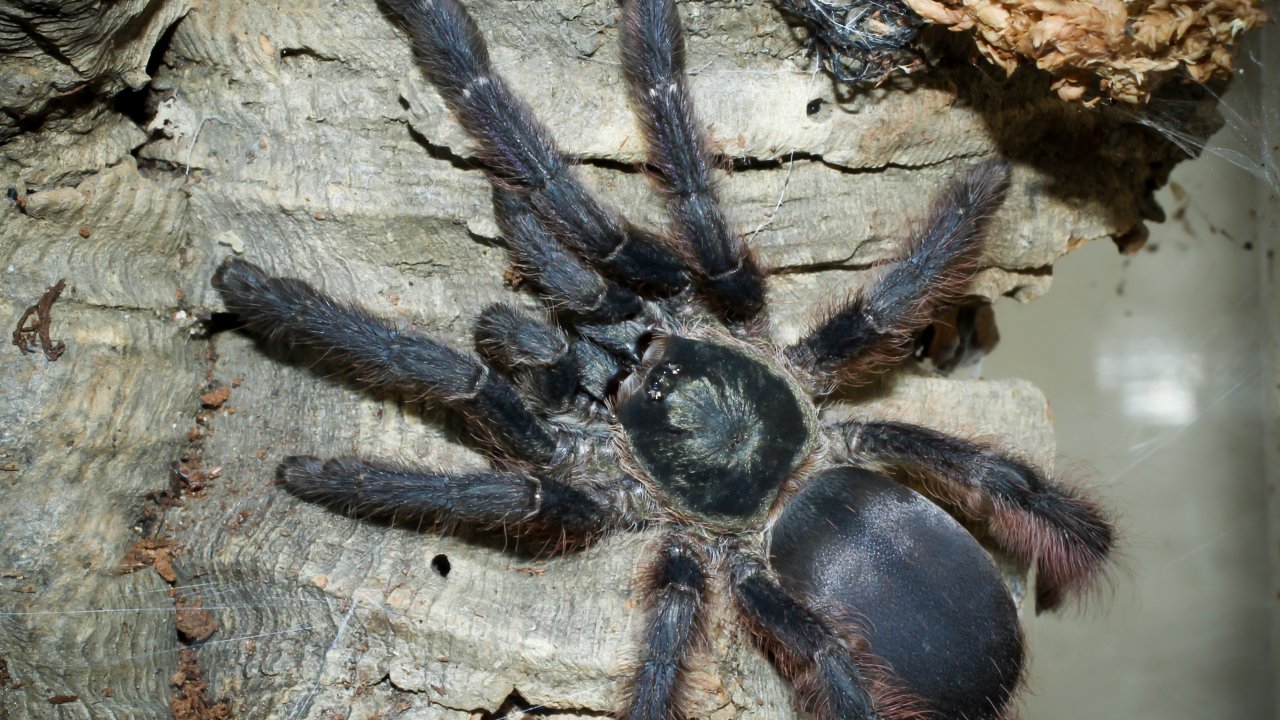 🌳 Arboreal
Tapinauchenius plumipes
Purple Tree Spider
Intermediate Requires consistent husbandry - more sensitive to ventilation, humidity, or feeding schedule. Some experience recommended. 🌳 Arboreal Lives above ground in trees or plants. Needs height and vertical climbing surfaces. Secure lid essential - they climb glass. 🌎 New World From the Americas: can flick urticating (irritating) hairs as a first defence, and venom is generally milder. 💨 Skittish Easily startled - may bolt or dart suddenly when disturbed. Secure lids are essential as they can be escape artists. ⚠️ Flicks hairs Uses urticating (barbed) hairs on the abdomen as a primary defence. These hairs can cause skin irritation and must be kept away from eyes. New World species only.- Temp
- 22-28°C
- Humidity
- 70-85%
- Adult DLS
- 14-17 cm
- Moult
- Sling ~3w - Adult ~12mo
Trinidad purple - tiny fast arboreal. Small tall tub with vertical cork and perfect ventilation. Mist one wall lightly.
-
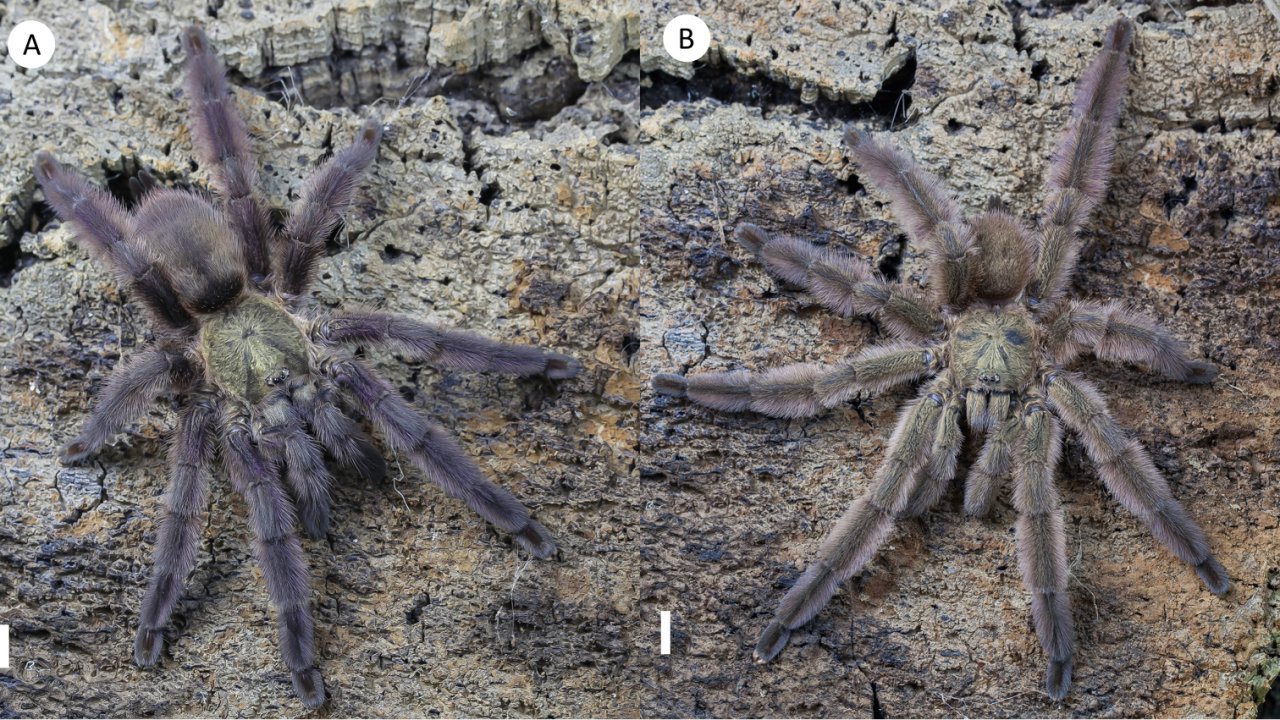 🌳 Arboreal
Tapinauchenius rasti
Caribbean Diamond
Intermediate Requires consistent husbandry - more sensitive to ventilation, humidity, or feeding schedule. Some experience recommended. 🌳 Arboreal Lives above ground in trees or plants. Needs height and vertical climbing surfaces. Secure lid essential - they climb glass. 🌎 New World From the Americas: can flick urticating (irritating) hairs as a first defence, and venom is generally milder. 💨 Skittish Easily startled - may bolt or dart suddenly when disturbed. Secure lids are essential as they can be escape artists. ⚠️ Flicks hairs Uses urticating (barbed) hairs on the abdomen as a primary defence. These hairs can cause skin irritation and must be kept away from eyes. New World species only.- Temp
- 22-28°C
- Humidity
- 70-85%
- Adult DLS
- 14-17 cm
- Moult
- Sling ~3w - Adult ~12mo
Rasts dwarf orange - tiny rocket-fast arboreal. Small tall tub, vertical cork, clamping lid, catch-cup rehousing.
-
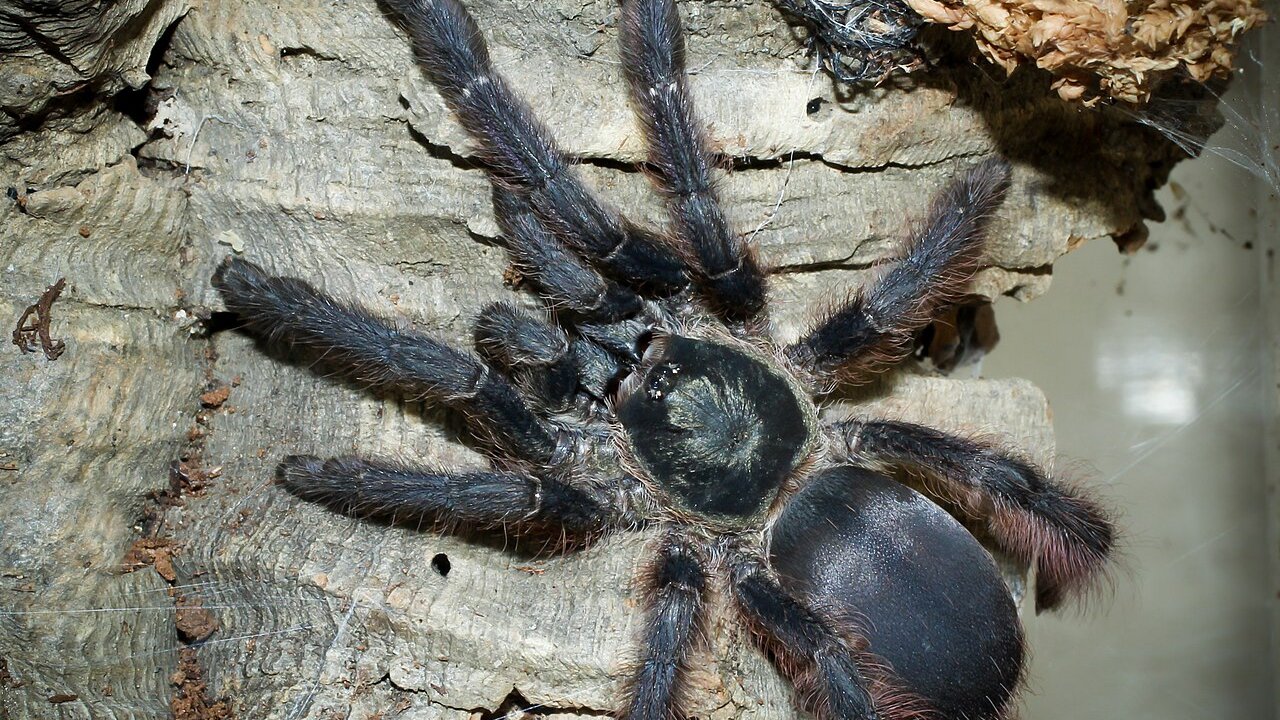 🌳 Arboreal
Tapinauchenius violaceus
Brazilian Purple Pinktoe
Intermediate Requires consistent husbandry - more sensitive to ventilation, humidity, or feeding schedule. Some experience recommended. 🌳 Arboreal Lives above ground in trees or plants. Needs height and vertical climbing surfaces. Secure lid essential - they climb glass. 🌎 New World From the Americas: can flick urticating (irritating) hairs as a first defence, and venom is generally milder. 💨 Skittish Easily startled - may bolt or dart suddenly when disturbed. Secure lids are essential as they can be escape artists. ⚠️ Flicks hairs Uses urticating (barbed) hairs on the abdomen as a primary defence. These hairs can cause skin irritation and must be kept away from eyes. New World species only.- Temp
- 22-28°C
- Humidity
- 70-85%
- Adult DLS
- 14-17 cm
- Moult
- Sling ~3w - Adult ~12mo
Purple tree spider - quick arboreal, tall enclosure with cross-ventilation and cork. Standard humid-but-breezy arboreal care.
-
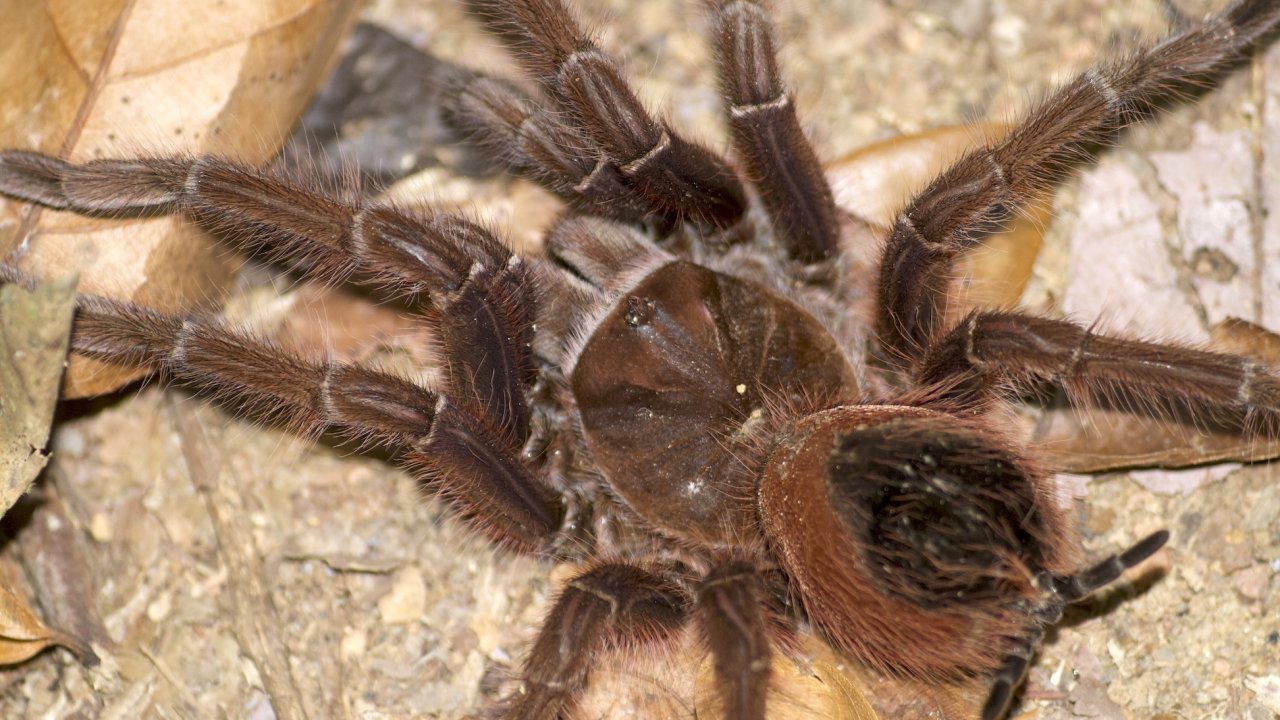 🌍 Terrestrial
Theraphosa apophysis
Pinkfoot Goliath Birdeater
Intermediate Requires consistent husbandry - more sensitive to ventilation, humidity, or feeding schedule. Some experience recommended. 🌍 Terrestrial Lives on or near the ground. Needs floor space more than height. Falls from height can be fatal - keep décor low. 🌎 New World From the Americas: can flick urticating (irritating) hairs as a first defence, and venom is generally milder. 💨 Skittish Easily startled - may bolt or dart suddenly when disturbed. Secure lids are essential as they can be escape artists. ⚠️ Flicks hairs Uses urticating (barbed) hairs on the abdomen as a primary defence. These hairs can cause skin irritation and must be kept away from eyes. New World species only.- Temp
- 22-28°C
- Humidity
- 60-75%
- Adult DLS
- 22-26 cm
- Moult
- Sling ~3w - Adult ~12mo
Pink foot goliath - giant terrestrial; huge space, deep damp substrate, XL water dish. Slings pink-legged, darkening with age.
-
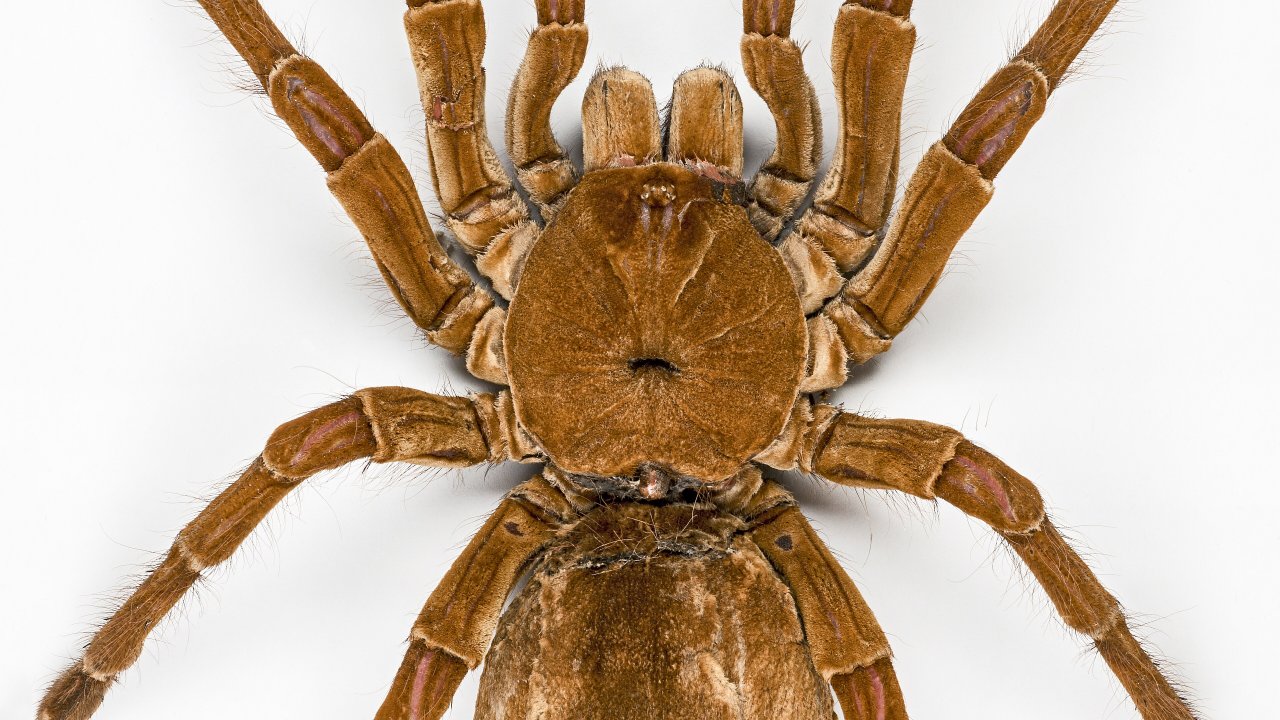 🌍 Terrestrial
Theraphosa blondi
Goliath Birdeater
Intermediate Requires consistent husbandry - more sensitive to ventilation, humidity, or feeding schedule. Some experience recommended. 🌍 Terrestrial Lives on or near the ground. Needs floor space more than height. Falls from height can be fatal - keep décor low. 🌎 New World From the Americas: can flick urticating (irritating) hairs as a first defence, and venom is generally milder. 💨 Skittish Easily startled - may bolt or dart suddenly when disturbed. Secure lids are essential as they can be escape artists. ⚠️ Flicks hairs Uses urticating (barbed) hairs on the abdomen as a primary defence. These hairs can cause skin irritation and must be kept away from eyes. New World species only.- Temp
- 22-28°C
- Humidity
- 60-75%
- Adult DLS
- 22-26 cm
- Moult
- Sling ~3w - Adult ~12mo
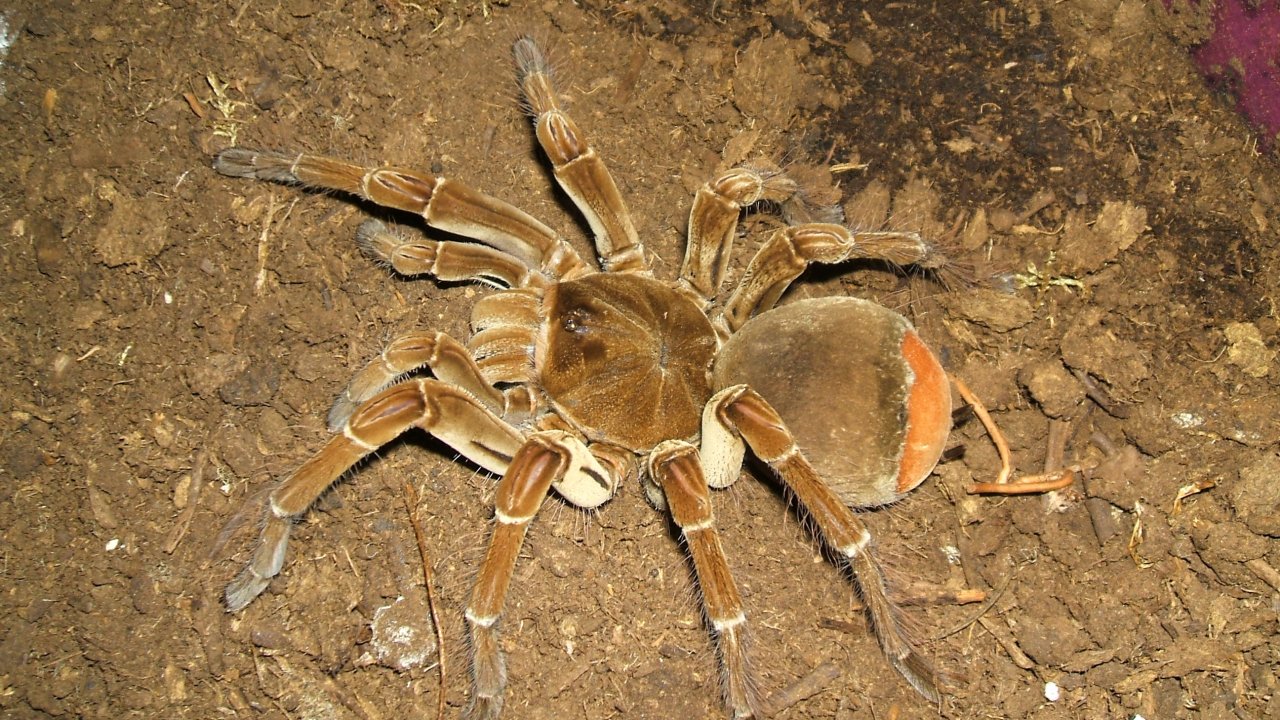
Goliath birdeater - the world largest spider. 60x45 floor, deep damp (not waterlogged) substrate, SAUCER-sized water dish, 80-90% humidity. Worst urticating hairs in the hobby - never bare-hand.
-
 🌍 Terrestrial
Theraphosa stirmi
Burgundy Goliath Birdeater
Intermediate Requires consistent husbandry - more sensitive to ventilation, humidity, or feeding schedule. Some experience recommended. 🌍 Terrestrial Lives on or near the ground. Needs floor space more than height. Falls from height can be fatal - keep décor low. 🌎 New World From the Americas: can flick urticating (irritating) hairs as a first defence, and venom is generally milder. 💨 Skittish Easily startled - may bolt or dart suddenly when disturbed. Secure lids are essential as they can be escape artists. ⚠️ Flicks hairs Uses urticating (barbed) hairs on the abdomen as a primary defence. These hairs can cause skin irritation and must be kept away from eyes. New World species only.- Temp
- 22-28°C
- Humidity
- 60-75%
- Adult DLS
- 22-26 cm
- Moult
- Sling ~3w - Adult ~12mo
Burgundy goliath - slightly easier than blondi; huge floor space, deep damp substrate, XL water dish, 80-90% humidity. Same legendary hairs.
-
🌍 Terrestrial
Theraphosidae sp. Colombia
Halloween Patch
Beginner Forgiving of common mistakes. Tolerant of temperature/humidity variation. Great first tarantula. 🌍 Terrestrial Lives on or near the ground. Needs floor space more than height. Falls from height can be fatal - keep décor low. 🌎 New World From the Americas: can flick urticating (irritating) hairs as a first defence, and venom is generally milder. 🟢 Docile Generally slow-moving and tolerant of handling. Rarely threatens or bites. Great for beginners. 🟢 Calm Deliberate and unhurried movements. Not easily startled. Usually sits contentedly in the open.- Temp
- 20-24°C
- Humidity
- 70-80%
- Adult DLS
- 12-16 cm
- Moult
- Sling ~4w - Adult ~10mo
The Halloween Patch ("Theraphosidae sp. Columbia" - vendor spelling of Colombia; even the GENUS is unknown) - a total mystery species whose orange-and-black sling patterning earned the trade name, offered at £125 per centimetre-long sling: the most expensive sling on the whole UK market. Vendor stats: docile, cool-tolerant, no size data. Every parameter in this guide is a provisional placeholder until the animal grows and the trade learns - a genuine frontier purchase.
-
🌍 Terrestrial
Theraphosidae sp. Dorado
Dorado Gold
Beginner Forgiving of common mistakes. Tolerant of temperature/humidity variation. Great first tarantula. 🌍 Terrestrial Lives on or near the ground. Needs floor space more than height. Falls from height can be fatal - keep décor low. 🌎 New World From the Americas: can flick urticating (irritating) hairs as a first defence, and venom is generally milder. 🟢 Docile Generally slow-moving and tolerant of handling. Rarely threatens or bites. Great for beginners. 🟢 Calm Deliberate and unhurried movements. Not easily startled. Usually sits contentedly in the open.- Temp
- 20-24°C
- Humidity
- 70-80%
- Adult DLS
- 13-15 cm
- Moult
- Sling ~4w - Adult ~10mo
The Dorado Gold - golden "skeleton" legs, navy femora and abdomen, gold-patterned carapace: an unidentified Peruvian (vendor-compared to Thrixopelma countrymen, so possibly an undescribed relative) that wears its colour scheme like a treasure map. Easy and docile per the vendor, 13-15 cm, £45 for 4 cm CB juveniles. Another open-nomenclature species whose guide parameters are the best current trade estimates.
-
🌍 Terrestrial
Theraphosinae sp. Highland Blue
Highland Birdeater
Beginner Forgiving of common mistakes. Tolerant of temperature/humidity variation. Great first tarantula. 🌍 Terrestrial Lives on or near the ground. Needs floor space more than height. Falls from height can be fatal - keep décor low. 🌎 New World From the Americas: can flick urticating (irritating) hairs as a first defence, and venom is generally milder. 🟢 Docile Generally slow-moving and tolerant of handling. Rarely threatens or bites. Great for beginners. 🟢 Calm Deliberate and unhurried movements. Not easily startled. Usually sits contentedly in the open.- Temp
- 22-26°C
- Humidity
- 60-70%
- Adult DLS
- 12-16 cm
- Moult
- Sling ~4w - Adult ~11mo
The Highland Birdeater ("Theraphosinae sp. Highland Blue", also traded as sp. "Cuzco") - an unknown genus AND species from the Peruvian Andes around Cuzco, listed beside the Antikuna Herradura form as a future "big one" by the vendor. Blue-tinged montane stock with moderate dry-side care; every parameter here is the trade baseline for a species literally nobody has identified yet. £35 CB slings for Andean-form collectors.
-
🌍 Terrestrial
Theraphosinae sp. Roatan
Roatan Island Purple
Beginner Forgiving of common mistakes. Tolerant of temperature/humidity variation. Great first tarantula. 🌍 Terrestrial Lives on or near the ground. Needs floor space more than height. Falls from height can be fatal - keep décor low. 🌎 New World From the Americas: can flick urticating (irritating) hairs as a first defence, and venom is generally milder. 🟢 Docile Generally slow-moving and tolerant of handling. Rarely threatens or bites. Great for beginners. 🟢 Calm Deliberate and unhurried movements. Not easily startled. Usually sits contentedly in the open.- Temp
- 20-24°C
- Humidity
- 50-70%
- Adult DLS
- 10-13 cm
- Moult
- Sling ~3w - Adult ~9mo
The Roatan Island Purple - an undescribed Honduran island endemic (vendor origin fields saying "Nicaragua" are wrong; it's Roatán) with striking sexual dimorphism: males solid deep purple, females stocky brown-black with purple femurs that glow velvet-fresh after a moult. Dry-ish island husbandry, calm temperament, strong feeding response, and famously productive breeding (sacs of hundreds) - an easy, cheap (£10 slings) project species with a payoff colour.


