
Species library
255 species profiled with accurate care data. Click any species to start a specimen record pre-filled.
+ Request a species
-
 🌍 Terrestrial
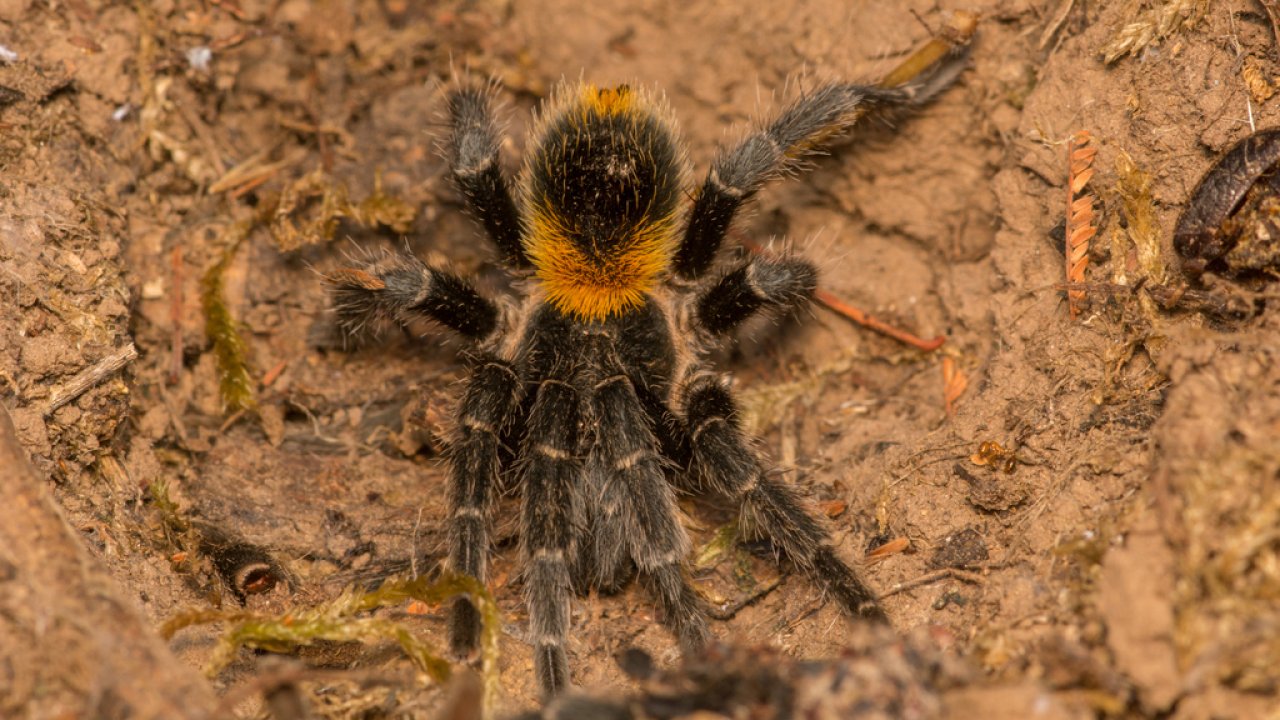
Homoeomma chilensis
Chilean Blue Tarantula
Intermediate Requires consistent husbandry - more sensitive to ventilation, humidity, or feeding schedule. Some experience recommended. 🌍 Terrestrial Lives on or near the ground. Needs floor space more than height. Falls from height can be fatal - keep décor low. 🌎 New World From the Americas: can flick urticating (irritating) hairs as a first defence, and venom is generally milder. 💨 Skittish Easily startled - may bolt or dart suddenly when disturbed. Secure lids are essential as they can be escape artists. ⚠️ Flicks hairs Uses urticating (barbed) hairs on the abdomen as a primary defence. These hairs can cause skin irritation and must be kept away from eyes. New World species only.- Temp
- 22-28°C
- Humidity
- 60-75%
- Adult DLS
- 13-15 cm
- Moult
- Sling ~3w - Adult ~12mo
Chilean dwarf orange - small terrestrial; dry substrate, water dish, hide. Calm and undemanding.
-
 🌍 Terrestrial
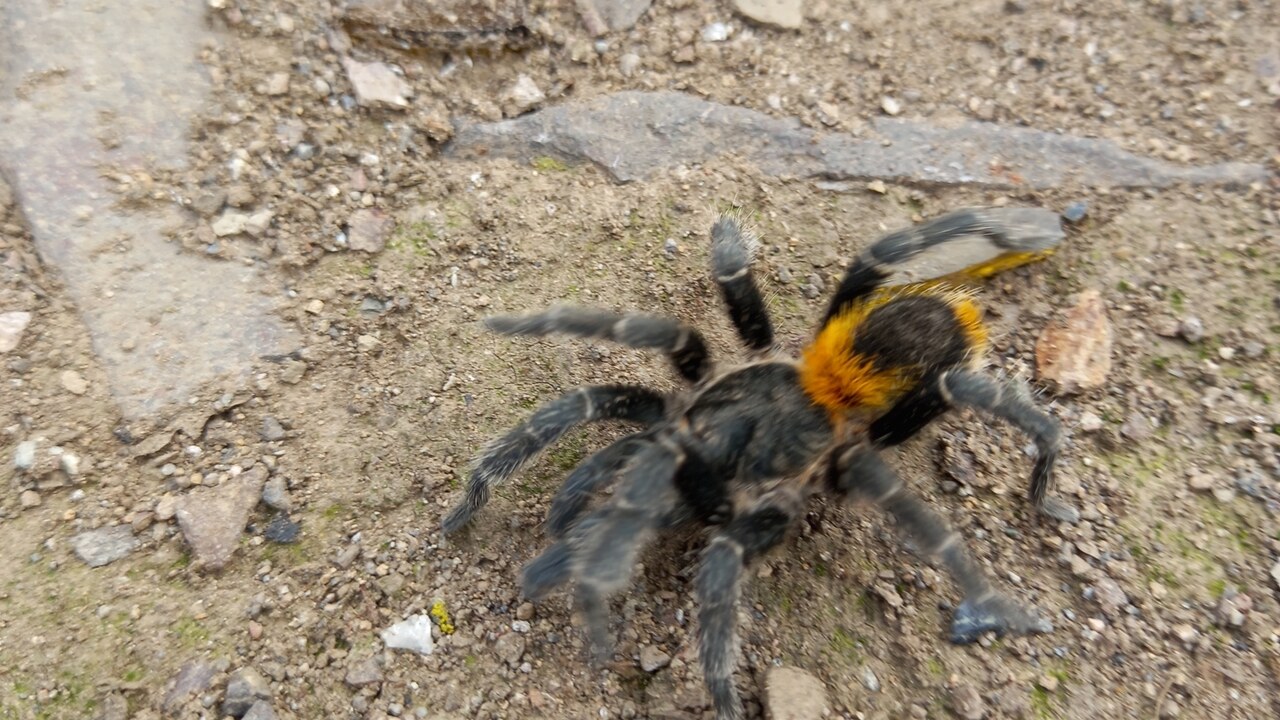
Homoeomma orellanai
Chilean Yellow Flame
Beginner Forgiving of common mistakes. Tolerant of temperature/humidity variation. Great first tarantula. 🌍 Terrestrial Lives on or near the ground. Needs floor space more than height. Falls from height can be fatal - keep décor low. 🌎 New World From the Americas: can flick urticating (irritating) hairs as a first defence, and venom is generally milder. 🟢 Docile Generally slow-moving and tolerant of handling. Rarely threatens or bites. Great for beginners. 🟢 Calm Deliberate and unhurried movements. Not easily startled. Usually sits contentedly in the open. ⏳ Long-lived Females can live 15-30+ years with good care. A significant long-term commitment compared to the 2-5 year male lifespan.- Temp
- 18-23°C
- Humidity
- 40-50%
- Adult DLS
- 7-10 cm
- Moult
- Sling ~5w - Adult ~13mo
The Chilean Yellow Flame (Chilean Bumblebee) - the hobby's old "Euathlus sp. yellow", formally described in 2018 and revised into Homoeomma in 2024. A sooty dwarf with a golden-yellow abdominal fringe from 2,500 m Andean steppe, where daytime heat and nighttime frost bred a spider that is honestly happier in a British living room than a heated vivarium: keep it cool, dry and patient. Among the most docile tarantulas in existence - curious rather than defensive - with glacial growth and 20-25 year female lifespans. Demand outstrips supply; CB slings command premium prices.
-
 🌍 Terrestrial
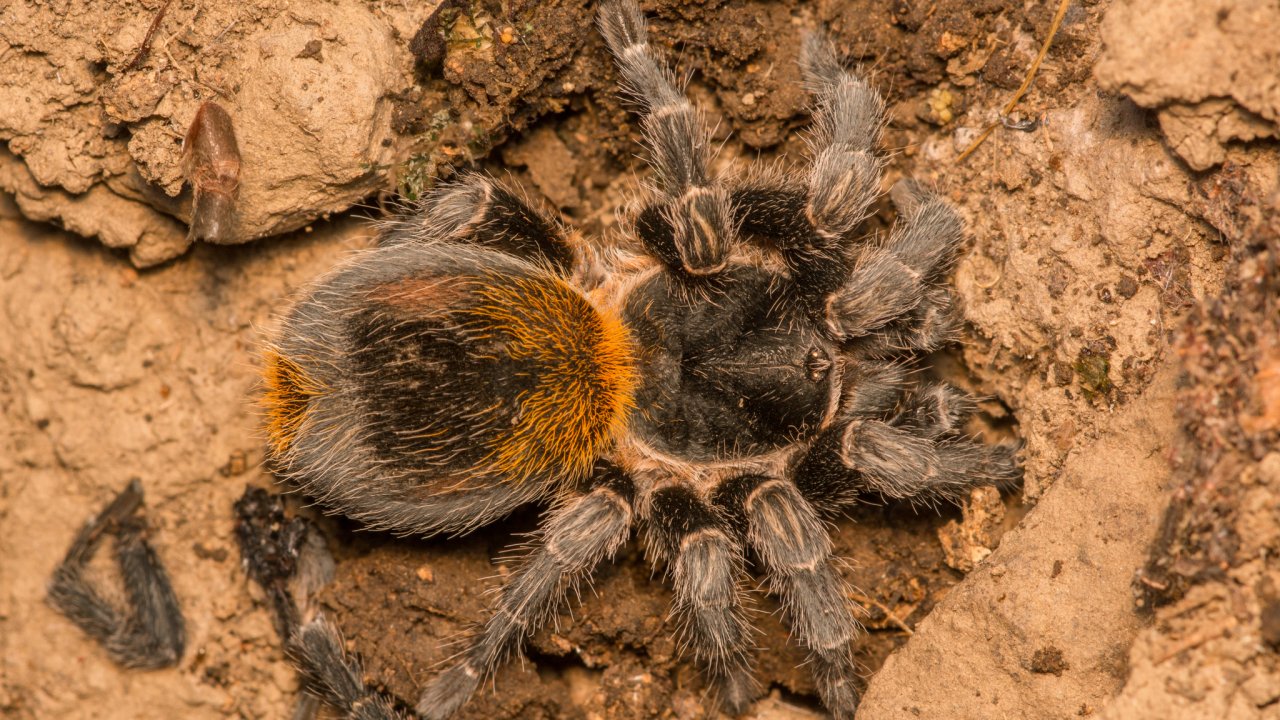
Homoeomma sp. blue
Peruvian Blue Flame Leg
Intermediate Requires consistent husbandry - more sensitive to ventilation, humidity, or feeding schedule. Some experience recommended. 🌍 Terrestrial Lives on or near the ground. Needs floor space more than height. Falls from height can be fatal - keep décor low. 🌎 New World From the Americas: can flick urticating (irritating) hairs as a first defence, and venom is generally milder. 🟢 Docile Generally slow-moving and tolerant of handling. Rarely threatens or bites. Great for beginners. 🟢 Calm Deliberate and unhurried movements. Not easily startled. Usually sits contentedly in the open. ⏳ Long-lived Females can live 15-30+ years with good care. A significant long-term commitment compared to the 2-5 year male lifespan.- Temp
- 22-26°C
- Humidity
- 65-75%
- Adult DLS
- 11-13 cm
- Moult
- Sling ~3w - Adult ~12mo
Blue metallic femurs and an orange abdomen - striking but rarely available. Slow-growing and docile.
-
 🕳️ Fossorial
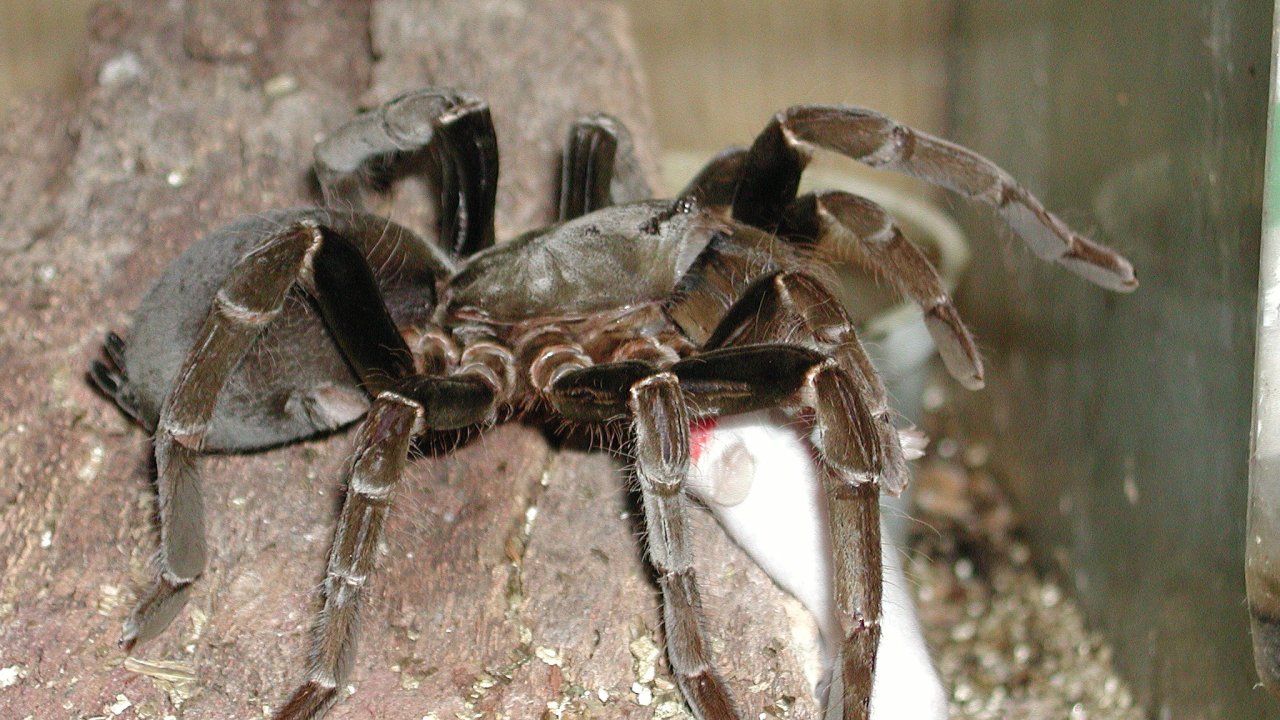
Hysterocrates gigas
Cameroon Red Baboon
Advanced Demanding or potentially dangerous. May be very fast, defensive, or have medically significant venom. Experienced keepers only. 🕳️ Fossorial Lives underground in deep burrows. Needs deep, packed substrate to dig. You may rarely see them - patience required. 🌍 Old World From Africa, Asia or Australasia: no urticating hairs - defence is speed and a potent bite. Medically significant venom possible. ⚠️ Defensive Will adopt a threat posture (rearing up, showing fangs) when disturbed. May bite if provoked. Approach with care and use a catch cup for rehoming. ⚡ Fast Moves very quickly, especially when startled. Can cross an enclosure in the blink of an eye. Not recommended for handling. ☠️ Potent venom Possesses medically significant venom. A bite can cause intense pain, muscle cramps, sweating, and may require medical attention. Old World species typically fall here as they lack urticating hairs.- Temp
- 22-28°C
- Humidity
- 65-80%
- Adult DLS
- 14-17 cm
- Moult
- Sling ~3w - Adult ~12mo
Goliath baboon - massive African fossorial. 20-25 cm deep damp packed substrate, large floor space. 80% humidity. Aquatic prey items accepted; an incredible digger.
-
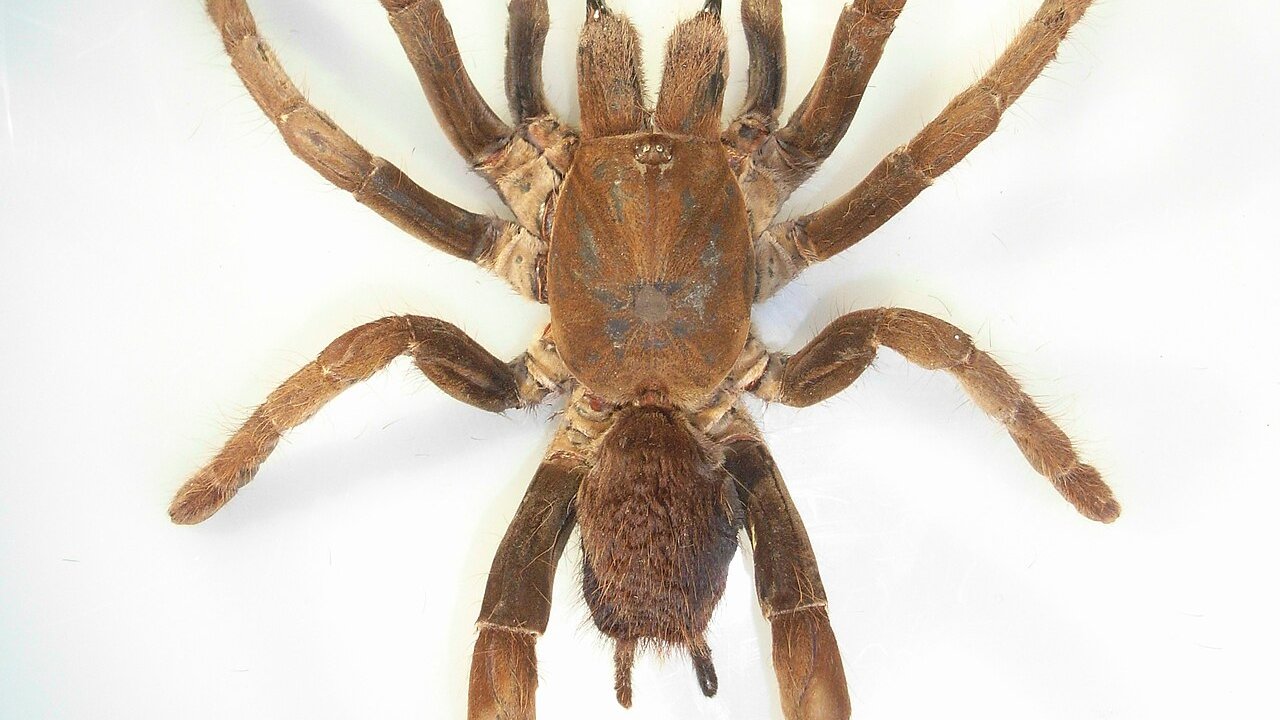 🕳️ Fossorial
Hysterocrates hercules
Hercules Baboon
Advanced Demanding or potentially dangerous. May be very fast, defensive, or have medically significant venom. Experienced keepers only. 🕳️ Fossorial Lives underground in deep burrows. Needs deep, packed substrate to dig. You may rarely see them - patience required. 🌍 Old World From Africa, Asia or Australasia: no urticating hairs - defence is speed and a potent bite. Medically significant venom possible. ⚠️ Defensive Will adopt a threat posture (rearing up, showing fangs) when disturbed. May bite if provoked. Approach with care and use a catch cup for rehoming. ⚡ Fast Moves very quickly, especially when startled. Can cross an enclosure in the blink of an eye. Not recommended for handling. ☠️ Potent venom Possesses medically significant venom. A bite can cause intense pain, muscle cramps, sweating, and may require medical attention. Old World species typically fall here as they lack urticating hairs.- Temp
- 22-28°C
- Humidity
- 65-80%
- Adult DLS
- 14-17 cm
- Moult
- Sling ~3w - Adult ~12mo
Hercules baboon - like H. gigas: huge fossorial, deep damp substrate, large enclosure, 80% humidity. Rare in the hobby.
-
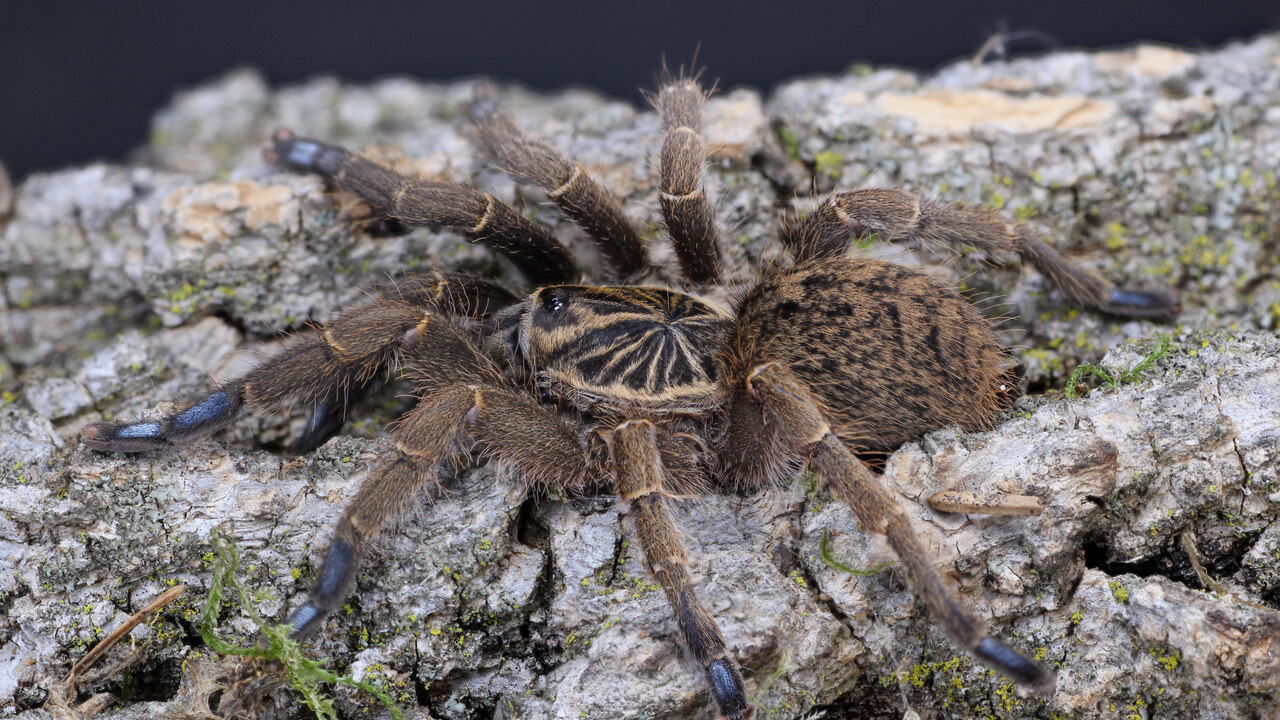 🕳️ Fossorial
Idiothele mira
Blue Foot Baboon
Intermediate Requires consistent husbandry - more sensitive to ventilation, humidity, or feeding schedule. Some experience recommended. 🕳️ Fossorial Lives underground in deep burrows. Needs deep, packed substrate to dig. You may rarely see them - patience required. 🌍 Old World From Africa, Asia or Australasia: no urticating hairs - defence is speed and a potent bite. Medically significant venom possible. ⚠️ Defensive Will adopt a threat posture (rearing up, showing fangs) when disturbed. May bite if provoked. Approach with care and use a catch cup for rehoming. 🕸️ Heavy webber Dense, prolific webbing behaviour. Will carpet the entire enclosure in thick silk - this is normal and healthy. Provides a visual indicator of the spider's territory. Old world- Temp
- 23-28°C
- Humidity
- 60-70%
- Adult DLS
- 10-13 cm
- Moult
- Sling ~3w - Adult ~9mo
The Blue Foot Baboon - the only African tarantula (with its rare congener) that builds a true TRAPDOOR: a hinged silk-and-soil lid flush with the ground. Metallic-gold carapace, smoky frame, and the famous powder-blue feet that fade after each moult and re-bloom over the following weeks. A South African sand-forest fossorial that grows fast, stays reclusive ("pet hole" par excellence) and can put on a genuinely fast ambush strike when the door opens. Regularly bred in the UK from small sacs, and one of the most rewarding behaviour-watch fossorials in the hobby.
-
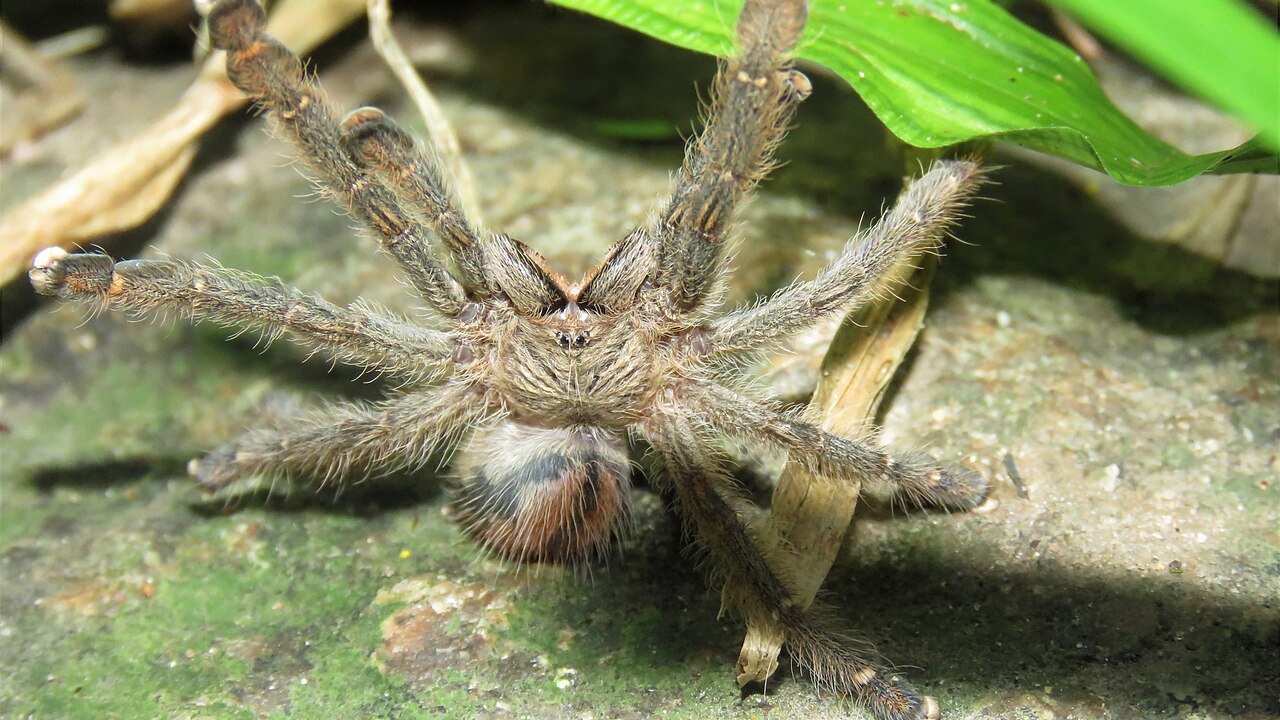 🌳 Arboreal
Iridopelma hirsutum
Brazilian Blue Pinktoe
Intermediate Requires consistent husbandry - more sensitive to ventilation, humidity, or feeding schedule. Some experience recommended. 🌳 Arboreal Lives above ground in trees or plants. Needs height and vertical climbing surfaces. Secure lid essential - they climb glass. 🌎 New World From the Americas: can flick urticating (irritating) hairs as a first defence, and venom is generally milder. 💨 Skittish Easily startled - may bolt or dart suddenly when disturbed. Secure lids are essential as they can be escape artists. ⚠️ Flicks hairs Uses urticating (barbed) hairs on the abdomen as a primary defence. These hairs can cause skin irritation and must be kept away from eyes. New World species only.- Temp
- 22-28°C
- Humidity
- 70-85%
- Adult DLS
- 14-17 cm
- Moult
- Sling ~3w - Adult ~12mo
Brazilian red birdeater - a small arboreal. 25x25x40 cm tall, strong ventilation, vertical cork and plants. Higher humidity (75-80%) with airflow; mist one wall.
-
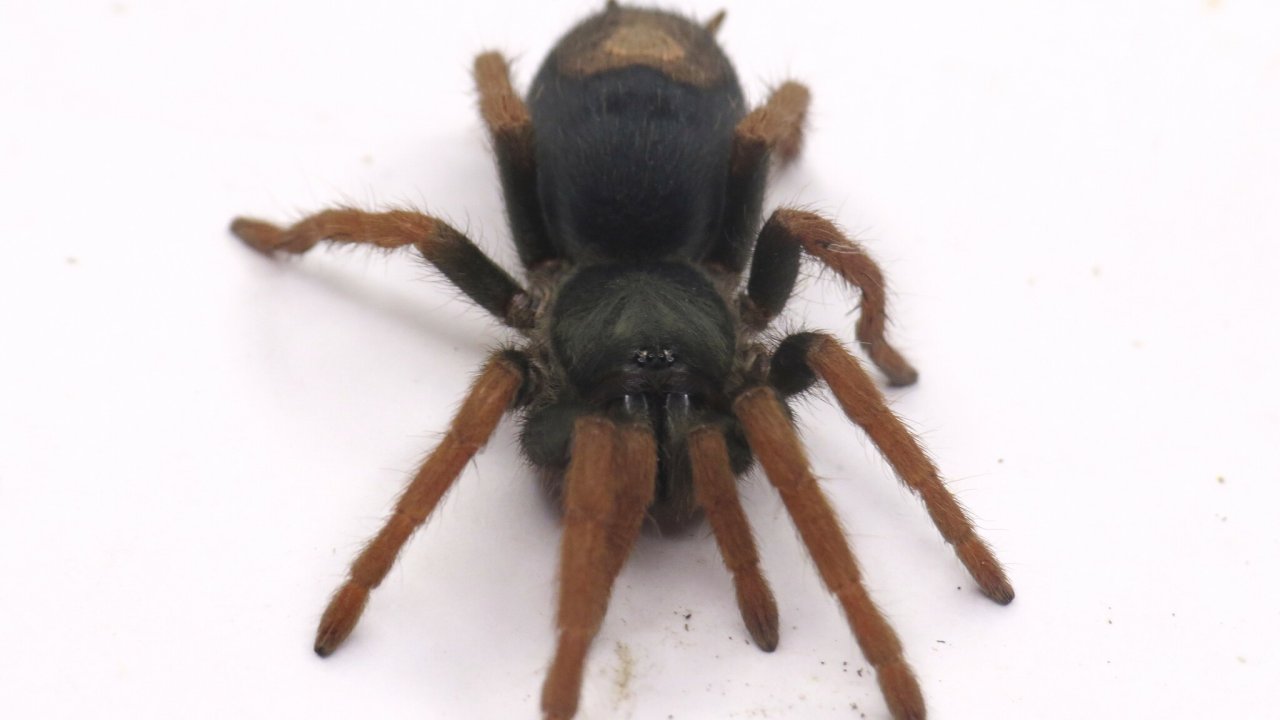 🕳️ Fossorial
Kochiana brunnipes
Dwarf Pink Leg
Intermediate Requires consistent husbandry - more sensitive to ventilation, humidity, or feeding schedule. Some experience recommended. 🕳️ Fossorial Lives underground in deep burrows. Needs deep, packed substrate to dig. You may rarely see them - patience required. 🌎 New World From the Americas: can flick urticating (irritating) hairs as a first defence, and venom is generally milder. 💨 Skittish Easily startled - may bolt or dart suddenly when disturbed. Secure lids are essential as they can be escape artists. ⚡ Fast Moves very quickly, especially when startled. Can cross an enclosure in the blink of an eye. Not recommended for handling.- Temp
- 23-27°C
- Humidity
- 60-75%
- Adult DLS
- 5-7 cm
- Moult
- Sling ~3w - Adult ~5mo
The Dwarf Pink Leg (Kochiana brunnipes) is a true dwarf Brazilian fossorial - adult females top out around 6 cm, glossy black with salmon-pink legs. A nomen dubium lost to science for over 50 years until its 2008 redescription, it is calm but lightning-quick, living almost entirely in its burrow. Its tiny footprint, cheap price and big personality in miniature make it a favourite "desk pet" for keepers who like dwarves.
-
 🌳 Arboreal
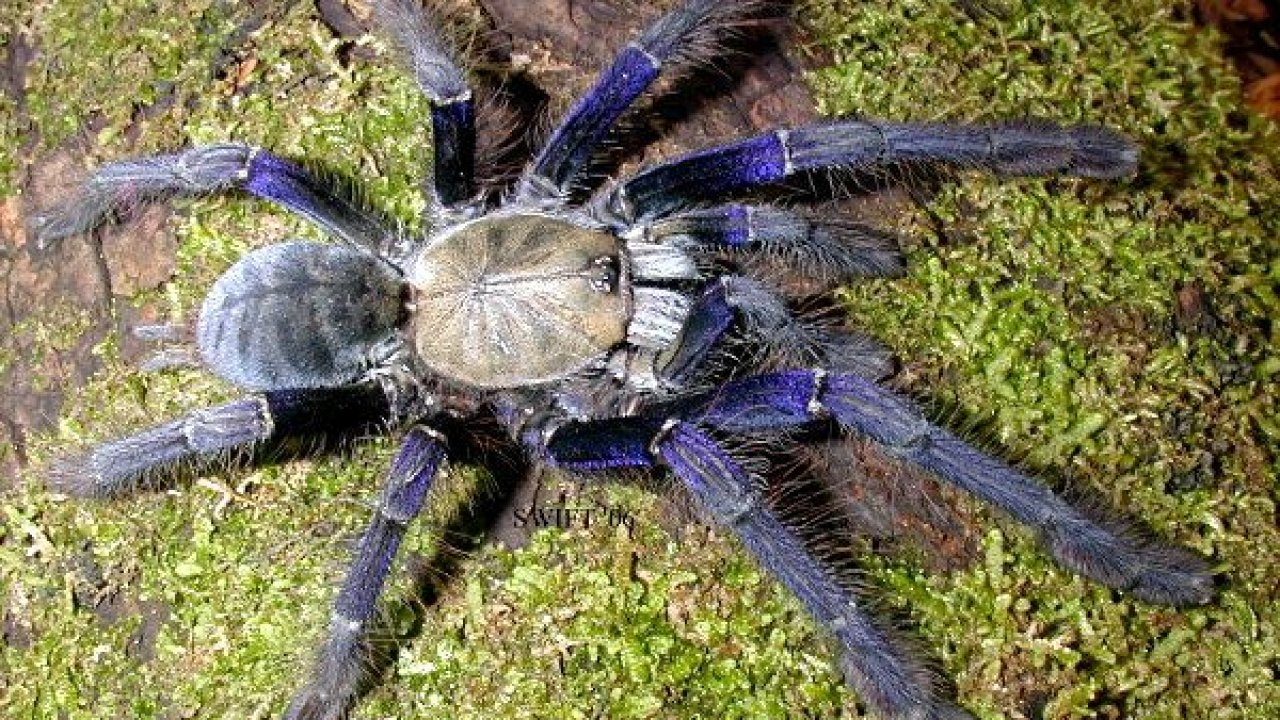
Lampropelma violaceopes
Singapore Blue
Advanced Demanding or potentially dangerous. May be very fast, defensive, or have medically significant venom. Experienced keepers only. 🌳 Arboreal Lives above ground in trees or plants. Needs height and vertical climbing surfaces. Secure lid essential - they climb glass. 🌍 Old World From Africa, Asia or Australasia: no urticating hairs - defence is speed and a potent bite. Medically significant venom possible. ⚠️ Defensive Will adopt a threat posture (rearing up, showing fangs) when disturbed. May bite if provoked. Approach with care and use a catch cup for rehoming. ⚡ Fast Moves very quickly, especially when startled. Can cross an enclosure in the blink of an eye. Not recommended for handling. ☠️ Potent venom Possesses medically significant venom. A bite can cause intense pain, muscle cramps, sweating, and may require medical attention. Old World species typically fall here as they lack urticating hairs.- Temp
- 22-28°C
- Humidity
- 70-85%
- Adult DLS
- 14-17 cm
- Moult
- Sling ~3w - Adult ~12mo
Singapore blue - large Old World arboreal. Tall 45 cm enclosure, thick vertical cork, 75-80% humidity, strong airflow. Deep substrate for slings which burrow initially.
-
 🌍 Terrestrial
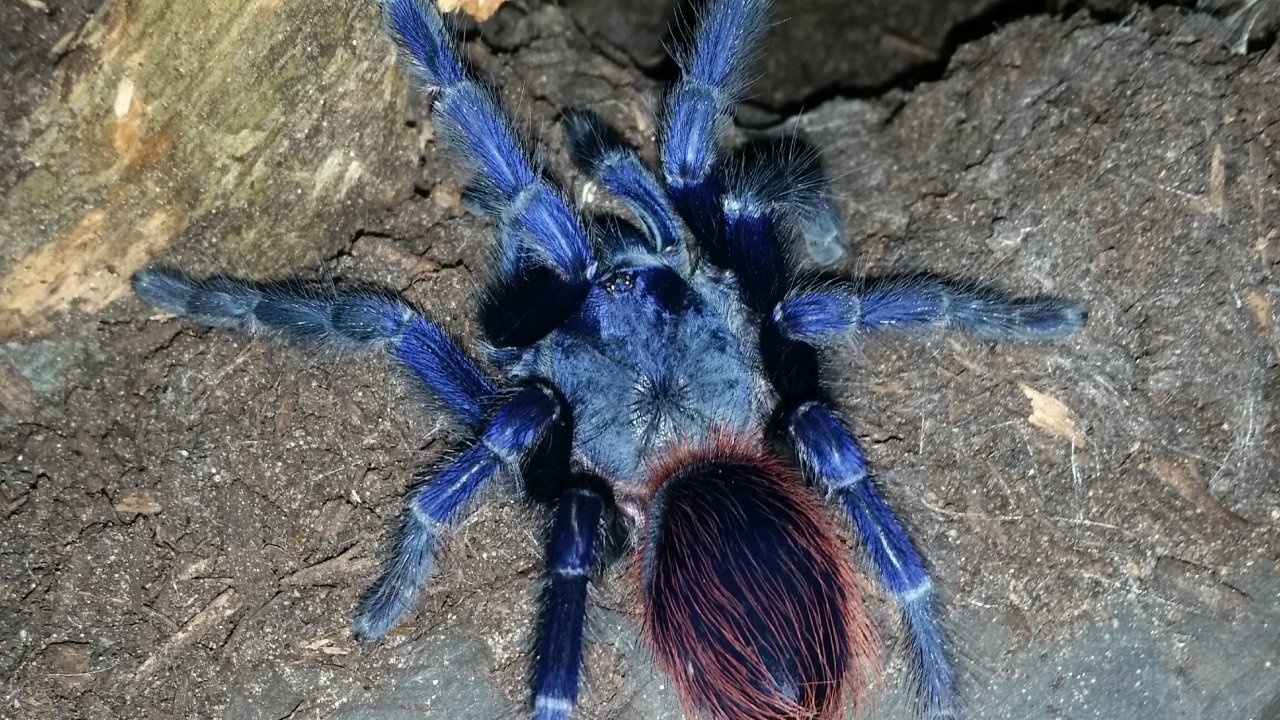
Lasiocyano sazimai
Brazilian Blue Beauty
Intermediate Requires consistent husbandry - more sensitive to ventilation, humidity, or feeding schedule. Some experience recommended. 🌍 Terrestrial Lives on or near the ground. Needs floor space more than height. Falls from height can be fatal - keep décor low. 🌎 New World From the Americas: can flick urticating (irritating) hairs as a first defence, and venom is generally milder. 💨 Skittish Easily startled - may bolt or dart suddenly when disturbed. Secure lids are essential as they can be escape artists. ⚠️ Flicks hairs Uses urticating (barbed) hairs on the abdomen as a primary defence. These hairs can cause skin irritation and must be kept away from eyes. New World species only.- Temp
- 22-28°C
- Humidity
- 60-75%
- Adult DLS
- 13-15 cm
- Moult
- Sling ~3w - Adult ~12mo
Endemic to the shrublands of Brazil's Chapada Diamantina, the Brazilian Blue Beauty (Lasiocyano sazimai, formerly Pterinopelma sazimai) shows one of the most electric blues in the hobby - a sheen that intensifies after each moult. A calm, terrestrial New World species reaching around 14 cm, it flicks urticating hairs rather than biting, making it a forgiving intermediate species. Deep dry substrate, a fresh water dish and good cross-ventilation are all it asks for.
-
 🌍 Terrestrial
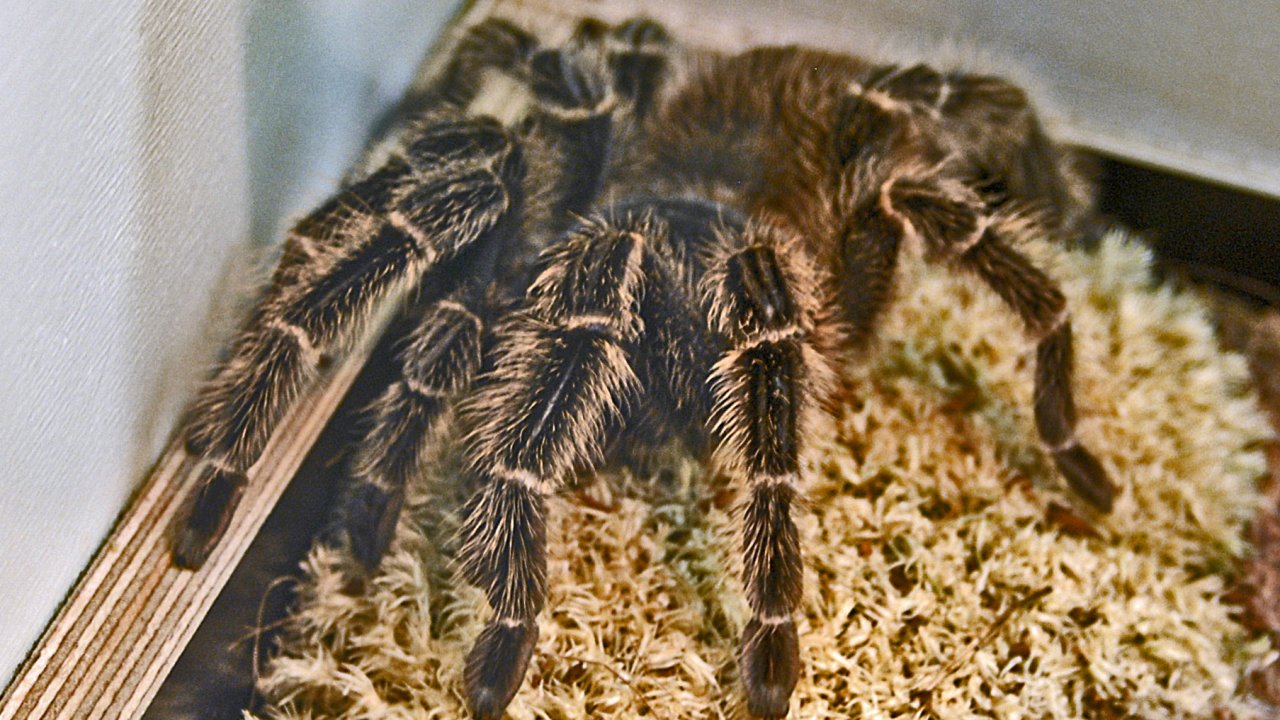
Lasiodora difficilis
Brazilian Fire Tarantula
Intermediate Requires consistent husbandry - more sensitive to ventilation, humidity, or feeding schedule. Some experience recommended. 🌍 Terrestrial Lives on or near the ground. Needs floor space more than height. Falls from height can be fatal - keep décor low. 🌎 New World From the Americas: can flick urticating (irritating) hairs as a first defence, and venom is generally milder. 💨 Skittish Easily startled - may bolt or dart suddenly when disturbed. Secure lids are essential as they can be escape artists. ⚠️ Flicks hairs Uses urticating (barbed) hairs on the abdomen as a primary defence. These hairs can cause skin irritation and must be kept away from eyes. New World species only.- Temp
- 22-28°C
- Humidity
- 60-75%
- Adult DLS
- 19-23 cm
- Moult
- Sling ~3w - Adult ~12mo
Brazilian white striped birdeater - massive terrestrial; huge floor space, deep substrate, XL water dish, 65-75% humidity. Voracious.
-
 🌍 Terrestrial
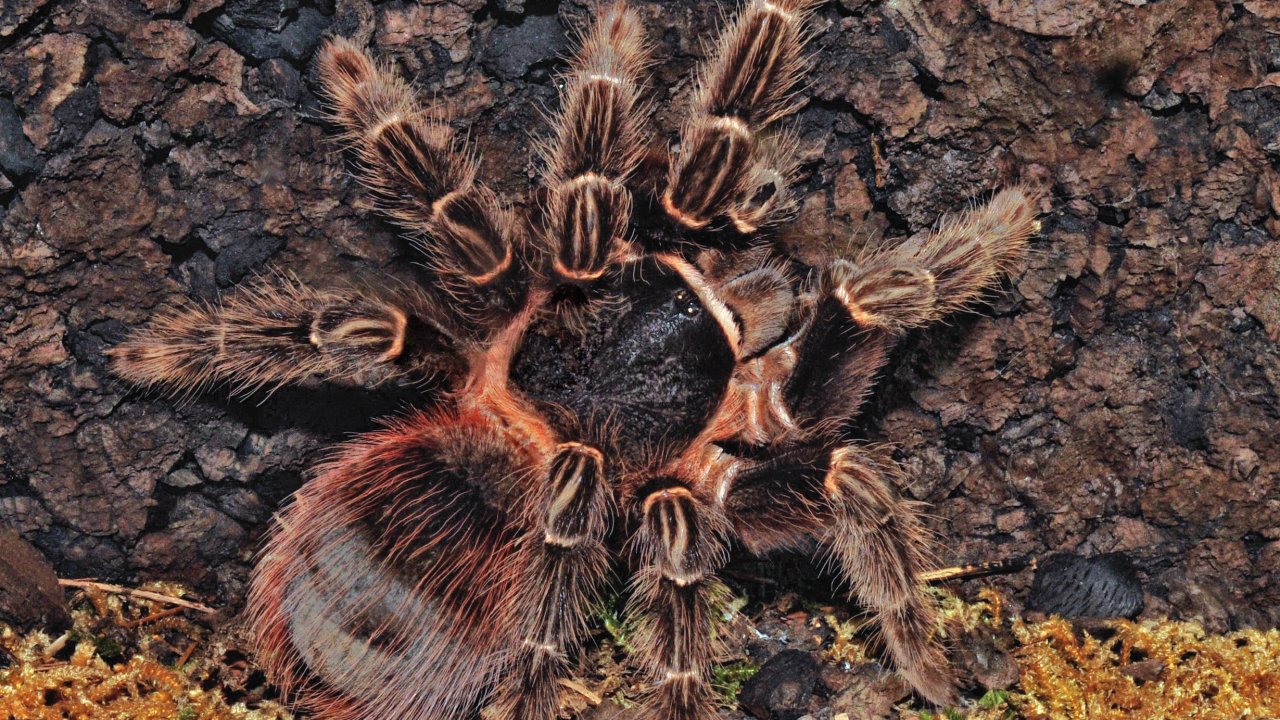
Lasiodora klugi
Bahia Scarlet / Scarlet Birdeater
Intermediate Requires consistent husbandry - more sensitive to ventilation, humidity, or feeding schedule. Some experience recommended. 🌍 Terrestrial Lives on or near the ground. Needs floor space more than height. Falls from height can be fatal - keep décor low. 🌎 New World From the Americas: can flick urticating (irritating) hairs as a first defence, and venom is generally milder. ⚠️ Defensive Will adopt a threat posture (rearing up, showing fangs) when disturbed. May bite if provoked. Approach with care and use a catch cup for rehoming. ⚠️ Flicks hairs Uses urticating (barbed) hairs on the abdomen as a primary defence. These hairs can cause skin irritation and must be kept away from eyes. New World species only. 🍽️ Voracious eater Aggressive feeding response. Will tackle prey eagerly and rarely refuses a meal. Adjust feeding schedule accordingly - overfeeding shortens lifespan.- Temp
- 24-28°C
- Humidity
- 65-75%
- Adult DLS
- 20-24 cm
- Moult
- Sling ~3w - Adult ~9mo
More red-abdomened and contrasting than L. parahybana. Can be flick-happy; provide deep substrate.
-
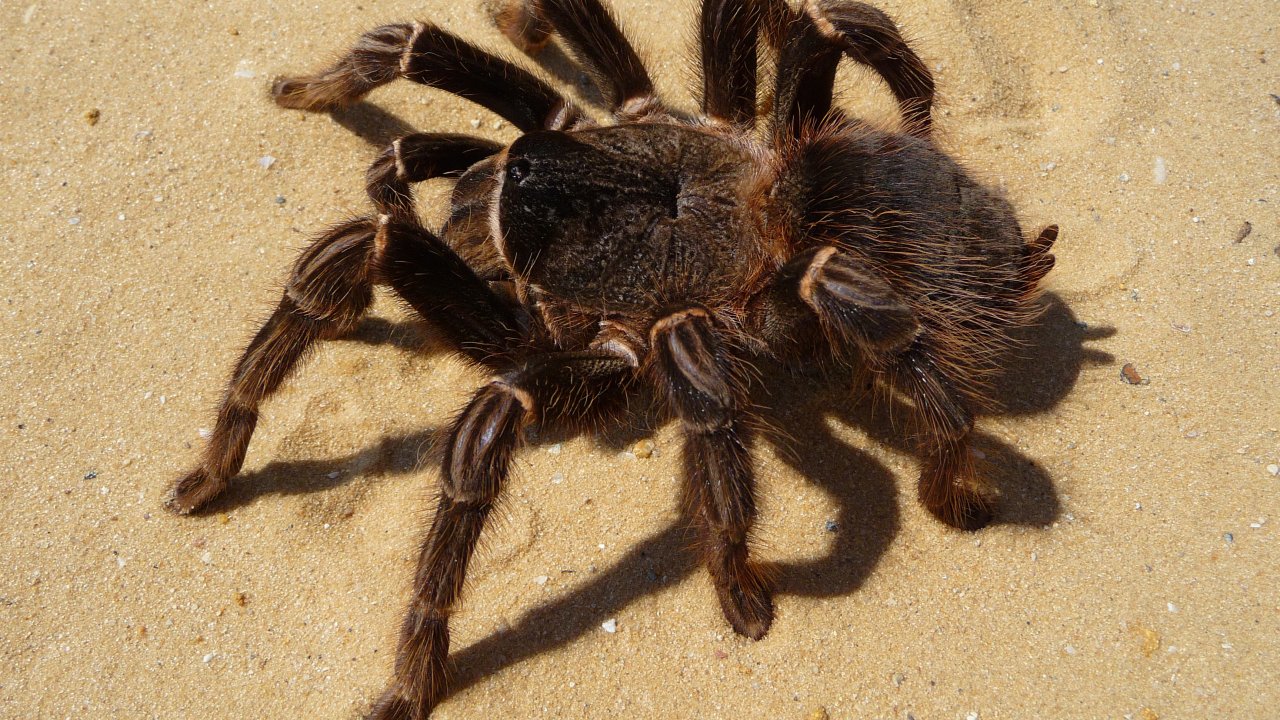 🌍 Terrestrial
Lasiodora parahybana
Brazilian Salmon Pink Birdeater
Beginner Forgiving of common mistakes. Tolerant of temperature/humidity variation. Great first tarantula. 🌍 Terrestrial Lives on or near the ground. Needs floor space more than height. Falls from height can be fatal - keep décor low. 🌎 New World From the Americas: can flick urticating (irritating) hairs as a first defence, and venom is generally milder. Food-aggressive Bold feeding response: will bolt at anything that moves, including tongs and fingers. Not a handling temperament - feed with long tongs. 🍽️ Voracious eater Aggressive feeding response. Will tackle prey eagerly and rarely refuses a meal. Adjust feeding schedule accordingly - overfeeding shortens lifespan. ⚠️ Flicks hairs Uses urticating (barbed) hairs on the abdomen as a primary defence. These hairs can cause skin irritation and must be kept away from eyes. New World species only.- Temp
- 24-28°C
- Humidity
- 65-75%
- Adult DLS
- 21-25 cm
- Moult
- Sling ~3w - Adult ~9mo
Massive salmon-pink bodied species reaching 23 cm. Fast-growing and ravenous. Provide a big footprint.
-
 🌍 Terrestrial
Lasiodora sp. Adobe
Adobe Giant Birdeater
Beginner Forgiving of common mistakes. Tolerant of temperature/humidity variation. Great first tarantula. 🌍 Terrestrial Lives on or near the ground. Needs floor space more than height. Falls from height can be fatal - keep décor low. 🌎 New World From the Americas: can flick urticating (irritating) hairs as a first defence, and venom is generally milder. Nervous ⚠️ Flicks hairs Uses urticating (barbed) hairs on the abdomen as a primary defence. These hairs can cause skin irritation and must be kept away from eyes. New World species only. 🟢 Docile Generally slow-moving and tolerant of handling. Rarely threatens or bites. Great for beginners.- Temp
- 22-26°C
- Humidity
- 70-80%
- Adult DLS
- 15-20 cm
- Moult
- Sling ~3w - Adult ~10mo
The Adobe Birdeater - coppery-adobe tones with darker femurs and a pink-washed carapace, brand new to the hobby (first UK slings 2026). Identification caveat: sold in the UK as Lasiodora sp. "Adobe", but US trade labels the same stock Lasiodorides sp. "Adobe" - a much smaller Peruvian genus - so treat the giant 20 cm size claim with caution until lineages settle. Either way: nervous, flicky, more bluff than bite, and straightforward big-South-American husbandry. New, cheap-ish (£35 slings) and unproven - an early-adopter species.
-
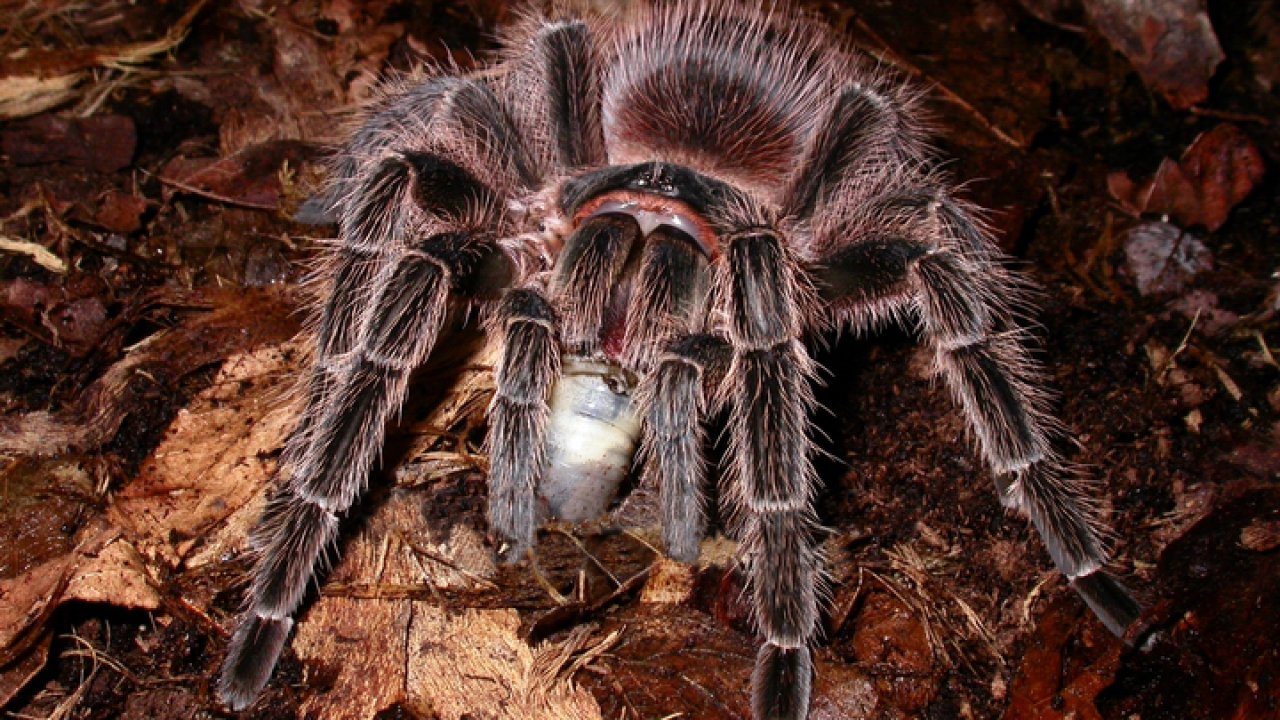 🌍 Terrestrial
Lasiodora striatipes
Striped Pink Tarantula
Intermediate Requires consistent husbandry - more sensitive to ventilation, humidity, or feeding schedule. Some experience recommended. 🌍 Terrestrial Lives on or near the ground. Needs floor space more than height. Falls from height can be fatal - keep décor low. 🌎 New World From the Americas: can flick urticating (irritating) hairs as a first defence, and venom is generally milder. 💨 Skittish Easily startled - may bolt or dart suddenly when disturbed. Secure lids are essential as they can be escape artists. ⚠️ Flicks hairs Uses urticating (barbed) hairs on the abdomen as a primary defence. These hairs can cause skin irritation and must be kept away from eyes. New World species only.- Temp
- 22-28°C
- Humidity
- 60-75%
- Adult DLS
- 19-23 cm
- Moult
- Sling ~3w - Adult ~12mo
Bahia grey birdeater - giant terrestrial like other Lasiodora; deep substrate, big water dish, damp corner. Strong feeding response.
-
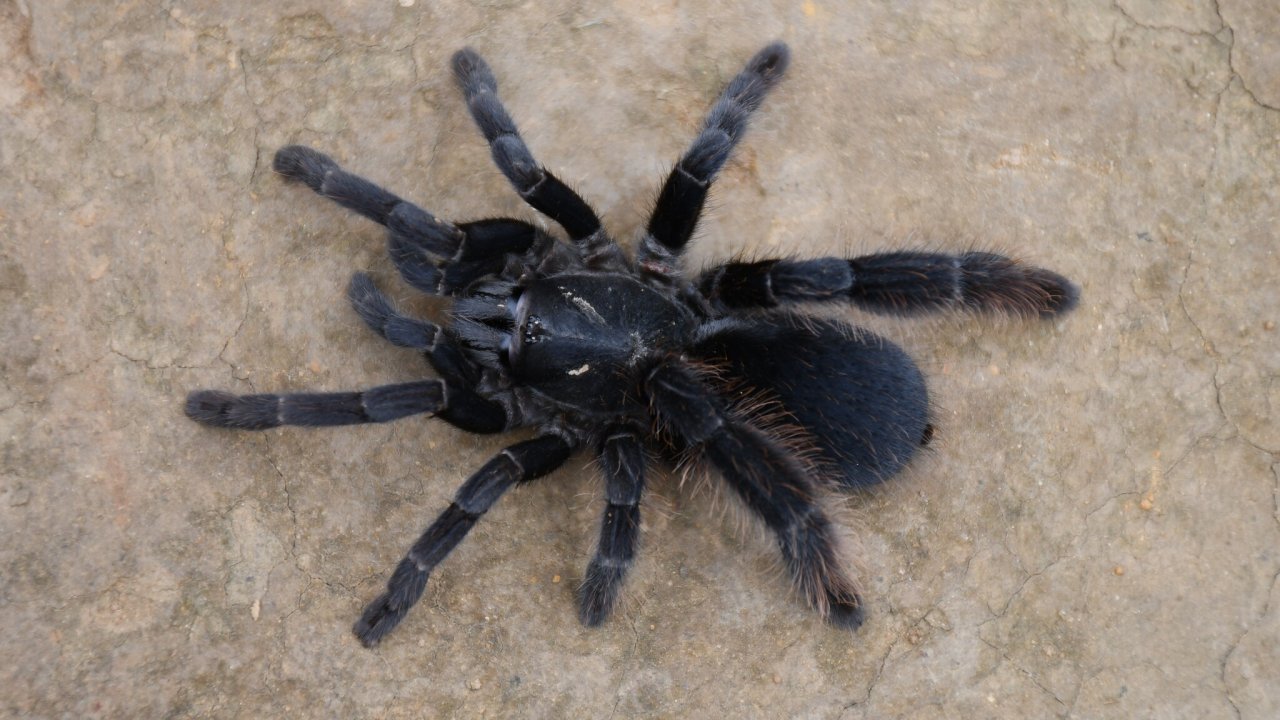 🕳️ Fossorial
Lyrognathus crotalus
Indian Black Earth Tiger
Advanced Demanding or potentially dangerous. May be very fast, defensive, or have medically significant venom. Experienced keepers only. 🕳️ Fossorial Lives underground in deep burrows. Needs deep, packed substrate to dig. You may rarely see them - patience required. 🌍 Old World From Africa, Asia or Australasia: no urticating hairs - defence is speed and a potent bite. Medically significant venom possible. ⚠️ Defensive Will adopt a threat posture (rearing up, showing fangs) when disturbed. May bite if provoked. Approach with care and use a catch cup for rehoming. ☠️ Potent venom Possesses medically significant venom. A bite can cause intense pain, muscle cramps, sweating, and may require medical attention. Old World species typically fall here as they lack urticating hairs.- Temp
- 22-26°C
- Humidity
- 70-80%
- Adult DLS
- 11-13 cm
- Moult
- Sling ~3w - Adult ~9mo
Violet-tinged Indian fossorial. Beautiful but defensive - specialist species for advanced keepers.
-
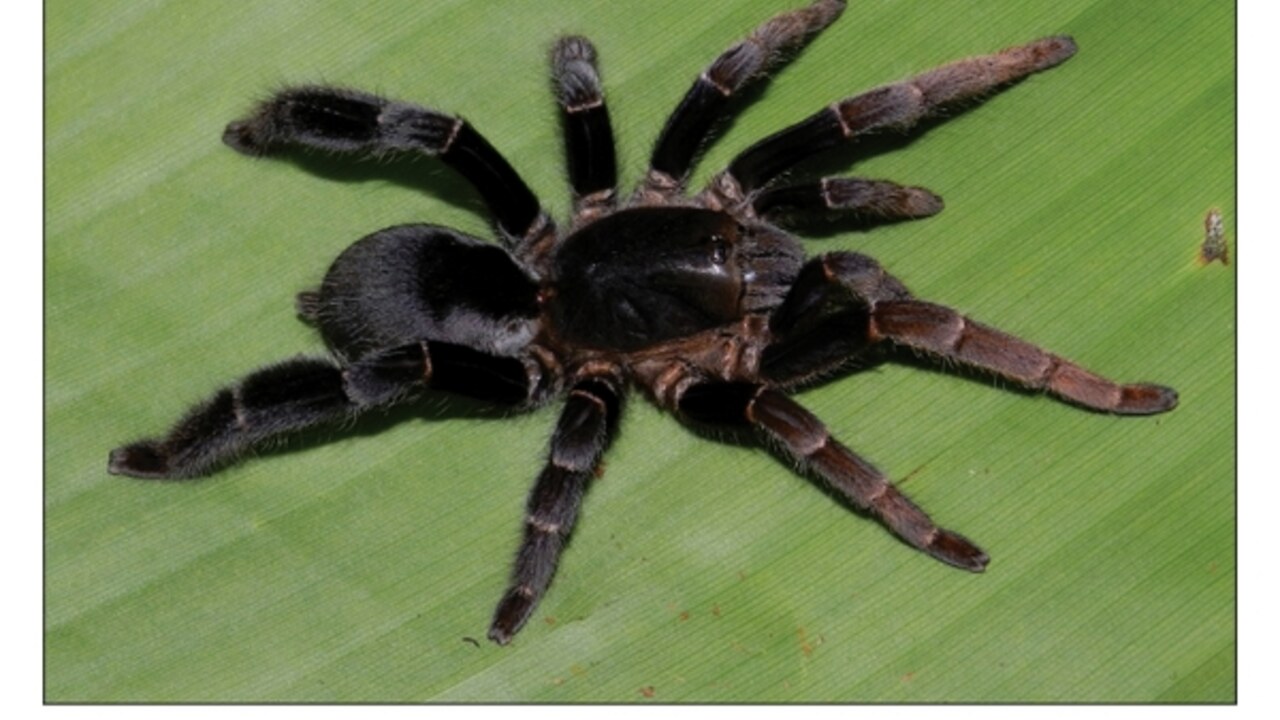 🕳️ Fossorial
Lyrognathus giannisposatoi
Thick Foot Earthtiger
Advanced Demanding or potentially dangerous. May be very fast, defensive, or have medically significant venom. Experienced keepers only. 🕳️ Fossorial Lives underground in deep burrows. Needs deep, packed substrate to dig. You may rarely see them - patience required. 🌍 Old World From Africa, Asia or Australasia: no urticating hairs - defence is speed and a potent bite. Medically significant venom possible. ⚠️ Defensive Will adopt a threat posture (rearing up, showing fangs) when disturbed. May bite if provoked. Approach with care and use a catch cup for rehoming. 🕸️ Heavy webber Dense, prolific webbing behaviour. Will carpet the entire enclosure in thick silk - this is normal and healthy. Provides a visual indicator of the spider's territory. Old world- Temp
- 24-27°C
- Humidity
- 60-75%
- Adult DLS
- 10-13 cm
- Moult
- Sling ~4w - Adult ~10mo
The Sumatran Stout Leg - the most robust member of its genus, named for Gianni Sposato and described in 2013 from lowland Lampung, Sumatra. Its party piece is in the name: "Lyro-" means sound, and it STRIDULATES - hissing and whistling through bristles on legs and pedipalps when threatened. Add rear legs two-to-three times thicker than the rest, deep silk-lined burrows and a ready threat posture, and you have one of the most characterful Asian fossorials. CB stock has slowly spread since 2019; catching some is worth it for keepers of defensive species.
-
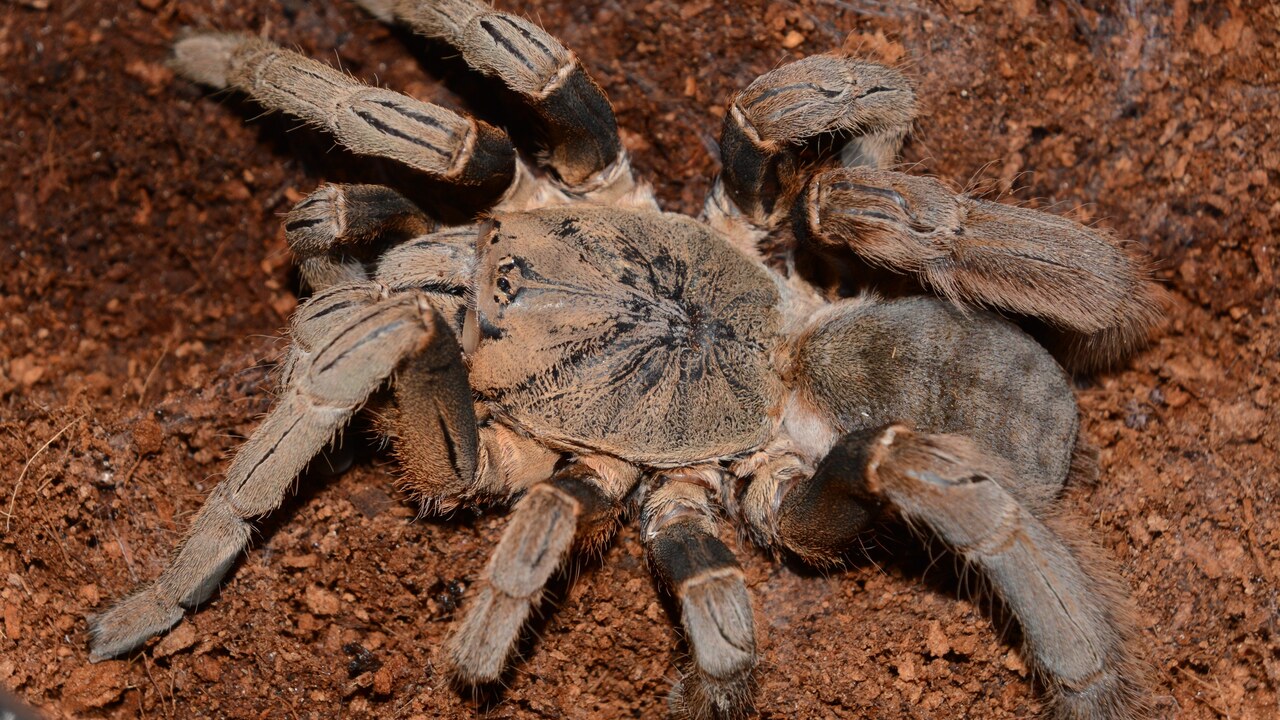 🕳️ Fossorial
Magnacrus tongmianensis
Thunder Thighs Earth Tiger
Advanced Demanding or potentially dangerous. May be very fast, defensive, or have medically significant venom. Experienced keepers only. 🕳️ Fossorial Lives underground in deep burrows. Needs deep, packed substrate to dig. You may rarely see them - patience required. 🌍 Old World From Africa, Asia or Australasia: no urticating hairs - defence is speed and a potent bite. Medically significant venom possible. ⚠️ Defensive Will adopt a threat posture (rearing up, showing fangs) when disturbed. May bite if provoked. Approach with care and use a catch cup for rehoming. 🕸️ Heavy webber Dense, prolific webbing behaviour. Will carpet the entire enclosure in thick silk - this is normal and healthy. Provides a visual indicator of the spider's territory. Old world- Temp
- 15-24°C
- Humidity
- 65-80%
- Adult DLS
- 15-17 cm
- Moult
- Sling ~4w - Adult ~10mo
The Thunder Thighs Earth Tiger (Magnacrus tongmianensis) - type species of a brand-new genus erected in 2025 (ex-Citharognathus), named for its conspicuously powerful hind legs, with the male only described that same year. A cool-tolerant (15-24 °C!) Chinese/Vietnamese fossorial that is perfectly adapted to unheated British rooms - one of the very few Asian earth tigers you can keep beside a window. Defensive, deep-burrowing, genuinely rare at £18 a sling for something this taxonomically interesting.
-
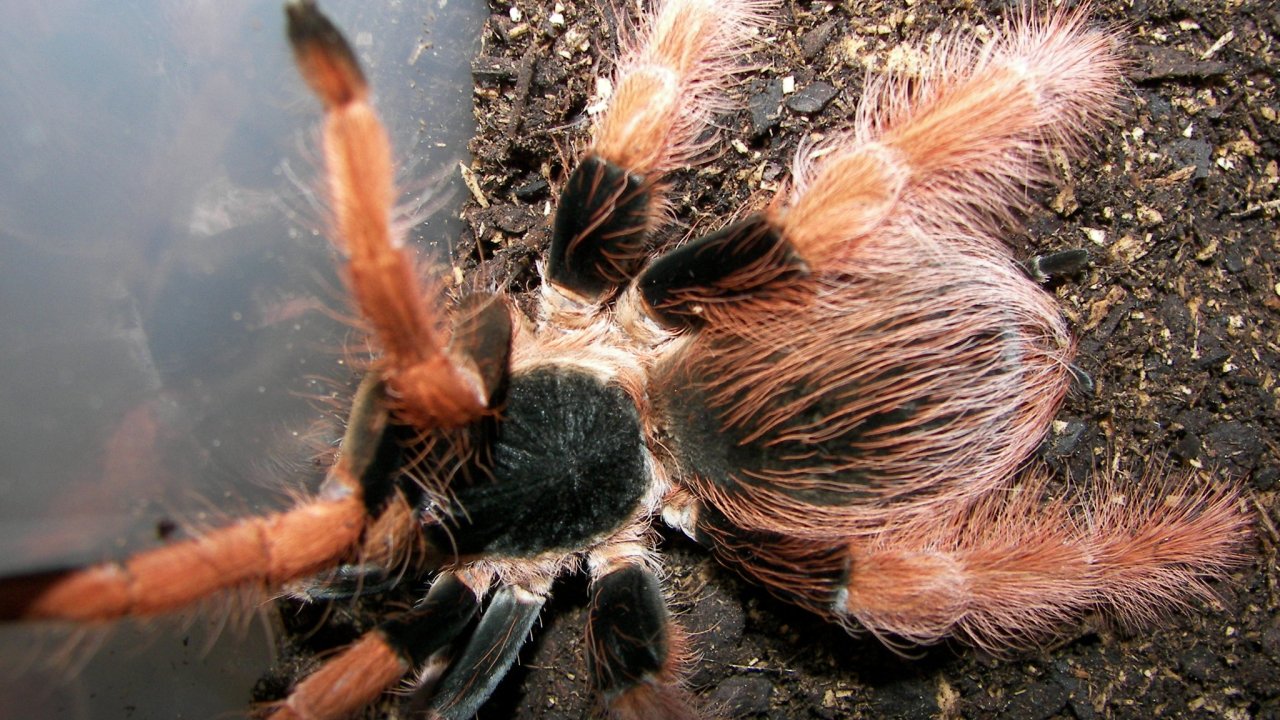 🌍 Terrestrial
Megaphobema robustum
Colombian Giant Redleg
Intermediate Requires consistent husbandry - more sensitive to ventilation, humidity, or feeding schedule. Some experience recommended. 🌍 Terrestrial Lives on or near the ground. Needs floor space more than height. Falls from height can be fatal - keep décor low. 🌎 New World From the Americas: can flick urticating (irritating) hairs as a first defence, and venom is generally milder. 💨 Skittish Easily startled - may bolt or dart suddenly when disturbed. Secure lids are essential as they can be escape artists. ⚠️ Flicks hairs Uses urticating (barbed) hairs on the abdomen as a primary defence. These hairs can cause skin irritation and must be kept away from eyes. New World species only.- Temp
- 22-28°C
- Humidity
- 60-75%
- Adult DLS
- 13-15 cm
- Moult
- Sling ~3w - Adult ~12mo
Colombian giant redleg - huge terrestrial, deep substrate (15 cm), XL water dish. 75-80% humidity. Unusual defensive slap posture - keep hands clear.
-
🌍 Terrestrial
Megaphobema sp. White
Giant White Leg
Intermediate Requires consistent husbandry - more sensitive to ventilation, humidity, or feeding schedule. Some experience recommended. 🌍 Terrestrial Lives on or near the ground. Needs floor space more than height. Falls from height can be fatal - keep décor low. 🌎 New World From the Americas: can flick urticating (irritating) hairs as a first defence, and venom is generally milder. 💨 Skittish Easily startled - may bolt or dart suddenly when disturbed. Secure lids are essential as they can be escape artists. Nervous ⚠️ Flicks hairs Uses urticating (barbed) hairs on the abdomen as a primary defence. These hairs can cause skin irritation and must be kept away from eyes. New World species only.- Temp
- 20-26°C
- Humidity
- 70-80%
- Adult DLS
- 14-17 cm
- Moult
- Sling ~4w - Adult ~11mo
The Giant White Leg - a brand-new, still-undescribed Colombian Megaphobema whose first captive-bred batches reached the UK in 2025-26. A colour-shifting career: white-legged slings, pink juveniles, then dark adults with white-sheened legs and a rose-washed abdomen. Classic Megaphobema temperament underneath - nervous, defensive-posturing, hair-flicking, never truly aggressive. Extremely rare and priced to match, but with the same straightforward cool-and-humid cloud-forest husbandry as its velvetosoma cousins.
-
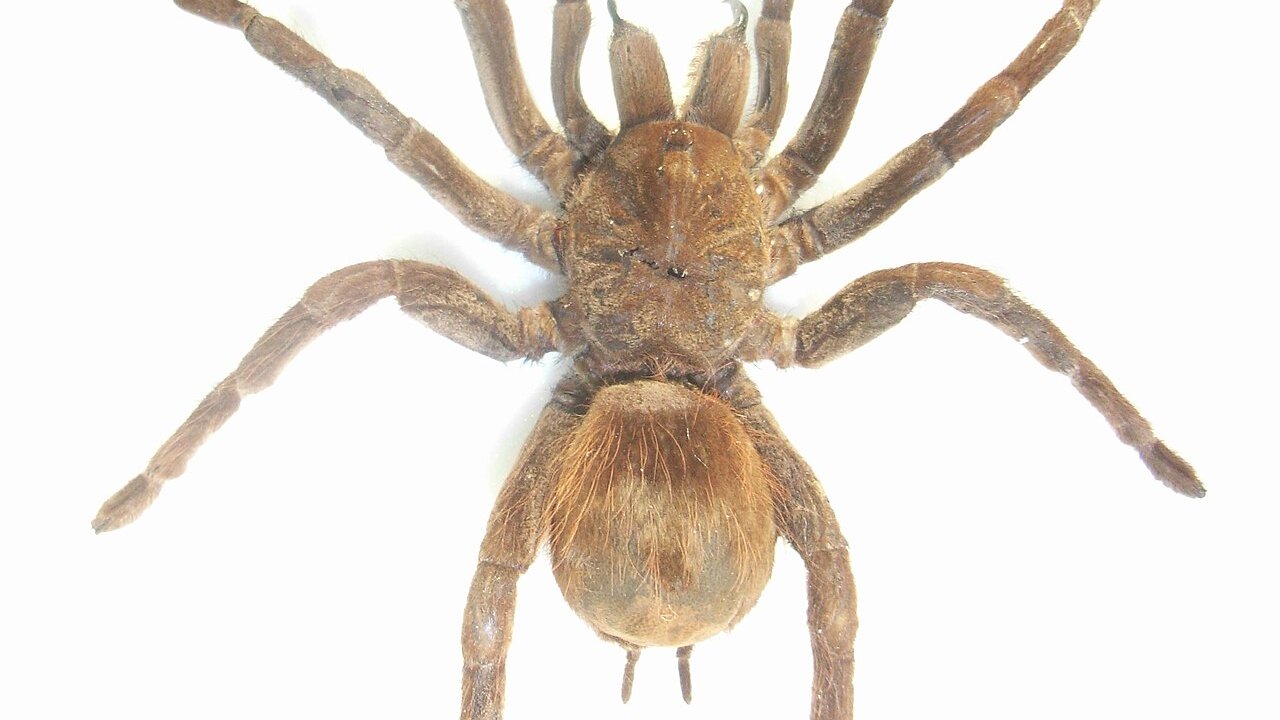 🌍 Terrestrial
Megaphobema velvetosoma
Ecuadorian Brown Velvet
Intermediate Requires consistent husbandry - more sensitive to ventilation, humidity, or feeding schedule. Some experience recommended. 🌍 Terrestrial Lives on or near the ground. Needs floor space more than height. Falls from height can be fatal - keep décor low. 🌎 New World From the Americas: can flick urticating (irritating) hairs as a first defence, and venom is generally milder. 💨 Skittish Easily startled - may bolt or dart suddenly when disturbed. Secure lids are essential as they can be escape artists. ⚠️ Flicks hairs Uses urticating (barbed) hairs on the abdomen as a primary defence. These hairs can cause skin irritation and must be kept away from eyes. New World species only.- Temp
- 22-28°C
- Humidity
- 60-75%
- Adult DLS
- 13-15 cm
- Moult
- Sling ~3w - Adult ~12mo
Velvet redleg - large terrestrial; deep substrate, generous floor space, damp corner. Humid forest species.
-
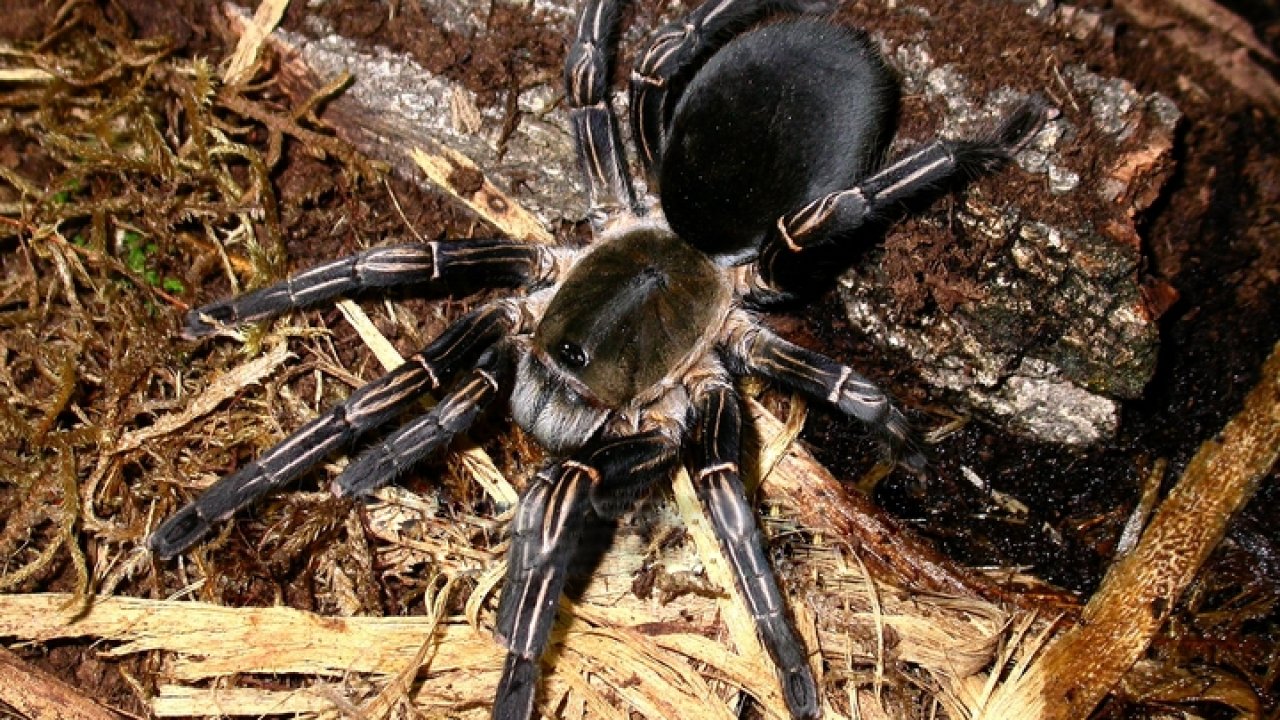 🕳️ Fossorial
Melopoeus albostriatus
Thai Zebra Tarantula
Advanced Demanding or potentially dangerous. May be very fast, defensive, or have medically significant venom. Experienced keepers only. 🕳️ Fossorial Lives underground in deep burrows. Needs deep, packed substrate to dig. You may rarely see them - patience required. 🌍 Old World From Africa, Asia or Australasia: no urticating hairs - defence is speed and a potent bite. Medically significant venom possible. ⚠️ Defensive Will adopt a threat posture (rearing up, showing fangs) when disturbed. May bite if provoked. Approach with care and use a catch cup for rehoming. ⚡ Fast Moves very quickly, especially when startled. Can cross an enclosure in the blink of an eye. Not recommended for handling. ☠️ Potent venom Possesses medically significant venom. A bite can cause intense pain, muscle cramps, sweating, and may require medical attention. Old World species typically fall here as they lack urticating hairs.- Temp
- 22-28°C
- Humidity
- 65-80%
- Adult DLS
- 14-17 cm
- Moult
- Sling ~3w - Adult ~12mo
Thailand zebra leg - fossorial/terrestrial. Deep (15-20 cm) damp packed substrate with starter burrow, 75-80% humidity. Seals itself in for weeks - normal.
-
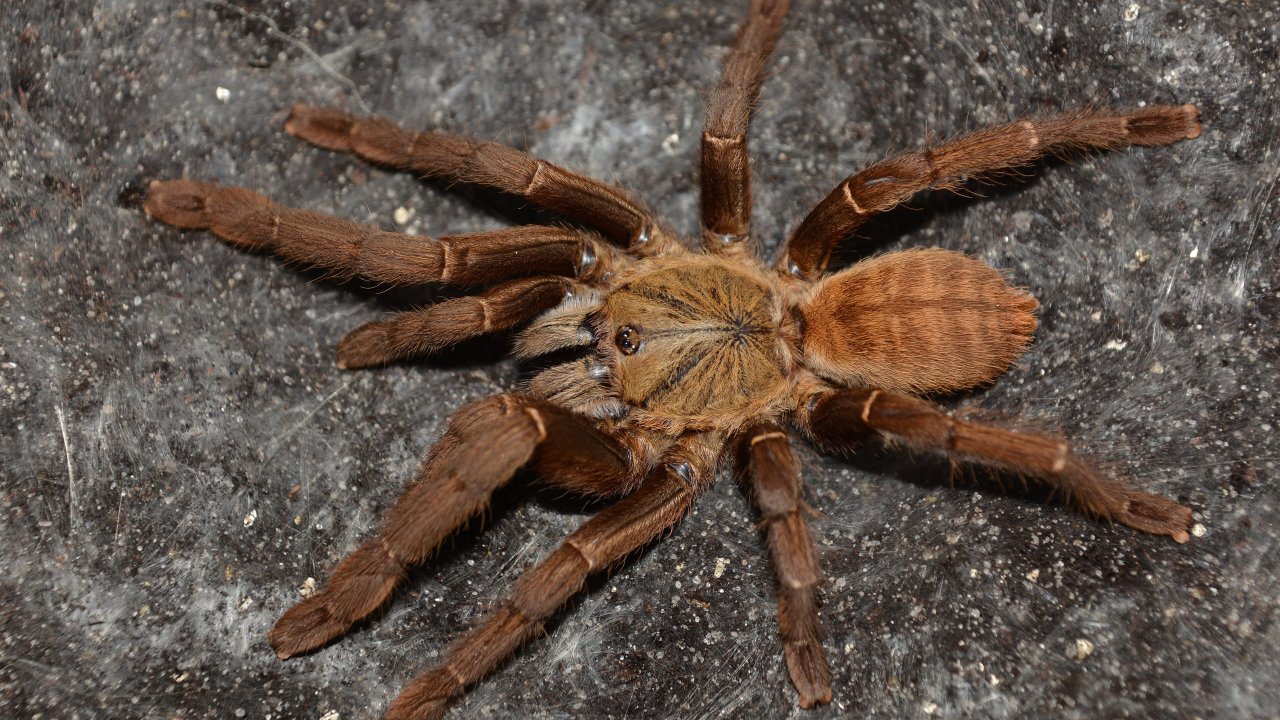 🕳️ Fossorial
Melopoeus hainanus
Hainan Earth Tiger
Advanced Demanding or potentially dangerous. May be very fast, defensive, or have medically significant venom. Experienced keepers only. 🕳️ Fossorial Lives underground in deep burrows. Needs deep, packed substrate to dig. You may rarely see them - patience required. 🌍 Old World From Africa, Asia or Australasia: no urticating hairs - defence is speed and a potent bite. Medically significant venom possible. ⚠️ Defensive Will adopt a threat posture (rearing up, showing fangs) when disturbed. May bite if provoked. Approach with care and use a catch cup for rehoming. ⚡ Fast Moves very quickly, especially when startled. Can cross an enclosure in the blink of an eye. Not recommended for handling. ☠️ Potent venom Possesses medically significant venom. A bite can cause intense pain, muscle cramps, sweating, and may require medical attention. Old World species typically fall here as they lack urticating hairs.- Temp
- 22-28°C
- Humidity
- 65-80%
- Adult DLS
- 14-17 cm
- Moult
- Sling ~3w - Adult ~12mo
Chinese bird spider - deep damp substrate (20 cm) with starter burrow. 75-80% humidity, warm (25-28 C). Defensive Old World - display only.
-
 🕳️ Fossorial
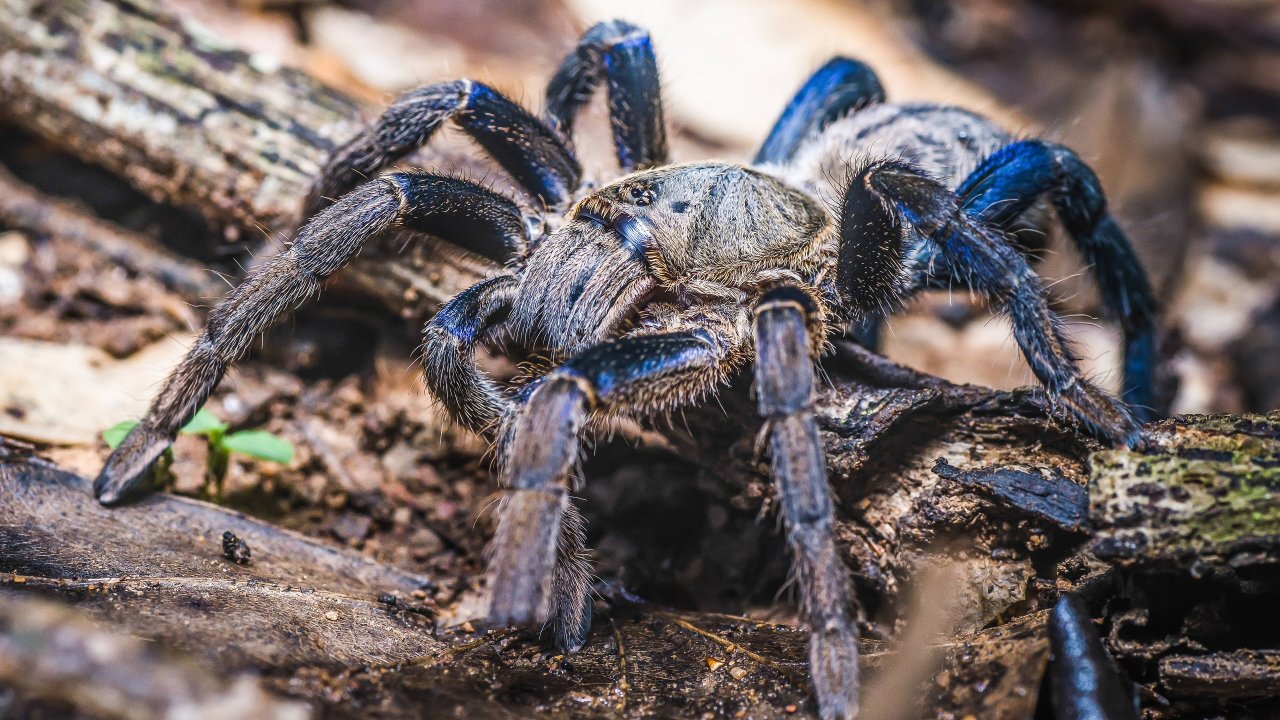
Melopoeus lividus
Cobalt Blue
Advanced Demanding or potentially dangerous. May be very fast, defensive, or have medically significant venom. Experienced keepers only. 🕳️ Fossorial Lives underground in deep burrows. Needs deep, packed substrate to dig. You may rarely see them - patience required. 🌍 Old World From Africa, Asia or Australasia: no urticating hairs - defence is speed and a potent bite. Medically significant venom possible. ⚠️ Defensive Will adopt a threat posture (rearing up, showing fangs) when disturbed. May bite if provoked. Approach with care and use a catch cup for rehoming. ⚡ Fast Moves very quickly, especially when startled. Can cross an enclosure in the blink of an eye. Not recommended for handling. ☠️ Potent venom Possesses medically significant venom. A bite can cause intense pain, muscle cramps, sweating, and may require medical attention. Old World species typically fall here as they lack urticating hairs. 🕸️ Heavy webber Dense, prolific webbing behaviour. Will carpet the entire enclosure in thick silk - this is normal and healthy. Provides a visual indicator of the spider's territory.- Temp
- 24-28°C
- Humidity
- 70-80%
- Adult DLS
- 12-14 cm
- Moult
- Sling ~3w - Adult ~9mo
Stunning metallic cobalt blue legs. Obligate burrower - you rarely see them. Fast, defensive, potent venom.
-
 🕳️ Fossorial
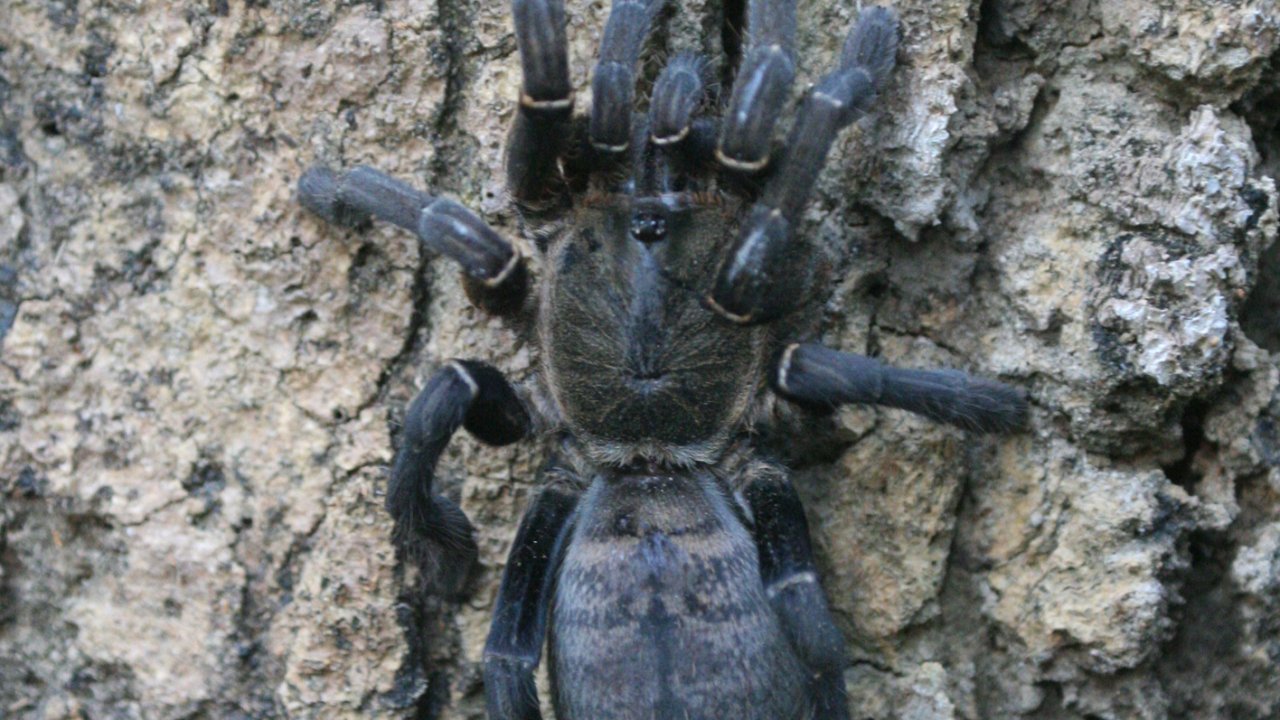
Melopoeus longipes
Long-Legged Earth Tiger
Advanced Demanding or potentially dangerous. May be very fast, defensive, or have medically significant venom. Experienced keepers only. 🕳️ Fossorial Lives underground in deep burrows. Needs deep, packed substrate to dig. You may rarely see them - patience required. 🌍 Old World From Africa, Asia or Australasia: no urticating hairs - defence is speed and a potent bite. Medically significant venom possible. ⚠️ Defensive Will adopt a threat posture (rearing up, showing fangs) when disturbed. May bite if provoked. Approach with care and use a catch cup for rehoming. ⚡ Fast Moves very quickly, especially when startled. Can cross an enclosure in the blink of an eye. Not recommended for handling. ☠️ Potent venom Possesses medically significant venom. A bite can cause intense pain, muscle cramps, sweating, and may require medical attention. Old World species typically fall here as they lack urticating hairs.- Temp
- 22-28°C
- Humidity
- 65-80%
- Adult DLS
- 14-17 cm
- Moult
- Sling ~3w - Adult ~12mo
Long-legged earthtiger - Asian fossorial, deep damp substrate, starter burrow against glass. Warm, humid, well-packed substrate essential.
-
 🌍 Terrestrial
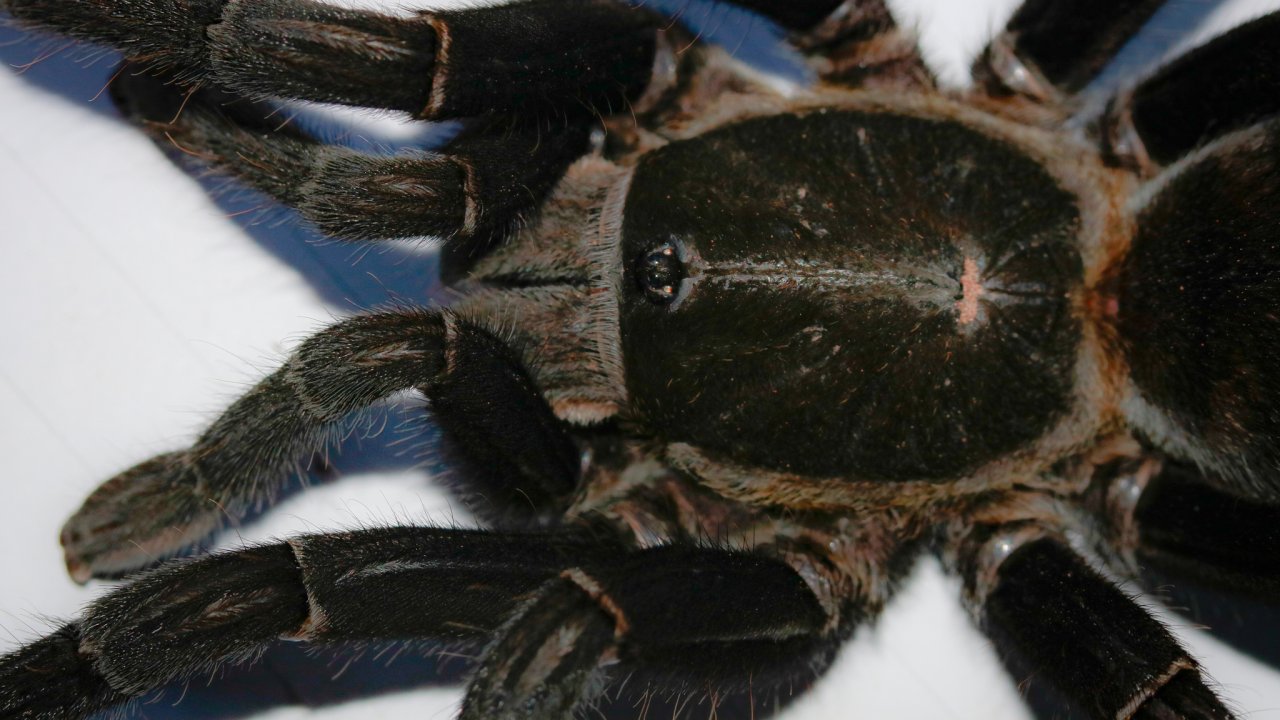
Melopoeus minax
Thailand Black
Advanced Demanding or potentially dangerous. May be very fast, defensive, or have medically significant venom. Experienced keepers only. 🌍 Terrestrial Lives on or near the ground. Needs floor space more than height. Falls from height can be fatal - keep décor low. 🌍 Old World From Africa, Asia or Australasia: no urticating hairs - defence is speed and a potent bite. Medically significant venom possible. ⚠️ Defensive Will adopt a threat posture (rearing up, showing fangs) when disturbed. May bite if provoked. Approach with care and use a catch cup for rehoming. ⚡ Fast Moves very quickly, especially when startled. Can cross an enclosure in the blink of an eye. Not recommended for handling. ☠️ Potent venom Possesses medically significant venom. A bite can cause intense pain, muscle cramps, sweating, and may require medical attention. Old World species typically fall here as they lack urticating hairs. 🕸️ Heavy webber Dense, prolific webbing behaviour. Will carpet the entire enclosure in thick silk - this is normal and healthy. Provides a visual indicator of the spider's territory.- Temp
- 24-28°C
- Humidity
- 70-80%
- Adult DLS
- 13-15 cm
- Moult
- Sling ~3w - Adult ~9mo
Velvety black Old World tarantula. Defensive, fast, and reclusive - fossorial in deep substrate.
-
🕳️ Fossorial
Melopoeus sp. Bach Ma
Bach Ma Earth Tiger
Advanced Demanding or potentially dangerous. May be very fast, defensive, or have medically significant venom. Experienced keepers only. 🕳️ Fossorial Lives underground in deep burrows. Needs deep, packed substrate to dig. You may rarely see them - patience required. 🌍 Old World From Africa, Asia or Australasia: no urticating hairs - defence is speed and a potent bite. Medically significant venom possible. ⚠️ Defensive Will adopt a threat posture (rearing up, showing fangs) when disturbed. May bite if provoked. Approach with care and use a catch cup for rehoming. ⚡ Fast Moves very quickly, especially when startled. Can cross an enclosure in the blink of an eye. Not recommended for handling. 🕸️ Heavy webber Dense, prolific webbing behaviour. Will carpet the entire enclosure in thick silk - this is normal and healthy. Provides a visual indicator of the spider's territory. Old world- Temp
- 20-26°C
- Humidity
- 60-75%
- Adult DLS
- 15-18 cm
- Moult
- Sling ~4w - Adult ~10mo
The Bach Ma Earth Tiger - a khaki-and-gold tiger-striped fossorial from the cloud forest of Bạch Mã National Park, central Vietnam, allied to C. schmidti and still formally undescribed (some 2026 nomenclature work shuffles these into a restored Melopoeus - contested, so Cyriopagopus is retained here). One of the most wanted Asian terrestrials: gorgeous colour, serious webbing, defensive speed and medically significant venom. Montane heritage means it runs COOLER than lowland earth tigers - 20-26 °C, not baking. CB females command £95 when they surface.
-
🕳️ Fossorial
Melopoeus sp. Lam Dong
Lam Dong Earth Tiger
Advanced Demanding or potentially dangerous. May be very fast, defensive, or have medically significant venom. Experienced keepers only. 🕳️ Fossorial Lives underground in deep burrows. Needs deep, packed substrate to dig. You may rarely see them - patience required. 🌍 Old World From Africa, Asia or Australasia: no urticating hairs - defence is speed and a potent bite. Medically significant venom possible. ⚠️ Defensive Will adopt a threat posture (rearing up, showing fangs) when disturbed. May bite if provoked. Approach with care and use a catch cup for rehoming. ⚡ Fast Moves very quickly, especially when startled. Can cross an enclosure in the blink of an eye. Not recommended for handling. 🕸️ Heavy webber Dense, prolific webbing behaviour. Will carpet the entire enclosure in thick silk - this is normal and healthy. Provides a visual indicator of the spider's territory. Old world- Temp
- 18-24°C
- Humidity
- 70-80%
- Adult DLS
- 13-15 cm
- Moult
- Sling ~4w - Adult ~10mo
The Lam Dong Earth Tiger - a near-black (mature females trend indigo) Vietnamese fossorial from the 1,500 m Lam Dong Plateau cloud forest, sold under an old "Haplopelma sp. Lam Dong" label. A deep-cooling specialist: 18-24 °C with no heating in most UK homes, and overheating is the main killer. Chunky fast-growing slings, clear threat postures, deep burrows with heavy web collars. Cheap (£15 slings) for such a striking highlander - a Cobalt Blue for keepers whose houses run cold.
-
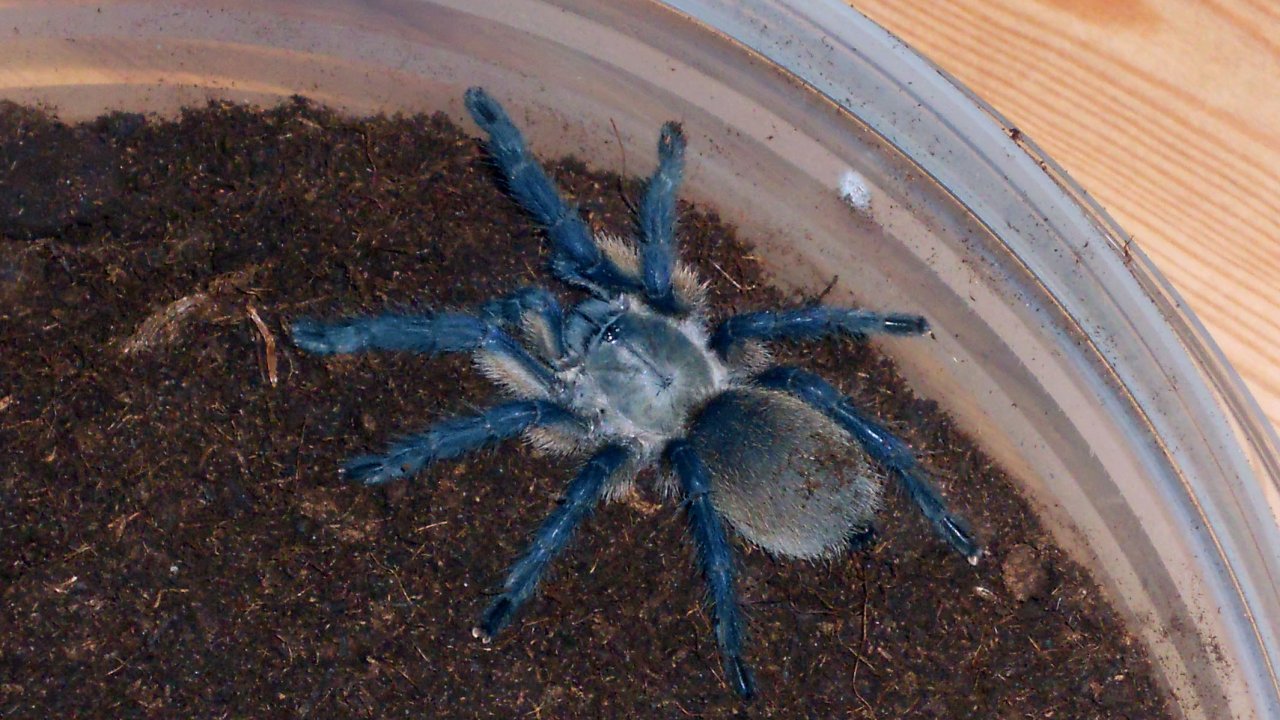 🌍 Terrestrial
Monocentropus balfouri
Socotra Island Blue Baboon
Intermediate Requires consistent husbandry - more sensitive to ventilation, humidity, or feeding schedule. Some experience recommended. 🌍 Terrestrial Lives on or near the ground. Needs floor space more than height. Falls from height can be fatal - keep décor low. 🌍 Old World From Africa, Asia or Australasia: no urticating hairs - defence is speed and a potent bite. Medically significant venom possible. ⚠️ Defensive Will adopt a threat posture (rearing up, showing fangs) when disturbed. May bite if provoked. Approach with care and use a catch cup for rehoming. ⚡ Fast Moves very quickly, especially when startled. Can cross an enclosure in the blink of an eye. Not recommended for handling. ☠️ Potent venom Possesses medically significant venom. A bite can cause intense pain, muscle cramps, sweating, and may require medical attention. Old World species typically fall here as they lack urticating hairs. 🕸️ Heavy webber Dense, prolific webbing behaviour. Will carpet the entire enclosure in thick silk - this is normal and healthy. Provides a visual indicator of the spider's territory.- Temp
- 24-28°C
- Humidity
- 50-65%
- Adult DLS
- 12-14 cm
- Moult
- Sling ~3w - Adult ~9mo
Gorgeous blue-legged baboon with an orange carapace. One of the few communal species; tolerate dry conditions.
-
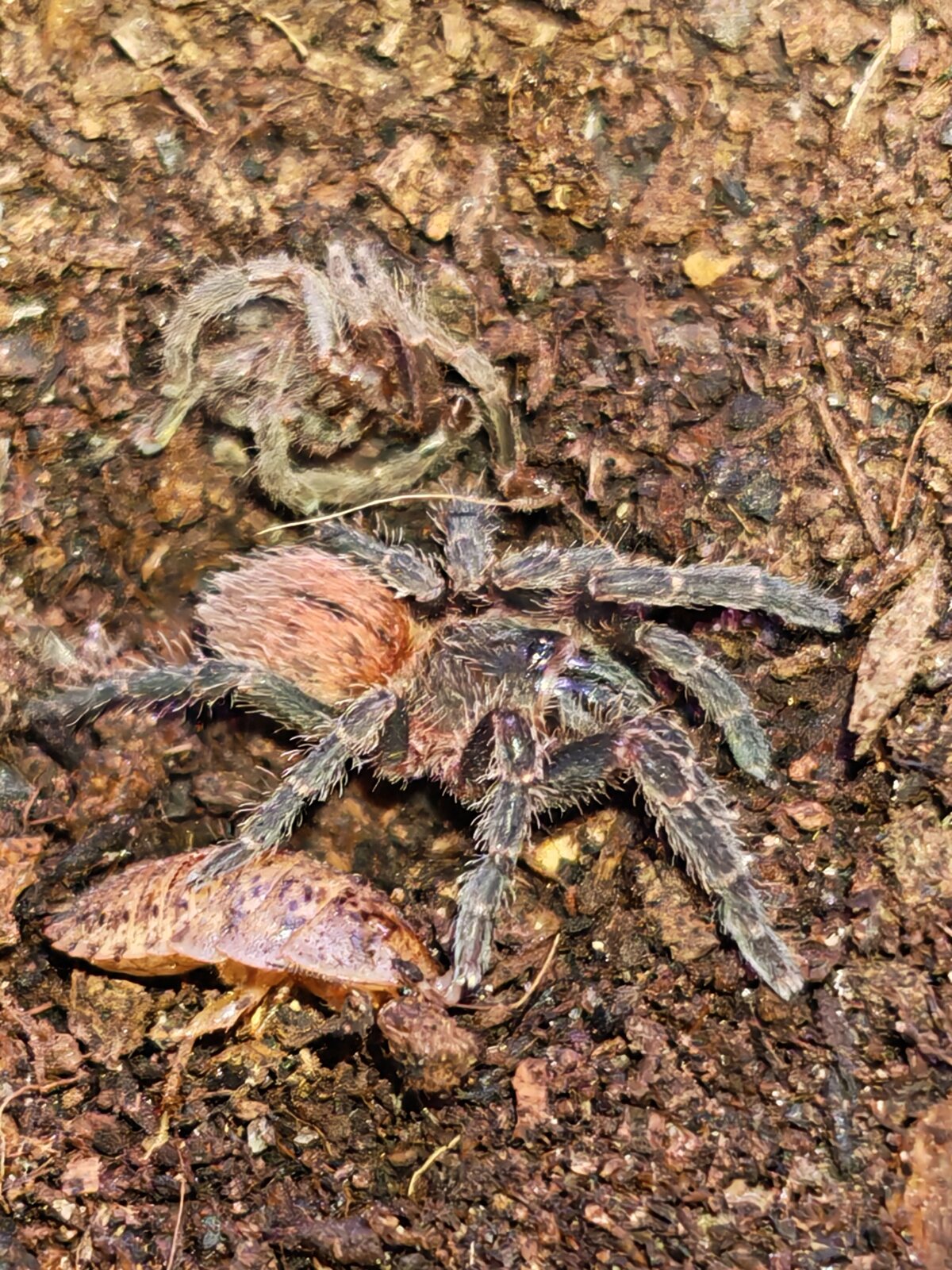 🌍 Terrestrial
Neischnocolus mecana
Gold Banded Sunburst Dwarf
Beginner Forgiving of common mistakes. Tolerant of temperature/humidity variation. Great first tarantula. 🌍 Terrestrial Lives on or near the ground. Needs floor space more than height. Falls from height can be fatal - keep décor low. 🌎 New World From the Americas: can flick urticating (irritating) hairs as a first defence, and venom is generally milder. 💨 Skittish Easily startled - may bolt or dart suddenly when disturbed. Secure lids are essential as they can be escape artists. ⚡ Fast Moves very quickly, especially when startled. Can cross an enclosure in the blink of an eye. Not recommended for handling.- Temp
- 22-27°C
- Humidity
- 70-80%
- Adult DLS
- 7-8 cm
- Moult
- Sling ~4w - Adult ~13mo
Colombian dwarf with gold and blue banded legs, red abdominal accents and a grey carapace - a sunburst in miniature at 7-8 cm. Formally described in 2023 from the Pacific Chocó rainforest (the trade name began on undescribed "sp. Panama" stock). A docile opportunist that burrows as a sling and ends up on display as an adult: small enclosure, damp substrate, and a feeding response far bigger than the spider.


